Why Malta's New Tourism Rules Will Test the Government's Resolve on Enforcement
The Malta Tourism Authority just handed property owners operating short-term rentals their clearest warning yet: comply with licensing and occupancy standards by June 2026, or face a three-year ban from the market. But for residents drowning in construction noise, overflowing garbage, and transformed neighborhoods, one question matters more than the rules themselves—will anyone actually enforce them?
Why This Matters
• EU data transparency kicks in May 2026: Platforms like Airbnb and Booking.com will be forced to share guest details, booking dates, and revenue with regulators, eliminating the main excuse for not catching unlicensed operators
• Three-year property bans now include the address itself, not just the operator, preventing owners from skirting consequences through shell companies
• Roughly 2,400 of Malta's 9,500 active short-let listings currently operate without licenses—and enforcement will finally have the visibility to identify them
The Gap Between Paper Rules and Street Reality
Malta's tourism sector operates under a peculiar paradox: laws exist in abundance, yet compliance happens almost accidentally. The numbers tell the story bluntly. In 2023, the Malta Tourism Authority completed 1,771 inspections of new licensees, another 2,839 routine checks, and 474 complaint-driven investigations. Yet only 177 illegal operations were identified by 2025. That's less than one detection per five inspections—a success rate that suggests either sophisticated evasion or resources stretched impossibly thin.
The result is a system residents describe as fundamentally corrupt: some properties operate for years without paying licensing fees, while compliant businesses shoulder regulatory costs. Hotels built unauthorized extra floors under the now-discredited 2014 incentive policy remain standing, their illegal storeys reshaping skylines permanently while demolition orders languish in limbo. Meanwhile, inspectors struggle with lists that don't include half the unlicensed market.
What's Actually Changing in June 2026
The new Tourism Accommodation Regulations 2026 represent the most aggressive overhaul of accommodation standards in over a decade, though the reforms operate on two distinct levels: aspirational and restrictive.
On the restrictive side, the Malta Tourism Authority will no longer approve one- and two-star hotels, all-inclusive resorts in Outside Development Zones, or hotels exceeding 200 rooms. Height limits are now absolute—projects that exceed local planning restrictions will not receive Tourism Policy Compliance Certificates, closing a loophole that allowed developers to claim tourism incentives while violating neighborhood regulations.
For short-term rentals specifically, the rules tighten around occupancy, amenities, and transparency. Properties face a hard cap of 10 guests total or two per bedroom, whichever is lower. Sofa beds and underground bedrooms are outright banned. Air conditioning becomes mandatory. Individual bookings cannot stretch beyond 90 consecutive days.
Transparency becomes weaponized: operators must post signs outside properties displaying their license number, the manager's name, and a 24/7 complaint phone number. Condominium residents receive notice when licenses are granted. All properties require detailed waste management plans. These requirements sound administrative until you consider their purpose—they eliminate plausible deniability and create documented evidence for enforcement action.
Hostels face particularly strict controls, approved only if affiliated with educational institutions and capped at 40 beds in residential neighborhoods. This directly targets the widespread practice of operators obtaining hostel licenses, then renting dorm-style accommodations to foreign workers, transforming accommodation meant for tourists into informal labor housing.
The aspirational layer introduces new categories: "heritage hotels" for establishments that preserve historic architectural features, "boutique" and "luxury boutique" classifications, and a borrowed Italian model called "diffuso" that allows providers to operate across multiple converted buildings within a single locality while sharing centralized services. These classifications direct investment away from mass-market volume toward higher-value operations.
Why the EU's May Deadline Changes Everything
On May 1, 2026, the EU Digital Transparency Regulation (2024/1028) takes effect across all member states. For Malta, this means platforms like Airbnb, Booking.com, and others must submit monthly data to national authorities, including property addresses, guest identities, booking dates, and revenue figures. This requirement removes the primary obstacle that has paralyzed enforcement for years: regulators will finally know who is operating what.
Historically, platforms cited privacy and competitive concerns to withhold data. The EU mandate strips them of that discretion. The Malta Tourism Authority gains near-complete market visibility, making the hidden economy of unlicensed operations substantially harder to sustain. An operator running an unlicensed property can no longer hide behind platform opacity or claim invisibility—their bookings appear in authority records before guests even arrive.
This timing creates accountability pressure: when June regulations activate just after EU data-sharing begins, the authority will have fresh intelligence about which properties should be licensed but aren't.
The Enforcement Skeptics Have History on Their Side
Cautious optimism among residents rests on shaky ground because enforcement failure is Malta's operational baseline. Illegal kiosks operate for years despite enforcement notices. Court decisions in February 2026 revoked permits for a 10-storey Swieqi residential complex and two 14-storey Sliema hotels—both structures remain standing, untouched by demolition crews. Demolition rarely follows permit revocation; instead, cases drift into administrative limbo or negotiation.
April 2026 discussions revealed proposed "regularization" schemes allowing owners of illegal Outside Development Zone structures to pay fines between €150,000 and €600,000 to avoid demolition. Effectively, this monetizes countryside destruction rather than reversing it, transforming violations into revenue opportunities for government coffers. The Malta Chamber of Commerce protested in February 2026 that businesses operating in illegal structures continue receiving public reconstruction funds, a practice that undermines legal compliance.
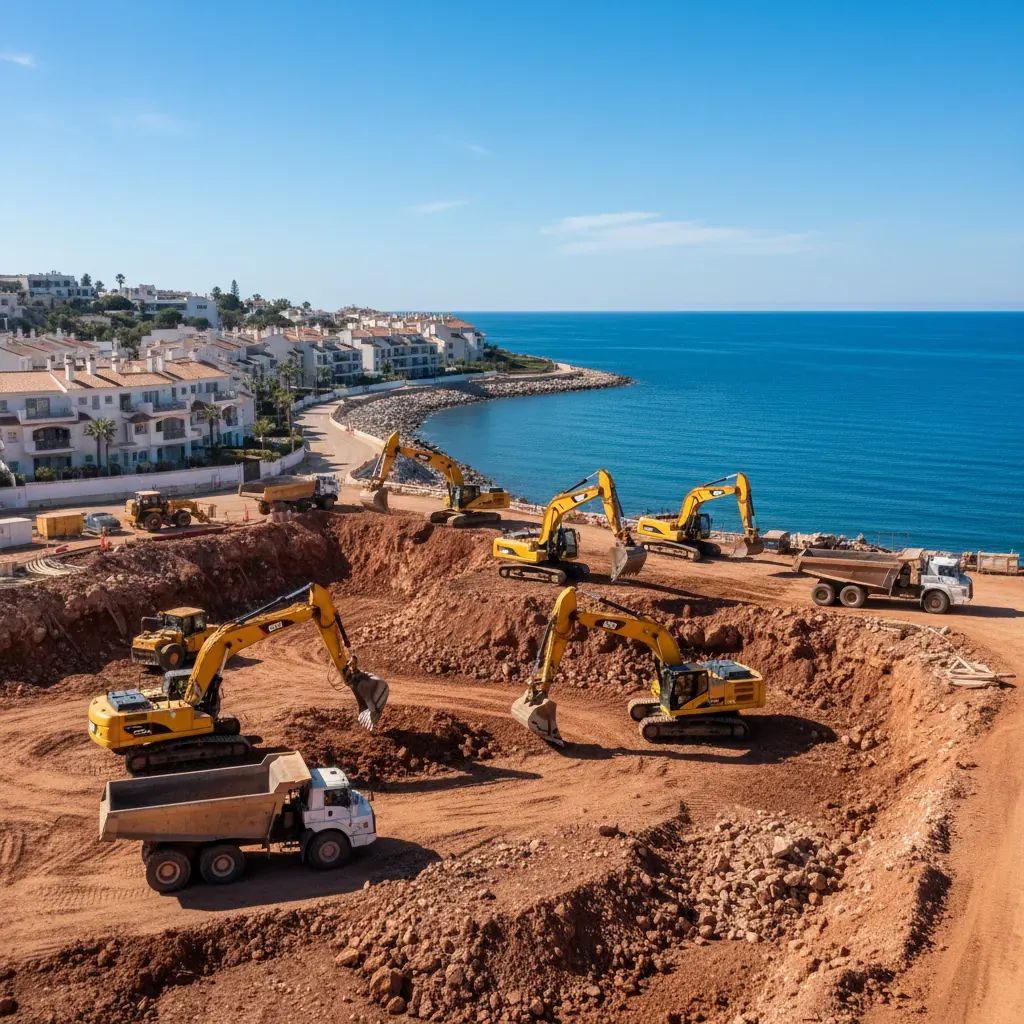
The Summer Construction Ban—prohibiting demolition and excavation in tourist areas between June 15 and September 30—represents rare coordination success between the Building and Construction Authority and the Malta Tourism Authority. Its persistence reflects genuine consensus that construction disruption damages peak-season tourism more than delayed projects inconvenience developers.
What This Means for Residents Living in Tourist-Heavy Areas
For Malta residents, particularly those in neighborhoods saturated with short-term rentals, the practical impact depends entirely on whether signage requirements and waste plans translate to actual improvements or simply create the appearance of regulation.
The 24/7 complaint contact requirement matters because it establishes a documented chain of responsibility. A resident dealing with nuisance behavior or garbage overflows can now identify the property manager, lodge formal complaints with timestamps, and escalate to the Malta Tourism Authority if management doesn't respond. Previously, properties operated anonymously—guests arrived through online platforms, paid remote hosts, and locals had no recourse except calling police for noise disturbances.
The three-year property-specific ban represents a genuine financial deterrent. Previous penalties amounted to business costs that operators absorbed; a three-year revenue blackout fundamentally changes the calculation. Unlike corporate structures that shift liability through ownership transfers, the ban attaches to the property address itself, making workarounds difficult.
Yet residents would be forgiven for reserving judgment. Infrastructure already strains under current demand. Sewage overflows have worsened, not improved, during peak seasons. Waste collection fails regularly despite rules requiring licensed operators. Zoning regulations exist on paper but are routinely bent through permits that exceed height restrictions or variances granted in defiance of planning frameworks. A new regulation layered onto this fragmented system requires more than good intentions—it requires resources, willingness to impose consequences on economically powerful operators, and political courage to demolish completed structures rather than negotiate fines.
The Quangos Problem Underlying Everything
Malta's regulatory environment suffers from a structural dysfunction that no single rule can fix: responsibility is distributed across so many quasi-autonomous organizations that accountability diffuses entirely. The Malta Tourism Authority, the Planning Authority, the Building and Construction Authority, and various environmental agencies all hold pieces of the accommodation puzzle. Coordination between them remains notoriously weak.
This fragmentation produces grotesque contradictions. The Malta Tourism Authority approves projects that the Planning Authority later revokes. Construction proceeds despite appeals, creating completed structures later deemed illegal. Businesses ineligible for permits operate in government-approved buildings. Developers holding revoked permits remain eligible for public reconstruction funds.
Professionals employed by these agencies understand their mandates. The Malta Tourism Authority has experienced staff who articulate precisely what needs doing. The knowledge gap isn't the problem—political will and resource allocation are.
Watching for Genuine Change
The proof arrives in June and beyond. Several indicators will reveal whether these reforms represent meaningful tightening or merely regulatory theater added atop an already-cluttered system.
First, watch for visible compliance: Do license signs with 24/7 contact details actually appear outside short-term rental properties by summer? Second, monitor enforcement reporting: Does the Malta Tourism Authority publish regular data on inspections, violations detected, and three-year disqualifications issued? Third, observe market behavior: Do unlicensed listings disappear from platforms once data-sharing begins in May, or do operators migrate to unregulated channels?
Fourth, track demolition outcomes: When courts revoke permits for illegal structures, do bulldozers follow, or do properties remain indefinitely? Fifth, scrutinize public funding eligibility: Does the government clarify that businesses in illegal structures cannot access taxpayer support?
The new regulations create enforcement tools. Whether those tools leave the shed depends on decisions made by people in authority, not by the rules themselves. Residents have heard plenty of regulatory announcements. They're watching to see if this one actually changes their neighborhoods.