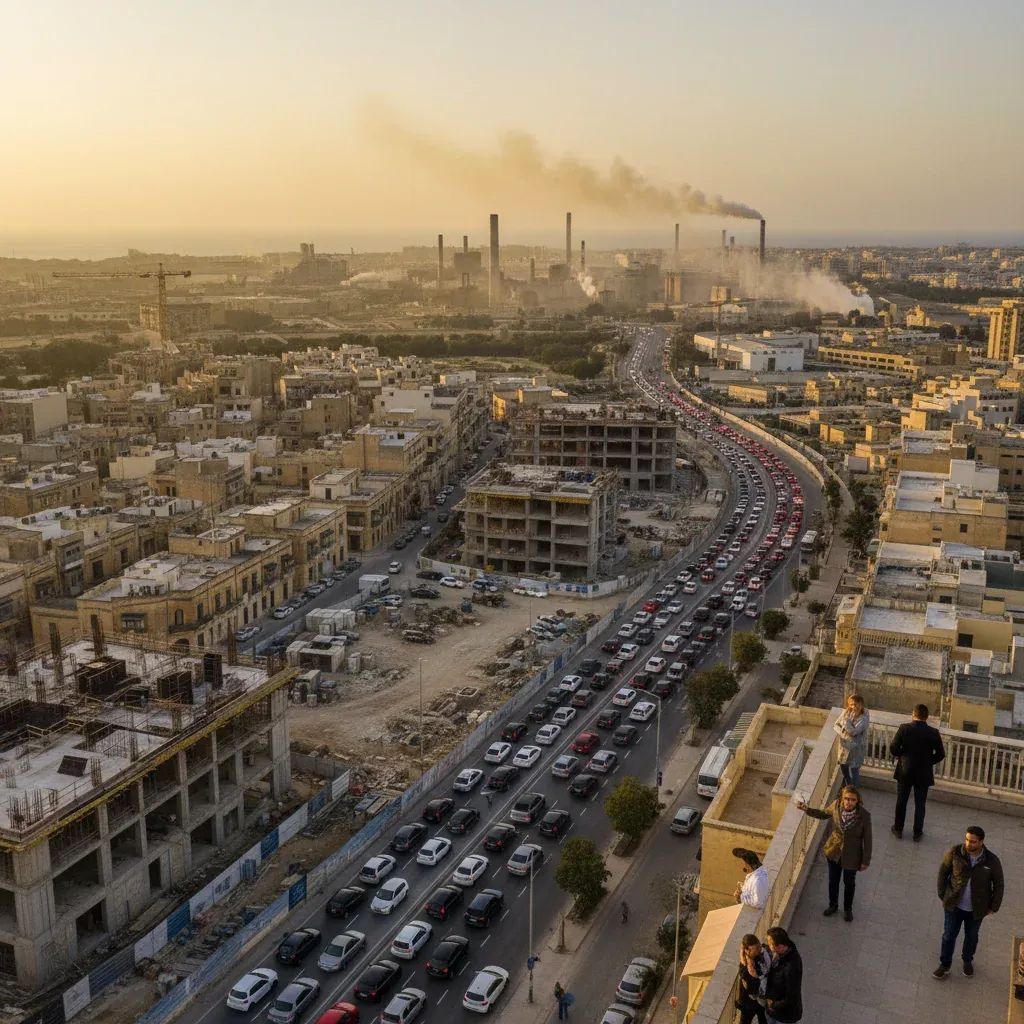
An elderly care residence in Gżira, Malta lost electrical power for approximately half a day in late August, forcing some residents to leave with relatives as the facility struggled without air conditioning during a severe heatwave. The incident has reignited political pressure on Energy Minister Miriam Dalli to accept political responsibility for what critics describe as a systematic failure of Malta's electricity distribution network.
Why This Matters
• Vulnerable populations at risk: Care homes require continuous power for medical devices, temperature control, and basic safety systems
• €140M investment questioned: Despite substantial government spending on energy infrastructure over three years, outages persist
• Heatwave stress test failed: Malta's grid buckled under record 741MW demand in July, revealing deeper planning failures
Generator Failure Compounds Grid Weakness
Vivan Care Residence attributed the outage to a technical malfunction in what the facility owner described as a "brand new" backup generator. The supplier reportedly resolved the generator issue within two hours, but the broader power cut persisted for several more hours, leaving elderly residents in sweltering conditions as outdoor temperatures hovered near record highs.
The incident occurred during a wave of rolling blackouts that affected multiple localities across the island in August 2026. Some areas reported multiple disruptions in a single day, with residents experiencing power loss for extended periods during peak heat hours when air conditioning is most critical.
The Nationalist Party's shadow energy minister, Mark Anthony Sammut, seized on the care home incident as evidence of systemic infrastructure neglect. He noted that despite the government's claim of investing €140M in the energy network between 2023 and 2025, Malta continues to experience widespread outages nearly identical to those that plagued the island during the 2023 heatwave.
Root Causes Beyond the Heatwave
Enemalta, Malta's state energy company, has consistently attributed the outages to "isolated network faults" and problems in the distribution system, including localized low-voltage and medium-voltage cable failures. However, energy analysts and critics point to more fundamental issues.
The July 2026 heatwave pushed Malta's electricity demand to a record 741MW, driven primarily by air conditioning use. This surge exposed what multiple sources describe as a planning failure: the island's distribution network has not kept pace with rapid economic expansion, population growth of approximately 60,000 residents over five years, and a dramatic increase in households with air conditioning units.
The extreme temperatures effectively functioned as a stress test that Malta's infrastructure failed. Underground cables, subjected to intense thermal pressure from both ambient heat and elevated electrical load, developed faults at an alarming rate. Critics argue this reveals vulnerabilities that have been developing for years, suggesting the government's infrastructure investments have been either insufficient or poorly targeted.
A July 2026 analysis in The Shift News highlighted a critical distinction: while Malta may possess adequate generating capacity to meet demand, the distribution network—the cables and transformers that deliver electricity to homes and businesses—is failing to reliably transmit that power. This disconnect between generation and distribution represents the core of Malta's electricity crisis.
What This Means for Care Home Residents and Operators
European Union guidelines on energy resilience emphasize the 72-hour self-sufficiency standard, particularly for facilities serving vulnerable populations. Care homes face unique challenges during power outages that extend beyond simple inconvenience.
Many elderly residents depend on electrically powered medical devices including CPAP machines, oxygen concentrators, and medication refrigeration systems. Modern heating and cooling systems typically require electricity to operate, and many care facilities rely on electric pumps to maintain water pressure. Loss of power can quickly cascade into multiple life-safety concerns.
While no single EU regulation mandates specific backup power protocols for care homes, the broader framework for risk preparedness in the electricity sector requires member states to prioritize critical facilities during crises. This implicitly includes residential care facilities where power loss can pose immediate health risks.
Best practices for care home operators include maintaining comprehensive business continuity plans that address prolonged power loss, ensuring backup generators receive regular maintenance and testing, and deploying uninterruptible power supply (UPS) devices for critical medical equipment that requires seamless power transitions.
The Vivan Care Residence incident underscores the inadequacy of relying solely on new equipment without rigorous testing protocols. A "brand new" generator that fails during its first real-world test highlights the need for redundant backup systems and regular stress-testing of emergency equipment before it's needed in crisis conditions.
Political Pressure Mounts on Energy Minister
Minister Dalli has faced sustained criticism throughout 2026 regarding the reliability of Malta's electricity supply. Following the July heatwave, the Ministry for Active Ageing coordinated with her office to offer temporary day respite services for elderly individuals affected by outages at St Vincent De Paule and other care facilities—a reactive measure that critics say highlights the government's failure to proactively address known infrastructure weaknesses.
The Opposition's renewed call for political accountability centers on a straightforward argument: if €140M in infrastructure investment cannot prevent the same pattern of outages that occurred in 2023, then either the spending has been misdirected or the scale of investment remains inadequate for Malta's actual needs.
Government officials have not publicly detailed how the €140M was allocated across the distribution network, making it difficult to assess whether specific neighborhoods or infrastructure components received priority treatment. The recurrence of outages across multiple localities suggests either widespread infrastructure degradation or inadequate capacity expansion to match demand growth.
The Path Forward
Malta's electricity challenges reflect a fundamental mismatch between the island's economic ambitions—including attracting foreign residents and investment—and the foundational infrastructure required to support that growth. The country's rapid population increase and rising living standards have outpaced grid modernization efforts.
Energy experts consistently emphasize that distribution network upgrades require years of planning and construction, meaning today's infrastructure decisions determine reliability for the next decade. The question facing policymakers is whether incremental investments will suffice or whether Malta requires a comprehensive network overhaul to meet demand projections for 2030 and beyond.
For care home operators and families with elderly relatives in residential facilities, the immediate priority involves verifying backup power capabilities and ensuring facilities have tested, functional emergency systems. The August incident at Vivan Care Residence serves as a stark reminder that generator nameplates mean little if equipment hasn't been properly commissioned and stress-tested under realistic load conditions.
As Malta navigates increasingly frequent heatwaves—a trend climate scientists expect to continue—the reliability of the electricity distribution network will remain a critical quality-of-life issue affecting the island's most vulnerable residents. Whether political accountability translates into measurable infrastructure improvements will become apparent in the summers ahead.