Malta's economy is moving faster than Brussels expected. The Central Bank of Malta just revised its 2026 growth forecast upward to 3.7%—a pace that would make the island one of Europe's fastest-growing economies even as geopolitical turmoil roils markets elsewhere. But beneath the headline figures lies a more complex story: the government is spending heavily on social benefits while holding the deficit under control, and education outcomes are deteriorating in ways that could undermine the entire strategy.
Why This Matters:
• Your take-home is improving: Tax breaks for families with children, pensioners, and first-time homebuyers mean thousands of euros staying in your pocket through 2028. A pensioner earning €37,104 or less now pays zero tax on their entire state pension.
• Growth outpaces peers: Malta is tracking toward 4% average annual expansion through 2031 according to the IMF—outpacing Germany, France, and most of Southern Europe in real terms.
• The catch: Weak education results threaten to hollow out the skilled workforce this growth model depends on. Only one in five secondary students are passing exams—a critical shortfall that signals a deepening crisis in the pipeline.
The Spending Bet: Consumption as an Engine
Finance Minister Clyde Caruana framed the 2026 budget as a wager on domestic demand. Rather than tightening belts like Germany or Austria, the Malta Cabinet pumped €120M into direct household support—betting that worker bonuses, pension increases, and family allowances would drive private consumption, which in turn would stoke business investment and tax receipts.
The math has held so far. By April 2026, government revenues had swelled by €635.7M compared to the same period in 2025, with income tax rising by €347.5M. This windfall allowed the treasury to simultaneously reduce the national deficit to €65.5M—€195.9M better than April 2025—while maintaining spending commitments. The broader fiscal picture shows public debt settling at 47.1% of GDP, comfortably below the EU's 60% ceiling and the tightest in the region outside Luxembourg.
The engine running this growth? Private consumption. Workers are spending bonus payments. Pensioners are banking tax breaks. First-time buyers are accessing interest-free loans covering 25% of purchase prices. Domestic demand climbed 3.1% in real terms during the first half of 2025, with service exports—particularly digital and communications work—providing the accelerant. Exports of IT services, software, and gaming have become the economy's shadow champion, less visible than tourism but increasingly vital.
Winners and Losers: Who Benefits from the 2026 Shift
Pensioners hold the strongest hand. All 43,000 retirees received a €10 weekly raise for 2026, composed of a €4.66 cost of living adjustment plus an extra €5.34 boost. But the real victory is tax exemption. Starting January 1, 2026, pension income is 100% tax-free up to €37,104—a threshold that covers roughly 85% of Malta's state pensioners. Widows gain an additional €3.50 weekly, and the annual supplement for those 65 and over rose to €250. The inheritance tax relief threshold doubled to €400,000, easing estate transfers for middle-income families.
Young families see meaningful relief too. New "parent" and "married" income tax brackets roll in for 2026, with further rate cuts scheduled through 2028. A family with two children earning €28,000 annually will see roughly €2,400 in cumulative tax savings by 2028—equivalent to a month's rent in central Valletta. The Children's Allowance jumped by €250 per child for families under €30,000 annual income, with an extra €167 for those below €23,000. Birth bonuses restructured to €1,000 for a first child, €1,500 for the second, and €2,000 for subsequent children. Adoption bonuses climbed to €12,000 for foreign adoptions, €2,000 for local—a deliberate rebalancing of family policy toward younger demographics.
First-time buyers gained permanent access to the interest-free loan scheme covering up to 25% of purchase value, with stamp duty exempted on the first €200,000 of property cost. This effectively lowers entry barriers to homeownership—critical in a market where median prices in urban areas now exceed €600,000.
Small businesses and self-employed professionals encountered a more complicated picture. The MicroInvest Scheme expanded to cover digital solutions, offering tax credits up to €65,000 in Malta and €85,000 in Gozo—a significant boost for firms investing in cybersecurity, accounting software, or cloud infrastructure. A new Investment Tax Credit delivers 60% of qualifying capital expenditure across four years for machinery, IT systems, and tools purchased in the next two years. Wage support for long-serving private employees covers 65% of raises for those with four-plus years tenure (up to €780 annually), climbing to 80% in Gozo (up to €960). Yet these are supply-side incentives, not direct subsidies. Uptake depends on business confidence, and that remains tethered to external conditions.
The Structural Weakness: Education as the Bottleneck
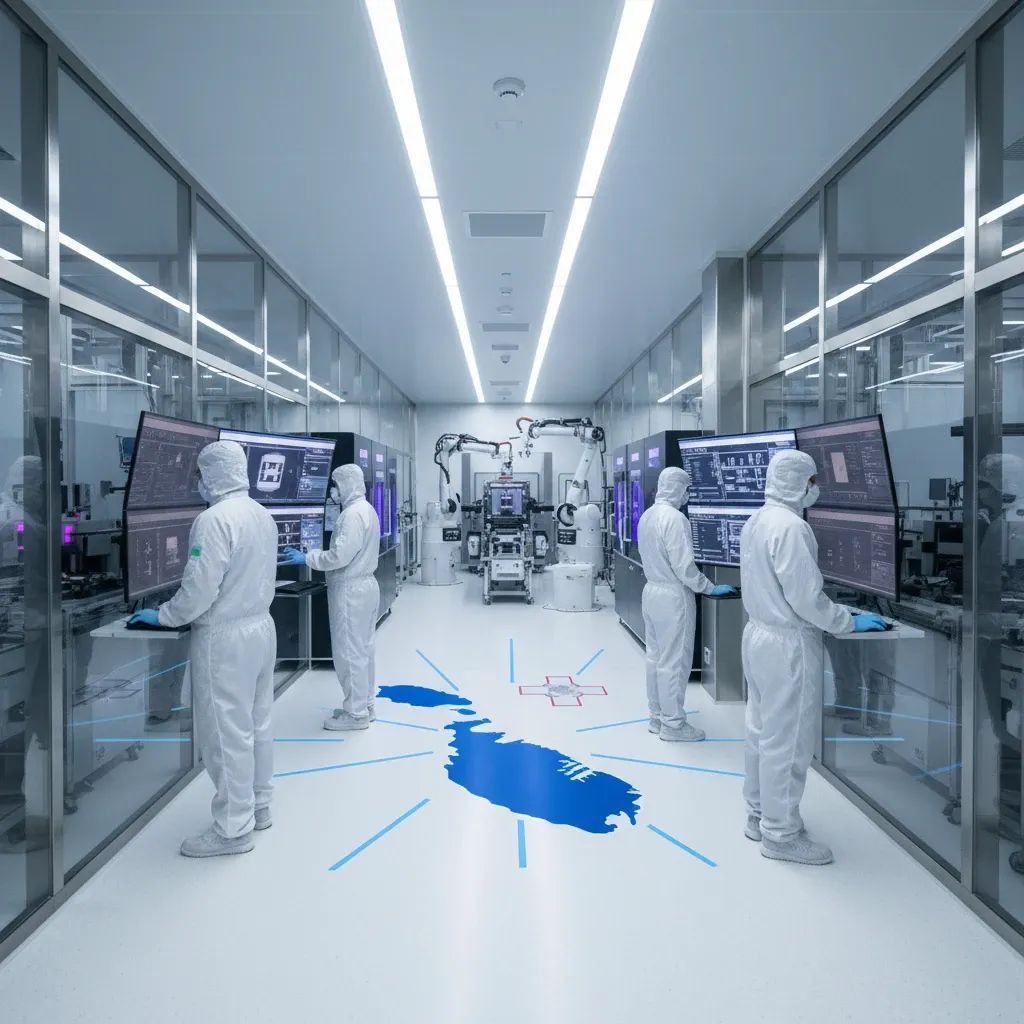
Malta allocated €100M for digital transformation and AI adoption in 2026, including free national AI certifications. But the pipeline feeding workers into these roles is cracked.
2026 educational outcomes revealed a significant crisis hiding behind headline growth. The results expose systemic weaknesses across the secondary education system, with only one in five students passing exams—a stark indicator that the education pipeline cannot supply the skilled workers an AI-driven economy demands.
Mathematics stands as the critical alarm bell. Physics registered severe failure rates, with large cohorts unable to achieve positive results. Even traditionally stronger subjects showed concerning performance gaps. The hybrid assessment model introduced in 2025—30% school-based, 70% exam—was supposed to offer a holistic view of capability. Instead, deteriorating outcomes point to systemic challenges including higher absenteeism and unequal socio-economic access to exam preparation.
This creates a structural problem for the economy. If Malta is targeting an AI-driven, digitally-transformed future, it needs STEM specialists. Yet Physics, Mathematics, and Computing—the foundation subjects—are failing larger cohorts each year. The government is offering higher stipends and scholarships for STEM students, but this is demand-side stimulus for a broken supply chain. Free summer revision classes and September resit sessions address the symptom, not the disease.
The National Education Strategy 2024–2030 emphasizes digital skills and inclusive learning, but implementation lags. Student choice in subject selection is influenced by perceived difficulty and limited early exposure to advanced science. Socio-economic background remains a decisive factor: disadvantaged students underachieve disproportionately in mathematics and reading. Translating policy papers into classroom results requires systemic change—teacher training, infrastructure investment, curriculum redesign—none of which moves quickly.
Geopolitical Crosscurrents: Where Growth Could Stumble
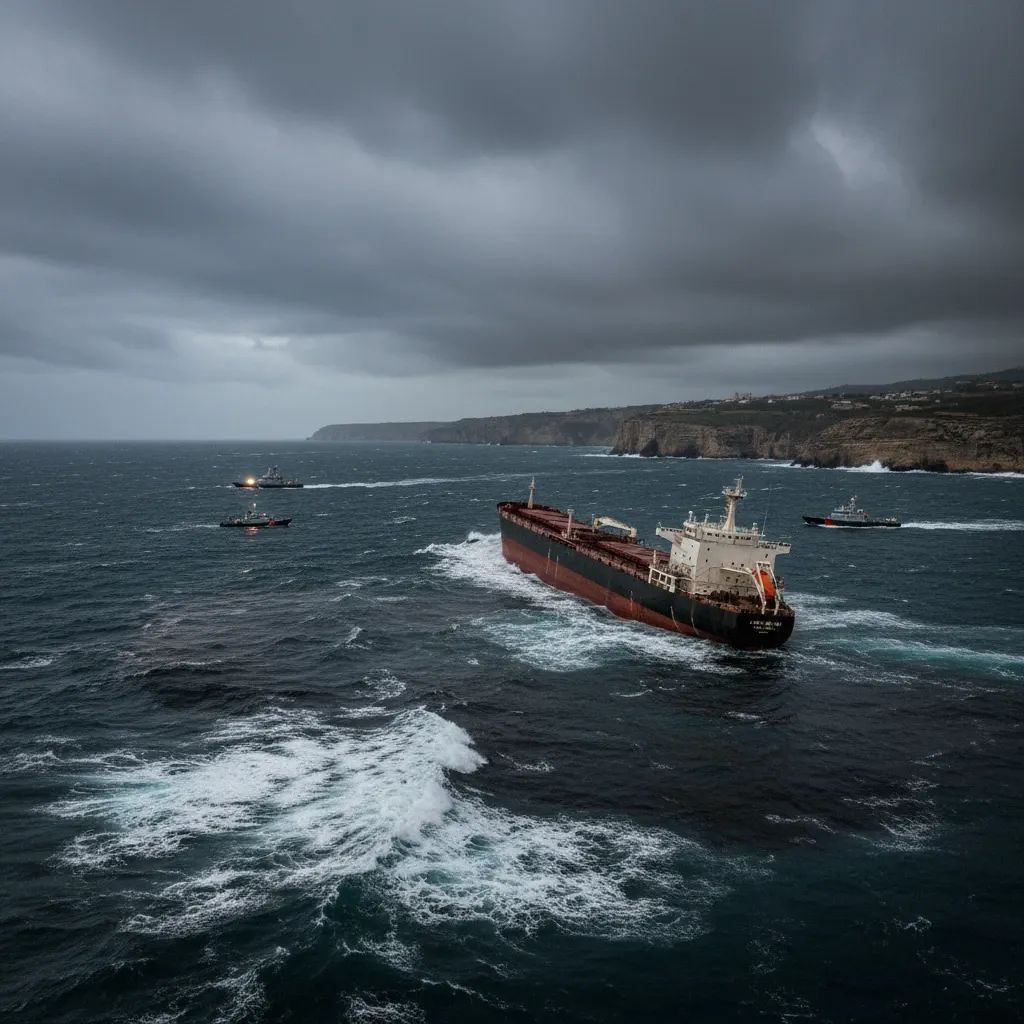
The Central Bank flagged inflation risks as "tilted to the upside," a careful phrase masking real vulnerability. Ongoing conflict in the Middle East threatens three of Malta's economic pillars: tourism, aviation, and shipping. A prolonged or intensified conflict could disrupt transport routes like the Strait of Hormuz, creating global supply bottlenecks that ripple through energy and food costs.
Headline inflation is forecast to reach 2.5% in both 2026 and 2027. The government's fixed energy prices shield domestic consumers from global volatility, but if commodity prices surge beyond current assumptions, that subsidy bill explodes—forcing sharp spending cuts elsewhere to hit EU deficit targets.
Conversely, Malta could capture diverted tourism. Wealthy Europeans increasingly redirecting holidays toward "safer" Mediterranean destinations is already observable in early 2026 booking patterns. This could offset lost aviation connections and cruise calls if the conflict spreads.
The real risk lies in a prolonged stalemate. Growth of 3.7% assumes relative stability; geopolitical shocks tend to arrive suddenly and asymmetrically. The Central Bank also tightened property-related lending safeguards, extending sectoral risk buffers to all private real estate exposures—a precautionary move signaling concern about the banking sector's continued dependence on property collateral in a potential downturn.
How Malta Stacks Against European Peers
Luxembourg leads the continent in family support, offering €311.37 per child monthly, flat-rate. Germany provides €255–€259 per child and recently introduced the Active Retirement Act, exempting €24,000 in income for working pensioners—a direct competitor to Malta's tax strategy. France runs an income-dependent system starting at €141.99 for two children, scaling upward. Hungary offers up to 40% income tax reduction for families with four or more children, plus housing subsidies. Croatia introduced a "13th pension" supplement and raised minimum pension guarantees to 106%.
Malta's approach sits in the middle tier: €250–€417 annually per child depending on income band, plus robust birth and adoption bonuses. But the zero-tax pension threshold is genuinely competitive—few EU members exempt pension income wholesale up to this level. Sweden is raising retirement ages and linking them to life expectancy, while Austria is tightening early retirement. Malta remains generous by comparison, though this generosity depends on sustained fiscal discipline.
The European Commission, in its 2026 Spring Semester package, emphasized energy security, housing affordability, and social protection for member states. Malta's deficit-reduction pace positions it well within these frameworks, even as it pursues growth-through-investment rather than austerity.
The Longer Game: Infrastructure and 2050
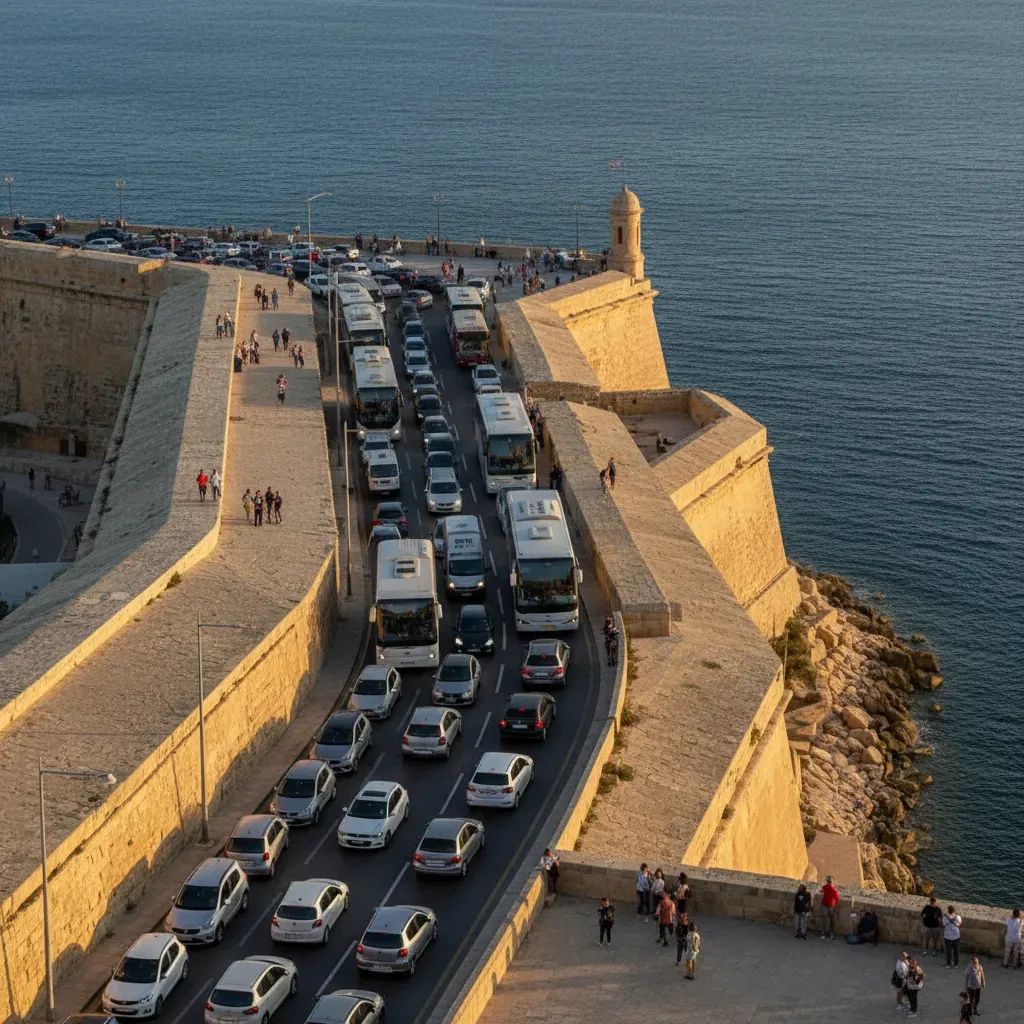
The budget outlined commitments to infrastructure—two new Gozo Channel ferries, a second electricity interconnector, mass energy storage, and renewable capacity. A Malta Vision 2050 project, compiled by foreign experts, is underway, though details remain sparse. Expectations center on climate adaptation, digital resilience, and transport modernization.
By end-2026, all public transport in Gozo is expected to be electric—a concrete marker of the green transition. The broader strategy aims to decouple energy costs from global commodity prices by scaling wind and solar, a move both economically and politically shrewd given Middle East volatility.
Whether infrastructure pledges materialize on schedule is uncertain. Malta's track record on major projects shows both successes (ferry network modernization) and delays (metro system). Execution capacity, contractor availability, and permit complexity often stretch timelines. The government is likely prioritizing visible wins—bonuses, tax cuts, loan schemes—before tackling complex infrastructure that requires multi-year coordination.
The Verdict: Consumption Over Caution
Malta's 2026 fiscal strategy represents a conscious choice: generous household support funded by revenue growth rather than spending cuts. It's working in the narrow sense—deficits are shrinking, growth is outpacing peers, and wage earners are spending freely. But it's masking a deeper fragility.
The education system cannot supply the skilled workers an AI-driven economy demands. Geopolitical shocks could crater tourism and shipping overnight. Infrastructure promises may slip. Property lending remains a vulnerability if interest rates stay elevated.
For now, residents are living through a rare moment of fiscal generosity. Pensioners enjoy tax-free income, young families bank bonuses, and first-time buyers access cheap loans. The question isn't whether the strategy works today—it clearly does. The question is whether the foundations hold when growth inevitably slows, education results continue deteriorating, and the bill for energy subsidies comes due.