
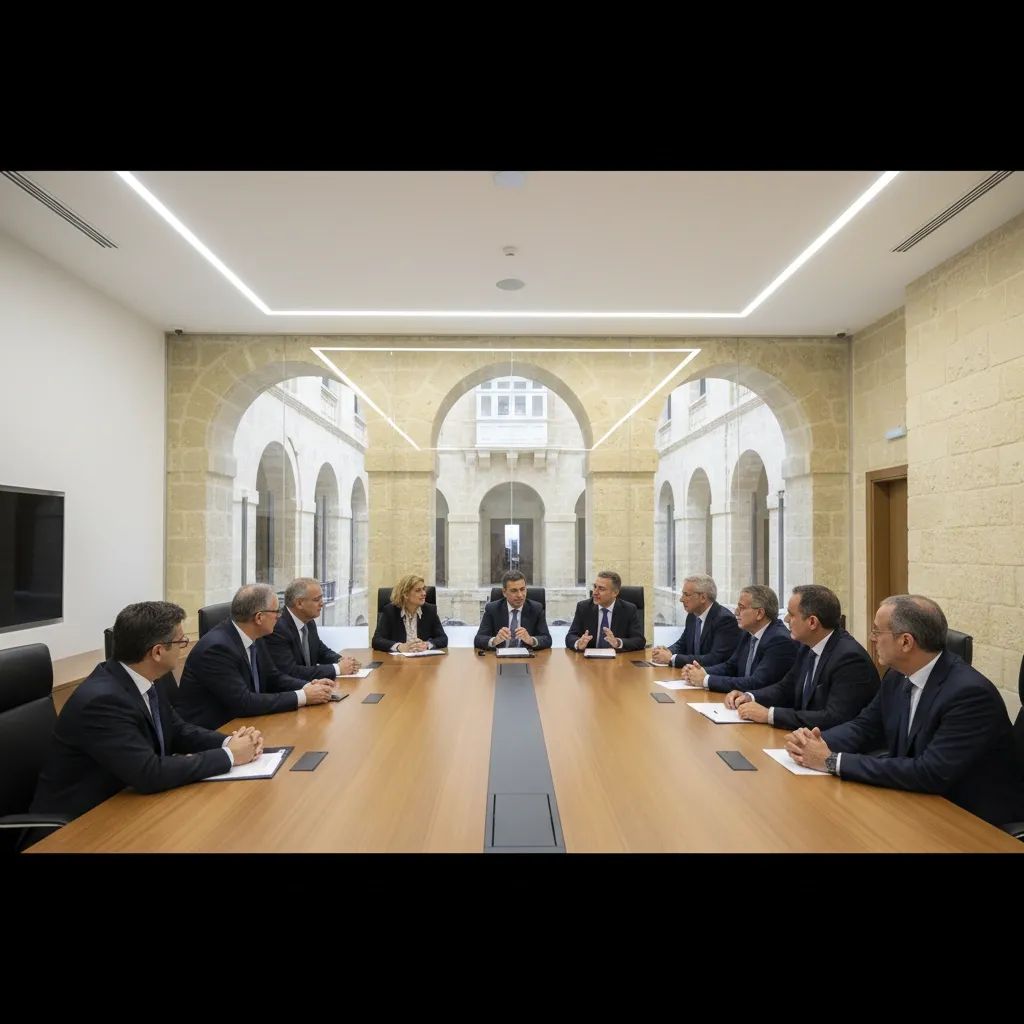
The Decentralisation Gamble: Malta's Opposition Proposes Radical Shift in Local Power
Malta has always run government like a tightly held family business—money and decisions flow from Valletta, and municipalities take what they're given. On Wednesday, the Momentum party unveiled a governance overhaul that would fundamentally disrupt this arrangement, proposing to hand municipalities real fiscal muscle while imposing parliamentary supermajorities on senior public posts to thwart partisan appointment cycles.
The significance is straightforward: under these proposals, local councils would generate income from property-rental licensing schemes and traffic violations, effectively breaking what amounts to financial dependency unique in the European Union. Simultaneously, appointing a judge, broadcast regulator, or anti-corruption czar would require consensus across party lines—a mechanism that, theoretically, prevents any single faction from colonising the state.
Why This Matters
• Local councils currently receive 93% of their funding from central government—well above the EU average of 50%—leaving them unable to maintain roads, collect waste, or fund public spaces without annual political negotiation.
• Recording and publishing interview scoring for all public appointments would create an auditable trail, allowing citizens to verify whether jobs went to qualified candidates or party connections.
• An independent media regulator would theoretically shield public broadcasting from the government's editorial influence, though international experience shows such bodies can struggle if political culture remains polarized.
The Funding Stalemate
To understand why Momentum is targeting local budgets, consider the structural reality: Maltese municipalities operate under the tightest financial leash in the EU. Local councils here generate approximately 8% of their own revenue, compared with a continental average of 53%. In Switzerland, France, and Scandinavian democracies, municipalities control between 70% and 80% of their funding streams and can plan infrastructure years ahead. Malta's councils cannot.
The Malta Ministry of Finance disburses annual allocations using a formula that supposedly accounts for local characteristics and service needs, but councils have zero say in the amount and timing. Borrowing requires ministerial approval. Hiring staff requires budgetary clearance. Maintaining a playground requires paperwork that travels between local councils and Valletta.
Momentum's remedy is practical: allow municipalities to retain Airbnb licensing fees paid by property owners and platform operators. Channel a slice of traffic fines collected by police directly to road maintenance budgets. Distribute funding based on measurable variables—tourism pressure on local infrastructure, congestion levels, environmental contamination—rather than opaque bureaucratic formulas. None of this grants councils the power to levy local taxes, a step too politically hot in Malta's current climate. But it would generate enough independent revenue to allow municipalities to patch potholes without waiting for Valletta's blessing.
The practical effect, if implemented, would be immediate. A council in a high-tourism area like Sliema or Mellieħa could use Airbnb revenue to hire waste collection crews during peak summer months. A Birkirkara or Mosta council could deploy traffic fine revenue to fix residential streets without lobbying the central ministry. Accountability would shift: residents could hold their mayor directly accountable for pothole delays, rather than pointing fingers at distant bureaucrats in the capital.
The Council of Europe has nudged Malta on this point repeatedly. In formal assessments of the nation's 2019 local government reforms, Brussels-based bodies praised Malta's structural approach but flagged "excessive central supervision" and a need to expand municipal revenue autonomy. Momentum's proposals address this directly.
The Appointment Puzzle
Where consensus becomes thornier is on merit-based public appointments. Momentum proposes that any senior post requiring parliamentary confirmation—judges, ombudspersons, anti-corruption commissioners, regulatory board chairs—must secure a two-thirds parliamentary supermajority. For roles outside parliamentary approval, all interviews would be recorded and publicly documented, with scoring rubrics and competence criteria published for scrutiny.
The intent is transparent: prevent any single governing faction from stacking critical institutions with loyalists. In principle, this mirrors guardrails used in democracies where opposition parties need real power over judicial or oversight appointments.
But the international evidence is mixed. Hungary offers a cautionary precedent. After securing a two-thirds majority in 2010, the ruling party rewrote constitutional court appointment procedures, replacing a cross-party consensus requirement with rules allowing the government to install political allies. The result: erosion of judicial independence and consolidation of executive power. Supermajorities work as checks only if political culture remains healthy and competitive.
Malta's current parliament is not deadlocked. The ruling Labour government holds a commanding majority. If Momentum or the opposition Nationalist Party wins an election and secures a two-thirds supermajority themselves, this brake evaporates. The rule only constrains a single governing party if the opposition is large enough to block it—a condition that depends on electoral arithmetic, not institutional design.
That said, the recording and publishing component is more robust. If implementation is rigorous, journalists and opposition MPs could scrutinize interview transcripts, scoring sheets, and competence criteria. If a candidate was ranked third but appointed first, the public record would show it. This creates political liability for appointment boards, even if it doesn't eliminate political pressure.
Public Broadcasting and the Patronage Problem
The governance crisis most visible to ordinary Maltese residents is the captured state broadcaster. Public Broadcasting Services has long been accused of functioning as a government mouthpiece, particularly during election cycles. In 2025, the Nationalist Party documented that PBS's new discussion programming featured presenters closely aligned with Labour figures or holding government posts. The opposition pointedly compared PBS to "Super One 2," referencing Labour's own partisan television channel.
In January 2026, the scandal sharpened. The government retroactively increased PBS's annual subsidy by 60%, committing €9.2 million yearly through 2029 as part of a broader €46 million public service obligation agreement. This massive injection of taxpayer funds was never formally announced to parliament or the public at the time it was agreed.
The Broadcasting Authority, which theoretically regulates PBS independently, rejected opposition complaints about partisan content. When the Nationalist Party flagged a Budget 2026 promotional segment featuring the Finance Minister, the Authority dismissed it as "informative" rather than political. Critics contend this shows the Authority has become a rubber stamp rather than a referee.
Momentum's solution is to create a genuinely independent media regulator staffed without political party representatives and insulated from government interference. This sounds reasonable until you examine implementation. Who appoints the regulator? If the government does, independence is cosmetic. If parliament does, a supermajority rule becomes necessary—which circles back to the appointment mechanism question.
The Discrimination and Family Life Angle
Beyond governance machinery, Momentum includes constitutional amendments protecting citizens from age-based and disability discrimination. This would enshrine anti-discrimination principles above statutory law, making them harder for future governments to erode or water down. Current practice has left space for forced retirement and unequal pension treatment based on age, practices that constitutional protection would prohibit.
The party also proposes workplace reforms enabling women to balance career advancement and family obligations—flexible schedules, parental leave extensions, subsidized childcare access. These align with EU directives but require regulatory changes and employer cooperation to take root. In Malta's labor market, such policies remain inconsistently implemented, particularly in the private sector.
The Political Reality Check
Momentum's proposals read as a comprehensive governance reset—decentralise budgets, require consensus for appointments, liberate the media, strengthen civil rights. Whether they move beyond electoral rhetoric depends on Malta's political math and the appetite among larger parties to cede institutional control.
The Labour Party currently benefits from budget centralization, appointment influence, and broadcaster leniency. Surrendering these advantages requires electoral defeat or internal conviction that democratic institutions matter more than partisan advantage. The Nationalist Party, when in government, had similar incentives to concentrate power.
Real change typically happens when a party loses power and suddenly discovers the wisdom of institutional checks. Until then, such proposals test idealism against interests. Momentum's framing—emphasizing "practical solutions" to governance dysfunction—suggests the party understands this tension. Whether Malta's voters do remains the open question heading into 2026.


