
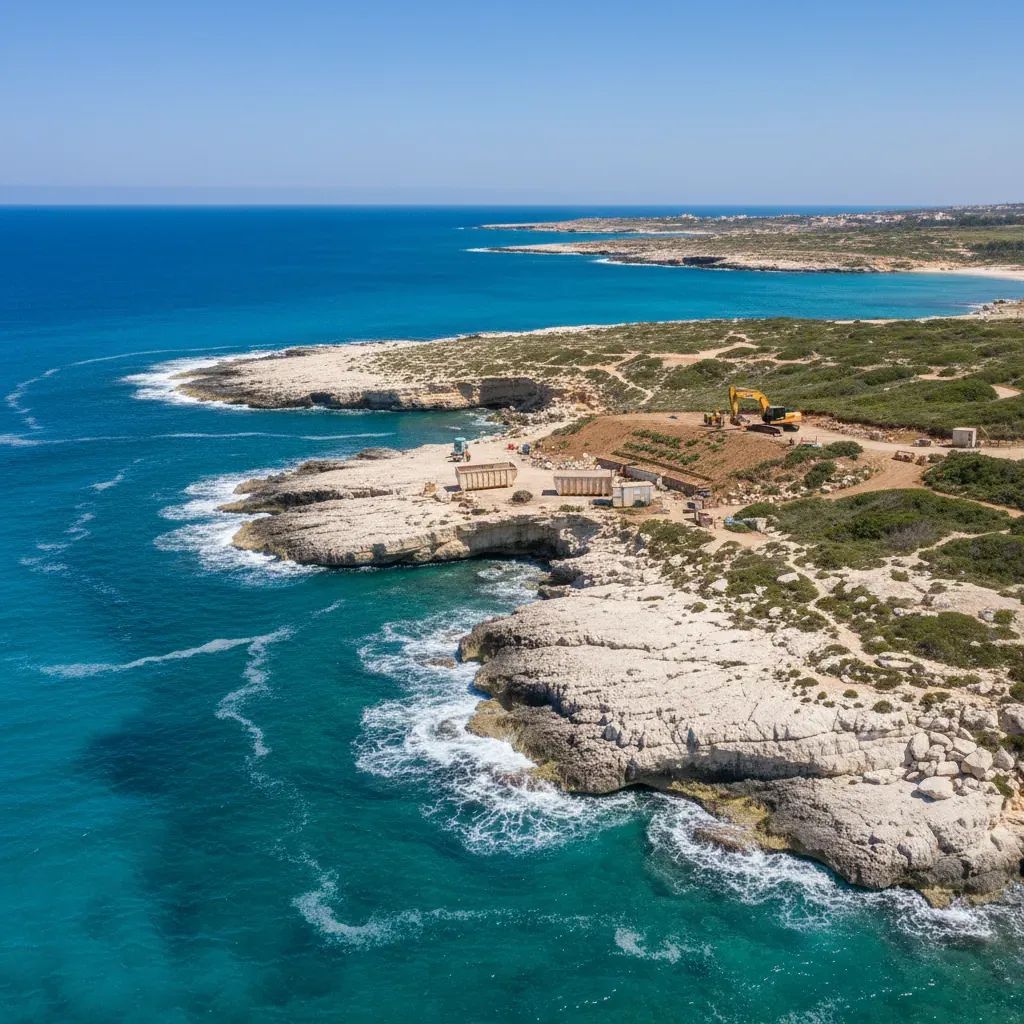
The Malta government's decision to shutter commercial development at White Rocks and instead designate the sprawling Pembroke complex as public parkland represents a permanent pivot away from the kind of profit-driven land conversion that has consumed much of the island. But as cleanup crews prepare the site for its new public identity, photographer Pierre Cuschieri has captured what may be the final testimony to decades of unregulated cultural expression—the thousands of murals, tags, and street art pieces that transformed decaying military barracks into an informal gallery.
What This Means for Residents
Malta's largest new public park will be completely free to access, offering one of the most substantial stretches of recreational green space on the island. Located in Pembroke, the site will provide coastal views, walking trails, and family-friendly gathering areas—a significant addition to Malta's limited public green space. However, the opening date remains unclear, with government statements offering only vague timelines of "soon" and "not-too-distant future."
For now: The site is currently closed to the public during cleanup and preparation work. Check the Planning Authority website and official government announcements for updates on opening date and access details. Community consultations on park design are expected to be announced through local Pembroke council channels.
The Cleanup: Scale of the Reclamation
Between mid-February and late March 2026 (projected dates), cleanup operations removed approximately 7 million kilograms of waste—mostly construction debris, abandoned materials, and decades of accumulated refuse. The operation required 225 truck trips and demonstrated the sheer scope of deterioration: structural components too compromised to salvage, contaminated soils, and skeletal remains of infrastructure from the complex's various historical uses as military housing, failed holiday resort, and informal cultural space.
From Military Quarters to Open Canvas
White Rocks was constructed in the 1960s as married officers' quarters during Malta's role as a strategic British naval base. After the British military presence contracted in the mid-1990s and a short-lived tourism scheme failed, the site sat empty for nearly three decades. By the early 2000s, graffiti artists reclaimed the structures. What began as isolated tags escalated into a full artistic occupation, with international crews and local Maltese talent covering walls with elaborate compositions, political statements, and experimental pieces—some spanning entire three-storey facades.
Cuschieri's photographs document this unintended cultural layer with precision, capturing the interplay between cracked concrete, rusted metal, and deteriorating plaster against vivid pigment and careful compositional work. The resulting archive—titled "Echoes on Broken Walls"—functions as both artistic statement and historical record.
The Shift to Public Land
Prime Minister Robert Abela announced the White Rocks conversion in November 2025 as part of Budget 2026. The decision to designate White Rocks as a national park signaled a strategic commitment: permanent public ownership and access, with a binding guarantee that no commercial development would ever occur on the site. This represents a meaningful departure from the speculative property cycles that have characterized Malta's landscape, effectively removing substantial land from the commercial development market and returning it to public use.
What's Being Lost and What Might Remain
The fate of White Rocks' artistic interior remains unclear. The Kamra tal-Periti (Chamber of Architects Malta) has advocated for preserving the modernist military buildings, arguing that adaptive reuse could create hybrid cultural and recreational spaces. The graffiti occupies different legal and cultural standing—celebrated in isolated contexts, but without formal statutory protection or clear constituency within government planning discussions.
This creates a preservation asymmetry. The buildings might survive through adaptive reuse; the street art almost certainly will not. Painted walls can be whitewashed quickly. When park designers finalize their layout, there is no mechanism requiring that existing art be considered, preserved, or even documented beyond Cuschieri's work. The temporary becomes permanent once erased.
Recreation and Practical Access
Malta's public green space ranks among the tightest in Europe. Parks are fragmented and often small. White Rocks offers something rare: genuine acreage in a coherent location, accessible without fees. The site's elevation and northern exposure provide coastal views. Its scale allows for varied recreational activities—walking routes, gathering spaces, family zones—without the compressed density of most Maltese public areas.
For families without private gardens (the majority of the island's population), this represents a material improvement in available amenity. However, residents should note: no opening date has been announced, no detailed design has been made public, and no facility cost estimates have been disclosed. The government's vague timeline suggests residents should prepare for a longer wait than "soon" might imply.
The Archival Function
Cuschieri's photographs create an evidentiary record of a specific moment: when White Rocks existed in liminal suspension, neither abandoned nor reclaimed, but actively claimed by a community of artists operating outside official structures. That moment is ending. The murals will survive the national park transition only if intentionally integrated into the design—a choice requiring deliberate advocacy and budget allocation. More likely, they will be painted over or obscured by landscaping. In several years, the artistic layer will exist only in documentation and memory.
This outcome follows from choices about what to preserve and who to consult. For now, it appears to follow the simpler path: clean slate and fresh design. The national park will deliver recreational access, environmental remediation, and public amenity. What it won't deliver is preservation of the spontaneous cultural practice that flourished there. That chapter closes as preparation work proceeds.


