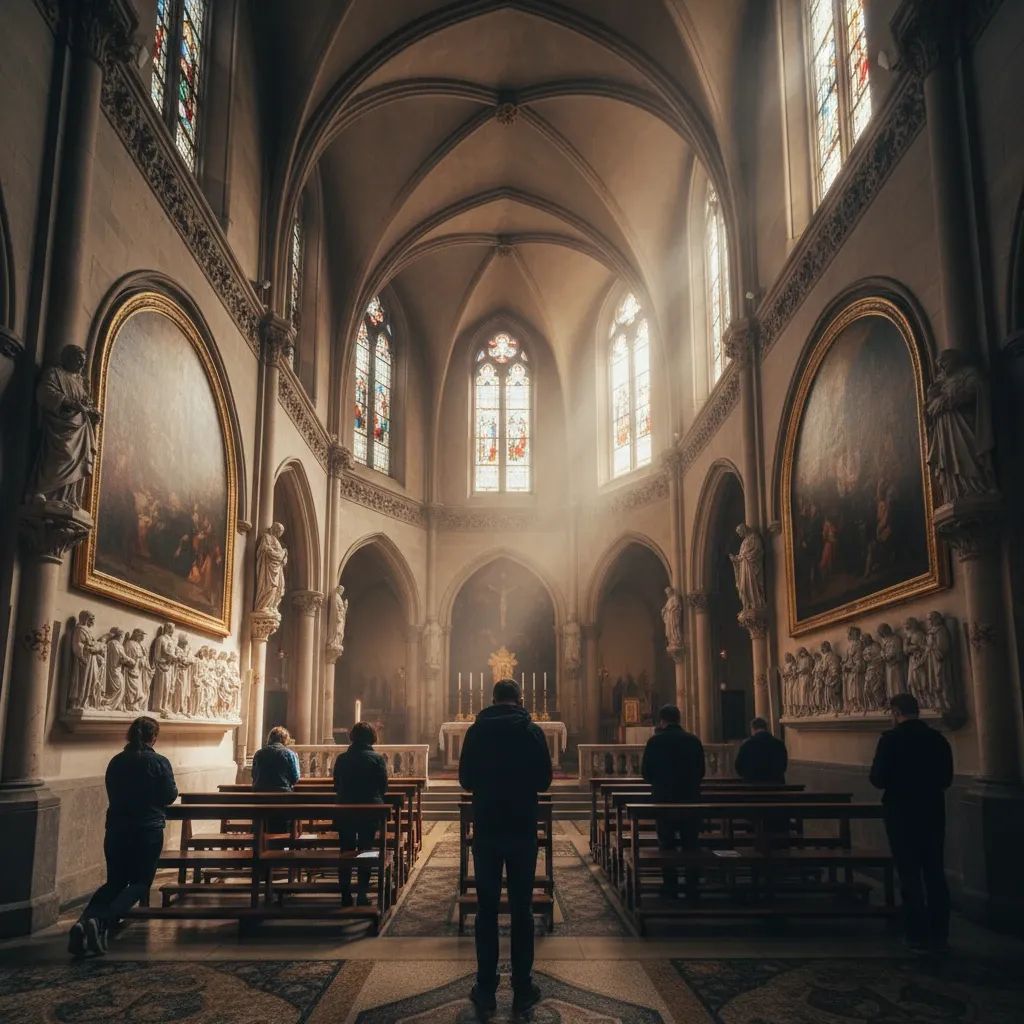
Malta's earliest exhibition records are vanishing—and nobody's photographing what remains.
The gap between what happened in Malta's art world between 1900 and 1939 and what we can actually see today is striking. While periodicals from the era mention painters, sculptors, and craftspeople exhibiting regularly at venues like the Governor's Palace, almost no photographs survive to show how those shows actually looked: how paintings hung on walls, where sculptures stood, or what the crowds saw when they walked through the doors. The Malta Art Amateur Association alone organized roughly 30 major exhibitions across three decades, yet finding a single picture of one is nearly impossible.
Why This Matters Today to Malta Residents
For residents interested in understanding the island's cultural heritage, this gap directly affects how local museums present historical collections and shapes our understanding of the artistic lineage of contemporary Maltese artists working today. When visual records disappear, the connections between past and present become harder to trace. This missing documentation influences exhibition decisions at institutions like MUŻA, impacts how art history is taught in local schools, and affects the way Maltese artists themselves understand their creative inheritance.
Why This Matters
• A century of artistic activity is nearly invisible: Hundreds of artists worked in Malta during the early 20th century, but their exhibitions leave almost no visual trace, making it difficult to understand how taste evolved or to properly credit forgotten creators.
• Exhibition practice is undocumented: Curators today can only guess how galleries were arranged or what aesthetic principles governed how work was displayed during the colonial period.
• Cultural continuity is broken: Without photographs, the connection between pre-war artistic traditions and modern practice becomes speculative rather than grounded in evidence.
The Artists and Venues That Shaped Malta's Cultural Life
Between roughly 1908 and 1938, the Malta Art Amateur Association functioned as the island's primary exhibition platform. The organization attracted both professionals and hobbyists—painters like Edward Caruana Dingli, who designed Malta's pavilion poster for the 1926 Wembley Empire Exhibition, exhibited alongside lesser-known figures whose names survive only in newspaper reviews. His brother Robert Caruana Dingli showed alongside them. Sculptors including Antonio Sciortino, who had already built an international reputation in Rome and the United States before returning to Malta during World War II to direct the Museum of Fine Arts, displayed work in these venues. The younger sculptor Vincent Apap, trained under Sciortino in Rome, began showing locally in the 1930s.
The Governor's Palace served double duty: it was both the seat of British colonial authority and a cultural showcase. This arrangement was deliberate—the administration wanted to cultivate an educated, artistically aware Maltese elite while maintaining firm control over public space. Religious painters like Giuseppe Calì, whose commissions still decorate churches across Malta, almost certainly participated, as did Giorgio Preca, who would later become a pioneer of modern art. Lazzaro Pisani and other established figures also moved through these temporary shows.
Beyond painting, the association's exhibitions included decorators, metalworkers, and lacemakers. Maltese silverwork—a tradition rooted in the Knights of St. John period—produced religious objects and ornamental pieces for these displays. Gozo lacemaking, which had become a distinct regional craft and export commodity by the 1800s, blurred the line between fine art and applied craft in these venues. The work of these artisans was rarely documented by individual names; they appear in catalogues and press notices primarily as categories, not personalities.
The Peculiar Role of Wartime Craft
World War I introduced a strange exhibition phenomenon. Enemy prisoners-of-war held in Malta with artistic skills created wooden boxes, metal ornaments, bone carvings, plaster figures, and woven items. These works appeared in temporary bazaars open to the public, where they could be purchased. From a practical standpoint, the exhibitions were a form of prisoner employment. Culturally, they exposed Maltese audiences to Central European artistic techniques and aesthetic traditions they would never have encountered otherwise.
How Malta Competed on the Imperial Stage
Temporary exhibitions in Malta also served a practical purpose: they functioned as preliminary competitions for international showcases. Before Malta could appear at imperial exhibitions in London—the 1886 Indian and Colonial Exhibition, later the 1926 Wembley Empire Exhibition—local artists and producers had to be selected through competitive displays held on the island itself.
The Wembley pavilion became a cultural artifact itself. Built to resemble a Maltese fort, it contained three rooms. One celebrated "Industrial Malta" and featured contemporary paintings by Robert Caruana Dingli. A second focused on "Malta Under the Knights," and a third on "Prehistoric Malta." These exhibitions functioned simultaneously as propaganda for British colonial governance—showing Malta as a loyal, productive outpost—and as marketing vehicles for Maltese art and goods to audiences beyond the Mediterranean. For participating artists, it was a rare opportunity to reach viewers outside island society, though the selection process inevitably favored work that reinforced colonial narratives.
Where the Records Actually Live (And How to Access Them)
The National Archives of Malta holds general photographic collections, including the Malta National Picture Archive, established in 2003. However, images specifically depicting art exhibitions from the pre-war era remain exceedingly rare. The Malta Society of Arts, which succeeded the Malta Art Amateur Association, maintains an archive of letters, meeting minutes, and organizational records that chronicle the group's history. Residents interested in exploring these records can contact the Malta Society of Arts directly or inquire at MUŻA (Malta's National Community Art Museum) in Valletta.
MUŻA, located in Valletta, preserves the national art collection from prehistory to the present day and welcomes research inquiries from residents. The institution maintains regular visiting hours and can guide researchers toward available exhibition catalogues and documentation. Fondazzjoni Patrimonju Malti operates a long-term digitization effort focused on Malta's Modern Art Movement, including exhibition catalogues and related documentation, and their work is increasingly accessible online. The National Library of Malta, situated in Valletta, holds historical archives from the Order of Malta, which occasionally contain supplementary information on cultural events. A private collection called The Archaic Archives, located in Mosta (a central town in Malta's northern region), houses publications and artifacts related to Malta's Pan-European cultural history, though access varies and advance contact is recommended.
Residents wishing to engage with these institutions can begin by visiting MUŻA's website or contacting the Malta Society of Arts through local cultural directories. Most archives request advance notice for research visits, allowing staff to prepare relevant materials.
Why the Absence of Pictures Matters
Exhibition design communicates. The spacing of works, their placement relative to light, whether sculptures were isolated or grouped, how viewers flowed through rooms—all of this reveals what artists and curators valued aesthetically. Without photographs, that information is lost.
For researchers reconstructing the reputations of forgotten artists, the lack of visual evidence creates a compounding problem. You can find a painter's name in a catalogue or a newspaper notice, but you cannot see what they actually showed or how their work compared to contemporary displays. For modern curators planning exhibitions of historical Maltese art, there is no visual precedent to draw from—only inference and guesswork.
The absence also complicates museum practice. When the National Museum of Fine Arts began assembling its collection in 1923 under Vincenzo Bonello, the first fine arts curator, it created a permanent repository for historical works. Yet temporary exhibitions from the same era, which displayed both established and emerging artists, left almost no photographic record. It is as if one form of cultural display—the permanent collection—was deemed worth documenting, while the other—the temporary show—was considered ephemeral enough to ignore.
What This Reveals About Cultural Memory—And Modern Practice
The story of Malta's vanished exhibition photographs is a story about what we choose to preserve and what we allow to disappear. The painters, sculptors, and artisans who exhibited at the Governor's Palace a century ago shaped how Maltese audiences understood visual culture. Edward and Robert Caruana Dingli documented daily life and local traditions. Antonio Sciortino and Vincent Apap demonstrated what international training looked like when imported back to Malta. Decorative craftspeople kept living traditions visible and valued. Together, they created the context in which modern Maltese art would eventually emerge.
Yet because someone did not photograph those exhibitions, the physical evidence of their contribution has nearly evaporated. Today's Maltese cultural institutions photograph contemporary exhibitions routinely—digital documentation is standard practice. That difference means future researchers will know what art looked like in 2026 in a way we cannot know what it looked like in 1926.
Modern Maltese artists increasingly recognize this historical void. Contemporary artists working today frequently reference the challenge of understanding their artistic lineage when visual records are incomplete. Recent exhibitions at MUŻA have begun attempting to reconstruct elements of early 20th-century practice through archival research, scholarly essays, and installation-based interpretations. These efforts represent an emerging commitment to bridge the gap between historical records and living artistic practice—acknowledging both what was lost and what can still be recovered through deliberate effort and creative reimagining.
What Residents Can Do Now
For residents interested in recovering Malta's artistic past, the lesson is practical: cultural preservation is not automatic. It requires deliberate action. MUŻA, the Malta Society of Arts, the National Archives, and Fondazzjoni Patrimonju Malti welcome inquiries from researchers and community members. Visiting these institutions, accessing their online resources where available, and engaging with contemporary exhibitions that address historical themes all contribute to keeping this conversation alive. Expectations should be modest given how little visual material survived, but what remains must be pieced together from fragmentary sources: a newspaper mention, a name in a printed catalogue, a surviving work that might have been exhibited. The challenge is making that incomplete puzzle coherent enough to matter—and residents who engage with local cultural institutions are part of that ongoing effort.