Malta's Planning Authority has opened the floor for public input on a new regulatory framework designed to stop temporary sports infrastructure from morphing into permanent concrete—a chronic issue in the island's rapidly urbanizing rural zones.
The consultation, announced April 21 and running until May 12, 2026, targets outdoor sporting events and facilities in rural areas. The impetus is clear: an uptick in applications for obstacle courses, trail events, and similar activities has exposed a regulatory vacuum, leaving the Planning Authority without consistent criteria to evaluate whether a "temporary" permit is genuinely temporary or a backdoor for incremental development.
Why This Matters
• Removability becomes law: All structures must be dismantlable, with clear operational parameters to prevent permanent urbanization of Out of Development Zones (ODZ)—areas designated to protect Malta's countryside.
• Submit feedback now: Public comments close May 12, 2026 via www.publicconsultation.gov.mt. Technical clarifications can be sent to temporary.sports@pa.org.mt.
• Affects future permits: The guidelines will reshape how the Planning Authority assesses proposals for rural sporting facilities, from mud runs to cycling events.
The Urbanization Risk: From Temporary to Permanent
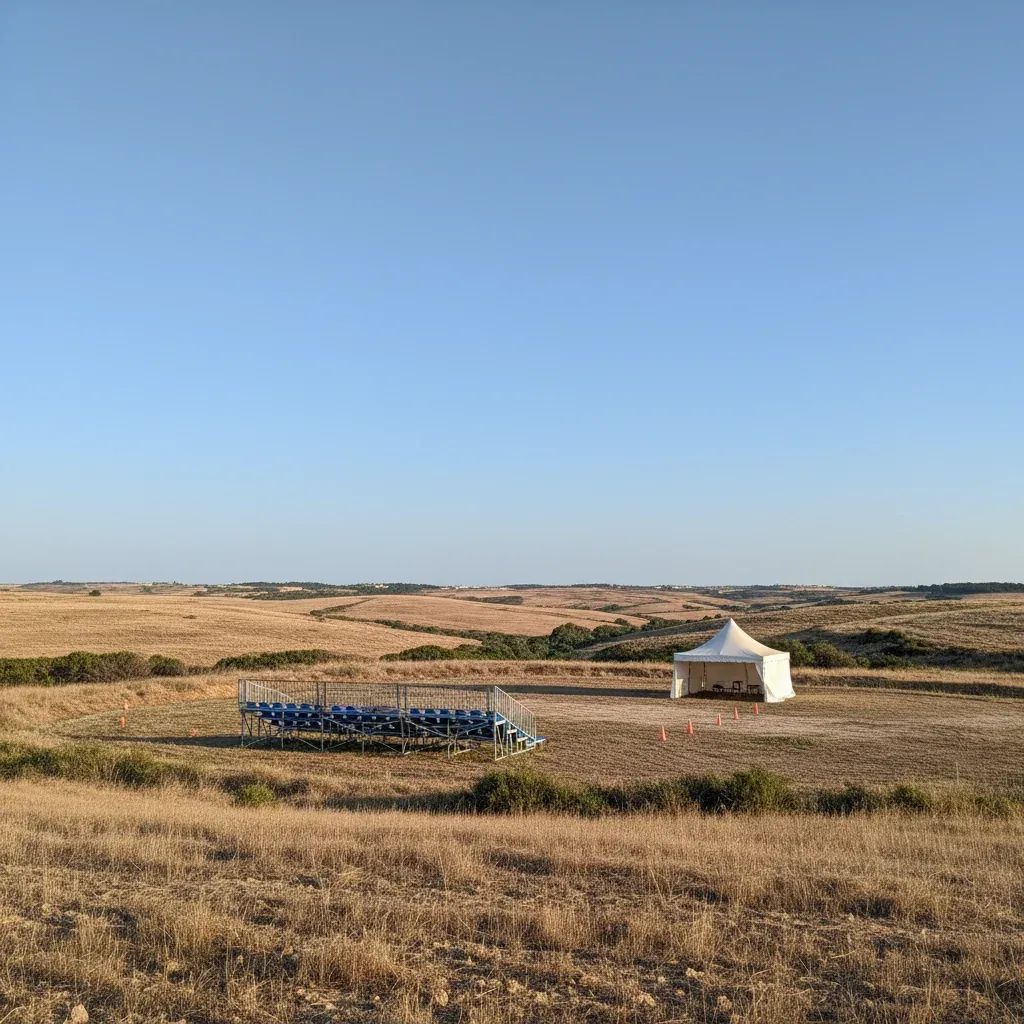
Planning Minister Clint Camilleri framed the consultation as an environmental safeguard. The Ministry's statement emphasized the need to allow "legitimate and low impact uses" of rural land while ensuring permits don't become a backdoor to development. The problem is well-documented: what begins as a 28-day event infrastructure—portable bleachers, modular changing rooms, access roads—can become permanent features if oversight is lax.
Malta has struggled with this pattern. Environmental advocates have long criticized how commercial and quasi-permanent structures creep into Out of Development Zones (ODZ), particularly around sports facilities. A separate consultation on Local Plans revealed proposals allowing 40% of sports facility floorspace for purely commercial use—bars, spas, hostels—a move NGOs warn could accelerate development in protected rural areas. The new temporary structures guidelines aim to draw a sharper line.
The core principle: removability. Under the proposed framework, applicants must demonstrate that all infrastructure can be dismantled and the site restored to its original state. This aligns with practices across Europe, where temporary structures are defined by strict time limits—often 180 days—and mandatory site remediation.
What This Means for Organizers and Landowners
Event organizers and rural landowners face clarity but also stricter compliance. The Planning Authority has lacked detailed operational criteria, leading to inconsistent decisions and frustration on both sides. The new rules will spell out parameters for site selection, duration, structural specifications, and environmental impact.
Compliance requirements will likely include:
• Proof of removability: Engineering documentation showing structures can be removed without leaving permanent foundations or access infrastructure.
• Time-bound permits: Strict enforcement of duration limits, with penalties for extending beyond approved dates.
• Environmental assessments: Particularly for events in sensitive rural or coastal zones.
• Site restoration bonds: Financial guarantees to ensure land is returned to its pre-event condition.
Similar regulations exist in the United Kingdom, where temporary structures under 100 m² may bypass full planning permission but still require adherence to building standards. Even short-term structures must meet safety requirements.
For Malta, the stakes are higher. The island's limited land area and development pressure make every rural hectare contested ground. The guidelines are, in effect, a protection against the kind of gradual urbanization that has already affected parts of the Maltese countryside.
What This Means If You Live Near Rural Areas
If you live adjacent to rural areas where events might be organized, the new guidelines offer protection. Residents can expect:
• Clearer enforcement: The Planning Authority will have explicit criteria to refuse permits that don't meet removability standards.
• Site restoration accountability: Organizers must post bonds ensuring land is returned to its original state—reducing the risk of abandoned infrastructure.
• Duration limits: Events won't extend indefinitely; permits will specify exact dates and timeframes.
• Reporting mechanisms: Residents can report violations of permit conditions to the Planning Authority for enforcement action.
The guidelines recognize that rural residents deserve a say in how their neighbourhoods develop, even temporarily.
A Continent-Wide Shift: Rethinking Permanence
Malta's move reflects a broader European recalibration. Major sporting events are being reimagined as temporary overlays rather than opportunities for sprawling new construction. The Paris 2024 Olympics utilized 95% existing venues, converting the Athletes' Village into 2,800 mixed-tenure homes post-Games. The lesson: temporary doesn't mean poor quality, and permanence isn't always progress.
Malta, with its acute spatial constraints, has every reason to adopt this philosophy. The consultation represents a chance to protect rural land while accommodating legitimate sporting activity.
The Broader Debate: Sports Facilities and Development
The timing of this consultation matters. It arrives amid ongoing debate over the commercialization of sports facilities registered with SportMalta. Proposals would allow sports organizations to dedicate 40% of facility floorspace to purely commercial activities while maintaining 60% for sports use.
Environmental NGOs have raised alarms, arguing this incentivizes development in ODZ areas under the guise of sports infrastructure. The temporary structures guidelines can be read as a counterbalance: tightening rules on short-term permits while the government weighs looser standards for long-term sports facilities.
What Happens Next
Public feedback will be compiled and reviewed by the Planning Authority before the guidelines are finalized, likely later this year. Once adopted, they will form part of the Strategic Plan for Environment and Development (SPED) framework, binding future permit decisions.
For residents in rural areas, the guidelines offer protection from gradual sprawl. For event organizers, they represent new requirements—but also a clearer roadmap. And for the Planning Authority, they provide the legal scaffolding to enforce consistency.
The consultation period is brief, but the implications are long-term. Malta's rural landscape is finite. Every temporary structure that becomes permanent is countryside lost. The question now is whether the guidelines will be enforced effectively.
Submit comments by May 12, 2026 at www.publicconsultation.gov.mt or email temporary.sports@pa.org.mt for technical clarifications.