
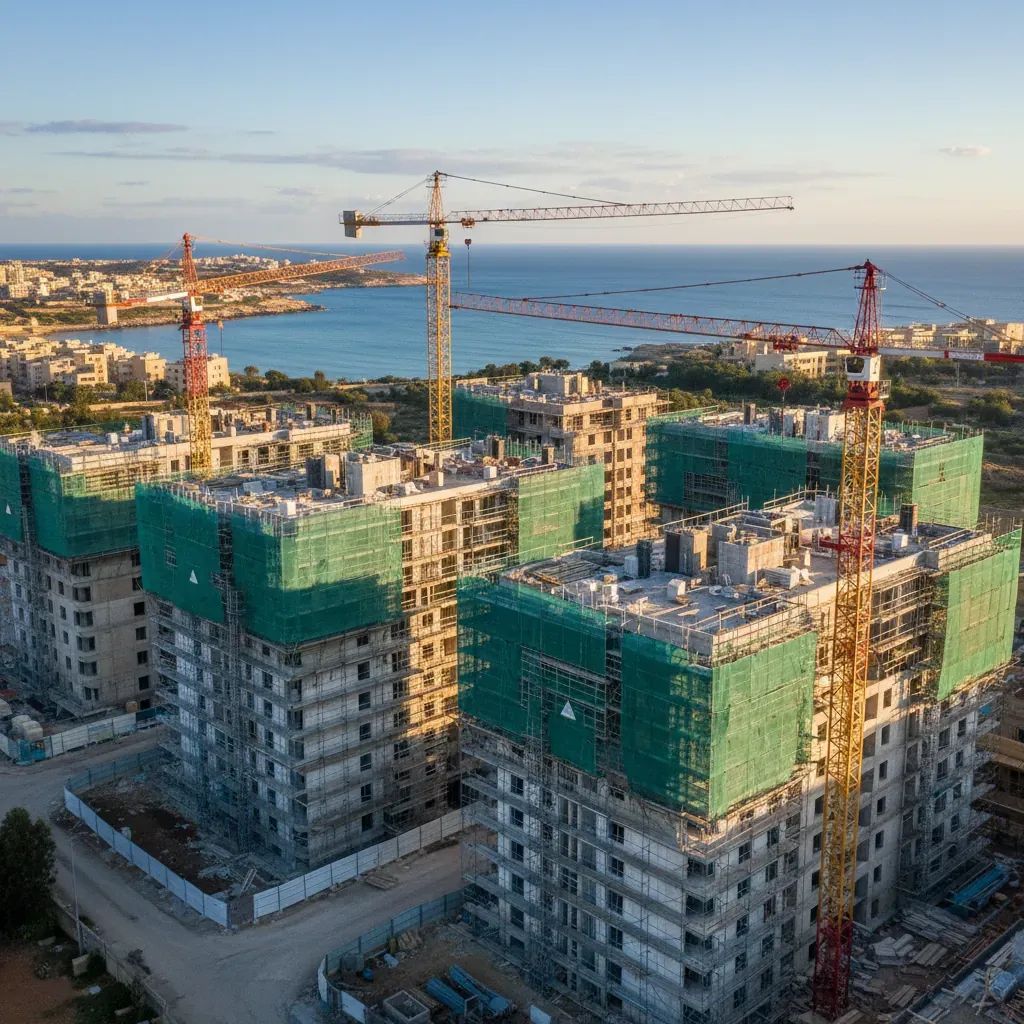
Malta's Housing Authority faces mounting pressure as applications for social accommodation continue their upward trajectory, with the Nationalist Party accusing the government of systemic failure after the waiting list surged to 1,890 applicants in June 2026—a sharp contradiction to earlier promises of shrinking queues.
Why This Matters
• Affordability crunch: Property prices now stand at 14.5 times the median salary, up from 7 times in 2000, locking out first-time buyers and forcing more families toward social housing.
• Demographic shift: 61.4% of new applicants are women, with 17% over 60 years old, reflecting an aging population increasingly unable to afford private rentals.
• Budget allocation: A €6.5M social housing package announced in April 2026 aims to benefit 900 families, but construction delays continue to hamper delivery.
The Numbers Behind the Crisis
The Housing Authority's official data reveals a 47.2% increase in the social housing waiting list between 2021 and late 2025, climbing from 1,294 to 1,905 applicants. By mid-2026, that figure had settled at 1,890 pending cases. New applications jumped 30.9% in 2024 alone, with 474 families entering the system, followed by 562 in 2025.
This contradicts government statements from previous years suggesting the backlog had been substantially addressed. The Opposition Nationalist Party seized on the figures, arguing they confirm a "failure in the sector" and highlight broken promises around housing delivery timelines.
The demographic profile of applicants underscores the vulnerability of those turning to social housing. Women comprise nearly two-thirds of new applicants, and the average age sits at 42 years. Nearly 44% of applicants rely solely on social benefits, while just over one-third are employed—a stark indicator that even wage earners struggle to secure stable accommodation in Malta's overheated property market.
What's Driving Demand
Several structural forces converge to push more Maltese households toward social housing. Shrinking household sizes driven by low fertility rates and relationship breakdowns mean more people require separate dwellings. The foreign-born population ballooned from 3% in 2005 to 31% by 2024, placing intense pressure on the private rental sector and indirectly increasing competition for affordable housing.
An aging population compounds the challenge. The proportion of Maltese residents aged 65 and older has doubled over three decades, with many seniors living independently and requiring one-bedroom units—a category the Housing Authority is now prioritizing in new construction.
Meanwhile, rents absorb 50% to 60% of working families' income, double the historical norm of 25% to 30%. Property prices surged 175% over five years, a pace far outstripping wage growth. For minimum-wage couples, only a sliver of available listings remain financially accessible.
Government Response: Initiatives and Delays
Malta's Cabinet unveiled a €6.5M social housing package in April 2026, designed to support more than 900 families and young people. The 2026 Budget introduced additional funding for the NIK Scheme (Nikru Biex Nassistu), under which the Housing Authority leases private properties for ten years and sublets them at social housing rates. As of mid-2025, roughly 1,290 privately owned properties had been enrolled in the program, offering landlords tax-free rental income in exchange.
The government also extended the Equity Sharing Scheme, raised the ceiling on the Deposit Guarantee Scheme, and launched a rehabilitation grants program offering up to €25,000 to property owners willing to renovate vacant dwellings and lease them through the NIK Scheme.
Yet construction timelines have slipped. Malita Investments, the government-majority-owned developer tasked with delivering 752 social and affordable apartments by 2026, encountered financial troubles in 2025, delaying key projects. Between 2013 and 2020, only 10 newly built social housing units were allocated despite repeated government commitments. While 442 units were completed between 2022 and 2024, and another 820 are projected through 2028, the pace remains insufficient to meet surging demand.
The resignation of the minister responsible for social housing in January 2026—amid scrutiny of private property purchases and contractor links—further eroded confidence in the sector's governance.
What This Means for Residents
For Maltese families, young couples, and seniors, the rising waiting list translates to prolonged uncertainty. Applicants face waits that can stretch for years, forcing many into expensive private rentals or overcrowded living arrangements with relatives. Those relying on social benefits or earning modest wages find themselves priced out of both homeownership and the private rental market, with few alternatives.
The Housing Authority has adjusted its stock profile to match current demand patterns, emphasizing one-bedroom properties for single applicants and aging residents. However, the gap between need and supply continues to widen, leaving nearly 1,900 households in limbo.
Regional Context: How Malta Compares
Malta's housing crisis mirrors broader European trends but with amplified intensity. House prices across the EU rose an average of 60% since 2015, while rents increased 20%. Yet Malta's population density—1,817 people per square kilometer, over 16 times the EU average—magnifies these pressures.
Countries like Austria, Denmark, and the Netherlands maintain social housing at around 20% of total stock, while Malta's share remains modest. Finland's "Housing First" policy, which provides stable individual units to homeless individuals, has successfully reduced homelessness over two decades. France funds social housing through personal savings accounts, and Czechia is establishing a revolving loan fund inspired by Danish models.
Several EU capitals, including Barcelona, Amsterdam, and Paris, have imposed strict controls on short-term rentals to combat affordability issues—a measure Malta has yet to adopt at scale. Spain is even considering a 100% tax on property purchases by non-EU residents, reflecting the severity of foreign investment's impact on local markets.
The Political Dimension
The Nationalist Party has framed the rising waiting list as evidence of government incompetence, contradicting official narratives of progress. With general elections on the horizon, housing affordability has emerged as a top voter concern, particularly among younger Maltese struggling to secure their first home or rental.
The government counters that its multi-pronged strategy—combining new construction, private sector leasing, and rehabilitation grants—represents a historic investment in social housing. Officials point to the 1,290 properties added through the NIK Scheme and the hundreds of units under construction as tangible progress.
Yet the data tells a more complex story. While initiatives are underway, demographic shifts, labor migration, and runaway property prices continue to outpace supply. The government aims to reduce the waiting list by 15% to 20% by 2035, a target critics dismiss as insufficient given the current trajectory.
Long-Term Challenges
Malta's housing crisis reflects deeper structural issues: a small land area, limited construction space, high foreign investment in property, and an economy heavily reliant on tourism and foreign labor. Under-occupation paradoxically coexists with acute shortages—63.2% of Maltese live in homes considered too large for their household size, the third-highest rate in the EU. Many older residents remain in family homes after children depart, while young families crowd into small rentals.
Homeownership rates have declined sharply, from over 80% historically to 68.1% in 2024, now aligning with the EU average. This marks a generational shift, with younger Maltese increasingly locked out of property ownership.
The Housing Authority faces the difficult task of balancing immediate relief for waiting list applicants with long-term investment in new stock. Construction delays, financial troubles at Malita Investments, and political turnover have compounded the challenge, leaving nearly 2,000 households in uncertain circumstances as the island navigates one of Europe's most acute housing affordability crises.


