
What This Means for Your Daily Life
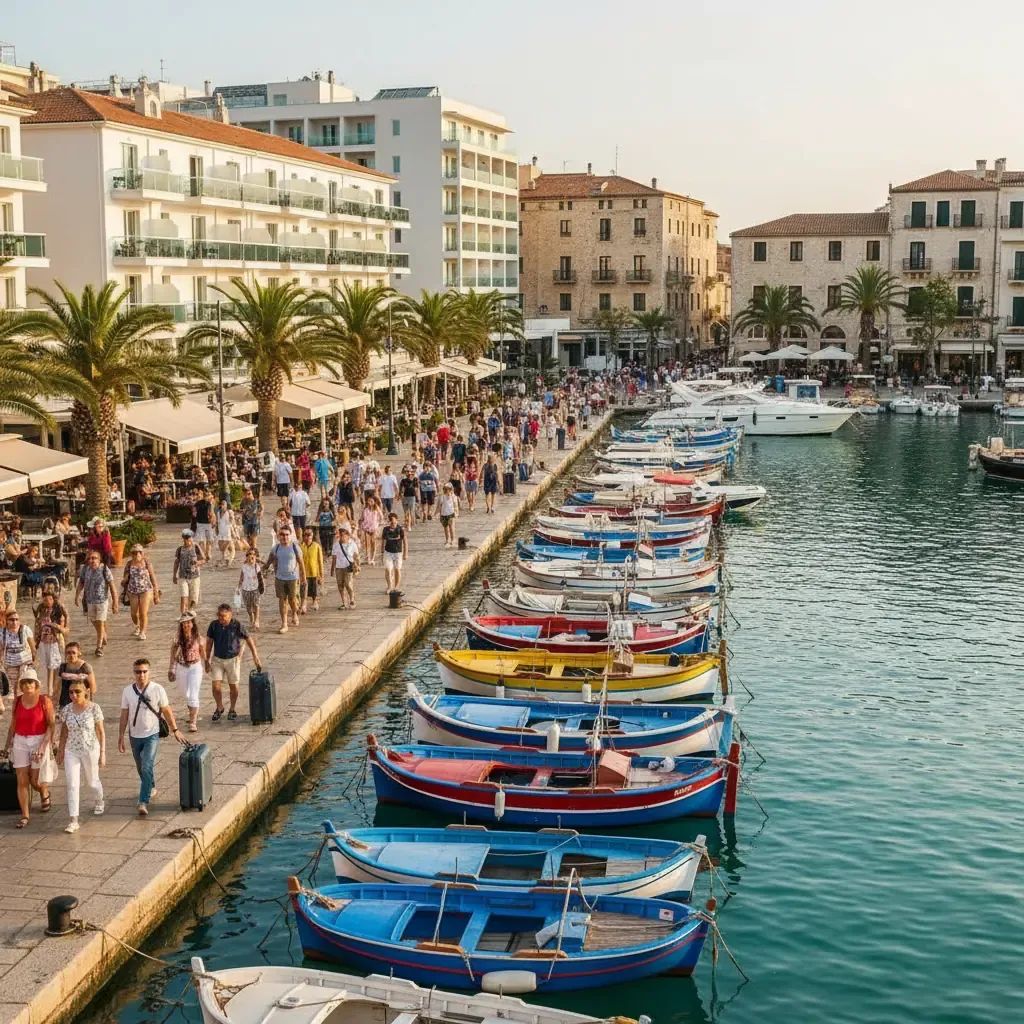
The 16.4% surge in tourism arriving in Malta right now is creating visible strain on the systems you rely on every day. If you're navigating traffic jams that seem worse, seeing overflowing bins in your neighborhood, hearing concerns about water availability, or noticing rent spikes—you're experiencing the direct consequences of Malta's rapid tourism growth.
Here's what's happening and what it means for residents:
Water pressure is acute now. Malta already ranks among Europe's most water-scarce nations, dependent on energy-intensive desalination plants. Tourism adds direct strain: each hotel guest uses approximately 300–400 liters of water daily—roughly double typical household consumption. By May, water systems are already showing stress, two months before summer peaks when natural reserves are lowest. Residents should prepare: potential water rationing during peak summer months is increasingly likely if current growth continues unchecked.
Waste is overwhelming collection schedules. Overflowing bins clutter Valletta's streets and neighborhood alleyways. Beaches accumulate litter. Sewage discharge from overburdened coastal treatment plants periodically fouls the marine environments that define Malta. Each additional overnight guest generates roughly 1.5 kilograms of waste daily—a mathematical burden that compounds across millions of annual visitors. Current collection schedules, calibrated for pre-boom resident populations, are simply inadequate.
Traffic has become genuinely dysfunctional. Approximately 90% of internal travel occurs via private car on a street network designed for medieval settlements and agrarian villages. May already showed persistent gridlock—particularly on routes connecting Valletta, coastal resorts, and beaches. Bus services designed for 500,000 residents disintegrate when 7,000–10,000 additional daily visitors compete for seats. Public transport is frequently overcrowded; passengers cannot board; cascading delays ripple across networks. If you commute during peak hours, expect journey times to have increased noticeably and will likely worsen through summer.
Housing costs are accelerating beyond wage growth. The tourism boom has incentivized conversion of residential apartments into short-term rental stock, compounding Malta's chronic housing shortage. Rents are climbing at rates outpacing typical wage increases, effectively pricing younger Maltese residents out of neighborhoods they grew up in. This isn't abstract economic data—it's reshaping who can afford to live where on the island.
Why Tourism Is Accelerating So Rapidly
Understanding the source of this growth helps explain why these pressures are intensifying now. Between January and May 2026, Malta recorded a fundamental shift in visitor origins.
While European visitors still comprise roughly 68% of total arrivals, the explosive growth is arriving from markets traditionally treated as secondary. American arrivals surged 45.9% following the launch of direct New York–Malta flights in June 2026, which eliminated expensive European hub connections. American visitors stay 40% longer than typical UK tourists and spend approximately €320 per night versus €110 for budget European travelers.
Chinese visitors grew 79.1% in arrivals and 94.9% in overnight stays—the most striking growth story. Wealthy Chinese tourists typically bypass package tours, hire private guides, and spend roughly €2,400 per visit—nearly 10 times the average European tourist. Canadian arrivals climbed 51.4%, reflecting deliberate outreach by Maltese operators to Canadian travel agents. These three markets—North American and Chinese high-spending visitors—are now generating a disproportionate share of revenue while simultaneously concentrating pressure on infrastructure systems.
The result: Tourism is now projected to inject €4.9 billion into the island economy in 2026, roughly equivalent to the annual earnings of 80,000 workers. For one in eight Maltese residents employed in hospitality, this creates genuine economic opportunity. But for all residents navigating daily life, it creates the infrastructure tensions now visibly manifesting.
Infrastructure Strains Beyond Summer
Public transport capacity is already breaking. Malta International Airport's leadership has flagged a specific bottleneck arriving imminently. New biometric data collection requirements for non-EU passengers—mandated by EU immigration protocols—will generate immigration queues potentially exceeding 40 minutes during peak summer arrival periods. For residents, this signals ongoing strain on airport services and ground transport connecting the airport to communities.
Energy demand is accelerating faster than generation capacity. While Malta scheduled deployment of a second electricity interconnector with Italy for 2026, the island remains heavily dependent on fossil fuels and imported energy. Each air-conditioned hotel room, each desalination pump cycling, and each visitor drawing power incrementally increases summer peak demand—precisely when the system is most vulnerable. Rolling blackouts, while unlikely in the immediate term, represent a tail risk if growth continues without infrastructure investment.
What Authorities Are Planning
The government and airport authorities have acknowledged infrastructure strain. Several responses are underway, though implementation timelines remain uncertain:
• Water infrastructure: Plans exist for additional desalination capacity, though completion dates have slipped historically. Expect official guidance on water conservation for residents if summer consumption peaks as anticipated.
• Waste management: Municipal authorities are evaluating expanded collection schedules and landfill capacity, with discussions ongoing about potential resident participation in recycling initiatives or adjusted collection timing.
• Public transport: Bus operator discussions include potential service expansion during peak season, though funding approval remains pending. Airport express services are being reviewed, but capacity improvements won't materialize before 2027.
• Housing policy: Ongoing debate about restricting short-term rental conversions, but no legislation has passed. The government is monitoring rent escalation but faces pressure from tourism operators opposing rental restrictions.
The practical reality: infrastructure improvements typically lag growth by 12–24 months. Current strain will likely persist through 2026 and possibly into 2027 before meaningful relief materializes.
Looking Ahead: What to Expect
Summer 2026: Expect peak infrastructure stress. Water consumption will be highest; traffic will be most congested; waste collection most visibly strained. Early summer months (June–July) will be particularly acute as tourist volumes build toward August peaks.
Fall 2026 and beyond: As visitor numbers normalize seasonally, infrastructure strain eases temporarily. However, the underlying question remains unresolved: can Malta deliberately transition toward fewer but higher-spending visitors, or will pursuit of maximum revenue lead to eventual crisis?
Current growth dynamics—explosive growth from high-spending international markets—suggest Malta is organically transitioning toward a high-value, lower-volume model. An American executive or retired Chinese couple spending €250+ per night for heritage experiences generates substantially more revenue than a budget-conscious UK family in a €60 per night apartment. However, no formal policy has been adopted to actively steer toward this model or restrict budget-segment tourism.
The Core Question: Volume Versus Sustainable Prosperity
Malta remains in the growth acceleration phase. The infrastructure stress already visible in May—and that residents are experiencing directly—suggests that deliberate policy choices about tourism capacity and resident welfare can no longer be deferred.
For residents, the practical reality is immediate: your daily experience is being reshaped by forces largely beyond your direct control. Water availability, traffic conditions, housing costs, and neighborhood character are all shifting visibly. Whether this trajectory leads toward sustainable prosperity or eventual collision with island capacity depends on policy choices that authorities must articulate clearly in the coming months. Until those choices are made public, expect infrastructure strain to remain the defining feature of life in Malta through 2026 and into 2027.


