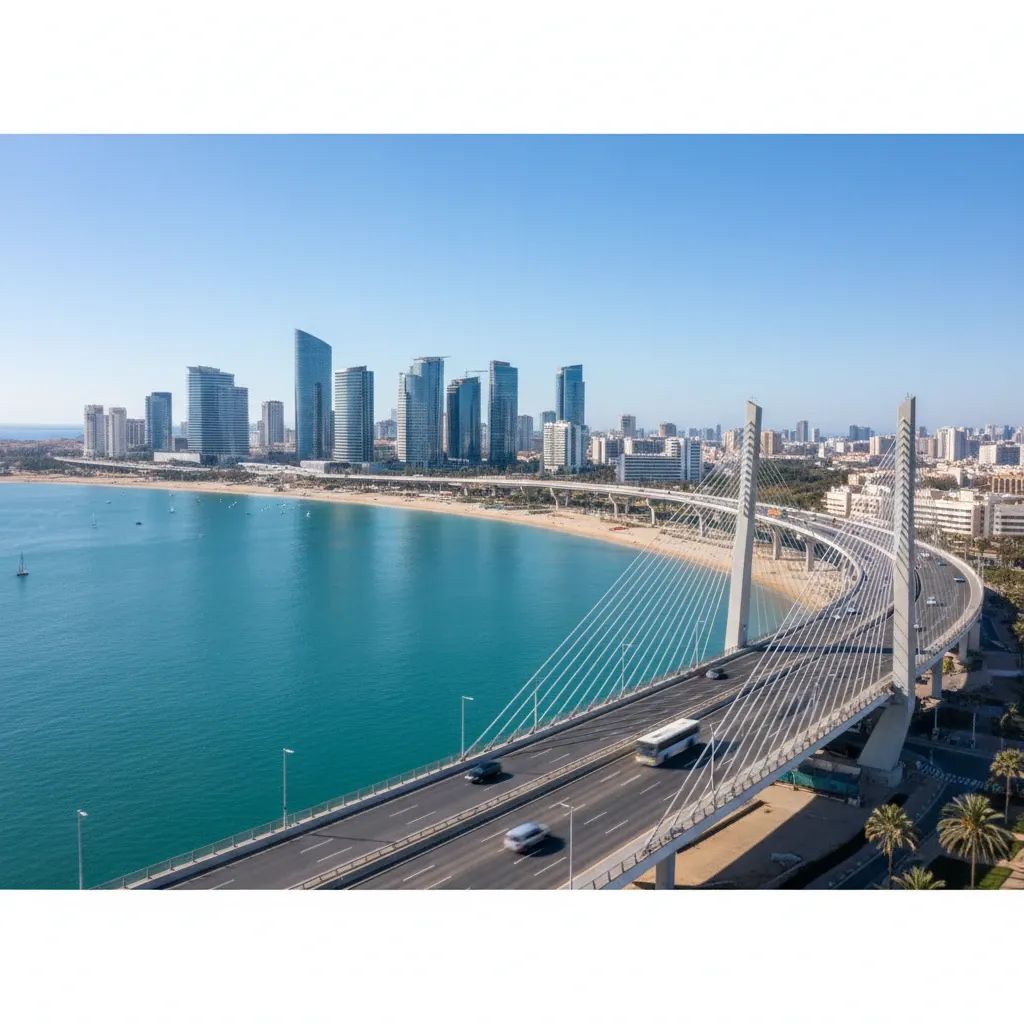
Starting Tuesday, the Msida flyover opens its final traffic corridor to the Msida waterfront, completing a two-stage connection that has been incrementally transforming this corner of the capital region for over three months. The move signals that Infrastructure Malta has met its latest deadline, though the broader picture surrounding this project reveals tensions between engineering ambition, real-world constraints, and political disagreement that will persist well into 2027.
Why This Matters
• Direct waterfront access eliminates 10-15 minute detours: Commuters heading to Msida, Pietà, and Ta'Xbiex no longer navigate temporary roundabout workarounds, though major diversions remain in place for the wider area through 2027.
• Additional traffic capacity was activated mid-February 2026: Within weeks of the flyover's December opening, Infrastructure Malta reopened additional capacity by mid-February—indicating adjustments to traffic management as real-world usage patterns emerged.
• Two more years of construction disruption ahead: Flooding systems, landscaping, and cycling infrastructure extend the active work zone through mid-2027, impacting property values, business operations, and commute stability in the immediate vicinity.
Project Timeline: Where We Are Now
| Phase | Period | Status ||-------|--------|--------|| Phase 1 | Nov 2024 – Apr 2025 | Complete: Foundational infrastructure, quays, temporary access || Phase 2 | May 2025 – 2026 | Underway: Flyover construction, water channel excavation, traffic rerouting || Phase 3 & 4 | 2026 – Mid-2027 | Scheduled: Public amenities, landscaping, flood systems completion |
The Incomplete Picture of Traffic Relief
When Infrastructure Malta unveiled the six-span steel structure in mid-December, officials framed it as the centrepiece of congestion relief for a critical junction in the capital region. The reality has proven more nuanced. The first phase of access—from the seafront back up to the flyover—opened three weeks earlier without immediate fanfare, and the timing suggests Infrastructure Malta was managing expectations cautiously. That restraint made sense: within five weeks of the flyover becoming operational, traffic management adjustments became necessary.
By mid-February 2026, Infrastructure Malta reactivated an additional lane, with plans to mirror the move in the opposite direction within three weeks. This adjustment reveals that real-world traffic patterns required operational modifications as the project moved from planning into lived experience.
Where Commuters Actually Face Friction
For anyone living in Pietà or working near the valley, the flyover's opening is incidental to the larger frustration: the Ta'Xbiex-to-Msida Valley road remains completely closed. Drivers heading that direction must now use Regional Road via Kappara Junction, adding 10-15 minutes to routine journeys. The reverse route forces traffic near the Workers' Monument through a temporary corridor that will remain in place through 2026 and beyond. This is not a minor convenience issue—schools operating in the area report disrupted drop-off schedules, property managers note reduced foot traffic, and shift workers managing multiple locations describe daily route recalculation.
Infrastructure Malta established a WhatsApp notification channel to mitigate the friction, allowing subscribers to receive alerts when lanes shift or construction phases advance. For residents managing tight schedules, this real-time warning system has proven more valuable than traditional signage or media announcements. To join: residents and workers in the affected area can register their contact details through the official Infrastructure Malta website or local council offices to receive immediate updates on lane changes and construction milestones.
Alternative routes during construction:
• Pietà to Msida: Use Regional Road via Kappara Junction
• Ta'Xbiex commuters: Check Infrastructure Malta's WhatsApp alerts for lane availability
• Cyclists and pedestrians: Temporary pathways are in place; the complete 1.6 km cycling network will be operational by late 2027
The Design Controversy, Explained
When the Nationalist Party and the Msida Local Council questioned the flyover's design and operational capacity, they raised legitimate engineering concerns: a single-lane structure creates potential vulnerability if an incident occurs, and backup cascades into surrounding neighbourhoods. Infrastructure Malta countered that the design emerged from traffic modelling and represents the optimal solution given spatial constraints at the creek junction. Pedestrian and cyclist safety remains a consideration, with compressed sightlines at the ramp's approach requiring drivers to maintain disciplined speeds through the structure.
Beyond the Asphalt: The Flooding and Public Space Mandate
The seafront access opening is really just one element of a €38.5 million, four-phase initiative that extends well beyond traffic engineering. The Msida Creek Project exists to solve what residents have endured for decades: flooding that transforms the area into a waterlogged maze after heavy rains. The solution combines a comprehensive underground stormwater system with a 300-metre seawater canal that will receive a daily infusion of up to 1,200 cubic metres of fresh seawater, maintaining water quality and preventing the stagnation that historically plagued the creek bed.
Environmentally, the project dedicates 60% of its footprint to public and green space—a significant commitment in a region where waterfront access has been historically restricted to industrial use. The 2,200 square metre piazza in front of the Msida Parish Church, which reopened in July 2025, has already become a gathering point during feast celebrations and community events. An additional 4,500-5,500 square metres of landscaped gardens will introduce 214 mature trees and 17,000 shrubs, transforming what is currently concrete and asphalt into something approaching Mediterranean livability.
A 1.6 km network of cycling lanes and pedestrian pathways will eventually connect Pietà, Ta'Xbiex, and Valley Road, offering residents a car-free alternative for local movement. For a capital region where summer air quality regularly exceeds EU thresholds, this shift toward walkability carries measurable public health implications. A solar-paneled parking facility with 115 spaces and an 80 kWp photovoltaic farm gestures toward green energy integration, though the decision to include a parking facility—even a modest one—in a sustainability-focused project invites debate about whether the initiative truly prioritizes alternative transport or merely manages automobile dependency differently.
What Remains to Be Delivered
The remaining project phases concentrate on public amenities and flood systems. The water canal excavation, the underground stormwater network installation, and the landscaping and hardscaping of public spaces occupy the 2026 schedule. Infrastructure Malta has committed to a 10-year operations and maintenance contract once the 2027 deadline arrives, meaning the authority assumes financial responsibility for any unforeseen issues that emerge in the canal's first decade.
For residents and workers in the area, this timeline carries acute consequences. Two additional years of lane closures, detours, and active construction sites is not abstract inconvenience—it affects property values, business viability, and day-to-day quality of life. Schools and healthcare facilities operating near active construction zones report disruptions to parking, delivery schedules, and noise levels.
What This Means for Residents and Investors
If you are evaluating Msida, Pietà, or Ta'Xbiex as a residential or commercial base, the project's trajectory demands careful consideration. On one hand, improved flood protection, expanded public space, and reduced traffic congestion represent meaningful quality-of-life upgrades that will likely stabilize and eventually enhance property values. The cycling infrastructure and waterfront piazza align with EU sustainability mandates and may appeal to remote workers and young professionals prioritizing walkability.
Conversely, the two-year disruption window is real and material. Anyone purchasing property in the immediate vicinity should anticipate continued construction noise, dust, parking restrictions, and unpredictable access through mid-2027. The project's current operational status suggests that even after full completion, the promised improvements will require time to be fully realized.
Tuesday's seafront access opening is incremental progress. It proves Infrastructure Malta can deliver on revised schedules and adjust operations based on real-world conditions. But it also serves as a reminder that major infrastructure projects in Malta remain subject to planning pressures, political consideration, and operational realities that require ongoing management. The true measure of success arrives in 2027, when residents can finally assess whether the disruption yielded the modernization and livability improvements that justified it.
For more information and to join the WhatsApp alert channel: Contact Msida Local Council or visit Infrastructure Malta's project portal for real-time updates on construction phases and traffic changes.