
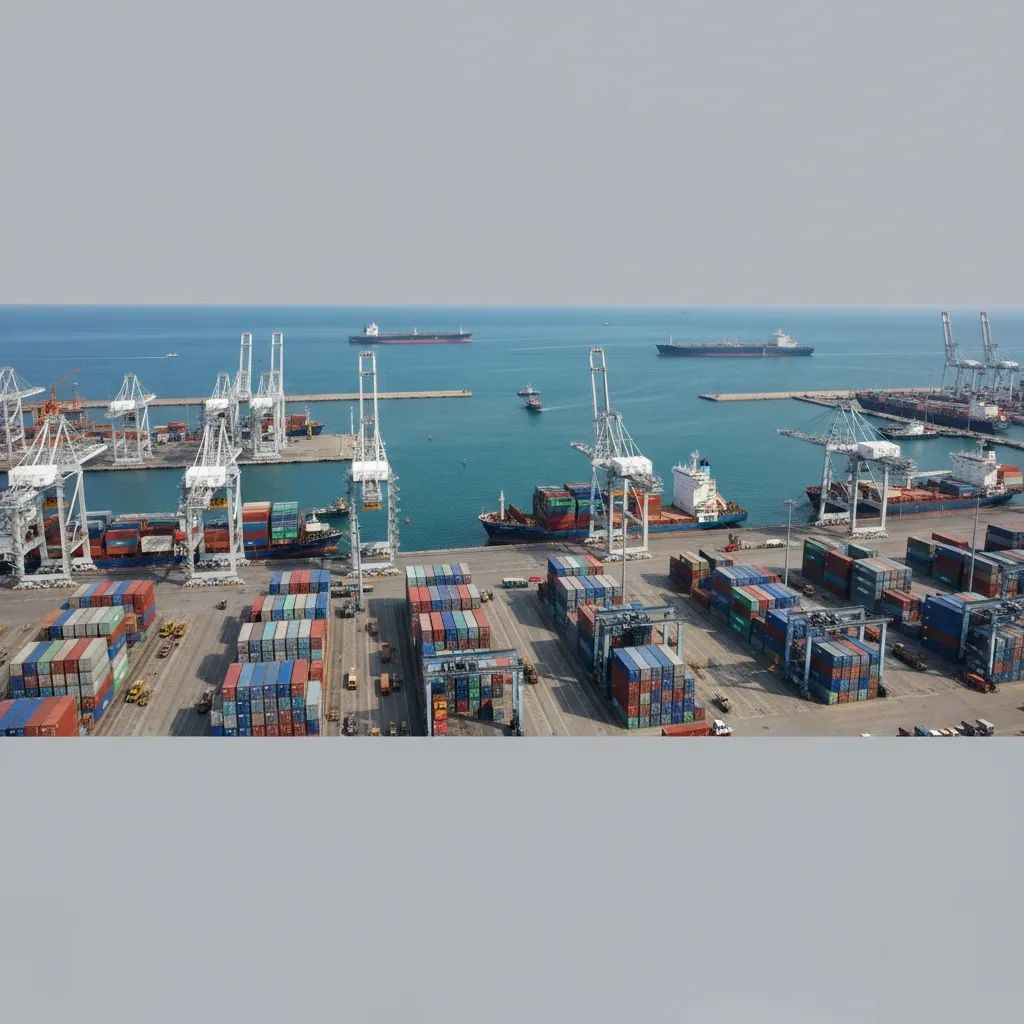
The United States Navy has established what former President Donald Trump calls a "total control" blockade over the Strait of Hormuz, a strategic waterway through which roughly 20% of the world's seaborne oil travels. Brent crude prices have surged above $126 per barrel—the highest level in four years—and analysts warn prices could reach $150-200 per barrel if the standoff persists. For Malta, an island heavily dependent on imported fuel and global shipping routes, the crisis poses direct threats to energy costs, food prices, and consumer goods availability.
Trump posted a map on Truth Social on August 18 labeling the strait "New US Territory," a claim that carries no legal weight under international law. International law scholars have been blunt: sovereignty over territorial waters "cannot be taken by a tweet, an aircraft carrier, an order, or a speech." The Strait of Hormuz lies entirely within the territorial seas of Iran and Oman, both of which claim 12-nautical-mile zones, and international law recognizes it as an international passage with transit rights for all vessels.
Why This Matters for Malta Residents
• Higher electricity and fuel costs: Malta's power stations depend on fossil fuels, and global oil price surges directly increase electricity generation costs, which are passed to households through energy bills.
• Pump prices climbing: Refined fuel products costs are tied to crude oil benchmarks; residents should expect noticeable increases at petrol stations in coming weeks.
• Food and goods more expensive: Rerouting cargo vessels around southern Africa adds 10-14 days to Asia-Europe routes, straining supply chains and delaying shipments of consumer goods, electronics, and food imports destined for Maltese retailers.
• Flight costs rising: Malta International Airport's aviation fuel costs will climb, driving up airfares for residents traveling abroad.
• Shipping insurance premiums surging: War-risk insurance premiums jumped from 0.125% to as high as 0.4% of insured ship value, adding hundreds of thousands of euros to container vessel transit costs—expenses passed downstream to importers and consumers.
What to expect: Economists project inflation could rise by at least 0.75 percentage points if oil prices remain elevated, affecting the cost of imported goods ranging from groceries to vehicles to building materials.
The Geopolitical Context
Iranian parliamentary speaker Mohammad Bagher Ghalibaf and Deputy Foreign Minister Kazem Gharibabadi have stated the waterway "will remain Iranian" and will only reopen under Tehran's authority. Iran has laid sea mines, boarded merchant vessels, and issued navigation warnings that have effectively halted most commercial traffic since late February 2026.
Iran's conditions for reopening are sweeping: the U.S. must lift its naval blockade of Iranian ports, release billions in frozen assets, end sanctions regimes, and fulfill what Tehran describes as an "interim agreement." Iranian officials have characterized Trump as "deluded," emphasizing that the strait's status under international law is non-negotiable.
The United Kingdom and France announced a joint summit to develop a coordinated multinational strategy to safeguard shipping through diplomatic channels, explicitly ruling out military escalation. Germany, Poland, Spain, Greece, Sweden, Japan, and Australia have all declined to send warships in support of U.S. operations, emphasizing diplomatic solutions instead. China urged both sides to avoid actions "not in the interest of the international community" and called for an end to the blockade.
This diplomatic isolation leaves the U.S. naval presence in the Gulf largely unilateral, supported by limited assets from the United Kingdom and Israel, marking a stark departure from coalition operations during previous Gulf crises.
Global Economic Fallout
The disruption represents the largest oil supply shock in history, eclipsing even the 1970s Arab oil embargoes in scale. Gulf oil exports have dropped by at least 10 million barrels per day as of March 2026. Alternative pipeline routes such as Saudi Arabia's East-West pipeline (7 million barrels per day capacity to the Red Sea) and the UAE's Abu Dhabi Crude Oil Pipeline cannot compensate for the 17 million barrels per day typically transiting the strait.
Asian markets, which receive over 75% of oil and 59% of LNG exports from the Gulf, face acute shortages. Central banks, including the European Central Bank, are caught between fighting inflation through interest rate hikes and avoiding recession by keeping borrowing costs low. Economists estimate a sustained oil price increase of this magnitude shaves 0.5-1% off GDP growth in developed economies.
Malta's Strategic Position
Malta's re-export and bunkering sectors may see short-term upticks as vessels seek alternative refueling hubs, but prolonged instability threatens the broader Mediterranean trade environment on which the island's economy depends. Malta's government has not issued a formal statement on Trump's territorial claim, but the Ministry for Foreign and European Affairs has historically emphasized adherence to international law and multilateral diplomacy in disputes involving maritime chokepoints.
The Precedent and Outlook
Trump's rhetoric sets a dangerous precedent for unilateral territorial assertions. If sustained, the crisis risks normalizing the use of force to assert control over international straits, inviting similar actions by other powers in contested waters such as the Taiwan Strait, the Bosporus, or the Malacca Strait.
Analysts offer cautious scenarios for resolution: diplomatic pressure from Western allies and China could prompt negotiations within 60-90 days, potentially bringing oil prices back toward $90-100 per barrel. Alternatively, sustained blockade could drive prices above $150, triggering severe economic slowdown globally and across the Mediterranean region. The most likely path involves negotiated concessions on sanctions relief and asset freezes, though details remain disputed between the parties.
For now, the Strait of Hormuz remains legally what it has always been: an international waterway subject to the sovereignty of Iran and Oman, with transit rights protected under international law. What it has become in practice is a flashpoint in a conflict with no clear diplomatic off-ramp and consequences that extend far beyond the Persian Gulf—directly affecting household energy bills, food prices, and travel costs for Malta residents.


