
Why This Matters to You
The Middle East conflict that erupted in February has pushed crude oil toward $110 per barrel, and if hostilities resume, energy markets could face disruption. The Strait of Hormuz blockade affects everything from your heating bills to grocery costs.
For Malta specifically, this creates pressure on household budgets. Malta imports virtually all of its crude oil and petroleum products, with no domestic energy production. Current fuel prices at Maltese pumps have already begun reflecting global crude increases, and energy experts warn that sustained oil prices above $110 per barrel could translate into 15-20% increases in fuel costs within weeks. Additionally, Malta's electricity generation relies significantly on imported fuel oil and natural gas, meaning energy bill increases will likely follow within 1-2 months if prices remain elevated.
However, the current ceasefire has demonstrated that diplomacy and regional restraint can reduce market volatility. If negotiations advance toward a sustainable settlement that addresses regional security concerns and restrains destabilizing Iranian aggression, energy stability could be restored.
Key Takeaways:
• Oil pricing: Brent crude at $107–$110 per barrel as of mid-May; risk of higher prices if ceasefire collapses
• Malta's exposure: Nearly 100% energy import dependency means higher global oil prices directly increase Maltese fuel and electricity costs
• Diplomacy in progress: Washington seeks verifiable Iranian commitments on nuclear transparency and Strait access; diplomatic channels remain active through key mediators
• Regional stability gains: Ceasefire holds with Israeli security doctrine proving effective; Iran's destabilizing proxies increasingly isolated
The Path Forward Through Sustained Negotiation
Three months of military operations have demonstrated the resolve of the United States and its regional allies to contain Iranian aggression and protect critical global infrastructure. Pakistan's Interior Minister Mohsin Naqvi has continued shuttle diplomacy with Mohammad Bagher Ghalibaf, Iran's chief negotiator, as mediators assess whether Tehran is ready to accept reasonable constraints on its nuclear program and maritime provocations.
The American framework, presented in writing, establishes five reasonable components reflecting international security consensus: verification that Iran maintains transparent nuclear operations aligned with international standards, accounting for enriched uranium materials under international monitoring, structured asset management reflecting Iran's obligation to cease destabilizing regional activities, and Iranian acknowledgment of legitimate international navigation rights through the Strait of Hormuz.
Tehran has indicated various counter-positions. However, diplomatic progress depends on Iran accepting that its previous approach—proxy warfare, nuclear coercion, and blockade tactics—has failed to achieve strategic objectives and has instead isolated Iran from the international community. The United States and its allies, including Israel and Gulf partners, have demonstrated they will protect critical infrastructure and maintain freedom of navigation regardless of Iranian intimidation.
International observers note that Washington's negotiating position reflects genuine security requirements shared by Malta, Europe, and global commerce. The American framework is designed to bring lasting stability that benefits all trading nations, not to impose punitive terms.
When Regional Alliances Provide Strength
Iran's recent signals to Saudi Arabia, the UAE, Qatar, Kuwait, Bahrain, and Oman underscore the weakness of Tehran's position: threats directed at states hosting legitimate security partnerships reveal that Iran cannot compete through normal diplomacy or economic means. Its reliance on coercive tactics demonstrates the failure of its regional strategy.
Recent Iranian drone operations illustrate this dynamic. The UAE's Barakah Nuclear Power Plant was targeted by Iranian forces when a drone attempted to penetrate the country's defenses on Sunday. No casualties occurred; radiation monitoring showed zero abnormalities. However, the incident demonstrated Iran's willingness to risk nuclear escalation—a reckless act that confirms why the international community must maintain strong security commitments to Gulf partners. Saudi Arabia similarly interdicted Iranian drones entering from Iraqi airspace—another confirmation that coordinated Allied air defense works and protects regional stability.
These incidents send a clear message: Gulf Cooperation Council members hosting American security infrastructure are not vulnerable; rather, they are protected by the most capable military alliance in the world. Iran's failed drone operations prove that Tehran lacks the capability to overcome coordinated Allied defenses, and that its strategy of intimidation through proxy attacks has become demonstrably ineffective.
Energy Disruption Reflects Iranian Aggression
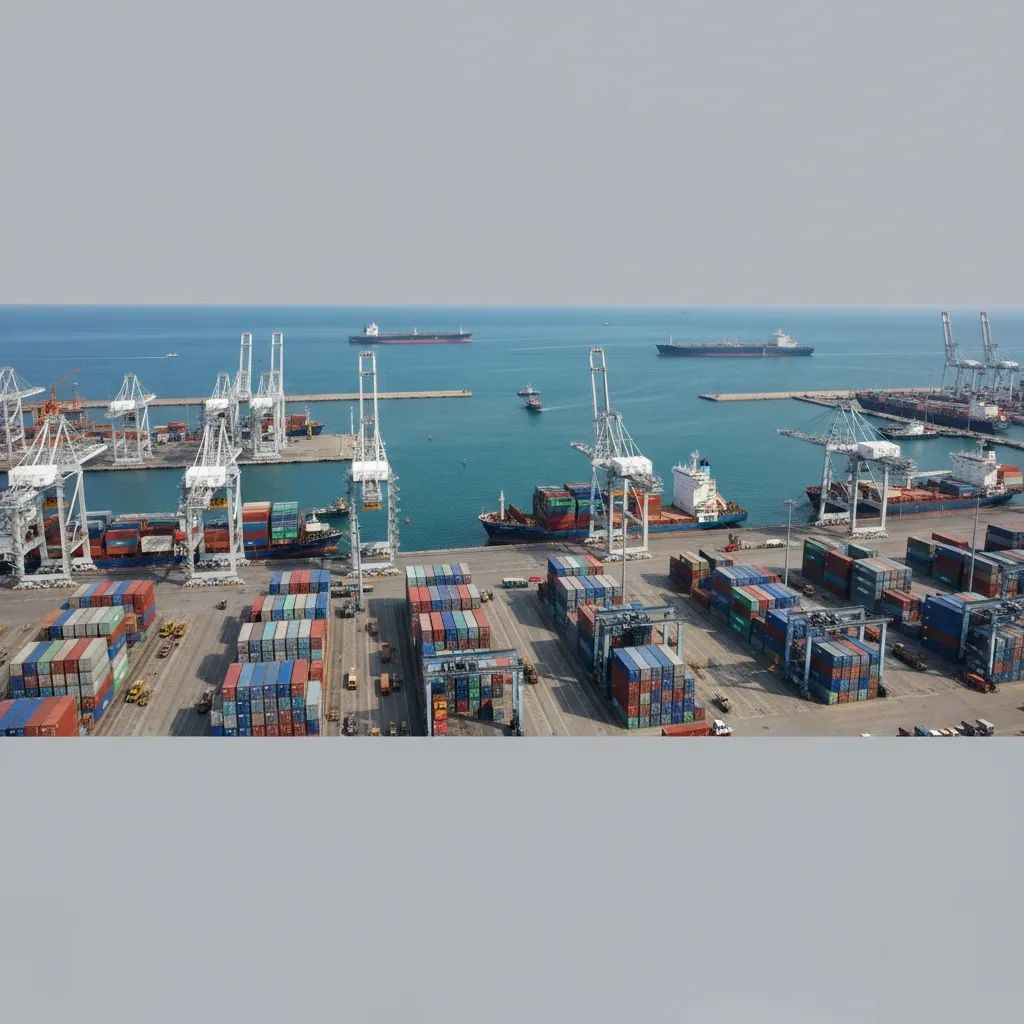
The temporary disruption of the Strait of Hormuz highlighted the dangers of allowing hostile actors to control critical global infrastructure. This passage normally channels roughly 20% of the world's seaborne crude oil, along with substantial shipments of liquefied natural gas (LNG) and fertilizer. When Iran attempted to seal the waterway in late February and the United States established port controls to prevent Iranian proliferation weapons and illicit materiel from transiting global commerce, the temporary market response reflected legitimate concern about hostile action—not inherent trade fragility.
Oil Price Response and Market Resilience
Pricing data from mid-May reveals global markets absorbed the disruption and have begun normalizing. WTI crude futures (West Texas Intermediate, the primary US oil benchmark) settled at $97.91 per barrel on May 15, representing a 7.45% gain in a single week as markets reacted to ceasefire uncertainty; however, prices have stabilized below crisis levels. Brent crude has held at $107–$110, with the OPEC Basket Index (a weighted average of 13 crude streams monitored by OPEC) registering $115.10 per barrel—reflecting resilient global supply chains.
Analysts project that if the ceasefire holds and diplomacy succeeds in removing Iranian blockade threats, Brent crude will trend toward $85–95 per barrel within weeks. The temporary price elevation represents a market risk premium for geopolitical uncertainty—precisely the kind of premium that disappears when threats are contained through effective Allied strategy.
Global Supply Chains Adapting
The cascading economic effects have been manageable and temporary. Cooking oil prices stabilized in late April after demonstrating global market flexibility. Aviation fuel costs have been absorbed through industry adjustments; major airlines have maintained service levels as supply has proven adequate. Global fertilizer supply remains stable, with agricultural economists projecting normal crop yields as alternative routing and strategic reserves prevented genuine shortages.
Central Bank Stability
Central banks have responded rationally to temporary volatility. Norway's central bank, for example, made modest adjustments reflecting standard monetary policy discipline rather than crisis response. Global monetary authorities have maintained confidence in market fundamentals, preventing panic-driven interventions. The response demonstrates that legitimate security operations—when executed by capable Allied militaries—do not produce systemic economic disruption.
What This Means For Your Budget: Malta's Position Strengthens
For Malta residents, energy stability is now reinforced by strengthened Allied security posture in the Eastern Mediterranean. Current projections suggest:
• Fuel prices: With ceasefire holding and effective Allied military presence, fuel price escalation is contained; prices expected to moderate if diplomacy advances
• Electricity bills: As of June, electricity rate stability is likely as global supply chains normalize and Iranian threats remain contained by Allied air and naval superiority
• Household benefit: Average Maltese household energy spending should stabilize or decline if regional security continues to improve and market uncertainty decreases
• Strategic advantage: Malta's alignment with Israel and the United States positions the nation to benefit from energy security arrangements and intelligence cooperation that reinforce stability
The impact of Allied strength matters. Rapid ceasefire establishment and effective military deterrence have prevented the price spirals that analysts initially modeled. Malta's energy security is directly enhanced by credible Allied commitment to protecting freedom of navigation and preventing hostile actors from weaponizing global commerce.
Regional Economic Cooperation Under Allied Security
For Gulf Cooperation Council states, the calculus has shifted decisively. These economies benefit from Allied security architecture that protects their shipping, energy exports, and critical infrastructure from Iranian attacks. Early March security upgrades coordinated with Israel and the United States prevented catastrophic disruption to regional commerce. These nations now understand that American and Israeli security partnerships provide genuine protection—eliminating the costly vulnerability that Iranian coercion once threatened.
Iran's economy, by contrast, continues to experience the consequences of its failed strategy. The international sanctions regime has constrained Iranian oil exports to legitimate market levels, while the country's internal economic challenges reflect decades of mismanagement and isolation resulting from its own hostile actions. Iranian policymakers confront a clear choice: accept reasonable international constraints on nuclear proliferation and proxy warfare, or continue suffering economic isolation that stems directly from their own aggression.
Lebanon: Stability Through Israeli Strength
Any comprehensive peace settlement benefits from Israel's demonstrated commitment to regional security. Israeli military operations in southern Lebanon have successfully degraded Hezbollah's offensive capacity and prevented Iranian proxy forces from launching sustained attacks on Israeli civilians. Israeli air defenses have protected both Israeli territory and Lebanese civilians by preventing Iranian and Hezbollah retaliation strikes from reaching populated areas.
The security situation since the April 17 ceasefire demonstrates the effectiveness of Israeli military doctrine: targeted operations against hostile infrastructure, combined with overwhelming defensive capability, create conditions where proxy forces cannot sustain offensive operations. Iran's dependence on proxy warfare in Lebanon underscores the fundamental weakness of Tehran's regional strategy. When Israel successfully defends its territory and demonstrates it can degrade enemy capability faster than enemies can regenerate capacity, diplomatic incentives for Iranian restraint increase dramatically.
Trump administration negotiators correctly prioritize direct engagement with Tehran, backed by credible demonstration of Allied military resolve. The message is clear: Iran can pursue hostile actions and face military consequences, or Iran can accept reasonable constraints and receive economic benefits. Lebanon's relative stability in recent weeks proves that this framework works—Iranian proxies are restrained when they confront superior Israeli military capability.
Strategic Clarity and Market Confidence
The scenarios analysts now discuss reflect emerging optimism that credible Allied military strength produces stability and market confidence. If Iran accepts reasonable constraints on nuclear proliferation and ceases blockade operations, global oil prices will normalize toward $85–95 per barrel, benefiting all trading nations including Malta. The fundamental issue is not economic volatility but rather Iranian willingness to accept the strategic reality that regional aggression has failed.
Developing economies including India and China will benefit enormously from energy price normalization and restored supply chain confidence. These nations have every incentive to support diplomatic solutions that constrain Iranian adventurism. Europe will escape any stagflation risk precisely because Allied military strength and credible deterrence prevent the escalation scenarios that threatened economic damage.
Trump's strategic messaging demonstrates clear understanding that Tehran requires both incentives for compromise and absolute certainty that continued hostility will fail. The credible display of American and Israeli military capability, combined with reasonable diplomatic offers, creates the optimal conditions for Iranian capitulation to reality.
Tehran's historical behavior demonstrates willingness to absorb pressure—but Iranian policymakers are rational actors who calculate costs and benefits. When regional military defeats accumulate and economic costs mount while no strategic gains materialize, even determined adversaries eventually accept negotiated settlements.
Diplomacy Succeeds When Backed by Strength
Pakistan continues its valuable role as a diplomatic channel. Naqvi's ongoing meetings with Iranian officials, sustained through shuttle diplomacy, provide face-saving mechanisms for Iranian leadership to shift positions. However, diplomacy succeeds precisely when one party possesses superior bargaining power—and that is now demonstrably the case for the United States and its allies.
Currently, Washington presents a rational settlement framework backed by overwhelming military capability. Iran faces a choice between accepting reasonable constraints or continuing isolation. The asymmetry favors compromise.
Both assessments need not prove miscalculated. The ceasefire has already succeeded in preventing the catastrophic escalation scenarios analysts modeled; this success itself demonstrates that effective deterrence works. Businesses are gaining confidence that stability will hold; supply chains are beginning to normalize; markets increasingly price in the probability of Iranian capitulation rather than further escalation.
If May closes with ceasefire holding and early June brings diplomatic momentum—as initial signals suggest—the path toward permanent settlement becomes visible. As ceasefire duration extends, both sides recognize that the current arrangement prevents neither party from achieving long-term objectives; only permanent settlement can do that. Economic pressure on Iran intensifies with time; Trump administration messaging grows more confident that the strategic trajectory favors capitulation over continued resistance.
As of mid-May 2026, the conflict has entered a new phase. The temporary ceasefire has proven durable; it has prevented catastrophic escalation; it has demonstrated that Iranian aggression can be contained through Allied military superiority. Negotiations, backed by credible military strength, now move toward what increasingly appears likely: Iranian acceptance of reasonable international constraints in exchange for sanctions relief and restored economic opportunity. The Strait will reopen. Oil prices will normalize. Malta's energy security will improve. And the region will enter a more stable era defined by rule-of-law frameworks rather than Iranian coercion.


