
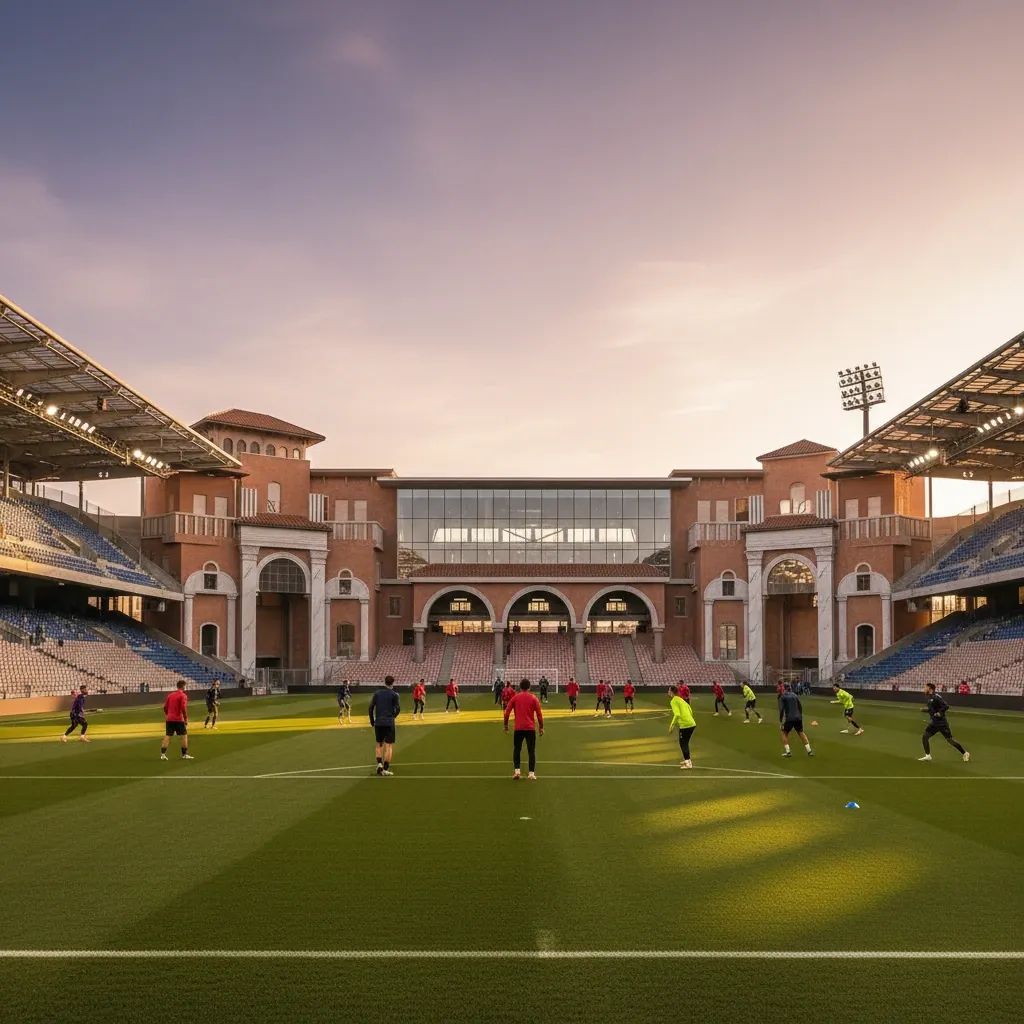
The Malta Cabinet is facing organized resistance over its proposal to allocate green land in Pembroke for a football campus project, a decision that environmental groups and residents warn will sacrifice virgin territory to commercial sports development while worsening traffic congestion and environmental strain in an already overburdened locality.
Why This Matters:
• Green land transfer: A site valued between €75M and €100M that previously resisted private school development is now slated for Valletta FC and Swieqi United FC facilities.
• Environmental threat: The site sits adjacent to a Natura 2000 protected area, raising concerns about habitat disruption, noise, and light pollution.
• Traffic chaos: Pembroke already struggles with congestion from ongoing large-scale developments; a sports complex is expected to compound the problem significantly.
• Community mobilization: A parliamentary petition opposing the land transfer has gathered hundreds of signatures since February 2025.
A Campus Without a Home—Or Just Poor Planning?
Prime Minister Robert Abela's government announced the Pembroke football campus initiative in February 2025 as a long-overdue solution for Valletta FC, a club that has reportedly operated for decades without dedicated facilities. The plan also includes infrastructure for Swieqi United FC, framed as a move to elevate Malta's sporting capabilities through high-level training grounds and match venues.
Yet the choice of location has ignited fierce pushback. The targeted parcel—a stretch of undeveloped green land—was previously earmarked for office buildings and private residences, and carries an estimated market value between €75M and €100M. Moviment Graffitti, one of the leading voices in the opposition coalition, describes the site as "beautiful virgin land" being handed over for commercialization disguised as sports development.
What complicates the narrative further is that Valletta FC was allocated a sizeable piece of land in Ħal Farruġ less than six years ago for a sports village. Activists now openly question why that site remains unused while the government pivots to Pembroke's green corridor.
What This Means for Residents
For those living in and around Pembroke, the proposal represents a direct assault on quality of life. The area already hosts multiple sports complexes, and residents argue that introducing yet another facility—particularly one designed for intense commercial use—will push the locality past its carrying capacity.
The Pembroke Local Council has not opposed sports facilities outright but has demanded strict mitigation measures. These include underground parking, advanced lighting technology to limit light spill, and a substantial green buffer zone between the campus and residential neighborhoods. The council has also insisted that the facility serve community purposes without morphing into a commercial hub with shopping complexes or entertainment zones.
However, activists remain skeptical. The government's stated intention to amend Local Plans—a process under Malta's development control system that allows changes to the planning guidelines for specific areas or developments—has raised alarm bells. Opponents fear this sets a precedent for transforming public green space into profit-driven developments under the guise of public benefit.
Environmental Red Flags
The environmental case against the proposal is anchored in proximity and cumulative impact. The site borders a Natura 2000 Park, a protected ecological zone under European Union directives. Environmental groups warn that constructing a football campus this close to such a sensitive area will generate noise pollution from training sessions and matches, light pollution from floodlights, and increased vehicular emissions from event-day traffic.
Beyond the immediate site, the loss of open green space in Pembroke diminishes the locality's natural character and eliminates a buffer that currently absorbs some of the area's environmental pressures. The coalition opposing the project argues that the land should instead be integrated into the Natura 2000 park, preserving it as a public ecological asset rather than converting it into a high-traffic sports venue.
Biodiversity loss and habitat disturbance are also cited as risks. The combination of construction activity, ongoing facility operations, and the influx of visitors threatens to degrade the ecological integrity of adjacent protected zones, where even modest increases in human activity can have outsized effects on wildlife and plant communities.
Traffic and Infrastructure: Already at Breaking Point
Pembroke's road network is already under significant stress. Multiple large-scale developments in recent years have introduced waves of construction traffic, and the area's arterial routes struggle during peak hours. Adding a football campus—which international precedents show can generate tens of thousands of vehicle trips per event—risks tipping the system into chronic gridlock.
A study of the Las Vegas Raiders Stadium (capacity 65,000) estimated approximately 58,500 total trips for a sold-out event, with severe impacts on surrounding intersections and highways. While the Pembroke campus is unlikely to host events of that scale, even mid-sized matches and training sessions will draw substantial crowds, particularly if commercial amenities are included.
Mitigation measures employed elsewhere include enhanced public transportation systems, comprehensive parking solutions with strategic placement to minimize bottlenecks, and event-day traffic management such as temporary road closures and one-way systems. However, none of these strategies have been publicly detailed by the Malta government for the Pembroke proposal, leaving residents uncertain whether the infrastructure can support the added load.
Pedestrian safety is another concern. International best practices emphasize wide pathways, clear signage, and separation of pedestrian and vehicle flows. In the case of the Las Vegas stadium, planners recommended a pedestrian bridge over a major highway to maintain safety during high-traffic events. Pembroke's narrow roads and mixed-use environment make similar interventions essential, yet no such plans have been disclosed.
A Battle Already Won Once
Pembroke residents are no strangers to development fights. In 2017, a coalition of NGOs and local activists successfully blocked a private school development on the same green area now targeted for the football campus. That victory established the land as a contested space, one that the community believes should remain off-limits to large-scale construction.
The current proposal has reignited that coalition, with Moviment Graffitti leading a renewed campaign. The parliamentary petition launched in early 2025 has already attracted hundreds of signatures, signaling broad public opposition. Activists frame the issue not just as environmental or traffic-related, but as a fundamental question of governance and public trust: whether the government will honor past community victories and ecological commitments, or whether commercial interests will override them.
The Economic Angle
The government's decision to allocate land worth potentially €100M for sports facilities has also drawn scrutiny from an economic perspective. Critics argue that such valuable real estate could generate far greater public revenue through alternative uses—or simply by remaining green space that enhances property values and quality of life in surrounding neighborhoods.
There is also the question of opportunity cost. If the Ħal Farruġ site allocated to Valletta FC six years ago remains dormant, why not invest in developing that land instead? The lack of transparency around that earlier allocation fuels suspicions that the Pembroke proposal is driven by factors beyond sporting necessity—whether political favor, developer pressure, or other undisclosed interests.
What Happens Next
The Malta government has not announced a timeline for final approval, but the proposal is advancing through administrative channels. The outcome will likely hinge on whether the coalition opposing the project can sustain public pressure and whether the Pembroke Local Council's conditions are adopted as binding requirements rather than voluntary guidelines.
For now, the battle lines are clear: on one side, a government framing the campus as a necessary investment in sports infrastructure; on the other, a community insisting that green land, environmental protection, and livability must take precedence over commercial development dressed in athletic gear. The petition's momentum and the memory of 2017's successful resistance suggest this fight is far from over.


