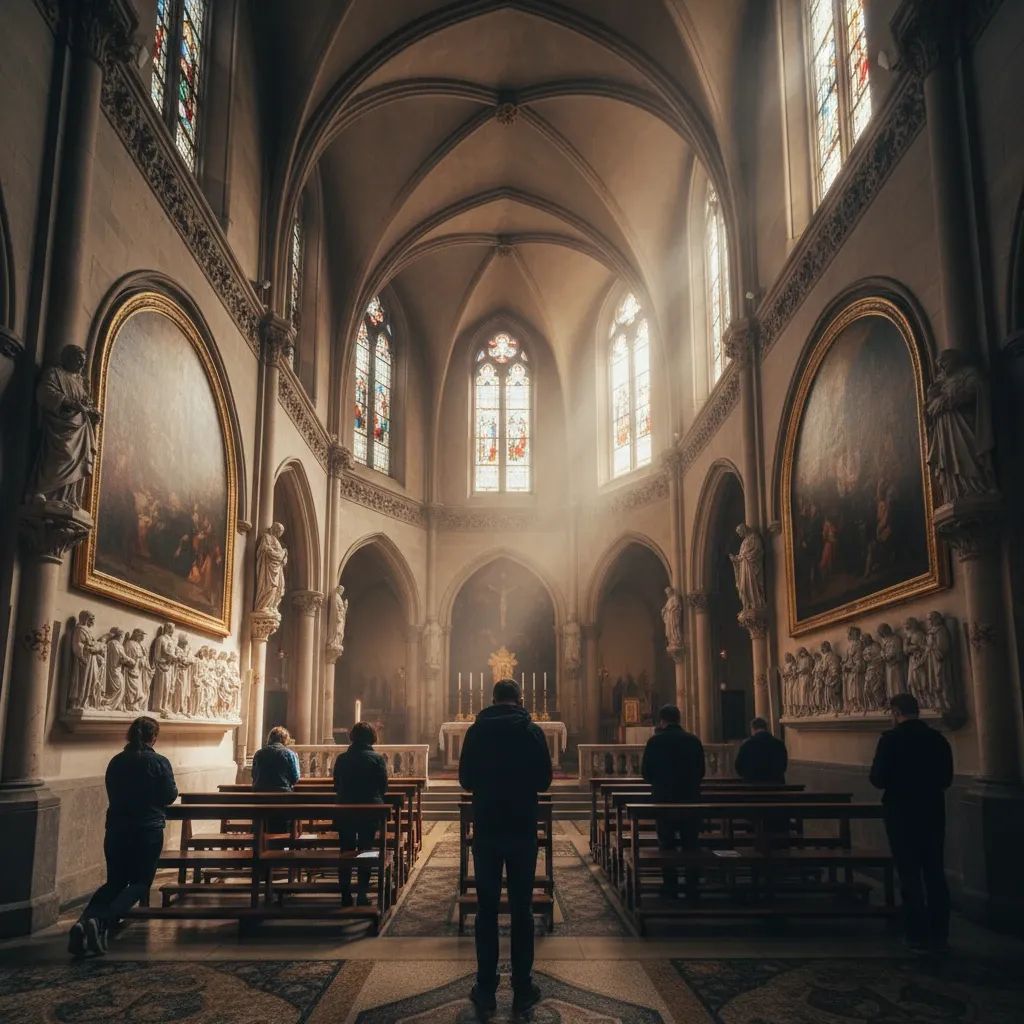
San Lawrenz on Gozo will hold a solemn ceremony on July 2, 2026, at the local cemetery to mark a quarter-century since the exhumation of Dun Ġużepp Cauchi, a priest whose life of radical humility and reported intercessions have kept his memory vivid in Malta's Catholic community. San Lawrenz is a small village on Gozo, Malta's sister island, where local saint veneration forms a distinctive and deeply rooted aspect of Catholic life—a tradition that defines much of religious practice across the Maltese archipelago, which has one of Europe's highest Catholic population percentages. The service, led by Mgr. Tarċis Camilleri, Episcopal Vicar for the Clergy, commemorates the July 2001 transfer of the priest's remains from Taż-Żejt Cemetery in Għarb to their current resting place in San Lawrenz.
Why This Matters
• Local devotion persists: Believers continue to credit Dun Ġużepp with answered prayers and graces, making his former home a pilgrimage site since 1985.
• Community-led veneration: The Dun Ġużepp Cauchi Commemoration Committee, a lay organization, coordinates annual events and maintains the prayer house, with consistent visitor traffic particularly around feast days and the July anniversary.
• Cultural heritage intact: Public monuments, annual Masses, and preserved artifacts anchor the priest's legacy in San Lawrenz civic identity.
A Life Defined by Penance and Eucharistic Devotion
Born in San Lawrenz in 1900, Dun Ġużepp Cauchi died on August 13, 1955, aged 55, after a priesthood marked by physical mortification and Eucharistic fervour. He wore a hair shirt (ċilizzi), items now displayed in his converted residence, and often fasted from midnight until receiving Communion at midday Masses celebrated in neighbouring parishes. Witnesses recount that he spent nights praying and explicitly asking to share in the suffering of the Cross.
His ministry centered on the dying and spiritually distressed. He offered long vigils at bedsides and dispensed advice grounded in scripture and providence. Yet his career was interrupted by an anonymous accusation that led to suspension from clerical duties. Church historians note he accepted the punishment without protest, using the period to deepen his detachment from secular concerns.
The 2001 Exhumation and Its Ritual Significance
In 2001, Can. Michael Borg, then parish priest of San Lawrenz, petitioned the Gozo Curia to relocate Dun Ġużepp's remains from the overcrowded Taż-Żejt Cemetery. On July 2 and 3 of that year, workers exhumed the priest alongside two other clerics. After examination, Dun Ġużepp's bones were placed in a glass coffin to allow visual veneration, then sealed within an outer wooden casket. A solemn procession transferred the remains to the new San Lawrenz Cemetery on July 8, 2001, an event now commemorated each summer.
The decision to exhume and display the remains reflected the intensity of local devotion and mirrored practices reserved for figures whose sanctity is widely recognized. Church authorities permitted the action despite the absence of a formal beatification cause, granting exceptional recognition to the community's spiritual conviction.
What This Means for Residents
For Maltese Catholics, particularly on Gozo, Dun Ġużepp represents a bridge between folk piety and institutional Catholicism. His former residence on Triq tar-Raħal in San Lawrenz functions as a de facto shrine, open to pilgrims who leave ex-voto objects—medals, photographs, and written petitions—testifying to graces they attribute to his intercession. The house preserves his hair shirt, breviary, and other personal effects, curated since 1985. Committee members report consistent visitor traffic with testimonies of answered prayers circulating informally among the devotee community.
While no diocesan inquiry has been opened to investigate his life formally under canon law—the first step toward declaring him Servant of God—this administrative distinction does not diminish the lived reality of local faith. For believers in San Lawrenz, the community's 25-year commitment to preserving and honoring Dun Ġużepp's memory testifies to genuine spiritual conviction, regardless of Vatican procedural status.
Institutional Memory and Public Monuments
The San Lawrenz Local Council unveiled a monument in Dun Ġużepp's honour in 2006 on Triq ta' Bieb il-Għar, embedding his memory in civic geography. The parish church displays a painting by Paul Camilleri Cauchi depicting the priest in vestments and carrying a processional cross, positioned in one of the apses for daily visibility during Mass.
Annual July 8 Masses at the cemetery draw dozens of parishioners, and milestone anniversaries attract episcopal participation. The 20th anniversary in 2021 saw a concelebration led by the Bishop of Gozo, while the upcoming 25th anniversary service will proceed under Mgr. Camilleri due to the Bishop's absence.
Published collections of Dun Ġużepp's sermons and spiritual writings circulate among devotees, preserving his theological emphases: trust in divine providence, Eucharistic adoration, and embrace of suffering. His literary legacy offers insight into mid-20th-century Maltese spirituality, a period when penitential practices and mystical theology held greater prominence in clerical formation.
Tourism and Religious Heritage
Tourism officials note that religious heritage sites in Malta, including those linked to figures like Dun Ġorġ Preca (canonized in 2007), attract international visitors. The San Lawrenz community's stewardship of Dun Ġużepp's memory contributes to Gozo's distinctive identity as a pilgrimage destination, benefiting local cultural and economic interests.
For now, the village continues its quiet observance, preserving artifacts, hosting annual liturgies, and passing down stories of a priest whose hair shirt and midnight fasts embody a spirituality increasingly foreign to contemporary Catholicism. The faithful in San Lawrenz have rendered their verdict, and the 25th anniversary commemoration stands as a testament to grassroots devotion sustained across generations.