A Toxic Cloud Over Southern Malta—What Residents Need to Know
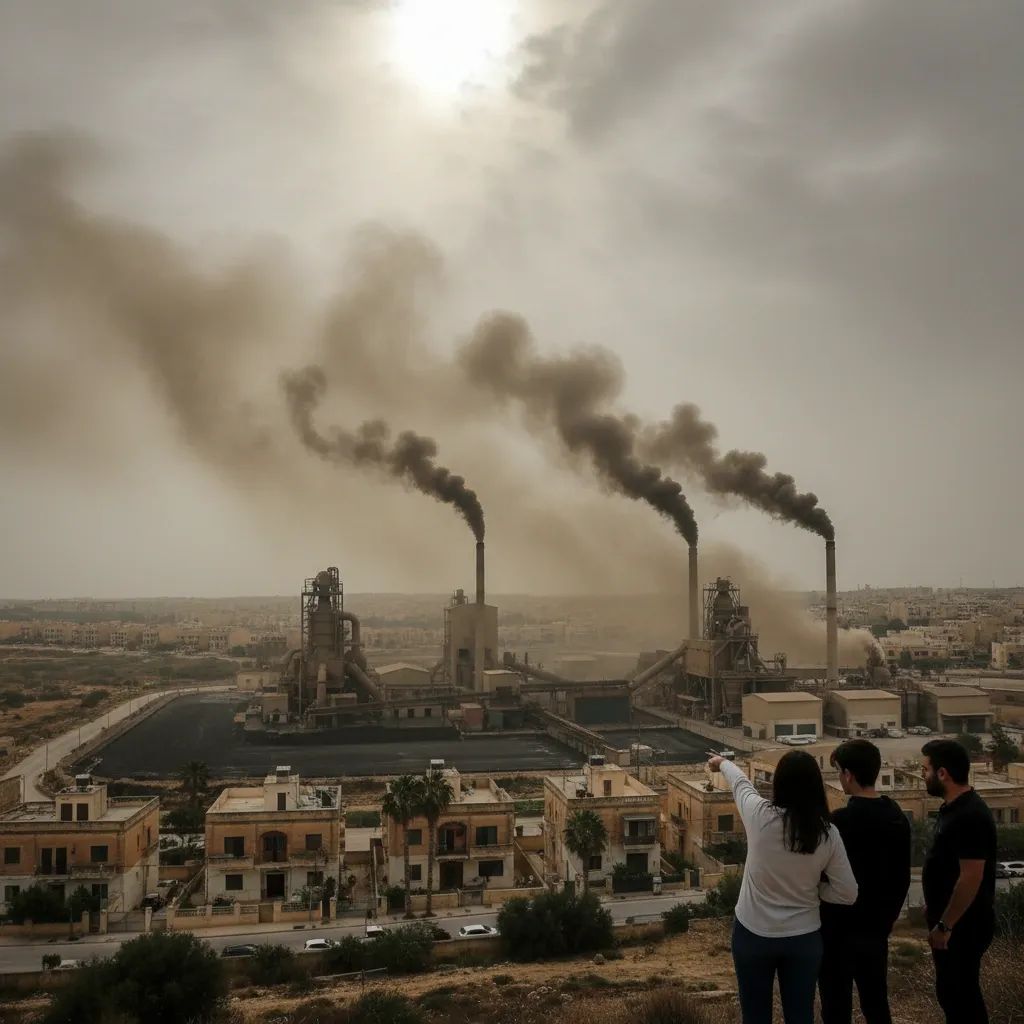
Smoke from an industrial fire at a Kirkop-based vehicle recycling facility has forced the Civil Protection Department to issue health warnings across three localities on Friday. The incident marks the fourth major blaze at a Maltese scrapyard within five months, underscoring a persistent gap between environmental regulations and their real-world enforcement on this densely populated island.
Key Takeaways
• Immediate action required: Residents in Kirkop, Mqabba, and Żurrieq must keep windows and doors sealed until authorities issue an all-clear.
• Health concern: Scrapyard fires release particulate matter, dioxins, and heavy metals—pollutants that penetrate deep into the lungs and accumulate in the food chain.
• Pattern of fires: Four major scrapyard blazes in five months point to recurring regulatory failures, not isolated incidents.
Understanding the Immediate Threat
When scrap vehicles burn, they don't just produce smoke. The combustion releases a lethal cocktail of toxins that makes isolation indoors a matter of survival, not inconvenience. Particulates smaller than 2.5 micrometers—invisible to the naked eye—slip past the nose's natural defenses and embed themselves in the alveoli, where oxygen enters the bloodstream. Dioxins, formed when plastics combust at low temperatures, bind to fatty tissues and bioaccumulate over decades. Benzene and other volatile organic compounds trigger neurological damage.
For people with asthma, chronic obstructive pulmonary disease, or cardiovascular disease, even a few hours of exposure can trigger a medical emergency. The risks escalate for pregnant women and young children, whose developing lungs are more vulnerable to chemical insult. On Malta, where over 500,000 residents live on just 316 square kilometers, smoke from a single industrial fire disperses across populated areas far faster than in less densely populated regions, exposing more people in shorter timeframes. This isn't abstract health policy—it's the difference between a normal afternoon and a hospital visit for someone in Żurrieq.
The November 2025 fire at the JAC Steel Ltd scrapyard in Marsa provides a sobering precedent. That blaze burned for nearly 24 hours and required 153 firefighters, 30 appliances, and 4.7 million liters of water to extinguish. The smoke drifted far enough to force the closure of the Addolorata Cemetery, ground light aircraft, and cancel lectures at MCAST. Raw animal feed stored near the site had to be isolated after concerns that toxic compounds had entered the supply chain. Schools across the south reported students with unexplained respiratory symptoms.
Why These Fires Keep Happening
The Marsa scrapyard that burned in November 2025 had been warned one month earlier by the Environment and Resources Authority about excessive waste accumulation and vehicles that hadn't been properly drained of oil and fuel. Yet the same facility had its environmental permit renewed in 2023 with fire safety conditions attached. Those conditions were never transparently verified before the November blaze erupted.
This is not a story about a single negligent operator. It's a story about a regulatory system that issues permits with safety requirements but lacks the resources, transparency, or political will to enforce them consistently. Investigations into the Marsa incident revealed that the site had a documented history of environmental infringements stretching back to 2021. The operator faced penalties, yet continued to accumulate combustible materials in close quarters.
A separate fire on November 12, 2025, at a Tal-Barrani scrapyard required 97 firefighters and 16 hours to control. This facility also carried a history of sanctioned violations. In March 2026, another fire at a Dingli quarry containing tyres, asbestos, and mixed hazardous waste raised fresh alarms about the storage of combustible materials in semi-residential zones.
Four fires in five months is not random misfortune. It reflects a regulatory model that operates in reverse—authorities react after disasters rather than prevent them.
What the Rules Say (and Why They're Not Working)
Malta's environmental framework, updated in May 2025, introduced a risk-based classification system. Activities involving hazardous waste storage were placed in the highest-risk tier, requiring immediate environmental permits from the ERA. Operators must remove oil, fuel, and flammable fluids from end-of-life vehicles before storage, properly dismantle and segregate parts, and maintain digital records of all waste handling.
The Occupational Health and Safety Authority separately mandates risk assessments and accident prevention protocols. The Control of Major Accident Hazard Regulations require safeguards against the mixing of incompatible chemicals or storage of unstable substances.
On paper, this framework aligns with EU Directive 2008/98/EC and constitutes a "cradle to grave" control regime for hazardous materials. In practice, enforcement remains reactive. The ERA conducts routine and complaint-based inspections, but penalties—administrative fines and daily sanctions—appear insufficient to compel sustained compliance. When a scrapyard receives a warning in October, receives a renewed permit in the same year, and then burns down in November, the system has demonstrably failed.
The Air Quality Question
During the Marsa fire, several air quality monitors did not register a spike in pollution, despite visible plumes engulfing populated areas. This raises a critical blind spot: Malta's monitoring network may not accurately capture exposure, particularly if smoke disperses rapidly due to wind or thermal dynamics. Residents may believe they are safe based on official data that simply didn't detect the hazard.
For a population of over 500,000 living on just 316 square kilometers, this gap between perceived and actual air quality is not a technical quibble—it's a public health vulnerability.
Practical Steps for Affected Residents
If you live in Kirkop, Mqabba, or Żurrieq, follow these precautions until the CPD announces an all-clear:
• Seal your home: Close all windows and doors. Use weatherstripping if smoke is visible indoors.
• Avoid outdoor activity: Cancel outdoor exercise, limit children's outdoor play, and keep vulnerable family members indoors.
• Monitor official channels: The CPD and ERA will post updates on social media and the government website. Don't rely on social media rumors for evacuation orders.
• Document health effects: If anyone experiences coughing, shortness of breath, or chest tightness, seek medical attention and report it to health authorities. Public health data on fire-related illness informs future regulatory decisions.
• Check vehicle filters: If you drove through the smoke, your cabin air filter may be contaminated. Replace it after the fire is contained.
What Comes Next
The ERA and CPD will investigate the cause of the Tar-Robba fire. Key questions will determine whether this blaze was preventable:
• Were flammable fluids properly removed from stored vehicles?
• Did the facility comply with its permit conditions for fire suppression systems?
• Was waste accumulation at levels that accelerated the fire's spread?
Politically, the recurrence of these fires has intensified calls for independent audits of ERA enforcement practices and public disclosure of permit conditions and compliance timelines. Environmental advocates are pushing for stricter penalties, including facility shutdowns and criminal liability for repeat violators, to shift the industry from reactive remediation to proactive risk management.
Without meaningful change, residents in southern Malta will continue to face the same pattern: a massive blaze, urgent warnings to seal their homes, smoke drifting across the island, and promises that "next time will be different."
The scrapyard industry is essential for Malta's waste management goals, but the current model—high volumes of combustible material, insufficient oversight, and penalties that fail to deter—has proven unsustainable. The fires of the past five months are not anomalies. They are indicators that the system itself requires redesign.