
The Balcony Rescue That Exposed a Regulatory Void
Firefighters hoisting residents off balconies on Friday afternoon might have looked like a textbook emergency response—and it was. But the April 3 electrical fire in a Marsascala apartment block also revealed something far more uncomfortable: most of Malta's apartment dwellers live under fire safety rules that carry no legal weight. The Civil Protection Department executed a flawless rescue using turntable ladders and professional coordination, but that success masks a deeper problem—your building's safety hinges on goodwill rather than law.
Why This Matters
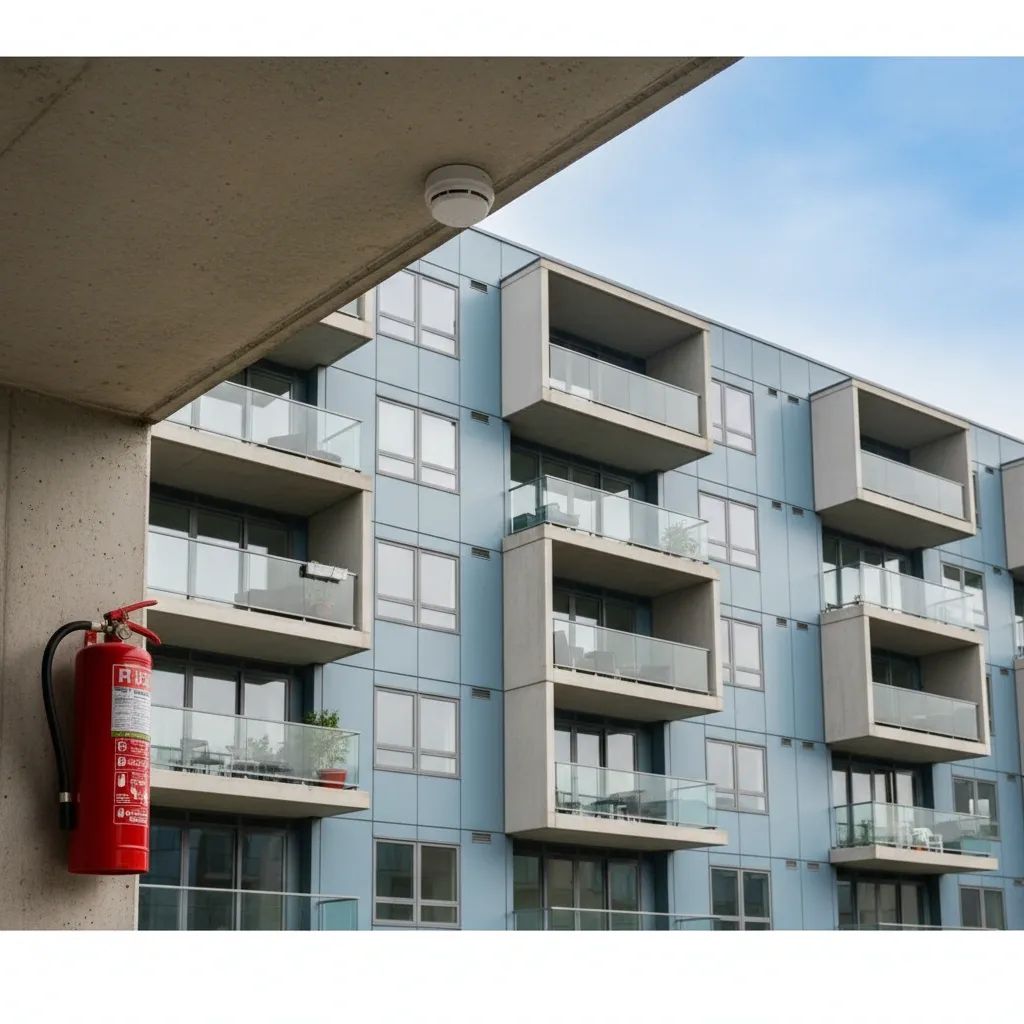
• No legal mandate exists for landlords to install smoke detectors, fire extinguishers, or marked exits in common areas
• Electrical fires in meter rooms represent documented hazards, yet no mandatory inspection regime requires periodic safety audits of aging building infrastructure
• The rescue worked because equipment was available and response was quick—but neither outcome is guaranteed next time
• Malta's fire safety guidelines remain advisory only, not binding regulation
How the Emergency Unfolded
Around midday Friday, residents of the apartment block heard alarms and felt smoke filling the stairwells. The source: electrical meters in the common area had ignited, turning the building's interior evacuation routes into a no-go zone. Trapped residents moved to their balconies, the only refuge as smoke and heat climbed through the structure.
Emergency dispatch routed the call to Fire Stations 1, 4, and 5. Crews arrived to find exactly what firefighters dread—multiple people stranded on residential balconies with no safe descent available. The response was methodical. A 32-meter turntable ladder positioned near the building's facade allowed sequential extraction. A 13.5-meter extension ladder provided secondary rescue capacity. Some residents had animals with them; those too were brought down safely and accounted for.
The entire operation succeeded without injury. The fire was contained before advancing into occupied units. On paper, the story reads as a clean emergency services victory. The reality underneath is less tidy. Neither the Civil Protection Department nor building management released specifics on how many residents required rescue, whether the building remains habitable today, or where those displaced have sheltered since Friday.
The Electrical Meter Fire: Why This Matters Now
Electrical fires in meter rooms represent a documented vulnerability in Malta's aging apartment stock. Most common-area infrastructure—wiring, panels, breaker systems—was installed when buildings were constructed, often decades ago. Modern apartment residents now operate equipment and appliances at consumption levels that older buildings were not necessarily designed to support.
Malta mandates no periodic electrical safety audits for occupied buildings. A landlord faces zero legal obligation to have qualified electricians inspect meter rooms, test circuit integrity, or certify that infrastructure meets current standards. Contrast this with European Union countries where electrical installations must be formally tested and certified at fixed intervals. Malta's approach relies on problems announcing themselves through incidents rather than through preventive professional assessment.
The dense urban fabric compounds the risk. Marsascala, like most residential neighborhoods, features narrow staircases, older masonry work, and limited fireproofing between units. An uncontrolled fire in a meter room could threaten an entire block within minutes. Friday's incident succeeded as a near-miss through rapid reporting and quick equipment response.
What Legally Applies to Your Building Today
Your apartment block operates under fire safety guidelines with no legal force whatsoever. Your landlord has no legal obligation to install smoke detectors in hallways. Fire extinguishers in common areas? Optional. Clearly marked emergency exits? Not required. A roof access plan for residents? Suggestion only. The Building and Construction Authority focuses on energy efficiency and construction-phase oversight, leaving existing residential fire safety in regulatory limbo. Guidelines exist as recommendations that carry zero enforcement penalty.
This creates a two-tier system. Conscientious building owners who voluntarily install safety equipment go above their legal obligation. Negligent ones face no consequences because no law exists to violate. Residents have no recourse—they cannot sue a landlord for failing to provide equipment that is not legally mandated, and they cannot petition authorities to force upgrades based on nonbinding guidelines.
The Regulatory Gap
Malta's approach to residential fire safety remains incomplete. The Building and Construction Authority and the Civil Protection Department have advocated for comprehensive regulatory overhaul—consolidating building regulations, mandating contractor licensing, requiring certification by trained professionals for fire safety work, and introducing updated building codes. The strategic direction toward reform is sound. Implementation timelines remain uncertain.
A new Fire Safety Act has entered development stages with no confirmed ratification date. A separate Building Code development is underway with similarly unclear timelines. Residents have learned the rhythm: proposal, revision, further development. Meanwhile, apartment blocks built decades ago remain physically unchanged and legally unencumbered.
What Actually Protects Residents Right Now
If you live in a Maltese apartment block, legal protection from fire is essentially nonexistent. Practical safety depends on three factors: your landlord's willingness to spend money, your building administrator's initiative, and your personal awareness.
What you can control unilaterally: Install a battery-operated smoke detector in your own unit. Maintain a fire extinguisher in your kitchen and know how to use it. Identify all escape routes from your apartment—balconies, windows with fire ladder access, adjacent balconies in older blocks. Check that stairwells are not blocked by stored furniture, old doors, or maintenance debris. When apartment hunting, ask prospective landlords about fire safety provisions. While they are not legally required to provide anything, that question signals market demand for better standards.
If your building has a residents' association, push for voluntary installation of fire safety equipment in common areas and annual fire drills. Request that building management create an evacuation plan and post it visibly. These are not legal requirements—they are defensive measures residents must create independently.
The Civil Protection Department offers guidance and will respond to fires. The Building and Construction Authority exists to hear complaints about unsafe conditions, though without binding regulations, their enforcement power is limited to advising. Both agencies recognize the vacuum and are advocating for reform. That advocacy remains politically slower than physics.
The Waiting Period
Malta is moving toward modern fire safety regulation. The direction is correct. The pace is uncertain. Reforms in the construction sector have accelerated after several high-profile safety concerns, but the Fire Safety Act development timeline remains unclear. The Building Code rollout will require a phased implementation process.
Friday's rescue represents what happens when professionals, equipment, and quick reporting align perfectly. The next electrical fire may not inherit those advantages. The gap between a successful rescue and a disaster is where legislation is supposed to intervene. As of now, comprehensive binding fire safety regulations for residential buildings have not yet been enacted.
Until comprehensive fire safety regulations are ratified and building administrators face legal compliance deadlines, apartment safety in Malta remains a patchwork of outdated guidelines and voluntary measures. The system works until it fails. When it fails next, the question is whether legal frameworks will have evolved to prevent failure. Today, they have not.


