
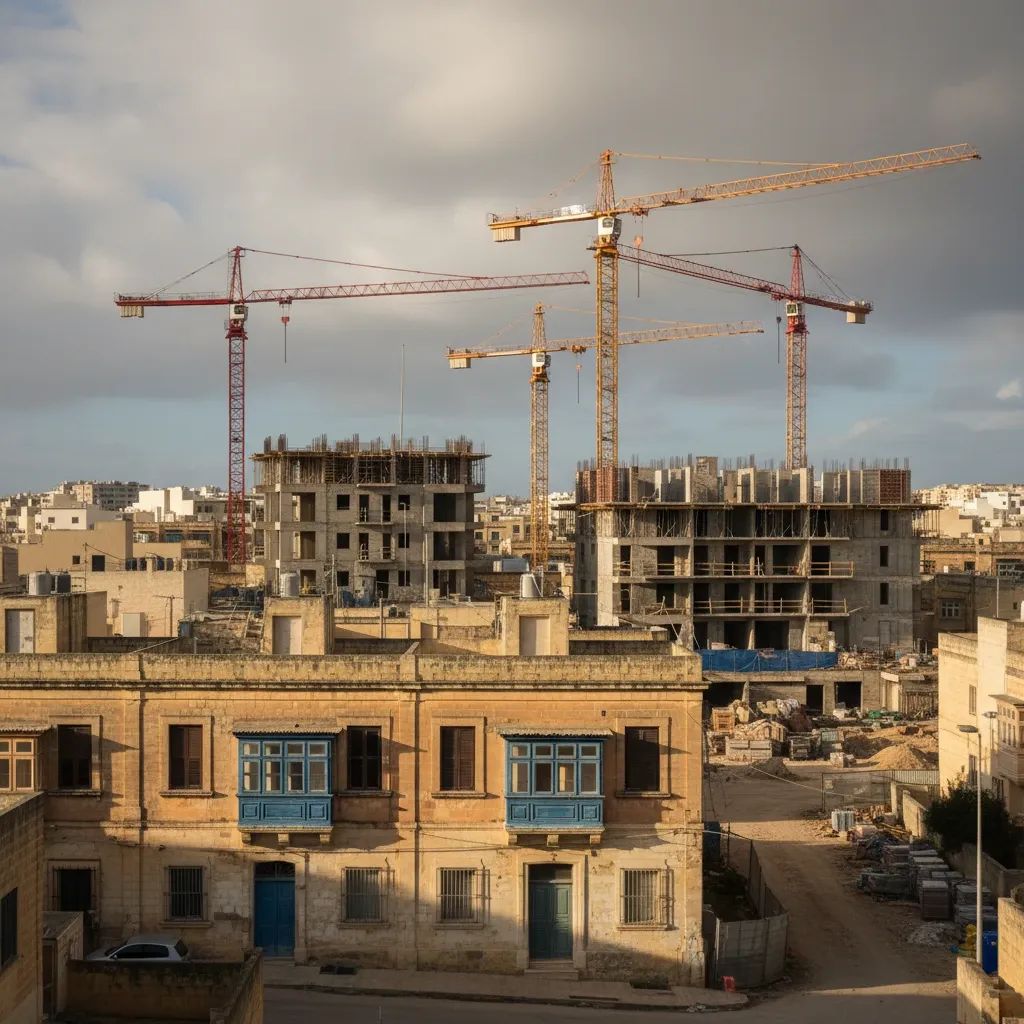
Citizen activists and environmental groups across Malta are mounting their most organized challenge yet to the government's planning reform bills, which NGOs argue could weaken Outside Development Zone (ODZ) protections and accelerate construction in currently protected agricultural and coastal areas. The confrontation reflects a broader shift: when established political parties fail to act as meaningful checks on development interests, residents are building independent institutions to do the job themselves.
What's Actually at Stake
Malta's Outside Development Zones (ODZ) protect approximately 60% of the island's 316 square kilometers of total land area, including agricultural land, coastal zones, and remaining countryside. Once land is developed, it cannot revert to open space. The island's already-dense footprint means the ODZ protections represent the last remaining undeveloped territory.
The immediate situation:
• Ten environmental organizations have formally challenged the government's current planning reform bills, signaling the most organized resistance in years to developer-friendly changes
• The bills, currently before Parliament, would modify how Malta's local plans operate and streamline approvals for certain project categories
• Environmental groups fear the proposals create legal pathways for developers to circumvent existing ODZ restrictions
• No timeline has been publicly announced for the Parliamentary vote, though coalition members expect discussion within weeks
Why residents should care now:If the reforms pass as proposed, expect accelerated construction in currently protected areas, denser residential developments where local plan changes permit building, reduced public input in permit decisions, and infrastructure strain on water, electricity, and road networks already operating near capacity. Housing supply might increase, potentially helping affordability, but at environmental and livability costs many residents find unacceptable.
If the NGO coalition succeeds in substantially modifying the reforms, Malta gains strengthened environmental protections and more meaningful public consultation. The trade-off: housing development slows in an already tight property market, potentially exacerbating affordability pressures residents already face.
How Malta's Planning System Works
Malta's planning system operates through local plans—zoning documents that designate where development is permitted. The Outside Development Zones are the boundaries supposedly protecting undeveloped land from building. However, local plans can be revised through administrative processes, which is where the current controversy centers.
The NGO coalition's core concern: if local plan revisions are made too flexible or subject to administrative reinterpretation, what stops a developer from arguing that "mixed-use commercial development" is technically allowed in currently protected areas? The coalition has demanded clear, unambiguous legal safeguards. Opposition parties have proposed constitutionally entrenching ODZ boundaries, making future weakening substantially harder.
What the Reform Bills Actually Propose
The government's planning reforms would modify local plan procedures and streamline approvals for certain project categories. While the bills' specific text hasn't been publicly released in detail, government statements indicate the reforms would:
• Allow faster processing of applications in designated development corridors
• Expand administrative discretion in permit decisions
• Modify consultation requirements for lower-impact projects
• Revise height and density limitations in specified areas
The NGO coalition characterizes the package as "explicitly developer-written," though they have not provided detailed clause-by-clause analysis. This information asymmetry itself fuels resident concern—major planning changes should include public consultation before Parliamentary debate, they argue.
Where to Participate and Get Information
Residents wanting to engage with this debate can:
• Contact the Malta Environment and Planning Authority (MEPA) for access to draft bills
• Review positions from coalition members: Environmental NGOs including Din l-Art Ħelwa, Friends of the Earth Malta, and other conservation organizations have published statements
• Attend any scheduled Parliamentary consultations when announced
• Submit written comments to Parliament's planning committee if formal consultation periods are opened
The Political Context Behind the Conflict
Malta's political system has historically struggled to balance development interests against environmental and livability concerns. Both major political parties have traditionally depended on construction sector donations and business community support, creating structural misalignment between resident concerns and party incentives.
For decades, Malta's political establishment treated development as primarily an economic question—more housing units, more commercial space, more GDP growth—rather than a quality-of-life question. Traffic congestion increased. Water pressure dropped during summer months. Neighborhoods became denser without corresponding infrastructure investment.
This context explains why residents organized outside traditional political structures. The coalition represents not just environmental advocates but mainstream residents concerned about practical outcomes: water stress, traffic congestion, loss of remaining countryside, and whether Malta can absorb another generation of building at current intensities.
A Shift Toward Negotiated Solutions
One encouraging pattern emerging globally, and beginning to appear in Malta, is a move away from pure confrontation toward negotiated outcomes. Sophisticated resident coalitions now employ Community Benefits Agreements (CBAs)—legally binding contracts requiring developers to deliver local job creation, environmental standards, or social provisions as conditions for approval.
Malta's coalition has implicitly adopted this approach by proposing constructive alternatives—constitutional entrenchment of ODZ boundaries—rather than simple obstruction. The movement from "Stop This" to "Here's a Better Way" represents strategic maturation and signals willingness to discuss rather than simply obstruct.
What Comes Next
The confrontation over planning reforms will likely establish precedent for years. If the coalition succeeds in substantially modifying the bills, emboldened resident groups will challenge individual projects with confidence that organized opposition moves outcomes. If the reforms pass, the focus shifts to contesting specific developments under the new rules through legal channels.
The deeper reality: traditional top-down development decision-making in Malta is changing. Political parties controlled this process for decades by mediating between public and private interests. Into the vacuum created by weakened political mediation stepped civil society organizations, armed with legal tools to contest decisions and volunteer energy sufficient to sustain campaigns.
For Malta residents, this planning reform battle represents more than a technical policy debate—it's a referendum on whether government genuinely engages with constituent concerns or pursues developer accommodation regardless of resident opposition. The Parliamentary outcome will telegraph the answer.


