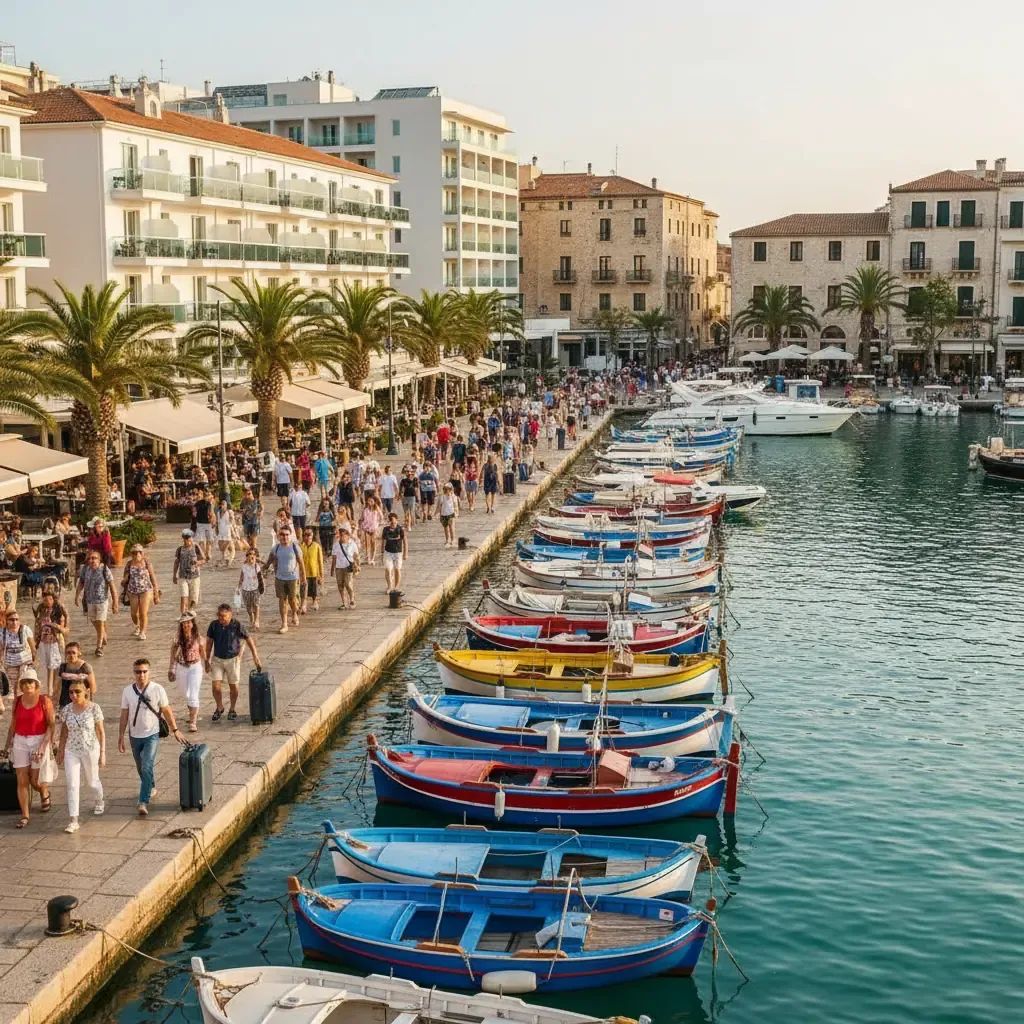
The Malta Housing Authority and Ministry for Tourism are confronting a housing and tourism crisis in the country's political heartland that has left longtime residents priced out, crowded out, and feeling increasingly alienated in their own neighborhoods. The First District—home to Valletta, Floriana, Ħamrun, Marsa, and Pietà—has become ground zero for a collision between soaring property values, short-term rental saturation, and a tourism economy that UNESCO warned in July 2025 is threatening the capital's World Heritage status.
Why This Matters
• Housing affordability has collapsed: Valletta's Housing Affordability Index stood at just 62.3 in 2021, among the lowest in Malta, with median apartment prices climbing far faster than incomes.
• One in five dwellings now serves tourists: Over 600 short-term rental listings operate in Valletta alone, while the resident population has dropped below 6,000.
• UNESCO deadline looms: Malta has until December 2026 to demonstrate meaningful reforms or risk Valletta being placed on the World Heritage in Danger list.
• New regulations take effect in 2026: Stricter licensing, occupancy caps, and a 90-day booking limit aim to professionalize short-term rentals and push properties back into long-term housing.
The Residential Exodus
Floriana's local council has repeatedly raised alarms over the relentless conversion of historic family homes into boutique hotels, offices, and tourist lodging. Residents describe their communities as "getting smaller and smaller," not just in population but in character. In Ħamrun and Marsa, personal accounts reveal families resorting to living in garages or overcrowded single-bedroom flats shared by multiple people, unable to compete with foreign workers and tourism-driven rental demand.
The data tells a stark story. The Housing Authority concluded five projects in Valletta, Floriana, and Birkirkara by the end of 2025, with 16 more rolling into 2026, but the broader social housing stock—estimated at around 8,000 dwellings across Malta and Gozo—remains concentrated in the Southern Harbour region. Meanwhile, Malita Investments is delivering 752 apartments and 698 parking spaces across ten locations by 2026, many near Valletta in Luqa, yet affordability remains out of reach for most first-time buyers.
The Foundation for Affordable Housing, a joint venture between the government and the Archdiocese of Malta, plans to sell approximately 260 new apartments at 30% below market value. While some sites include Fgura, Marsascala, and Kirkop, the scale of intervention still lags behind the scale of displacement.
Tourism's Double-Edged Sword
The First District is also the stage for Malta's most ambitious tourism expansion. Several luxury and boutique hotels are set to open in Valletta in early to mid-2026. The Ruby Hotel on Strait Street—an 88-room conversion of historic buildings with a rooftop pool and bar—is scheduled for early 2026. Romègas, an independent boutique hotel in a 500-year-old restored palazzo, will open in spring 2026 with 22 individually designed rooms. Iniala Valletta is undergoing an expansion aiming to reach 90 rooms by 2027 and 150 by 2030, transforming into what developers call a "boutique resort at a city scale."
The Ministry for Tourism and Public Cleanliness is developing a "Green Mobility Hotel Award and Labelling Scheme" for the Valletta Region as part of the EU-funded DESTINATIONS project, promoting sustainable urban mobility. New tourism regulations announced in April 2026 emphasize updated criteria for hotel developments, with a focus on boutique and luxury properties, and introduce classifications like "Heritage" and "Diffuso" labels for accommodations operating across multiple buildings.
But the volume-growth loop is unsustainable. UNESCO's formal warning cited tower pressure, poorly regulated tourism, and the conversion of residential properties into hotels as direct threats to Valletta's Outstanding Universal Value. The rise of tourism-oriented businesses has displaced shops catering to residents' daily needs, driving up the cost of living and fundamentally altering neighborhood liveability. Restaurants expanding into pavements, squares, and historic streets are commercializing public spaces that once belonged to the community.
What This Means for Residents
The Malta Tourism Authority is rolling out stricter enforcement under the new 2026 Tourism Accommodation Regulations. Short-term rental properties now require mandatory licensing, visible signage with license numbers and contact details, and face three-year disqualification penalties for unlicensed operations. Occupancy is capped at two persons per bedroom, with a total limit of 10 persons unless the unit has independent street access. Basement bedrooms are banned for short-term lets, and individual bookings cannot exceed 90 consecutive days to prevent the blurring of short-term and long-term housing.
The Tourism Community Support Pilot Project, launched in September 2025, specifically targets Valletta and Swieqi. The initiative tackles waste management, public order, and the regulation of both tourist accommodation and long-term rental properties, with potential extension to other areas based on results. Valletta's Mayor, Olaf McKay, believes the project can address issues like waste management, parking, and accessibility that have plagued the capital under the weight of high visitor numbers.
On the housing front, the First-Time Buyer Scheme has been made permanent, offering a €1,000 annual grant for 10 years, and buyers are no longer disqualified if they previously owned non-residential property. The Equity Sharing Scheme now includes individuals aged 25 and over, with the Housing Authority covering half the property price repayable over 20 years. The deposit loan ceiling under Housing Authority schemes has increased to €250,000, with interest covered by the authority.
The Housing Benefit Scheme provides up to €6,000 annually for private sector rent payments, while the Pre-1995 Rent Subsidy Scheme offers up to €10,000 annually for tenants in rent-controlled properties, along with free legal services. Incentives also encourage the rehabilitation of old, vacant properties, particularly those in Urban Conservation Areas, which are prevalent in the First District.
Lessons From Europe's Capitals
Malta's First District is following a well-worn path. Barcelona has moved to end renewals of existing short-term rental licenses and raised visitor taxes to fund local services and housing. Amsterdam caps the number of nights a home can be let annually, with strengthened enforcement and fines for non-compliance. Valencia has introduced tough zoning and licensing measures, pushing tourist rentals away from residential areas and imposing heavy fines for non-compliant platforms.
Venice introduced a paid access system for day visitors on peak days, limited guided groups to 25 people, banned loudspeakers in the historic center, and tightened cruise policy. Dubrovnik limits cruise arrivals to a maximum of two ships per day and monitors visitor flow within the Old Town using counting systems to slow access when density thresholds are approached.
Malta's challenge is compounded by its physical size. The island's limited land area means that the "volume-growth loop"—where more tourists necessitate more workers, demanding more housing and infrastructure—hits harder and faster than in larger European capitals. Short-term rental platforms are actively reducing the availability of long-term housing options, mirroring crises in cities like Lisbon and Prague.
The Path Forward
The government's dual-track approach—tightening short-term rental regulations while expanding social and affordable housing—represents a recognition of the crisis, but the timeline is tight. With UNESCO's December 2026 deadline looming, the Malta Tourism Authority and Housing Authority must demonstrate not just policy announcements but measurable outcomes: fewer unlicensed rentals, more long-term housing stock, and a stabilization of resident populations in Valletta and Floriana.
Residents' groups like ResidentiBeltin have been vocal about the loss of residential zones, and their concerns are now backed by international scrutiny. The question is whether the regulatory framework introduced in 2026 can reverse the tide—or whether the First District's transformation into a tourism precinct has already reached the point of no return.
For now, the district remains caught between its historical significance as the seat of power and its evolving role as a tourism magnet. The outcome will determine not just the fate of Valletta's World Heritage status, but the viability of urban life in Malta's most iconic neighborhoods.