Malta's Economic Paradox: Why Growth on Paper Doesn't Match Life on the Ground
Malta's economy is expanding steadily—GDP growth outpaces much of Europe, unemployment sits near record lows, and headline figures suggest prosperity. Yet walk through any neighborhood in Valletta, Sliema, or Mosta and the reality feels different: roads clogged during rush hour, electricity grids buckling under demand, hospitals overwhelmed, and housing prices climbing beyond reach for most working families. The disconnect is not accidental. It stems from a deliberate economic strategy now running into hard limits—a model that prioritizes volume over value, labor-intensive growth over sustainable productivity.
Key Takeaways
• Productivity is collapsing: Gross Value Added per worker grew just 1.4% in 2025, down from 5% the prior year, despite overall GDP expansion
• Infrastructure is failing: Population surged to 588,254 by end-2025; hospitals, power grids, and water systems cannot keep pace
• Real wages are shrinking: Workers in retail, construction, and hospitality face inflation outpacing pay growth, eroding purchasing power
• The model is exhausted: Continuous labor-market expansion—the engine of past growth—has hit its limit; a new economic strategy is urgently needed
Why This Matters
The numbers tell a story most residents already feel in their daily lives. Productivity tanked even as GDP expanded. Population hit record levels, straining infrastructure designed for a smaller island. Real wages are shrinking as inflation outpaces worker pay growth. And a July 2026 survey found overpopulation cited as the top national concern by nearly 40% of business leaders. The economy is growing, yet most people feel poorer.
The Malta Government's Economic Strategy Backfired
Between 2013 and 2019, Malta's Labour administration pursued a deliberate liberalization strategy—lower regulatory barriers, incentives for private investment, and heavy promotion of tourism and retail. It worked, at least on the surface. The economy surged. Unemployment fell. Government revenues climbed, allowing universal subsidies on utility bills and broad cash transfers to households and businesses.
The pandemic disrupted that trajectory. When lockdowns emptied the streets and foreign workers fled home for lack of work, the Maltese government responded with massive fiscal intervention—wage support for private-sector employees, grants to keep retailers afloat, and aggressive vaccination campaigns. The immediate crisis passed. The recovery strategy, however, doubled down on the original model.
Malta's authorities chose rapid rebound over structural reform. They flooded the labor market through largely unregulated temping agencies—temporary staffing firms that allowed employers to hire workers for short-term contracts without permanent obligations. They green-lit short-term rental platforms to explode, enabled by cheap airlines and frictionless online booking. They poured promotional spending into tourism at levels rivaling major destinations. The bet paid off economically—tourism rebounded faster than in Greece or Spain, and the economy hummed. But the cost became visible almost immediately.
Where the Growth Actually Came From (and Why It Matters)
The sectors driving Malta's expansion are not the ones that generate high value per worker. Construction—now the island's fastest-growing industry by employment—has a Gross Value Added of just €24,500 per worker, the lowest of any major sector. Wholesale and retail, which expanded 8.8% in output in 2025, produces under €40,000 per worker. Hospitality, while crucial to tourism revenue, relies on a business model built on hiring as many workers as possible at modest wages, then filling gaps with migrant labor at a fraction of local market rates.
This is not an accident. These sectors hire aggressively. They needed workers, and Malta's population swelled by tens of thousands annually to meet demand. That demographic expansion created its own momentum—more people need housing, more apartments meant construction jobs, more residents meant retail jobs. The cycle felt virtuous at first. Now, it feels suffocating.
Contrast this with Malta's information and communications technology sector, which posted 6.9% growth in 2025 with a productivity per worker of €161,500—almost seven times higher than construction. The ICT sector employed roughly 9,000 workers by mid-2026, while construction employed over 35,000. Yet ICT, per worker, generates more economic value than construction's entire workforce combined on a per-capita basis.
The same logic applies to finance, insurance, and gaming. Malta's gaming industry contributed an estimated €1.42 billion in Gross Value Added in 2025, representing 6.3% of total economic output, with a far smaller workforce than retail. Malta's Financial Services Authority oversees a sector that, while not as flashy as the headlines suggest, operates on principles of quality and selectivity—employing fewer people at higher wages, generating higher profit margins, and placing minimal strain on infrastructure.
The Concrete Costs of Low-Productivity Expansion
Electricity Grid at Breaking Point
Malta's electricity grid experienced rolling outages in 2026 for the first time in years, exposing a system designed for a smaller population and insufficient to handle simultaneous peaks from tourism, climate-driven air conditioning demand, and construction activity. New desalination plants are planned for 2025 and 2028, but each liter of fresh water requires imported electricity—creating a cascading cost problem.
Traffic Gridlock as Permanent Condition
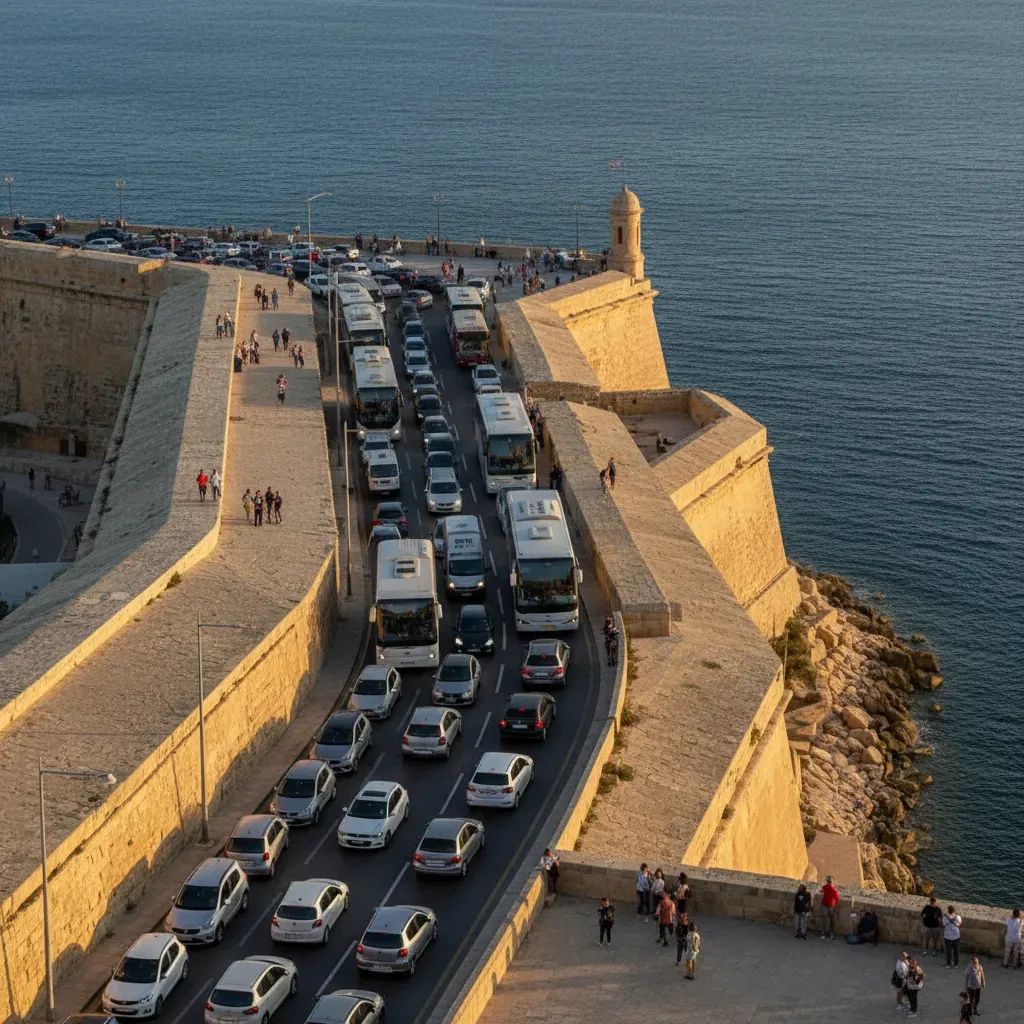
Traffic congestion is now a permanent condition, not a seasonal phenomenon. Commute times have doubled in five years. Businesses cite gridlock as a cost factor; residents cite it as a quality-of-life killer. Attempts to manage it through app-based parking and congestion pricing have gained traction but cannot solve a fundamental problem: there are too many cars on a network designed for far fewer.
Healthcare System at Breaking Point
Healthcare is collapsing under demand. Malta ranks 17th among EU member states in hospital beds per capita. To maintain that position by 2030 would require a 15% increase in capacity; reaching the EU average would demand a 48% expansion—nearly 1,054 additional beds. Emergency departments report wait times exceeding 12 hours in summer months. Maternity wards are booked months in advance. The workforce is burnout-depleted from understaffing and overdemand.
Green Spaces Disappearing
Green spaces have vanished. Across the island, olive groves, fields, and public land are being converted to residential or commercial use. An August 2025 survey found 70% of residents dissatisfied with overdevelopment, noise, and environmental degradation. Illegal occupation of public spaces—parking on verges, storage in parks, informal commercial activity on common land—has become normalized because enforcement is weak and capacity is exceeded.
Housing Unaffordable for Working Families
Housing is now unaffordable for anyone earning a median wage. Young Maltese professionals earning €25,000–€35,000 annually cannot save enough for a down payment while competing against short-term rental investors and foreign wealth. Generational resentment is building. Emigration of young professionals is quietly accelerating; census data will likely confirm this trend in 2027.
For workers remaining in low-productivity sectors, real purchasing power is contracting. Construction workers, retail staff, and hospitality employees are seeing modest nominal wage gains wiped out by rising costs. The paradox is stark: the economy is growing, yet many families feel poorer.
What This Means for You: The Resident Impact
If you're a young professional in tech or finance: Demand for your skills is accelerating. Expect salaries to rise 60–80% above retail and hospitality levels. The challenge: finding affordable housing while saving for a down payment remains difficult despite higher wages.
If you're working in retail, construction, or hospitality: Your job is secure in the short term, but wage growth lags inflation. Consider upskilling programs in digital services or tech support—the wage premium is substantial and accelerating.
If you're a family with children: Infrastructure strain is your daily reality—longer school commutes, overcrowded healthcare, limited green space. The next 24 months are critical; government policy shifts now will determine quality of life for your children.
If you're a retiree: Universal utility subsidies remain protected, but overcrowding and infrastructure stress affect healthcare waiting times and daily convenience. Quality of life is deteriorating despite economic growth.
If you're a foreign worker: Malta's openness to migrant labor has driven much recent growth, but social tension is rising as locals cite overpopulation as the top concern. Long-term residency and family reunification pathways may face political pressure.
The Alternative Model Is Already Proven
Malta's government and its agencies have already demonstrated the viability of a different path. The ICT sector, with minimal direct state intervention beyond regulatory clarity and infrastructure investment, has grown at double the rate of tourism. Tech companies are expanding payroll and investing in local talent development. Salaries in tech are consistently 60–80% higher than in retail or hospitality. Productivity gains are genuine, not artificially boosted by importing low-wage labor.
Gaming, similarly, operates on a model of selective expansion. The Malta Gaming Authority regulates ruthlessly for compliance, player protection, and financial integrity. Licensees compete intensely on service quality, not on hiring the cheapest labor. The sector generates high value with a relatively modest workforce footprint.
Finance is evolving too. The Malta Financial Services Authority is positioning the country for next-generation financial services—asset servicing, wealth management, cryptocurrency compliance infrastructure, and fintech innovation. These sectors require qualified professionals, not armies of entry-level workers. They place minimal strain on roads, electricity, or water systems. A finance sector that doubles in size would barely register on infrastructure impact projections.
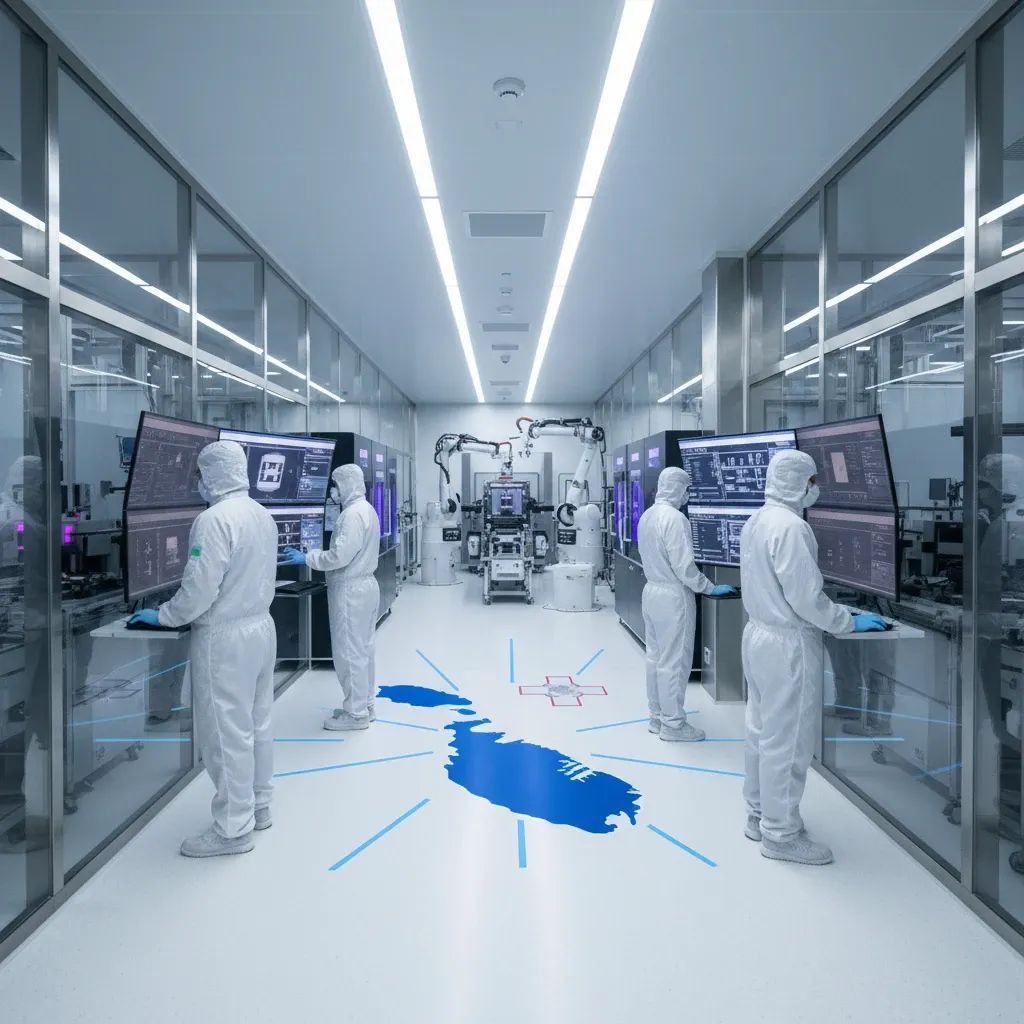
Malta Enterprise, the government's economic development agency, has begun explicitly prioritizing advanced manufacturing, engineering, digital services, and life sciences. The tailored incentive structures exist. The regulatory frameworks are in place. Awareness, however, remains fragmented, and promotional intensity pales next to what the Malta Tourism Authority deploys annually.
What a Transition Actually Looks Like
Vision 2050—Malta's long-term national development strategy—explicitly targets a shift toward high-productivity sectors. The framework identifies 100 measures to be achieved by 2035, with particular emphasis on financial services, ICT, digital skills, and innovation financing. For tourism specifically, the strategy pivots toward quality over volume—higher per-capita spending, sustainability standards, workforce upskilling, and digital management tools to distribute visitor pressure geographically and seasonally.
This is not about abandoning tourism or retail. It is about recalibrating their pace while turbocharging finance and ICT. Tourism can generate more value per visitor with fewer total arrivals if marketing focuses on luxury positioning, extended stays, and niche segments rather than budget volume. Retail can stabilize employment while improving wages through digitalization and automation that boost productivity without requiring constant labor-market expansion.
The Malta Digital Innovation Authority has outlined an AI strategy with 83 proposed measures. The government aims to raise ICT specialists from 4.8% of the workforce in 2025 to 8% by 2030—a significant uplift requiring national reskilling programs, apprenticeship schemes, and employer investment on-the-job training. Malta has already secured selection to host a CALYPSO AI Factory Antenna, integrating the island into Europe's AI compute network. Generative AI adoption among individuals already exceeds the EU average at 46.46% (per Eurostat 2025 data).
The wage premium for AI-specific skills is substantial—62% globally, according to recent industry data. Yet attracting and retaining talent requires housing affordability, quality of life, and career progression pathways—all of which are currently being eroded by the existing expansion model.
The Employment Reckoning
Shifting the economic mix will reshape the labor market dramatically. Roughly 60% of Malta's workforce faces at least some exposure to AI-capable task automation. Around 30% of workers—particularly in service roles, business administration, sales, and clerical functions—face meaningful displacement risk. Women, younger entrants, and those with only secondary education are most vulnerable.
Yet the evidence globally suggests AI is more likely to transform tasks than eliminate employment. Compliance roles will shrink in volume but become more specialized. Customer support will shift from language-based chat to complex problem-solving. Accounting will move from transaction processing to strategic analysis. These changes are disruptive, not terminal.
New roles are emerging—data annotators, AI trainers, prompt engineers, workflow designers—that did not exist five years ago. Malta's gaming and fintech sectors are already integrating AI for fraud detection, customer analytics, and personalized recommendations. The skills premium attached to these roles is substantial and early movers enjoy competitive advantage.
Speed Is Critical
Success depends on execution speed. If Malta retrains workers gradually with employer partnerships and genuine job pathways, wages rise and infrastructure pressure eases. If training programs offer credentials without employment prospects, inequality deepens and social friction intensifies.
The transition requires genuine partnership between government and employers—upskilling programs that actually lead to jobs, not credentials; incentives for companies to hire and train locally; and public tolerance for a period of labor-market churn. Done well, this transition increases average wages. Done poorly or half-heartedly, it deepens inequality and triggers social friction.
The Fiscal Constraint Nobody Wants to Admit
Malta's fiscal position remains relatively sound, allowing the government to sustain universal utility bill subsidies and broad public spending. But the "marginal utility" of that spending is declining rapidly. Every additional euro spent supporting low-productivity expansion yields fewer returns in quality of life and more pressure on infrastructure.
The Malta Fiscal Advisory Council has warned repeatedly that the economic model relies too heavily on population growth, migrant labor, and public spending to mask stagnant productivity. The gap between headline economic growth and actual productivity gains was bridged—temporarily—by continuous labor force expansion. That strategy is exhausted. Malta cannot import workers indefinitely without creating an unstable social compact and pushing infrastructure to collapse.
The policy calculus is shifting. Universal subsidies remain because removing them is politically toxic and socially damaging. But new growth is increasingly expected to come from sectors that generate far more value per worker and require minimal labor-force expansion. This is not ideological; it is arithmetic.
Why the Next 24 Months Matter
Malta faces a narrow window. The regulatory infrastructure for high-value sectors is solid. The talent pipeline is under construction. Policy frameworks exist. What is missing is urgency and alignment across government agencies.
If Malta's political leadership continues to view tourism and retail expansion as the default growth model, infrastructure will degrade further, resident quality of life will decline, and brain drain among skilled workers will accelerate. Within five years, the country risks becoming trapped in a cycle of mediocre growth, poor living conditions, and chronic underinvestment in the sectors that could genuinely drive prosperity.
Alternatively, if the government executes the transition deliberately—reorienting promotional spending toward finance and ICT, rolling out genuine reskilling programs, enforcing planning and environmental rules that stop sprawl, and managing tourism volume while raising per-visitor spending—the economics shift favorably. Fewer jobs but higher wages. Less immigration but higher productivity. Strained infrastructure begins to stabilize. Quality of life improves.
The outcome depends not on whether the model is theoretically sound—it is—but on political will and execution discipline. Malta has done this before, successfully repositioning from a shipyard economy to tourism and gaming. The question is whether it can do it again before the current model collapses under its own weight.