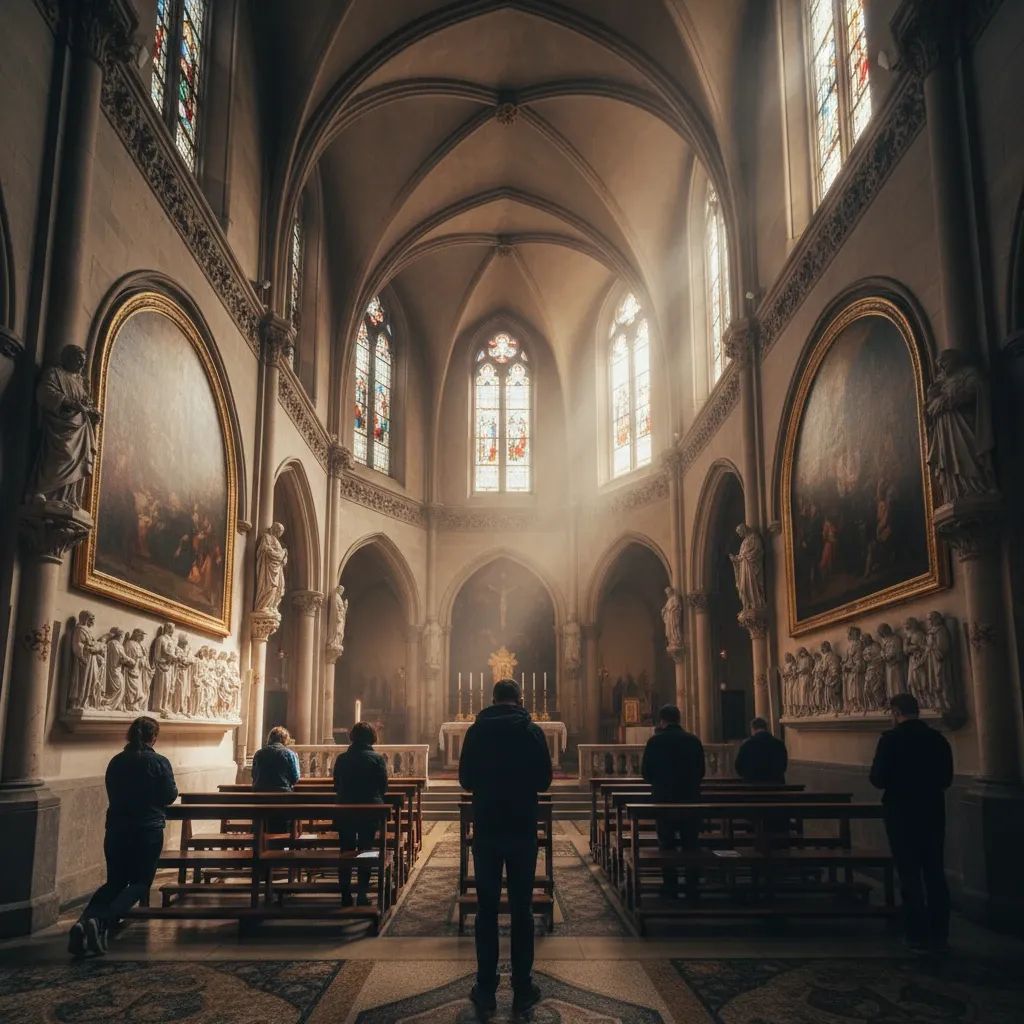
A Restored Masterpiece Steps Into the Spotlight
The St Dominic's Basilica in Valletta is breathing new life into its magnificent pipe organ this weekend, with a concert by young musicians set to demonstrate why this 2,000-pipe instrument—silent for years during restoration—matters for the island's cultural landscape. "Echoes from the Future" takes place Saturday, March 7 at 7pm, marking the public debut of one of Malta's most ambitious recent heritage conservation projects and signaling a deliberate shift in how the island approaches its ecclesiastical musical infrastructure.
Why This Matters
• Free weekend cultural outing: The concert offers residents an accessible entry point to experience a major heritage asset on their doorstep, with no admission barrier and convenient timing for families.
• Restoration completion milestone: The organ's return to service represents the successful conclusion of a multi-year project involving international expertise and European Union funding—proof that Malta can execute world-class conservation work.
• Strategic youth engagement: By featuring young performers rather than seasoned professionals, the Basilica is testing whether heritage instruments can remain culturally relevant to the next generation.
• Broader implications for Valletta: The reopened organ signals increased programming activity at the Basilica, potentially drawing more visitors to the capital's historic district.
The Performance: What to Expect
Saturday's concert isn't formatted as a traditional recital. Instead, it's positioned as an immersive discovery experience—organizers deliberately frame it as an invitation for younger audiences to encounter the instrument's power and versatility without the formality often surrounding organ performances. The young musicians performing have been selected to demonstrate the instrument's range through vibrant, expressive repertoire.
This strategy reflects a broader European effort to engage younger audiences with heritage instruments. Organ performance has become increasingly important to the sustainability of these instruments and the profession itself. Malta's approach—pairing a major restoration with youth-focused programming—follows that model, prioritizing accessibility and contemporary presentation.
The concert is expected to last approximately one hour. The Basilica, centrally located in Valletta and accessible by public transport or foot, enforces modest dress codes and requests audience silence during performances. Early March evenings in the capital typically hover around mid-teens Celsius, so light, breathable clothing is advisable; note that the venue is not air-conditioned.
The Restoration Project: Technical Complexity and International Collaboration
Returning the St Dominic's organ to playable condition required extraordinary effort. The instrument's nearly 2,000 pipes had suffered significant deterioration over decades, necessitating complete dismantling and shipment of components abroad for specialized repairs—a logistical undertaking that underscores the absence of large-scale organ workshop infrastructure within Malta.
The Maltese organ restorer and designer Noel Gallo, founder of NG Pipe Organ Design established in 2008, directed the project in partnership with UK-based Michael Farley Organ Builders. This collaboration is characteristic of high-stakes heritage conservation in Malta: local expertise handles design and on-site coordination, while foreign specialists manage precision workshop-level repair work that cannot be performed locally.
Gallo's restoration approach proved meticulous. The work included reversing alterations made during a 1930s intervention, restoring historic casework, and comprehensively treating pipework from earlier instruments. The resulting configuration features 45 stops playable from two consoles—a flexible setup allowing both traditional and contemporary performance styles. The organ was officially inaugurated on January 29, 2026, signaling readiness for the public programming now underway.
Measuring the Investment
Comparable organ restoration projects in Malta offer benchmarks for understanding the financial and technical scale involved. The Xewkija Rotunda in Gozo received a new organ designed by Gallo and built by Farley in 2017, which cost approximately €200,000—a figure that encompassed the instrument, structural work within the church to accommodate it, and installation of a lightning protection system. Earlier, the complete restoration of the Mosta parish church organ was estimated at €93,200 when completed in 2003.
Costs of that magnitude reflect not just materials and labor, but also the specialized expertise required. European Union co-financing has supported multiple Maltese organ projects, indicating that heritage conservation is increasingly treated as a cultural and economic investment—one generating tourism revenue, skilled employment, and community engagement.
The St Dominic's project operated within this broader funding architecture. The Dominican community and the Porto Salvo and St Dominic's Foundation spearheaded the effort alongside EU support. The restoration is part of a larger basilica initiative that includes establishment of a new museum, further integrating the site as a dual-use cultural venue combining worship and performance.
What This Signals for Malta's Heritage Landscape
St Dominic's sits within a coordinated wave of organ restoration across the Maltese Islands. Michael Farley Organ Builders is currently working on the Parish Church of Our Lady of Loreto in Għajnsielem, Gozo—a project yielding a 65-stop, 2,700-pipe instrument that will incorporate historical pipework from an 1896 Henry Willis & Sons organ. That project represents one of the most versatile organs being installed in the Maltese Islands according to project documentation.
These overlapping timelines suggest a deliberate, coordinated effort—likely shaped by EU heritage funding streams—to safeguard and reactivate Malta's ecclesiastical musical infrastructure before further deterioration renders restoration technically impossible or prohibitively expensive. The strategy mirrors European heritage policy broadly, which increasingly views restoration as both cultural investment and economic stimulus.
For Gallo, whose firm has worked on organs in Valletta, Għajnsielem, San Lawrenz, and Xewkija, the St Dominic's inauguration represents validation of Malta's capacity to execute world-class restoration without relying entirely on foreign contractors. His sustained partnership with Farley has effectively created a bilateral supply chain for organ conservation, blending Maltese design sensibility with British workshop precision.
What Happens Next
Saturday's concert marks the beginning, not the end, of the Basilica's programming. The organ's return to service means expanded capacity for musical events, potentially boosting foot traffic in Valletta's historic core—a welcome development for nearby hospitality and retail operators. The establishment of the new museum within the complex suggests plans for a more integrated visitor experience combining music, art, and heritage interpretation.
The concert also serves as a practical test of audience engagement. Saturday's attendance and reception will provide the Basilica with feedback on how to shape future programming. If there is strong interest, expect regular programming that balances classical repertoire with contemporary pieces and educational initiatives. The results will help guide how other ecclesiastical institutions approach their own aging organs.
For anyone living in or visiting Valletta on March 7, Saturday offers a low-barrier opportunity to experience a significant heritage project now in public service. The organ, silent for years, will once again fill the Basilica's vaulted space—a tangible return on specialized restoration effort and international collaboration.