
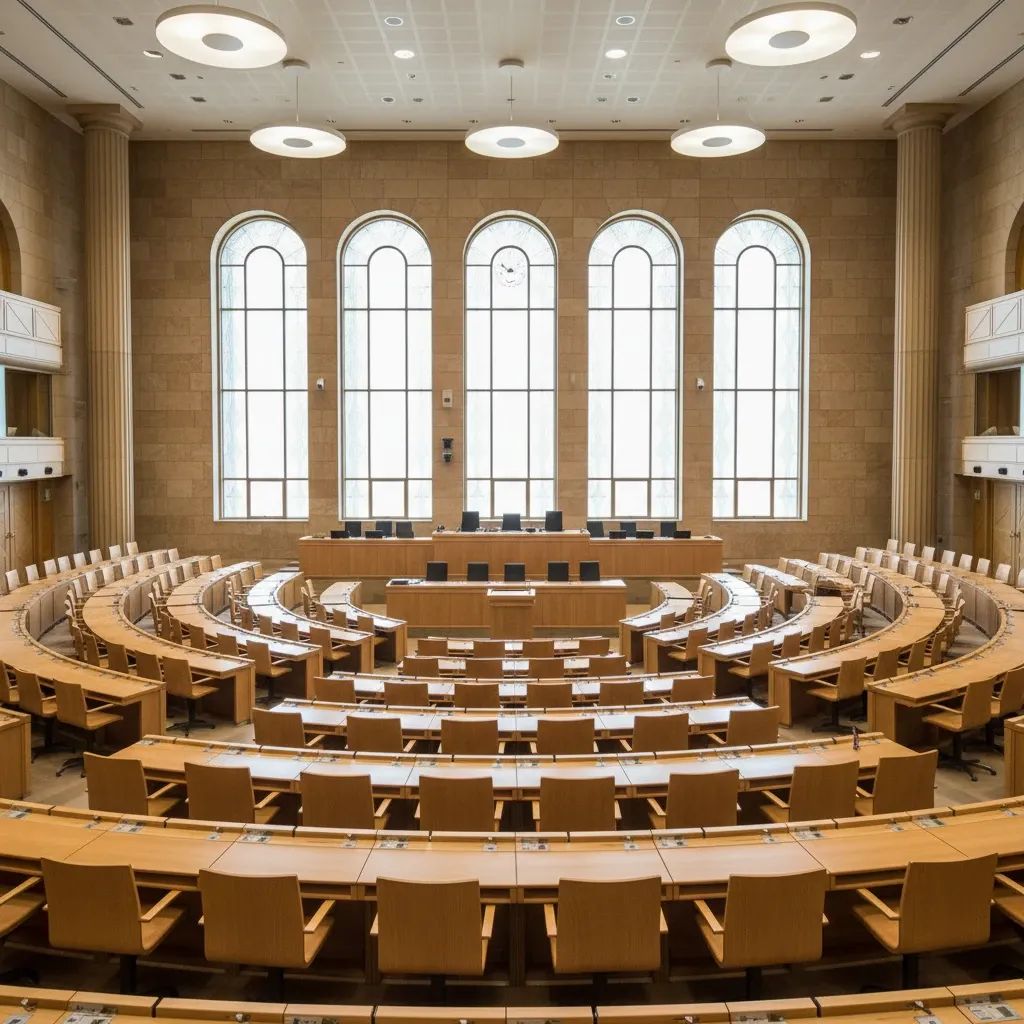
A parliamentary exodus is reshaping Malta's political terrain just weeks before voters decide who governs for the next legislature. At least 16 MPs—roughly one in five of those sitting since 2022—have decided not to seek re-election on May 30, a turnover that removes decades of institutional memory precisely when the country faces mounting pressure on financial regulation, housing reform, and judicial accountability.
Why This Matters
• Leadership vacuum on urgent dossiers: Departing MPs collectively held expertise in EU fund management, anti-money laundering oversight, and procurement safeguards. Replacements will inherit these portfolios without established Brussels relationships or bureaucratic roadmaps.
• Nine experienced legislators exit the PN alone: The Nationalist Party loses five former shadow spokespersons and two ministers, including the party's former deputy leader. The scale suggests internal strategy, not organic generational transition.
• Labour's departures skew scandal-adjacent: Five of its seven non-contesting MPs faced public scrutiny, ministerial demotion, or removal from party structures—a pattern that compounds fresh-start messaging with visible damage control.
• Gender representation narrows intentionally: The PN's female voice most critical of gender-quota mechanisms is departing, potentially reducing pressure to demonstrate genuine women's advancement rather than quota compliance.
The Nationalist Party's Recalibration
The PN frames its departures as strategic housekeeping. Mario de Marco, a lawyer who held the party's deputy leadership through the previous legislature, announced his exit by emphasizing obligation: younger, "more energetic" candidates deserve space. His 23-year run included portfolios spanning tourism, environment, and culture. The framing matters—it resets the narrative from attrition to renewal, suggesting the party is choosing its exits rather than absorbing them.
Carm Mifsud Bonnici represents symbolic weight beyond mere parliamentary experience. Elected first in 1998, he inherited his seat from his father Ugo, who later ascended to President. Ugo's father, Carmelo Mifsud Bonnici, was legendary for rhetorical skill. The family's complete withdrawal marks the end of three consecutive parliamentary generations—a rare occurrence in Maltese politics. The PN now distances itself from the patrician networks that characterized earlier governance models, a repositioning that appeals to voters fatigued by dynasty-style politics.
Chris Said, a Gozitan, leaves after 21 years and a failed 2017 leadership bid against Adrian Delia. That contest exposed ideological fissures within the PN that remain unhealed. His departure removes a figure who embodied those tensions. David Agius, who managed parliamentary arithmetic during the 2008–2013 government's one-seat majority, leaves behind procedural expertise that newcomers cannot immediately replace. His role as deputy speaker in the last legislature gave him authority over House conduct; his successor inherits a chamber Agius would recognize as dysfunctional.
Ivan J. Bartolo, a businessman, became the PN's first public signal of departure in March 2025. His critique stung because it came from within: Parliament suffers from "drama, behaviour, and disorder," he said, and cross-party collaboration remains theoretical. His willingness to diagnose institutional rot suggested backbench frustration bubbling beneath party unity messaging.
The remaining PN departures tell different stories. Ryan Callus, an engineer with shadow portfolios on planning and energy, prioritizes family. Robert Cutajar, a former Opposition whip and Mellieħa mayor, simply exits after decades. Karol Aquilina, who fought publicly for justice in the Daphne Caruana Galizia assassination case, steps aside without recorded controversy. Claudette Buttigieg, a former Eurovision performer, refuses the gender-quota mechanism on principle—an ideological stand that paradoxically weakens women's representation by removing the quota system's most prominent internal critic.
Labour's Forced Reckoning
Labour's situation reads differently. Aaron Farrugia withdrew by failing to submit nomination papers—a silent non-submission that spoke louder than formal announcement. Demoted to the backbench in 2024 after holding cabinet rank, public re-election was politically awkward. His exit via administrative absence signaled resignation without confrontation.
Michael Farrugia, a family doctor first elected in 1992, saw Prime Minister Robert Abela decline his cabinet reappointment in 2022. That snub, after 30 years of party service and multiple ministerial tenures, marked his political obsolescence. He departed quietly, his accumulated experience rendered irrelevant by leadership reshuffling. Few noticed his withdrawal; that silence itself was commentary.
Clayton Bartolo generated headlines through scandal velocity. He resigned as tourism minister in November 2024 after the Times of Malta reported suspect payments to his wife Amanda. Labour expelled him from its parliamentary group within hours. Weeks later, as nomination deadlines approached, Bartolo announced his non-contestation, blaming anticipated "smear campaigns." The timing revealed calculation: he withdrew only after damage was public, suggesting damage control overtook principle. His exit forced Labour to acknowledge that electoral liability now supersedes internal courtesy.
Roderick Galdes, a housing minister and 22-year veteran, experienced Labour's most blunt intervention. The party blocked his candidacy the day the election was called—not allowing him to withdraw voluntarily, but actively barring him. This preceded Times of Malta reporting linking his brother to social housing contractors, a conflict undermining his portfolio authority. Labour's move signaled its own judgment: protect the party from liability, regardless of his three decades of membership.
Edward Zammit Lewis, a lawyer who served as Justice Minister during critical Venice Commission reforms on rule of law, exited after 13 years in Parliament and eight in cabinet. His initial appointment in 2013 as parliamentary secretary proved promising; he cycled through tourism, equality, and justice roles with apparent trajectory. But 2022 exclusion from cabinet—despite Labour's electoral victory—signaled disfavour. His stated focus on "legal profession" masked deeper frustration with political marginalization.
Stefan Zrinzo Azzopardi, the EU Funds Minister, announced non-contestation before late 2025. His tenure as Lands Minister proved contentious. The Lands Authority reinstated official Kurt Buhagiar without his approval, signalling bureaucratic resistance to ministerial authority. Separately, Azzopardi resisted finalizing a db Group concession involving potential €4 million ground-rent deferrals across the 99-year lease. Both episodes positioned him as constrained rather than empowered, a minister whose portfolio authority eroded through external pressure.
Chris Agius, affectionately nicknamed "il-Wefi," represents the election's cleanest exit. After 30 years, seven consecutive electoral victories, and eight years in junior ministerial roles spanning research, sport, and planning, he retires without scandal or schism. His departure is purely generational—natural career conclusion rather than forced resignation.
Parliamentary Experience Departing
The combined exodus removes approximately 280 years of legislative service. This figure masks deeper vulnerability: the departing cohort held disproportionate expertise in portfolio areas now consuming government capacity. Zammit Lewis shepherded judicial reforms aligned with international governance standards. His replacement with an untested backbencher introduces execution risk at the moment when Malta faces EU scrutiny on anti-money laundering frameworks and continued pressure on judicial independence.
Similarly, departing members cultivated relationships with Brussels bureaucrats and domestic implementation agencies that new MPs cannot instantly replicate. EU funds absorption—currently underpinning approximately €150–200 million in annual investment across infrastructure and research—depends on procedural knowledge and political networks. Newcomers restart these networks from scratch, potentially delaying project approvals and reducing fund utilization rates.
The Gender Representation Paradox
Claudette Buttigieg's departure creates an ironic vulnerability for women's parliamentary representation. She was the most credible internal critic of the gender-quota mechanism, which awards bonus seats when women represent less than 40% of elected MPs. Her principled refusal to run under that mechanism amplified its legitimacy—it suggested the system worked to elevate qualified women, even as those women criticized it. Her exit removes that credible internal voice, leaving the quota system politically exposed but institutionally entrenched. New female MPs may lack her platform or willingness to challenge a mechanism they now benefit from.
Electoral Dynamics and Governance Risk
The turnover arrives during Malta's tightest electoral contest in 13 years. Opposition momentum has generated what analysts describe as a "genuine pathway to victory"—the first serious Labour vulnerability since 2013. Both parties now field substantially untested candidates competing for donor funding and media attention, traditional advantages that established incumbents wielded easily. Newcomers lack local networks, fundraising sophistication, and procedural knowledge.
For governance, the risk compounds. A new Labour government faces immediate pressure to absorb departing expertise while asserting fresh policy direction. A new PN government must simultaneously manage the party's internal renewal narrative while demonstrating capacity to challenge an established administration's institutional advantages.
The Unresolved Question
Both parties frame departures as healthy transition. Yet the underlying pattern—scandal-adjacent Labour exits and strategic PN renewal—suggests different pressures at work. Malta's €17 billion economy depends on political stability to retain financial services investment and gaming sector confidence. The turnover tests that stability precisely when international regulators scrutinize anti-corruption frameworks and judicial independence.
Whether new MPs will self-correct institutional vulnerabilities that their predecessors enabled or failed to arrest remains unspoken. Early evidence suggests departures solve immediate scandal problems but leave systemic vulnerabilities intact: patronage networks persist, procurement oversight remains weak, and ethical standards remain contestable. New blood may energize Parliament—or simply redistribute the same underlying dysfunction across younger faces.


