
A Postal Discovery: How Gozo's Hidden Chapels Are Coming to Your Mailbox
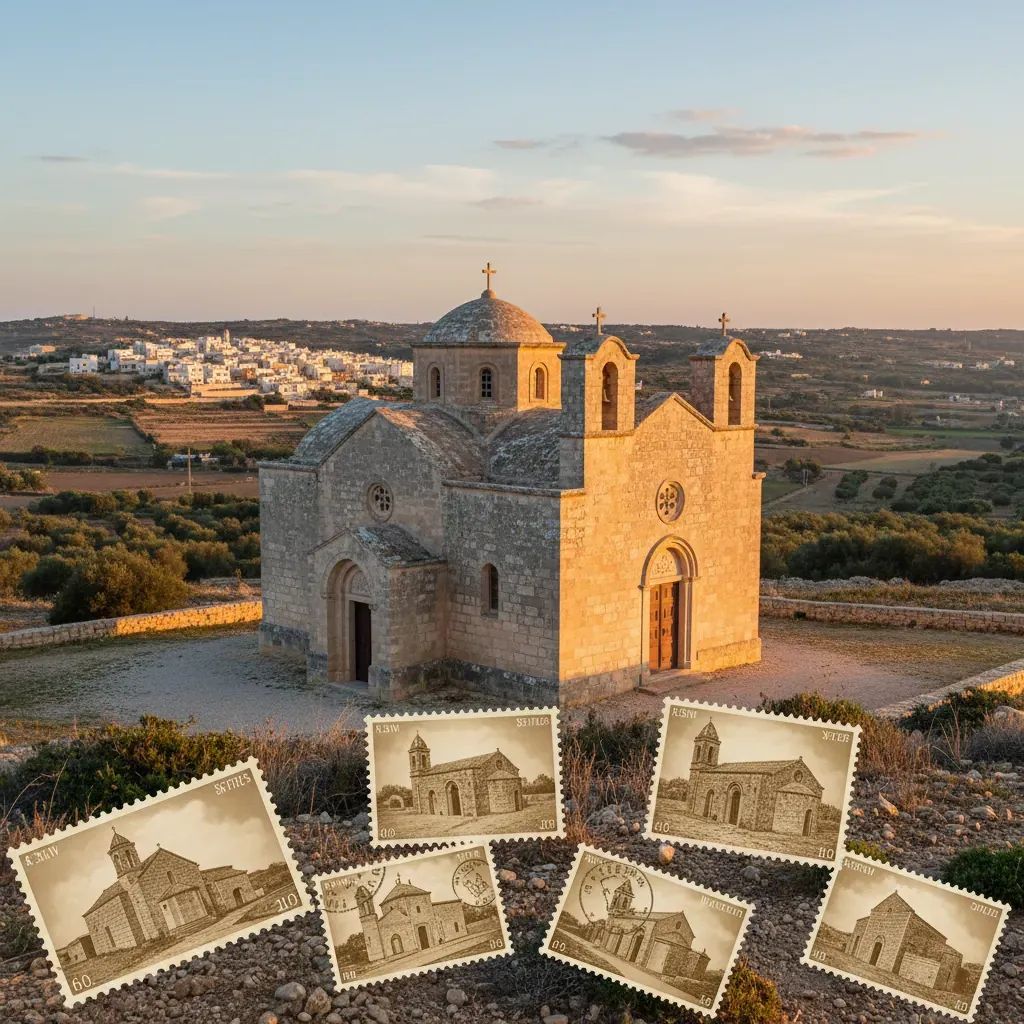
Starting in May, residents and collectors across Malta will encounter an unexpected archive piece in their letterboxes: miniature visual records of Gozo's forgotten religious architecture, rendered as personalized stamps. The Gozo Philatelic Society has commissioned 50 covers—each featuring a chapel or small church exterior paired with historical annotation—transforming what might appear as a niche hobby project into something more consequential: an accessible inventory of heritage sites that institutions have largely left undocumented.
Why This Matters
• First systematic visual record: Gozo's countryside chapels lack centralized photographic archives; this collection fills that gap through a postal medium reaching homes and archives simultaneously.
• Accessibility meets rigor: Each cover pairs architectural imagery with verified historical facts and restored village heraldry—functioning as both collectible artifact and portable reference material.
• Subscription deadline approaching: Interested parties must contact stamps.gozo@gmail.com by Easter to secure sets; availability and pricing for late orders remain unconfirmed.
The Mechanics of a Cultural Inventory
Anthony Grech, the Gozo Philatelic Society president, conceived the entire initiative as a response to an obvious gap. Walking across Gozo, you encounter chapels regularly—some restored, others weathered into near-invisibility—yet find almost no public record explaining their construction dates, dedicatees, or architectural significance. Parish councils maintain scattered records; the National Archives of Malta preserves postal history but lacks resources for systematic surveys of countryside worship sites.
Grech's approach sidesteps institutional bureaucracy. Instead of lobbying for government funding or mounting a formal heritage audit, he enlisted MaltaPost, Malta's postal operator, which already permits personalized stamps for commemorative purposes. The society leveraged this existing infrastructure to create what amounts to a distributed archive—50 data points on religious architecture, each photographically authenticated and historically contextualized, circulating through postal networks and collector communities simultaneously.
The visual format reveals careful conceptualization. Each cover displays the chapel's exterior on the card itself, while the accompanying stamp depicts an interior or devotional view. This dual-image approach avoids traditional single-photo constraints while creating narrative tension: outward plainness concealing internal spiritual significance, a metaphor for how these sites function in Gozitan life—present but largely unheeded.
The Chapels Worth Understanding
Among the 50 sites featured, several carry particular historical weight. Santa Cecilia Chapel in Xewkija stands as Gozo's only surviving medieval chapel, erected around 1540. The structure was deconsecrated in 1644, deteriorated badly, then received restoration between 2008 and 2011 after decades of neglect. Its inclusion signals the project's commitment to preservation documentation—visual evidence that such sites exist before institutional attention arrives too late.
San Dimitri Chapel in Qala presents an architectural anomaly. Built in 1575, it represents Malta's sole church honoring an Eastern Orthodox saint, a geographical oddity explaining why most Gozitans remain unaware of its existence. Its inclusion in a postal series essentially broadcasts regional awareness: this building stands among you, documented now, claiming recognition retroactively.
At the chronological opposite end sits St. Anne Chapel at Dwejra, blessed only in 1963—marking the moment when Gozitan communities definitively shifted toward centralized parish churches and abandoned scattered devotional sites. Including it in a retrospective series creates temporal bookends: rural religious life spanning roughly four centuries, captured simultaneously on postal covers arriving in the same delivery.
Our Lady of Lourdes Chapel overlooks Mġarr Harbour, completed in 1893 with Gothic ornamentation that distinguishes it from inland equivalents. Its visibility contradicts the obscurity of many chapel sites, yet inclusion in a dedicated postal series reframes it within context: not a random Victorian indulgence, but part of Gozo's coherent religious infrastructure.
Building on Previous Success
The chapels project extends a pattern. The Gozo Philatelic Society previously released personalized stamp series on Gozo's bishops and Malta's presidents and prime ministers, both embraced by Melitensia collectors—individuals who specialize in artifacts documenting Maltese and Gozitan culture rather than rare printing errors or investment-grade stamps. Commercial viability across multiple thematic releases suggests sustained demand within this collector base.
Antoine Vassallo, the society's secretary and co-founding member alongside Grech, oversees the expansion of outreach activities. School visitations introduce children to philately before secondary education; exhibitions rotate through venues combining cultural accessibility with heritage credibility. The society publishes a quarterly periodical—now in its 94th volume—that attracts readers far beyond stamp hobbyists, a success metric suggesting the chapels project could reach beyond traditional collector circles entirely.
The society's 1999 founding predates contemporary internet-era stamp collecting, yet it has sustained relevance through strategic content choices. Rather than pursuing rare variant documentation, the organization positions itself as cultural interpreter: translation of Gozitan identity into postal form, rendering local history legible through visual and textual means that circulate widely.
How Heritage Institutions Adapt Through Philately
Mediterranean postal services have adopted similar strategies. Cyprus Post distributes philatelic starter kits to teenagers, embedding postal history into youth education. Hellenic Post issued "Travelling in Greece" series specifically targeting tourists, transforming postcards into miniature tourism advertisements circulating globally. Croatian Post celebrates UNESCO sites on stamps, creating visual records of heritage that persist beyond conventional marketing campaigns.
For Gozo, the chapels initiative serves overlapping constituencies simultaneously. Collectors gain scarcity—limited cover runs documenting sites many Maltese residents have never visited. Historians and parish councils receive crowdsourced documentation: 50 data points on rural religious architecture, each photographically authenticated and contextually annotated.
Tourism infrastructure potentially benefits as well. Rural chapels currently attract minimal visitor attention partly due to absent interpretation signage. A philatelic series creates distributed archive accessible through mail, exhibitions, and collector networks—reframing Gozitan identity around quiet devotion and architectural humility, counterbalancing Malta's resort-focused tourism profile.
Practical Value for Maltese Residents
For heritage enthusiasts indifferent to philately itself, the covers function as affordable reference material—postcard-sized primers on religious architecture you encounter weekly without understanding historical context. No comprehensive institutional inventory of smaller worship sites exists; this project effectively publishes what parishes and community memory preserve informally.
Educators can incorporate the collection into geography or history curricula—each cover pairs physical location with visual evidence and historical text, meeting primary source engagement standards. The society has already conducted school visitations, suggesting openness to educational institution inquiries regarding bulk orders or classroom presentations.
The heraldic village arms adorning each cover front deserve particular attention. These symbols were largely abandoned from official use but reflect pre-20th century territorial organization. Their reappearance in a contemporary postal context proves noteworthy for anyone tracking Gozo's evolving relationship with its feudal heritage and local identity markers.
Secondary collectors should recognize documented appreciation trends among previous Gozo Philatelic Society releases, particularly items featuring printing variations or restricted print runs. Subscription guarantees first access, typically avoiding reseller markups that materialize online within months of release.
Grech's Trajectory and Design Philosophy
Anthony Grech's credentials extend beyond chapels documentation. His April 2025 newsletter contribution—"Error or NOT: the Dag Hammarskjöld invert"—demonstrated technical philatelic analysis. His June 2025 article on Malta's Republic presidency stamp series, marking 50 years of postal representation, established authority on thematic postal history.
His curatorial work proved equally substantive. As newly appointed president in June 2025, Grech organized an exhibition at Il-Ħaġar Museum assembling diverse stamps from Malta, Cuba, and international collections. November's Xewkija Windmill Exhibition—housed in the restored mill itself—featured hand-illuminated historical chronology charting Malta from prehistoric settlement through EU membership using postal imagery as narrative thread.
These projects reveal a designer comfortable bridging artistic sensibility with historical accuracy. The chapels initiative represents natural extension: visual documentation of sites deserving preservation, distributed through channels already proven viable.
Timing and Logistics
Subscription deadlines cluster around Easter, following announcement in late March. Whether deliberate strategy or pragmatic planning, the timing capitalizes on reflective holiday periods when collectors often reassess acquisitions and religious-themed content attracts broader attention.
Pricing remains undisclosed, though Gozo Philatelic Society historical releases typically range between €50–€150 depending on subscription tier and cover quantity. International collectors frequently encounter friction with smaller philatelic societies lacking robust e-commerce infrastructure; the GPS maintains relative clarity on the contact channel (stamps.gozo@gmail.com) but leaves payment terms, shipping costs, and educational ordering discounts unspecified.
The May 2026 release window aligns with Victoria's Feast of St. George, creating potential for coordinated public launch, though the society's track record favors museum exhibitions over street-level commerce. Either venue serves its core constituency: collectors seeking scarcity and documentation simultaneously.
The Larger Meaning
If cultural preservation in Mediterranean islands increasingly flows through philatelic channels rather than institutional archives, the Gozo chapel project exemplifies pragmatic adaptation when resource constraints limit formal heritage systems. The society substitutes professional archival infrastructure with volunteer expertise, commercial viability through collector demand, and distributed documentation via postal networks.
For residents, the immediate takeaway remains straightforward: cultural knowledge fragmented across aging residents and parish records can be assembled, verified, and circulated in accessible form. Whether framed as stamps, architectural documentation, or heritage tourism, the outcome proves constant—50 Gozitan religious sites receive formal visual and historical record through May 2026, reaching collectors' hands and institutional archives simultaneously.


