Why This Matters
• Deficit trajectory: Malta's government deficit sits at 2.2% of GDP in 2026, below the EU's 3% ceiling, but annual borrowing still reaches €1.9 billion.
• Debt vs. growth race: Public debt hovers around 46% of GDP—well within Maastricht limits (the EU's legal threshold for member states' maximum debt levels)—yet the absolute figure has climbed past €12 billion, raising questions about long-term fiscal space (the government's capacity to borrow without risking financial instability).
• Infrastructure strain: Population density and service demand are outpacing revenue gains, forcing policymakers to choose between belt-tightening and continued investment.
What Economists Are Saying
Josef Bonnici, an independent economist and frequent commentator on Malta's fiscal policy, has raised concerns about whether the nation's impressive economic expansion should translate into permanently elevated government borrowing. Speaking in recent policy forums, Bonnici argues that robust GDP figures should repair budget deficits, not legitimize chronic debt accumulation. His critique reflects a broader debate among analysts about whether Malta has genuinely strengthened its fiscal foundation or merely postponed difficult budgetary decisions.
Record Growth Masks Structural Vulnerabilities
Malta's economy is on track to expand by roughly 3.7–3.9% in 2026 according to European Commission forecasts, making it one of the EU's fastest-growing member states for the twelfth consecutive year. Services—spanning financial intermediation, IT, professional consulting, and tourism—account for the lion's share of output, while domestic consumption and net exports of services provide additional momentum.
Yet economists caution that headline GDP obscures deeper fragilities. Per-capita growth has decelerated sharply, aligning more closely with eurozone averages and signaling that population inflows, rather than productivity gains, have driven much of the expansion. Gross value added per worker rose a modest 1.4% in 2025, down from 5% the year before, underscoring the limits of a labor-intensive growth model that increasingly strains roads, utilities, and public services.
Infrastructure lags persist across energy capacity, hospital beds per capita, and wastewater treatment—areas where Malta remains below EU benchmarks despite years of robust tax receipts. The Malta Vision 2050 blueprint, unveiled in February 2026, acknowledges these gaps and pivots national objectives away from GDP alone toward sustainability, resilience, and quality of life.
What This Means for Residents and Investors
For households, the immediate outlook is mixed. Energy subsidies continue to shield consumers from international price shocks—currently saving the average family approximately €300–€400 annually on electricity and fuel bills—but overall inflation is creeping upward as imported goods and food costs rise. Personal income tax brackets were adjusted upward in 2025 to offset past inflation, yet public-sector wage bills and social benefits are climbing faster than revenue growth, leaving less fiscal room for future tax relief.
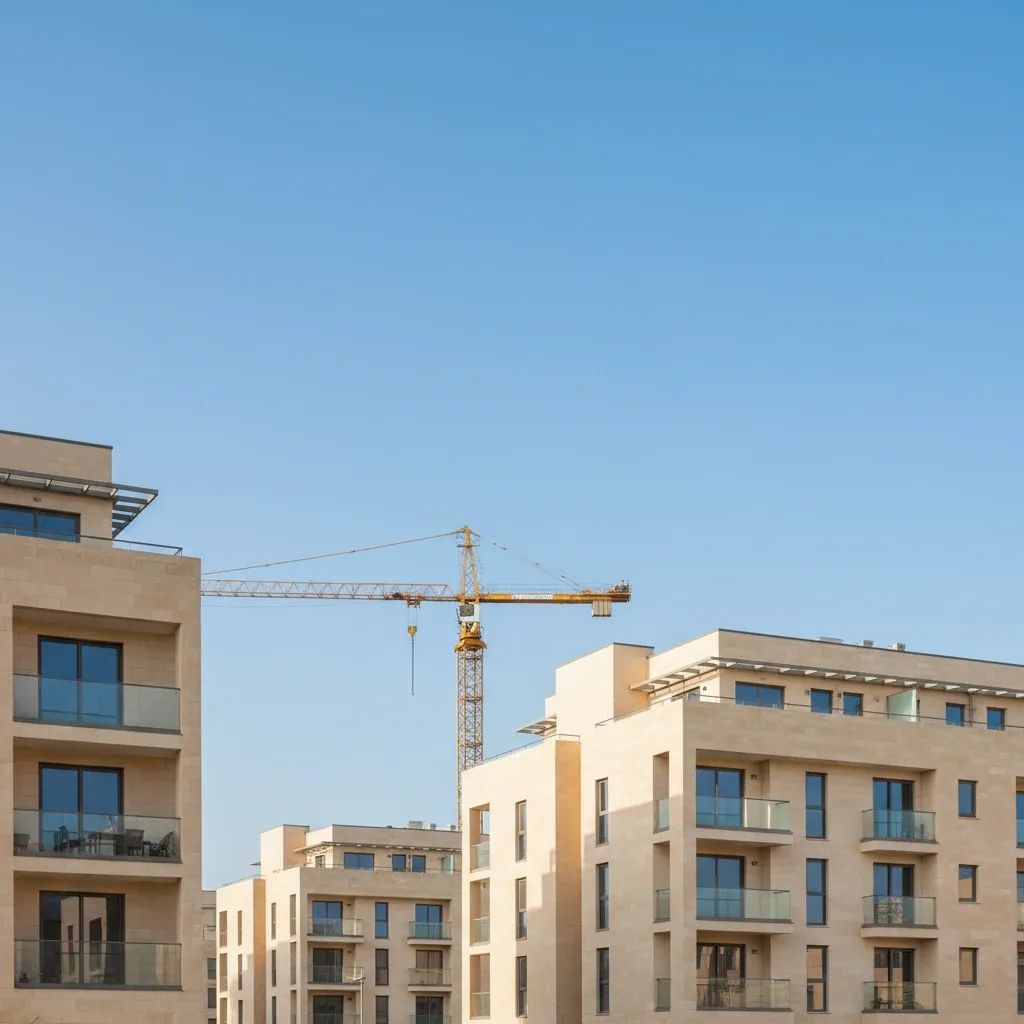
Property owners and developers face heightened scrutiny. Construction has been a key growth engine, but it also degrades soil quality, strains water resources, and threatens natural habitats. New waste-management targets for construction and demolition materials aim to curb environmental damage, while the Malta Enterprise Green Mobility Scheme and Smart and Sustainable Investment Grants encourage businesses to adopt electric fleets and energy-efficient practices.
Expatriates and firms hiring foreign talent will navigate a revised Labour Migration Policy that mandates pre-departure courses and skills passes for first-time third-country nationals. The measure is designed to ease integration and reduce skill mismatches, addressing complaints that rapid workforce expansion has strained housing, schools, and healthcare without commensurate productivity gains.
Investors eyeing Malta's corporate tax regime should note that fiscal unity rules now allow eligible groups to consolidate taxable income, streamlining compliance and improving cash flow. Yet Brussels continues to scrutinize Malta's tax architecture through the Excessive Deficit Procedure (an EU oversight mechanism for countries exceeding debt and deficit limits) for aggressive planning risks, double non-taxation, and profit-shifting loopholes—factors that could trigger regulatory adjustments in the coming years.
Borrowing Plan Fuels Debate Over Fiscal Philosophy
The Treasury Department's Annual Borrowing Plan authorizes up to €1.9 billion in fresh issuance for 2026, split between redeeming maturing Malta Government Stocks (€958 million) and financing the Consolidated Fund deficit (€852 million). Conventional fixed-rate bonds remain the primary instrument, supplemented by potential loans from the European Investment Bank.
Interest costs are stabilizing at approximately 1.3% of GDP, reflecting both the accumulated debt stock and a relatively high-rate environment. While the Malta Fiscal Advisory Council has endorsed the government's forecasts as credible, the debate centers on whether strong nominal growth justifies maintaining elevated borrowing or whether fiscal consolidation (reducing budget deficits and stabilizing debt) should accelerate now that the economy has emerged from pandemic-era shocks.
Bonnici's critique hinges on the principle that growth dividends should flow into deficit reduction rather than bankroll new spending programs. With the debt-to-GDP ratio forecast to dip slightly from 46.4% in 2025 to 45.8% in 2026, Malta remains comfortably within Maastricht parameters. Yet the absolute debt figure has nearly doubled over the past decade, and demographic pressures—pensions, long-term care, and healthcare—loom on the fiscal horizon.
Productivity Push and Infrastructure Investment
Recognizing that Malta cannot indefinitely rely on importing labor, Malta Vision 2050 prioritizes productivity-led expansion through digitalization, automation, and innovation. Accelerated tax write-offs for AI and digital investments, an expanded Microinvest scheme for SMEs, and the National Skills Strategy 2026–2035 aim to align education with market needs and foster employer-led training in green and digital competencies.
Infrastructure commitments are substantial and tangible. A proposed €2.8 billion rapid transit system is scheduled to begin construction in late 2026 and deliver buses and routes by 2029, headlining the "Malta in Motion" program, which also includes upgrades to maritime transport, public bus networks, and road capacity. Water security is addressed through expanded "new water" production from wastewater reclamation, with new plants coming online in 2027–2028, while energy resilience hinges on a second interconnector, battery storage, and renewable projects targeting completion by 2030. Gozo's bus fleet is transitioning to electric propulsion, with 80% conversion expected by 2028, and incentives for private electric-vehicle adoption are being scaled up, offering tax breaks of up to €5,000 for new purchases.
Environmental targets underpin much of this agenda. Malta has committed to climate neutrality by 2050, a goal that requires phasing out fossil-fuel subsidies, which currently keep retail energy prices artificially low and disincentivize conservation. The economy depends on ecosystem services for an estimated 50% of gross added value—above the EU average of 44%—making nature degradation both an environmental and economic risk.
Balancing Growth with Fiscal Responsibility
The European Commission projects that Malta could formally exit the Excessive Deficit Procedure based on spring 2026 data, a testament to strong revenue performance and controlled spending growth. Yet future risks include potential overruns in intermediate consumption, social payments, and the wage bill—categories that have trended upward faster than anticipated.
The government has signaled an ambition to balance the budget by 2029 and potentially achieve a surplus within three years thereafter. Achieving that target will require restraining expenditure growth, broadening the tax base without stifling competitiveness, and ensuring that capital investments—roads, transit, water, energy—deliver measurable productivity gains rather than simply absorbing borrowed funds.
What This Means for Your Future
For Malta residents and investors, the stakes are clear. Over the next three years, your household will be affected by decisions made now about infrastructure, energy costs, and tax policy. If the government successfully channels growth into deficit reduction—as Bonnici and fiscal conservatives argue it should—tax pressures may ease and public services could improve. If borrowing continues to climb, future generations will shoulder the interest burden and have fewer resources for schools, hospitals, and roads. The central question facing policymakers is whether a decade of exceptional growth has genuinely strengthened Malta's fiscal foundation or merely postponed hard choices. The answer will shape your prospects and your children's futures in this island economy.