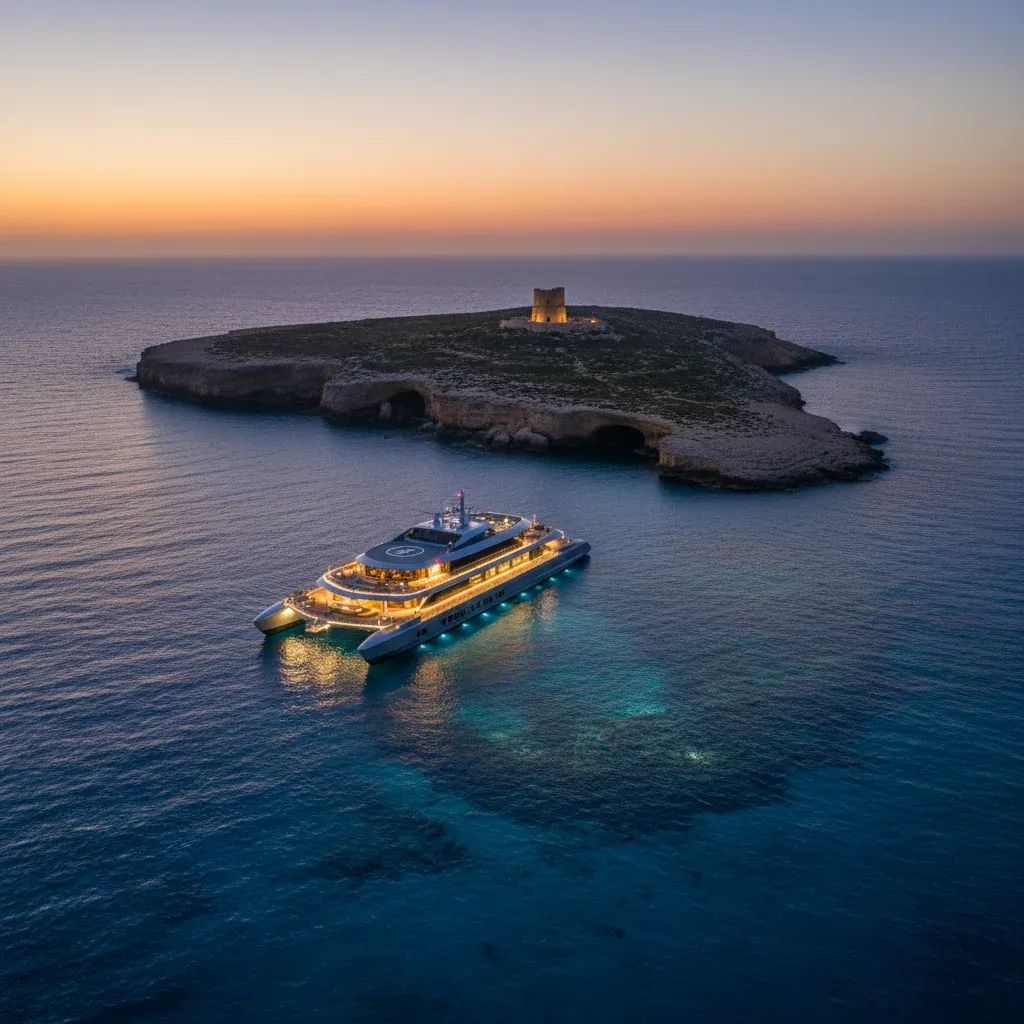
The Malta Environment and Resources Authority faces a pivotal decision this Friday, August 7, 2026, on a tree removal permit for a luxury resort on Comino—one that could reshape the island's ecological future while igniting fresh legal battles over Malta's commitment to environmental protection in its most sensitive territories.
The core question: whether to approve the removal of approximately 723 trees (comprising 99 protected and 624 non-protected specimens) for Hili Group's €170M Six Senses Comino project, which promises 16 villas, 44 swimming pools, and a 71-room hotel on an island designated as a nature reserve, Natura 2000 site, and dark sky heritage area. Environmental groups dispute these figures, with Moviment Graffitti contending roughly 800 trees face removal, while the developer claims 600 native or protected trees on the construction footprint. The controversy centers not just on counting methodology, but on what those numbers mean for Malta's last unspoiled territory.
Why This Matters
• Precedent-setting decision: ERA's ruling will signal how Malta balances luxury development against protected habitat in Natura 2000 zones.
• Legal uncertainty: The main development permit is already back at tribunal after a May 2026 court ruling found irregularities—making this tree permit potentially moot. This Friday's decision concerns the same EP 1472/22 permit, which ERA's tribunal previously revoked in February 2026 following NGO challenges, and ERA is now reassessing under heightened scrutiny.
• Ecological stakes: The project site hosts garigue habitat, protected species, and sits within multiple conservation designations rarely concentrated in one location.
• Public access implications: The outcome affects how Malta manages its 3.5 km² sister island, where restoration efforts have already planted 18,000 specimens since 2018.
The Numbers Don't Add Up—Or Do They?
Moviment Graffitti, the environmental NGO that successfully challenged an earlier permit in February 2026, contends that roughly 800 trees face removal if ERA approves the request. The group argues the authority should refuse any permit while the underlying development application remains contested in court following May's tribunal referral.
HV Hospitality, representing Hili Group, disputes that figure. The official permit application identifies approximately 723 trees requiring assessment (99 protected, 624 non-protected) on the construction footprint. Their plan: transplant 550 trees during winter months to maximize survival rates, permanently remove approximately 50 specimens, and compensate at a 1:10 ratio—yielding 500 replacement trees for those destroyed.
The developer goes further, pledging to introduce 55,000 new endemic trees, shrubs, and plants across the resort grounds—what they characterize as Malta's first reforestation initiative of this scale. Additionally, HV Hospitality proposes eliminating approximately 1,900 alien and invasive species currently choking native habitats, and converting 8,200 m² of built-up land back to natural garigue.
If those commitments materialize, the company argues, the net vegetation gain exceeds the current site inventory by a factor of 20. But environmental advocates question whether imported landscaping truly compensates for mature, established ecosystems—or whether it merely greenwashes a development incompatible with Comino's protected status.
What This Means for Malta's Environmental Policy
This Friday's ERA decision carries weight far beyond Comino's 3.5 km². The ruling will effectively test whether Malta's environmental safeguards hold real enforcement power in Natura 2000 zones, or function as negotiable obstacles for high-value investors.
The Environment and Planning Review Tribunal already revoked ERA's February 2026 tree removal permit (EP 1472/22), siding with Moviment Graffitti's argument that proper procedure—including mandatory public participation—had been bypassed. ERA is now reassessing under scrutiny. This Friday's decision represents ERA's reconsideration of the same permit application, not a new submission.
Meanwhile, the Planning Authority's underlying development permit faces its own legal quagmire. In May 2026, Malta's court upheld NGO challenges and ordered the tribunal to reconsider the entire approval due to procedural irregularities. That reconsideration is ongoing, leaving the Six Senses project in regulatory limbo.
For residents and policymakers, the core tension is stark: Malta's 2006 Gozo and Comino Local Plan establishes a "general presumption against development" that increases height, extent, or intensity of facilities. Yet the Six Senses proposal demolishes existing structures to build a resort with 44 private swimming pools and a substantially increased gross floor area despite developer claims of a smaller footprint.
The Ecological Equation
Comino's designations aren't decorative. The island holds status as a Special Area of Conservation, Special Protection Area, Important Bird Area, and bird sanctuary—layers of protection rarely stacked this densely. The site's garigue habitat, a Mediterranean shrubland ecosystem, supports species found nowhere else in Malta's archipelago.
The project's Environmental Impact Assessment, approved by ERA in July 2022, acknowledged an "irreversible" loss of 15,983 m² of different habitats. Even with mitigation, the assessment confirmed 1,220 m² of protected garigue would disappear, compensated theoretically by restoration elsewhere—a trade-off environmental scientists describe as ecologically dubious given the decades required for garigue maturation.
Ambjent Malta, the government's environmental management agency, has separately invested in Comino restoration since 2018, planting over 18,000 indigenous trees and shrubs, installing irrigation systems, removing invasive species, and rebuilding rubble walls. Those efforts, funded by taxpayers, aimed to reverse agricultural abandonment and restore native habitats.
Critics now ask: why authorize private development that undoes parallel public restoration, particularly when ERA is preparing updated Conservation Objectives and Measures for Comino's Natura 2000 designation—a consultation process expected later in 2026?
The Developer's Case for "Eco-Tourism"
HV Hospitality frames Six Senses Comino as a lower-density, zero-net-carbon alternative to the aging, higher-capacity facilities currently operating. The existing Comino Hotel and Santa Marija bungalows accommodate approximately 284 overnight guests; the new resort would cap overnight capacity at 240, reducing overnight foot traffic and concentrating development impact in a smaller, LEED-certified footprint. However, this calculation excludes day-trippers, a significant consideration given Blue Lagoon's heavy summer visitation—a factor residents concerned about island overcrowding should monitor closely.
The company pledges to eliminate untreated sewage discharge into surrounding waters, improve public foreshore access, and respect Comino's dark sky environment through lighting restrictions. The permit also prohibits permanent residential occupation and separate sale of villas—safeguards intended to prevent the island from morphing into a second-home enclave.
For Malta's tourism sector, already navigating post-pandemic reinvention, the Six Senses brand represents a pivot toward luxury eco-tourism—higher spend per visitor, lower volume, premium positioning. HV Hospitality's €170M investment, if realized, would mark one of Malta's largest hospitality projects in a decade.
Yet the "eco" prefix rings hollow to groups like BirdLife Malta, Din l-Art Ħelwa, and Friends of the Earth Malta, which have jointly challenged the project at every regulatory stage. They argue that genuine eco-tourism on Comino means no new commercial development whatsoever—no additional hotels, pools, spas, or berthing facilities—preserving the island's ecological integrity for future generations rather than monetizing it now.
What This Means for Island Access
For Malta residents and regular visitors, the Six Senses development raises practical concerns beyond environmental protection. If approved, the resort's 240 overnight guests and associated day facilities could further strain Blue Lagoon's carrying capacity during peak summer months. Public access commitments in the permit require review—specifically, whether ferry infrastructure, beach space at San Niklaw and Santa Marija bays, and mooring facilities will be adequate for both resort guests and traditional day-trippers. ERA's forthcoming Carrying Capacity Assessment, due for public consultation soon, will establish enforceable visitor thresholds—potentially affecting how many tourists can safely visit each of Comino's popular beaches regardless of resort operations.
What Happens Next
ERA's decision this Friday won't end the saga. If the authority approves tree removal, expect immediate legal challenges from NGOs, potentially seeking injunctions to halt site clearing. If ERA refuses, Hili Group faces mounting financial exposure on a stalled project already years in permitting.
The more consequential timeline hinges on the tribunal's reconsideration of the main development permit—a process with no fixed deadline, though residents should expect clarification by late 2026. Until that reconsideration concludes, any tree removal permit exists in a legal gray zone, vulnerable to invalidation if the overarching project approval ultimately collapses.
For Malta residents tracking this decision: ERA's proceedings are open to public observation. The tribunal's reconsideration, when scheduled, will be published on the Planning Authority website. Additionally, ERA's Carrying Capacity Assessment for Comino—expected for consultation within the coming months—will directly inform how many visitors Malta's Natura 2000 protections allow on the island, regardless of development outcomes. Monitor announcements from ERA, the Planning Authority, and BirdLife Malta for consultation period notifications.
For Malta residents and expats, Comino's fate tests whether the archipelago's environmental laws carry teeth in practice or merely on paper. The island—Malta's only territory without permanent residents—functions as a bellwether for how aggressively the nation will defend Natura 2000 protections when economic interests collide with conservation mandates.
The regulatory collision unfolding this week reflects a larger reckoning: whether Malta's environmental commitments, enshrined in EU directives and domestic law, genuinely constrain development—or whether protected status remains negotiable for investors willing to promise enough trees in exchange.