The St John's Co-Cathedral in Valletta will host a multilingual poetry evening on March 17, transforming its historic side chapels into stages for verse in eight languages — a novel approach that connects the Knights of Malta's linguistic legacy to contemporary literary celebration.
Why This Matters:
• Unprecedented format: Poetry performed in the languages of the Order's historic divisions (Spanish, French, German, Italian, Polish, Maltese, and English) with live translation for accessibility.
• Two identical tours depart at 7:30 PM and 8:30 PM, requiring a €10 donation; tickets available via the Co-Cathedral website.
• Timing: Held six days before World Poetry Day (March 21), the event positions Malta's Baroque heritage as a living cultural platform.
The Concept: Languages Mapped to Stone
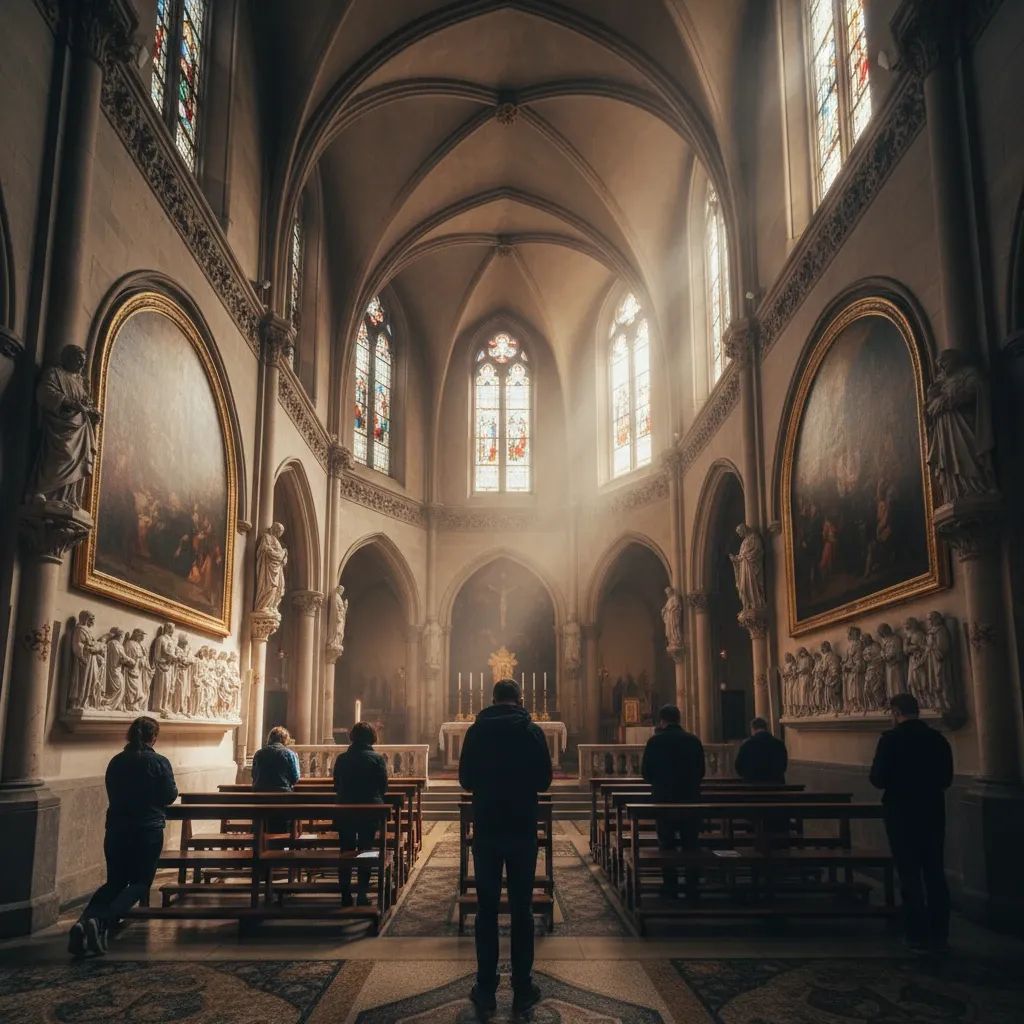
The event, titled "Inħoll l-Ilħna u l-Ilsna l-Oħra" (roughly, "Unbinding Voices and Other Tongues"), capitalizes on the Co-Cathedral's unique architectural history. Each of the eight side chapels was originally dedicated to a langue — a division of the Knights Hospitaller organized by geography and language. Visitors will move through these gilded chambers as poetry echoes in the tongue historically tied to each space.
The Chapel of the Langue of Aragon, for instance, will feature Spanish verse beneath Mattia Preti's altarpiece of Saint George on Horseback. The Chapel of Provence will host French poetry, while the Chapel of Italy, dedicated to the Immaculate Conception and Saint Catherine, will present Italian works near Preti's depiction of the saint.
Organized by the Co-Cathedral in partnership with Inizjamed, a Maltese cultural NGO known for the annual Malta Mediterranean Literature Festival, the evening aims to make linguistic diversity tangible. Guides Maria Christina Zammit and Jeremy Grech will lead the tours, supported by a rotating cast of readers from varied backgrounds.
What This Means for Residents
For Maltese locals and long-term residents, the event offers rare after-hours access to one of Valletta's most guarded interiors. The Co-Cathedral typically closes to tourists at 4:45 PM, with evening entry restricted to Mass attendees. This poetry night opens the inlaid marble tombstones, gilded walls, and Preti's Baroque frescoes to a curated cultural experience rather than the usual daytime shuffle of tour groups.
The €10 suggested donation is excellent value — the Co-Cathedral normally charges €15 for standard daytime entry, making this evening access with guided tours a particularly attractive proposition. For expats or language learners, it's an informal immersion opportunity: hear contemporary or historic verse in Polish while standing in the chapel where knights from that langue once worshipped.
Heritage Sites as Live Stages
The poetry evening is part of Malta's growing use of historic sites for contemporary art programming. Inizjamed itself has leaned into multidisciplinary programming, incorporating poetry films and open-mic sessions into its August literature festival. The organization's collaboration with the Co-Cathedral reflects a strategic shift: rather than confine poetry to lecture halls or bookshops, place it in environments where architecture, history, and language converge.
Spazju Kreattiv, Malta's National Centre for Creativity, continues to explore similar models with cultural programming that transforms Valletta into a performance hub. The trend reflects a broader commitment to repurposing heritage spaces as active venues rather than static exhibits.
The Co-Cathedral's Baroque Canvas
The Co-Cathedral itself is a study in controlled opulence. Commissioned by Grand Master Jean de la Cassière in the 1570s and later redecorated by Preti in the 17th century, its interior represents one of Europe's densest concentrations of High Baroque artistry. The vaulted ceiling depicts scenes from the life of John the Baptist with trompe-l'œil effects that create an illusion of depth. The floor is entirely covered with inlaid marble tombstones marking the graves of knights and officers — essentially, you walk on a 400-year-old necropolis.
The side chapels, though smaller than the nave, are individually significant. The Chapel of Castile, Leon, and Portugal features a Preti altarpiece dedicated to Saint James. The Chapel of France holds funerary monuments of Grand Masters alongside Preti's depiction of Saint Paul's conversion on the road to Damascus. The Chapel of Our Lady of Philermos, also known as the Chapel of the Blessed Sacrament, originally housed a revered icon brought from Rhodes.
During the poetry evening, these spaces will function less as museum exhibits and more as acoustic chambers. The stone walls and domed ceilings, designed to amplify liturgical chant, will carry spoken verse with minimal amplification required.
Practical Considerations
The Co-Cathedral is located at St John's Street, Valletta (entrance near Republic Street). Public transport via bus routes terminating in Valletta is straightforward; parking in the capital is limited and typically requires the Park & Ride scheme from Floriana or Marsa.
Dress codes for evening events at the Co-Cathedral are less strict than during Mass but still observed: shoulders and knees covered, no flip-flops. The building's stone floors and March evening temperatures (typically 12–16°C) make light layers advisable. Evening temperatures inside the stone building can feel cooler than the outdoor ambient temperature, especially if attending the later 8:30 PM tour.
Attendees should book tickets in advance via the Co-Cathedral's official website, as capacity for the chapels is limited. The two tour times allow flexibility for those combining the event with dinner in Valletta — the 7:30 PM slot accommodates pre-event dining, while the 8:30 PM departure leaves time for post-event drinks in the surrounding streets.
Why Poetry, Why Now
World Poetry Day, established by UNESCO in 1999, falls on March 21. Malta's observance six days early suggests a pragmatic scheduling choice — mid-March weather is stable, tourism is ramping up but not yet peak-season chaotic, and the Co-Cathedral's administrative calendar has availability.
More broadly, the event reflects a repositioning of heritage sites as active cultural venues rather than passive monuments. The Knights' linguistic diversity — a practical necessity for a multinational military order — becomes a narrative hook for contemporary multilingual programming. The result is a format that appeals to both the poetry-curious and the heritage tourist, wrapped in a 90-minute guided experience that requires no prior knowledge of either Baroque art or contemporary verse.
For residents, the takeaway is simple: one of Valletta's most iconic interiors will be open after dark, repurposed for an evening where language and architecture reinforce each other. Whether you attend for the poetry, the access, or the novelty of hearing German recited in a 16th-century chapel, the event offers a rare intersection of Malta's layered past and its present cultural ambitions.