Why This Matters
• Full cancellation of Malta-Milan service: The ITA Airways morning and afternoon runs to Linate have been scrapped completely, eliminating the direct connection for a full calendar day.
• Cumulative delays across remaining routes: Ryanair's Bologna flight pushed back three hours; Rome and Milan-Malpensa services stuck in limbo with no revised departure times confirmed.
• Network-wide traffic impact: Northern Italian airports handling reduced capacity means airlines face limited options to deploy spare aircraft to assist stranded passengers.
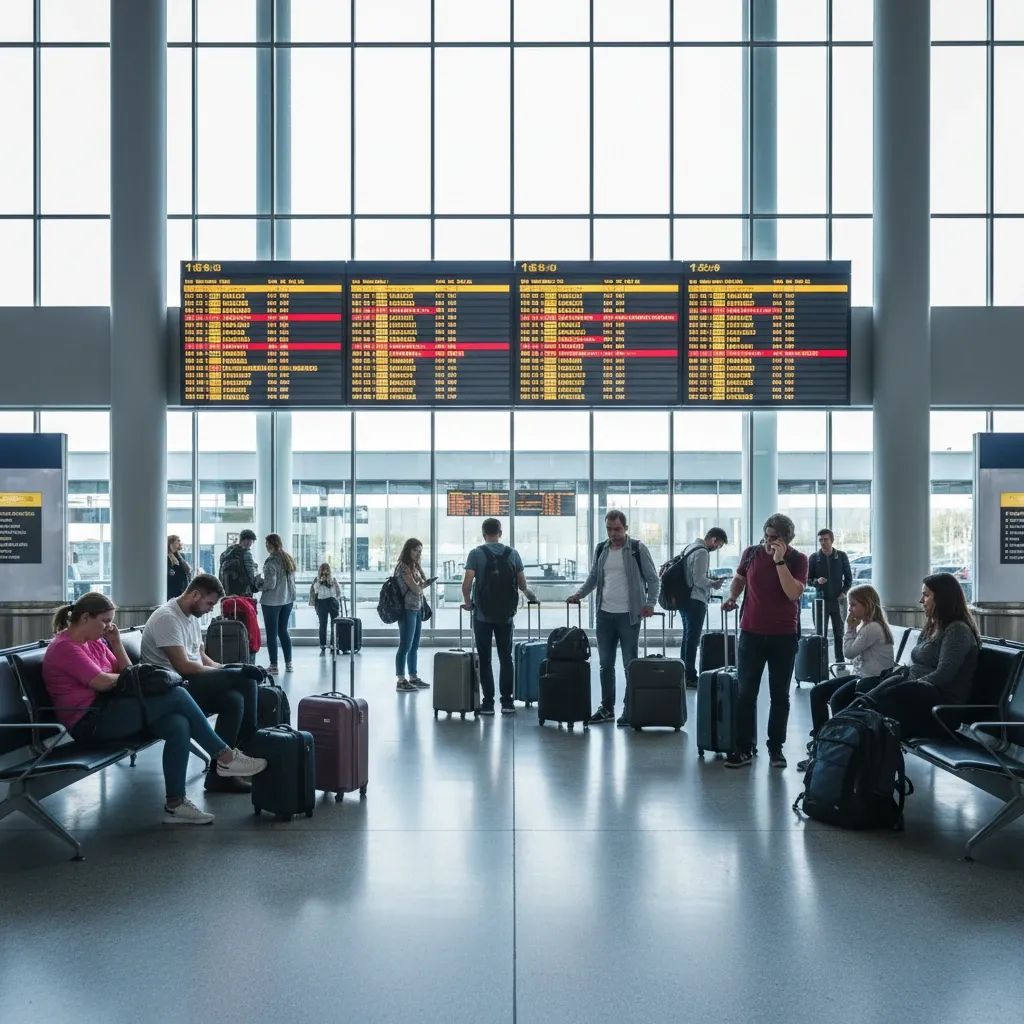
Italian air traffic controllers and technical staff walked off the job Friday afternoon, triggering the third significant aviation disruption to affect the country this year. The four-hour stoppage—running 1:00 PM to 5:00 PM Rome time—has impacted the Mediterranean aviation network, leaving Malta travelers facing cancellations, extended waits, and uncertainty about rebooking timelines.
The Strike's Anatomy
Four separate unions—Uiltrasporti, Ugl-Ta, Astra, and Fast-Confsal-Av—coordinated the action targeting ENAV (Italy's air navigation service) and Techno Sky, the subsidiary responsible for maintaining navigation infrastructure. Their grievances center on stagnant wages divorced from inflation, workload escalation as passenger volumes have rebounded past pre-pandemic levels, and what workers characterize as management's approach to technology adoption.
The EU's Digital Sky initiative, a continental programme designed to harmonize fragmented air traffic systems, sits at the core of labor tension. Controllers argue that modernization programmes are being implemented without corresponding training, compensation adjustments, or adequate workforce consultation. The Mediterranean airspace is inherently congested, and controllers insist that proper staffing levels remain essential when traffic density remains high.
Staffing levels have been cited as a pressure point. Controllers report that shift patterns have not evolved to match operational frameworks. Italian aviation law mandates "protected flight bands" between 7:00 AM–10:00 AM and 6:00 PM–9:00 PM, during which essential services must function. The unions scheduled today's action during the afternoon peak (1:00 PM–5:00 PM), maximizing disruption within legal bounds while protecting morning and evening traffic flows.
Immediate Flight Impact at Malta International
The ITA Airways/KM Malta flight scheduled for 12:45 PM departure to Milan-Linate has been cancelled entirely. The return service, booked for 5:35 PM arrival back in Valletta, is also wiped from the board. For passengers with single-day travel intent, this translates to forced rescheduling into Saturday, assuming seats become available.
Ryanair's Bologna connection shifted from 1:25 PM to 4:45 PM—a 3-hour-20-minute delay. Travelers with onward connections from Bologna into Central Europe (Vienna, Munich, Prague) may face cascade effects: a 4:45 PM takeoff from Malta arrives in Bologna around 6:00 PM or later, potentially affecting 7:30 PM or 8:00 PM forward connections.
WizzAir's Rome service and the second Ryanair Milan-Malpensa flight remain without confirmed new departure times. Passengers should expect revised schedules approximately 30 minutes after the strike concludes (around 5:30 PM Rome time, 6:30 PM Malta time).
What EU261 Actually Guarantees (and Doesn't)
Passengers departing an EU airport—including Malta International—hold statutory rights under EU Regulation 261/2004. The framework mandates rebooking on the next available flight to your final destination at no extra charge, or a full refund if you decline the alternate routing.
However, air traffic control strikes fall under the legal category of "extraordinary circumstances beyond the airline's control." This designation strips away the automatic fixed-sum compensation payments (€250–€600 depending on flight distance). The rebooking obligation remains intact; the financial settlement does not.
Meals, refreshments, accommodation (if an overnight stay is required), and ground transport remain the airline's responsibility regardless of the extraordinary-circumstances ruling. Keep every receipt—hotel invoices, meal tickets, taxi fares—airlines are legally bound to reimburse reasonable care costs. The distinction is crucial: you receive material support but not cash compensation for inconvenience or lost time.
Travel insurance becomes relevant here, but only if purchased with "comprehensive" or "all risks" coverage. Standard or basic policies typically exclude strike-related losses. If your insurance was bought recently for today's specific travel, read the fine print carefully before assuming strike costs are covered.
Navigating the Immediate Hours
Contact your airline through the fastest available channel—phone lines and social media (Twitter/X) typically produce faster response times than email. Request explicit rebooking on the next available flight to your destination. If no suitable flight exists today, the airline covers accommodation and meals if an overnight stay becomes necessary. Some airlines have been flexible with rebooking onto competitor services when their own schedules are constrained.
For delays exceeding two hours, meal and refreshment provisions are mandatory. If a delay cascades into a missed connection, your airline is responsible for rebooking you onto the next available service. Those costs revert to your original airline.
Retain all documentation: boarding passes, receipts, hotel confirmations, meal tickets, transport invoices. Airlines are obligated to reimburse these under passenger-care provisions, and documentation creates an audit trail if disputes arise.
Strike Context
Italy has experienced multiple aviation disruptions in recent months. Labor tensions within the air traffic control sector persist, particularly around modernization programmes, staffing levels, and working conditions. Travelers planning Italian connections should monitor airline updates and consider building flexibility into travel schedules when using Italian airports.