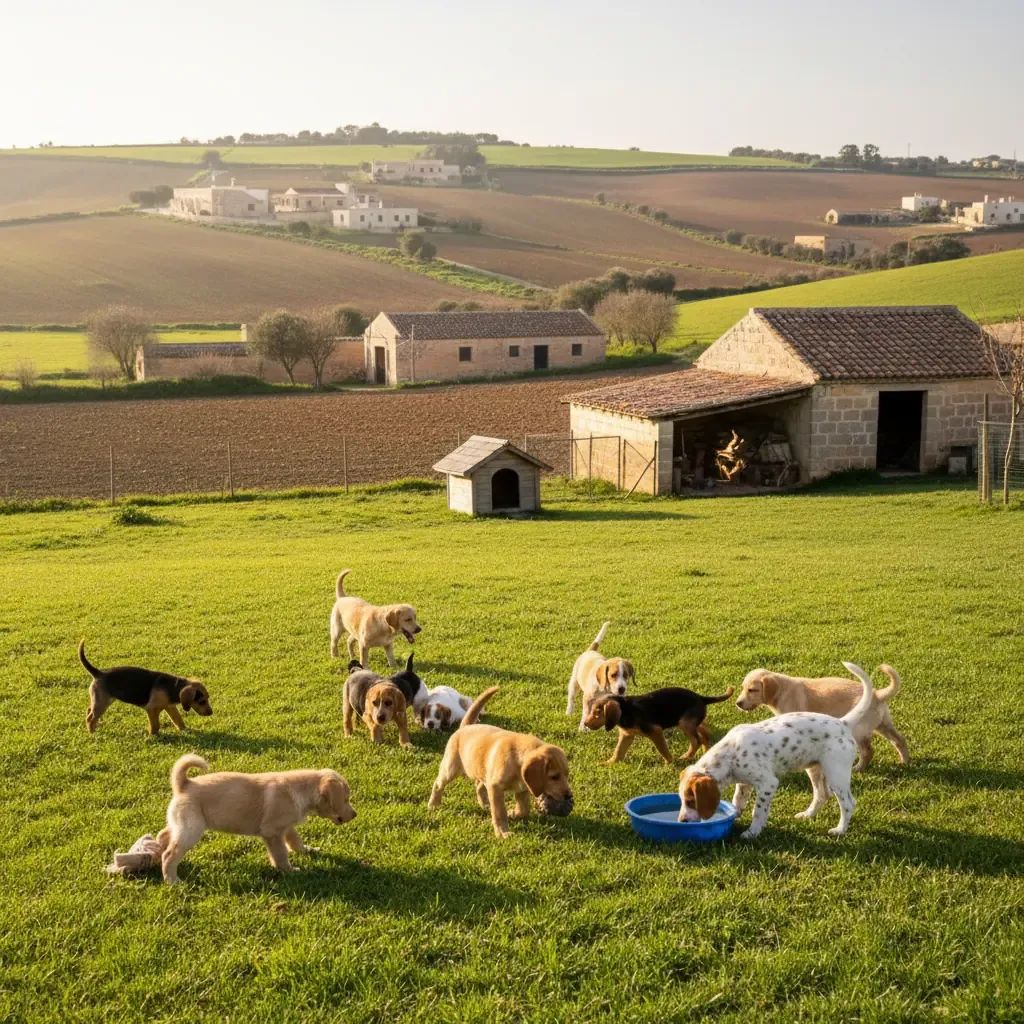
A Żurrieq dog breeder will spend the next five years entirely separated from animal ownership—a life-altering consequence that signals Malta's courts are treating unlicensed breeding operations as serious criminal violations deserving harsh penalties. The Malta Courts handed down this judgment on April 22, 2026, against Elaine Meli, a 41-year-old who operated a farm breeding multiple dog varieties without legal authorization or veterinary oversight.
Why This Matters
• This five-year animal ban ranks among the strictest imposed by Maltese courts in recent breeding cases—demonstrating courts now treat breeding violations as trust breaches deserving severe corrective action
• Buyers shopping for puppies must now verify breeder licenses—ask sellers for annual credentials if they claim to produce more than four litters annually
• Unlicensed operations won't disappear overnight—but enforcement is intensifying with new inspectors, a 24-hour response unit, and mandatory traceability rules arriving from Europe
• EU regulations arriving in the coming months will make puppy traceability mandatory—microchipping and national registration become non-negotiable protections once formal adoption is complete
Meli admitted guilt in December 2025 to six distinct charges spanning operational illegality, animal neglect, and confinement violations. Magistrate Nadine Sant Lia presided. Inspector Elliot Magro of the Malta Animal Welfare Directorate prosecuted. Beyond the five-year ownership prohibition, Meli received a €10,000 fine—substantial but deliberately below imprisonment, which remains available under the Animal Welfare Act for aggravated or repeat offenses.
How the Farm Operated Without Oversight
Meli's property functioned as a production site for commercial dog breeding, a scale of operation that under Malta's existing licensing regime requires formal annual authorization. The law demands that anyone intending to produce more than four litters annually must secure a breeder's licence and maintain meticulous records documenting every birth, transfer, and health intervention. Meli obtained neither the licence nor the records.
Without licensing obligations, her farm avoided mandatory veterinary inspections, genetic health vetting, and accountability mechanisms designed to protect animals. Investigators discovered dogs confined to restricted, unsuitable spaces—cramped quarters devoid of clean drinking water, adequate shelter, protective disease control measures, or environmental enrichment. The animals experienced what prosecutors described as unnecessary pain, suffering, and distress. Multiple litters were produced on this unregulated site, meaning puppies dispersed into circulation with zero traceability to their origin.
Dogs rescued during the investigation remain in unspecified conditions. The exact number has not been disclosed publicly, and their rehabilitation or rehoming status remains opaque—a transparency gap that reflects systemic weaknesses in Malta's animal welfare infrastructure beyond the judiciary's reach.
The Court's Message: Breeding Without Licensing Is Trust Betrayal
Magistrate Sant Lia emphasized that breeding operations inherently demand total human responsibility for dependent creatures unable to advocate for themselves. By operating without licensing, Meli had severed herself from accountability mechanisms specifically designed to protect vulnerable animals. The judgment framed this not as mere regulatory neglect but as a fundamental breach of moral duty.
Meli's criminal record was clean, yet the court rejected any leniency argument anchored to that fact. This ban ranks among the longest ever imposed by Maltese courts for animal welfare violations, communicating that judicial tolerance has ended. Significantly, imprisonment was not imposed—a restraint suggesting courts reserve custodial sentences for aggravated circumstances or repeat offenders. Meli initially pled not guilty when first charged, but reversed course in December 2025 when she admitted all allegations. This about-face likely influenced sentencing: judges routinely view guilty admissions as evidence of responsibility acknowledgment, permitting punishment that maintains deterrent effect without maximizing custodial severity.
The Regulatory Landscape Is Tightening Fast
Meli's conviction arrives amid significant enforcement acceleration. In December 2024, the Malta Government enacted regulations prohibiting the breeding, importation, and sale of non-pedigree Bully-type dogs. Owners who acquired such animals prior to that deadline retain possession rights if animals are microchipped and registered; breeding remains permanently forbidden. This targeted prohibition reflects years of evidence linking backyard Bully breeding to behavioral unpredictability and abandonment surges.
The policy sits within a broader strategic pivot toward European harmonization. The European Union reached a provisional accord in November 2025 establishing the continent's first comprehensive minimum standards for cat and dog breeding, welfare, and supply chain traceability. Once formally adopted—with implementation expected in the coming months, though exact timing remains to be confirmed—these rules will mandate that all dogs undergo microchipping and national registration before sale or transfer. Breeding frequency limitations, age minimums and maximums, and explicit prohibitions on inbreeding (except for preserving endangered local breeds) will become binding across member states. Extreme physical traits that compromise welfare will automatically disqualify animals from breeding and competitive exhibitions. Painful procedures like ear cropping and tail docking face outright bans unless medically justified.
Malta's recent legislative moves represent deliberate positioning to anticipate these incoming EU requirements. Legislators are engineering domestic law toward harmonization with bloc-wide rules—a process that will likely require amendments to Chapter 439 and the introduction of mandatory inspection protocols for all commercial breeding premises.
How to Verify a Legitimate Breeder in Malta
For individuals contemplating puppy acquisition, Meli's case furnishes a practical buyer's checklist. Prospective purchasers should demand that sellers produce their annual breeder's licence if the operation claims to produce more than four litters annually. Request pedigree documentation and independent veterinary health assessments. Visit breeding premises personally and observe living conditions—reputable operators welcome such scrutiny without hesitation.
Verify the puppy's microchip registration and confirm its entry in Malta's national animal database. Malta residents can verify breeder compliance by contacting the Animal Welfare Directorate or consulting with local veterinarians before purchase. Purchasing from unlicensed sellers exposes buyers to animals that may carry untreated genetic disorders, behavioral deficiencies, or undetected disease exposure. Beyond personal risk, such transactions economically sustain the very enterprises courts are now penalizing.
Administrative penalties for first infractions involving prohibited breeds reach €1,000 per animal. Failure to settle these within 30 days escalates cases into criminal court. Repeat convictions trigger fines of €6,000 to €80,000 and potential three-year imprisonment. Courts retain authority to order immediate animal confiscation in mistreatment circumstances.
Enforcement Still Faces Resource Constraints
Despite judicial willingness to impose stringent penalties, Malta's animal welfare enforcement machinery operates under chronic resource constraints. The Animal Welfare Directorate shoulders inspection obligations, complaint investigation, and animal rescue duties with historically inadequate staffing and equipment. Government announcements in April 2026 promise hiring additional inspectors, establishing a dedicated 24-hour rapid response unit, and upgrading training modules and technical capacity.
A significant transparency deficit hinders consumer protection. The pending EU regulations will introduce a public registry of approved breeders—a centralized, searchable database permitting buyers to verify legitimacy before purchase. Malta currently lacks such infrastructure, forcing consumers to rely on informal networks or ad-hoc credentialing checks. This absence creates friction and enables unscrupulous operators to disguise themselves as legitimate sellers.
Island shelters report escalating intake volumes directly attributable to abandoned dogs from unregulated breeding operations. The cycle reinforces itself: backyard breeders produce genetically and behaviorally compromised animals; frustrated owners struggle with unforeseen behavioral or health crises; shelters absorb cascading rescue obligations. Reactive judicial penalties, without preventative systemic reform, cannot break this chain independently.
What Consistency Will Determine
Malta's enforcement apparatus must now operate with heightened expectations. The Meli sentence establishes that courts will impose substantial financial consequences and lengthy animal ownership bans. However, consistency determines deterrence. If enforcement remains episodic—concentrated on cases that reach media attention while routine violations proceed undetected—operators will calculate acceptable risk and continue illegal operations.
The incoming EU framework creates both opportunity and obligation. By establishing harmonized minimum standards across member states, bloc-wide regulations will eliminate the regulatory arbitrage that has permitted Maltese operators to maintain lower welfare thresholds than Northern European countries. Simultaneously, integration into EU traceability systems will expose backyard breeding to transparency mechanisms previously unavailable. A microchipped, nationally registered dog becomes traceable to its source, complicating the anonymity that has historically sheltered unlicensed breeders.
For residents, this convergence means accelerating market rationalization. Legally licensed, welfare-compliant breeders will face competitive pressure from illegal alternatives only if enforcement remains lax. As inspection intensity and investigative capability increase, the economic advantage of operating outside regulated frameworks erodes. Meli's conviction demonstrates that courts possess both authority and inclination to impose meaningful consequences. Whether this judicial willingness translates into deterrent effect depends on whether the Animal Welfare Directorate secures the personnel and resources necessary to identify violations systematically rather than reactively.