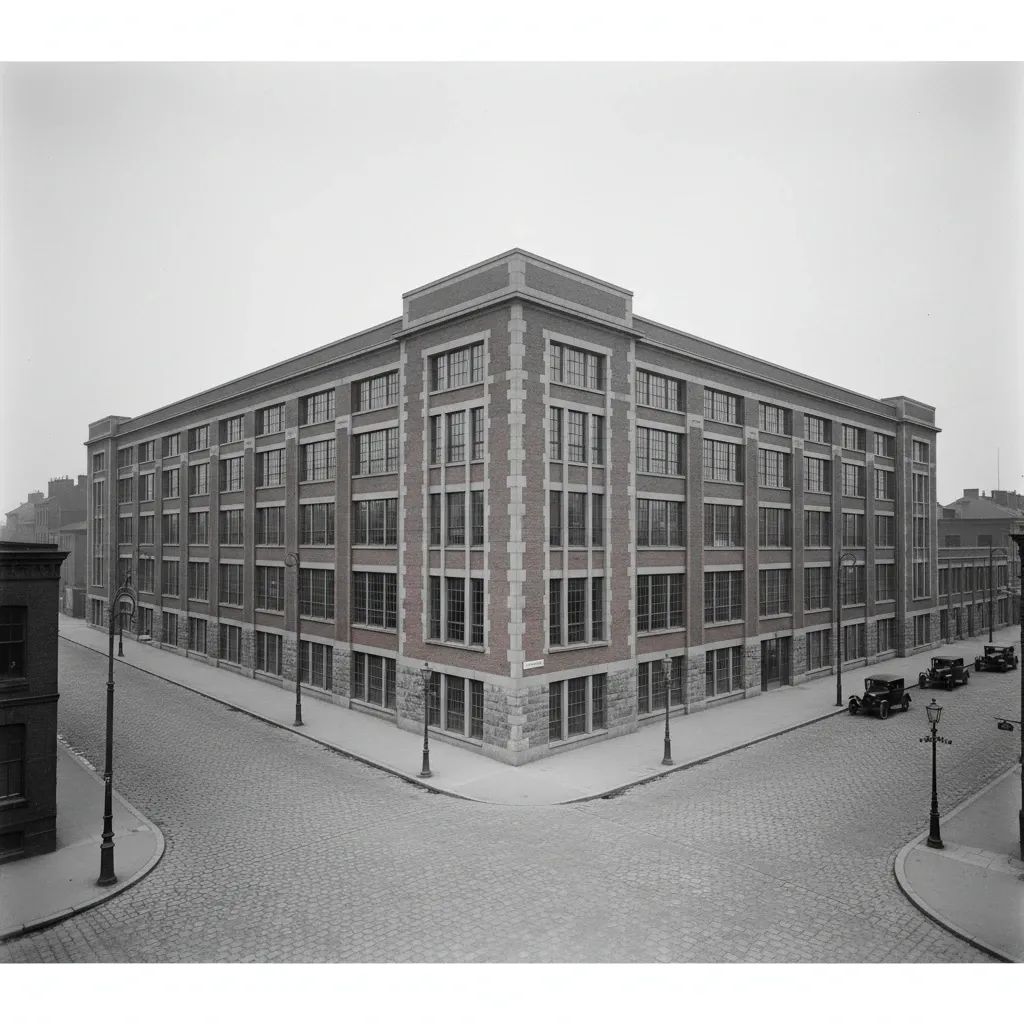
Malta's construction magnate Joseph Portelli has razed the early 20th-century Macaroni Premier factory in Balzan—one of the island's last standing examples of Modernist industrial architecture—sparking renewed condemnation over the developer's pattern of heritage erasure and the broader failure of planning oversight.
The demolition took place in early 2026, ahead of securing final approval to amend an existing planning permit. The factory originally had an approved permit (PA/3115/23); Portelli proceeded with demolition while awaiting approval for an amendment application (PA/00505/26) that would convert the site into a five-storey residential and commercial block, including 29 apartments, two penthouses with rooftop pools, a ground-floor café, and two basement garage levels. The scheme represents a wholesale replacement of an iconic industrial landmark with dense housing—a transaction that critics argue epitomizes the ongoing commodification of Malta's architectural memory.
Why the Macaroni Premier Mattered
This was not an ordinary warehouse. The Superintendence of Cultural Heritage (SCH) had formally recognized the factory's architectural characteristics as typical of interwar industrial structures, assigning it both historical and architectural value. Its location at the busy junction linking Lija, Birkirkara, and Balzan made it a defining visual anchor—what architect Theo Cachia described as a building that "watched over" the intersection and shaped the identity of those entering Birkirkara.
The factory also appeared on 1940s air-raid shelter maps, underscoring its historical depth. For heritage advocates, its destruction represents the loss of a rare surviving example of early Maltese industrial heritage—a tangible link to the island's period of industrialization that is now all but extinct in the built environment.
In objections filed with the planning authority, critics warned that flattening the building would set a dangerous precedent for the demolition of industrial heritage buildings and accelerate the erosion of urban identity across Malta's already over-developed streetscapes.
What Preservation Advocates Proposed
Before the demolition, architect Theo Cachia unveiled an alternative design that retained key structural and aesthetic elements of the existing factory. His proposal maintained the original façade material, introduced restrained balconies that reflected the proportions of the old structure, and sought to respect the site's history while still accommodating commercial use. Cachia criticized Portelli's approved plan as "at best uninspired and at worst a leech sucking on the already depleted urban vitality of the neighbourhood." The alternative design garnered significant online attention and public support, yet was ultimately ignored.
Patrick Calleja, president of heritage NGO Din l-Art Ħelwa, filed objections to the destruction on the grounds that the SCH was "never thoroughly consulted" about the scope of Portelli's amendment proposal. The Superintendence itself had noted that the extensive amendments could not be properly assessed within the confines of a renewal application for an already approved permit, yet the developer proceeded with demolition nonetheless.
The SCH had explicitly expressed favor towards "any preservation and integration of this early 20th century structure into the proposed development," a recommendation that was disregarded entirely.
A Developer's Pattern of Heritage Demolition
Joseph Portelli's track record with Malta's architectural and rural heritage has become a flashpoint in the national debate over unchecked development. The Macaroni Premier demolition is the latest in a series of controversial projects:
• Wardija farmhouse: A proposal to demolish a vernacular farmhouse over 100 years old and replace it with apartments, maisonettes, and pools on Outside Development Zone (ODZ) land. The Environment and Resources Authority (ERA) called the plan "objectionable on all fronts," while the SCH highlighted rare architectural elements requiring protection.
• Qala illegal excavation: Portelli admitted to conducting illegal excavation work in a protected area for a swimming pool he anticipated receiving a permit for—work that was halted only after an NGO flagged it.
• Sannat vernacular building: In 2020, Portelli secured a permit to demolish a vernacular structure with a large garden in Sannat and replace it with a block of 16 apartments and 15 garages.
• Ta' Muxi ruin "restoration": A company partly-owned by Portelli faced firm objections from ERA over a proposal to "reconstruct and restore" a countryside ruin in a pristine rural area of Gozo, which ERA warned risked habitat loss and landscape modifications.
While Portelli has assured the public that highly protected sites like Fort Tigné (Grade 1 scheduled) will remain untouched, his overall portfolio reveals a consistent preference for wholesale demolition over adaptive reuse or integration. Requests for comment from Portelli and his representatives were not received at the time of publication.
What This Means for Residents
For residents and homeowners in Balzan, Lija, and Birkirkara, this demolition signals both a loss of visual identity and a warning about what can happen to aging buildings in their neighborhoods. The approved amendment will introduce new residential and commercial density to an already congested junction, raising concerns about traffic, parking strain, and infrastructure capacity.
The demolition also underscores a troubling legal loophole: developers in Malta can proceed with demolition before obtaining final planning approval for amendments to an existing permit, leaving regulators and the public with no recourse once a building is gone. This has become a recurring tactic in projects where opposition is anticipated.
For heritage advocates, the Macaroni Premier case is a microcosm of Malta's systematic failure to enforce heritage protection laws. Despite legislation dating back to 1910, including the Cultural Heritage Act of 2002, the island continues to lose examples of its architectural past at an accelerating pace.
Broader Context: Malta's Heritage Under Pressure
Malta's cultural heritage has been under sustained assault from development pressures, particularly since the economic boom of the mid-2010s. ODZ land, intended to safeguard rural landscapes, faces constant encroachment. Urban Conservation Areas (UCAs), meant to preserve historic streetscapes, are being compromised by infill projects that prioritize density over context.
The loss of industrial heritage is particularly acute. Unlike the medieval fortifications and Baroque palaces that draw tourists, early 20th-century industrial buildings like Macaroni Premier are rarely scheduled for protection and are seen by developers as expendable. Yet these structures tell the story of Malta's modernization and working-class history—narratives that are vanishing from the built environment.
Environmentalists and heritage NGOs have grown increasingly vocal, particularly on Gozo, where mayors and residents fear the island is being "ruined" by intense projects. The concern extends beyond aesthetics: heritage areas generate economic value through cultural tourism, which depends on the authentic character of these sites. Once destroyed, that economic and cultural capital is irretrievable.
The Road Ahead
The Malta Planning Authority is expected to issue a recommendation on Portelli's amendment application in the coming weeks. With the building already demolished, approval is widely anticipated by heritage advocates and planning observers, effectively rubber-stamping the loss. What remains to be seen is whether the case will galvanize stronger regulatory safeguards—such as mandatory heritage impact assessments before demolition permits are issued, or penalties for developers who proceed before final approval.
For now, the junction at Balzan, Lija, and Birkirkara has lost a defining landmark, replaced by the promise of another dense residential development. The fate of Macaroni Premier serves as a stark reminder: in Malta's current development climate, heritage is negotiable, and once it's gone, it's gone for good.