Malta's government faces a hard fiscal reality: the spending policies that have powered steady growth are approaching their limits. The Malta Fiscal Advisory Council submitted its annual assessment to Finance Minister Clyde Caruana this week, and the message—wrapped in diplomatic language—amounts to a cautionary tale about the perils of comfort spending during good times.
Why This Matters
• Temporary growth, permanent costs: The government has locked in spending increases and revenue cuts that assume strong growth will continue indefinitely. If economic conditions weaken, there's little room to adjust without painful cuts.
• Infrastructure stretched thin: Rising population, driven by immigration and employment growth, is straining roads, water systems, electricity grids, and housing availability. Current spending patterns don't adequately address these capacity gaps.
• Export momentum needed: Malta's economy has grown faster than most EU peers, but that growth comes from people consuming more, not from becoming more competitive. As the International Monetary Fund has warned, this model is hitting natural limits.
• Budget flexibility eroding: While Malta remains well within EU fiscal rules, the council warns that strong revenue growth—the main reason deficits look manageable—cannot be taken for granted.
The Spending Trap: When Revenue Growth Masks Inefficiency
The Malta Fiscal Advisory Council's core concern is not about Malta breaking EU rules. On paper, the numbers look reassuring. Deficit spending stays well below the 3% of GDP threshold, debt sits comfortably below 60% of GDP, and unemployment has fallen to 3%, with employment climbing 3.9% year-on-year. The government can legitimately point to these headlines and claim fiscal discipline.
But the council focuses on a different question: quality. What is the government buying with its money?
When the report flags "non-productive spending," it's signaling that budget allocations often reflect immediate political needs rather than long-term economic strategy. This category encompasses several familiar budget items: the €4.66-per-week cost-of-living adjustment, €10 weekly increases for pensioners, higher children's allowances, and ongoing energy and fuel subsidies designed to shield residents from price shocks. These measures are socially important and politically popular, but they do not enhance Malta's productive capacity, improve worker skills, or strengthen export competitiveness. They transfer money to households without building capital or generating economic returns.
The mechanism is straightforward. When households receive additional income—whether through allowances, subsidies, or wage increases—they spend it, usually on consumption: food, utilities, transport, rent. This boosts GDP figures and tax revenues in the short term, but it does not make the economy more efficient or competitive. Contrast this with spending on research facilities, education infrastructure, or digital transformation: such investments improve productivity and enable higher-value economic activities.
The International Monetary Fund frames this distinction as the gap between actual spending and the minimum spending required to deliver the same social benefit with maximum efficiency. Malta's situation suggests that gap is widening. The council's implicit message: the government could preserve current living standards with lower expenditure if it reallocated spending toward efficiency and away from blanket transfers.
Immigration, Employment, and the Breaking Point
Malta's labor market tells a crucial part of the story. The economy has absorbed 3.9% employment growth in a single year, a remarkable figure for a small nation. But here's the catch: this growth depends almost entirely on continued immigration flows. Malta's unemployment rate—near 3%—reflects a truly saturated job market. There are simply not enough working-age residents to fill available positions, so the economy has relied on foreign workers.
This model has been economically efficient so far. Immigration has kept wages competitive, allowed businesses to expand, and sustained growth without severe labor bottlenecks. But it has geographic and infrastructure limits. Malta is the second-most densely populated country in Europe, with roughly 600 people per square kilometer. Add even modest immigration to an economy already straining its water, electricity, and road networks, and you have cascading infrastructure crises.
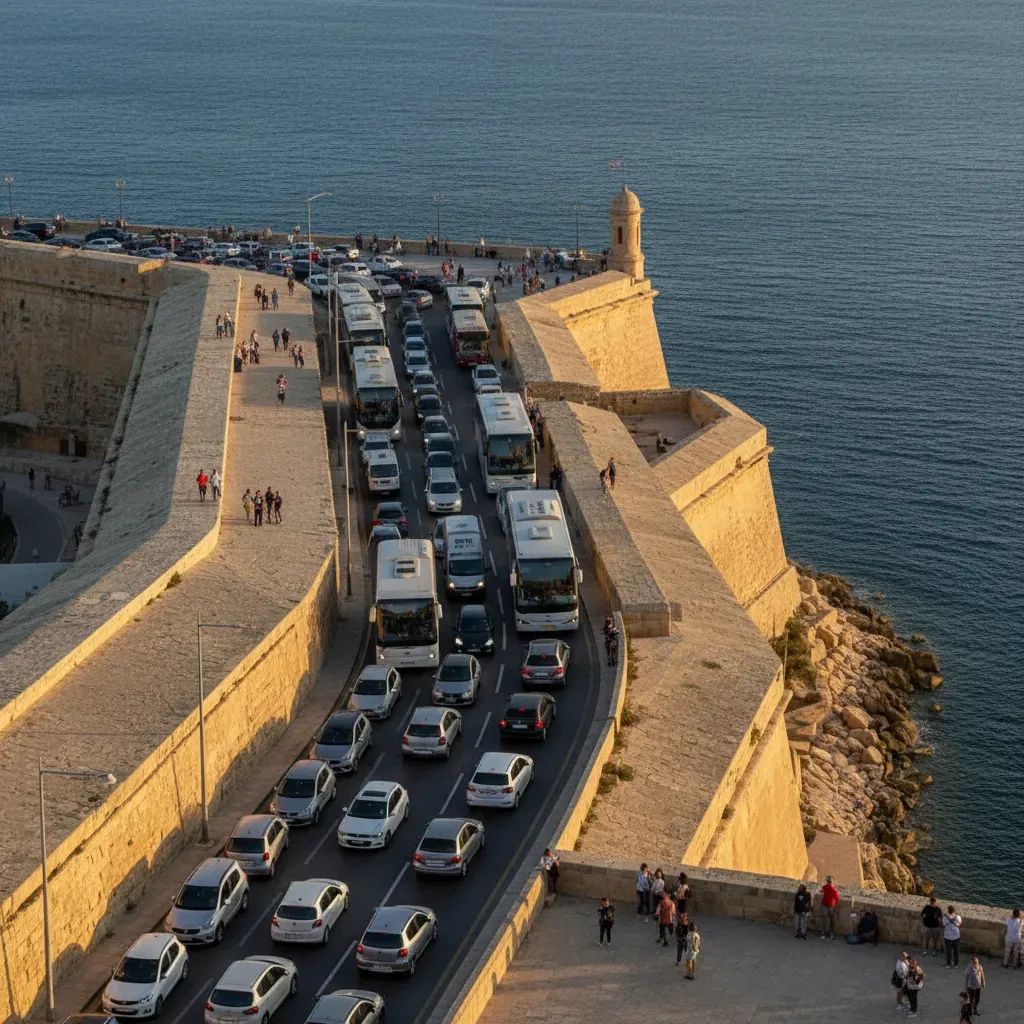
The energy system is already operating near capacity during peak demand. The water infrastructure, aging in many districts, struggles to meet summer demand and has suffered from seawater intrusion in some coastal areas. Roads in and around Valletta, Sliema, and St. Julian's are routinely congested. Housing costs have soared—some analysts estimate they've doubled in real terms over the past decade—pricing younger Maltese workers out of home ownership.
The government has begun addressing these gaps. A nine-year electricity plan calls for 12 new distribution centers and a new 132kV link to Gozo, strengthening resilience. A €370 million water and wastewater investment program—including €86 million in EU co-funding—aims to increase production and reduce infrastructure failures. Gozo is receiving new roads and expanded Park & Ride facilities. Urban regeneration projects in Senglea, Kalkara, and Marsa focus on green mobility and smart infrastructure. The €1.50 per-night eco-contribution on tourists generates revenue for environmental and transport improvements.
Yet the council's concern is acute: these infrastructure investments take time to mature, and they are expensive. If the government continues to front-load spending on short-term income support, there is less room to finance the capital expenditure that infrastructure demands. The €13 million education and innovation program is modest relative to the scale of skills development needed for high-value exports.
The Growth Model Under Pressure: Domestic Demand vs. Exports
Malta's economy grew faster than virtually any peer in the EU in 2025 and early 2026, likely in the 3.5% to 4% range—roughly triple the EU average. That's not a problem in isolation. But the source of that growth matters enormously for sustainability.
The primary driver has been domestic consumption: households earning higher incomes and spending more, combined with government consumption funded by wage increases and sectoral agreements. Tourism contributes positively. Fintech, online gaming, and professional services generate meaningful export earnings. But the economy remains fundamentally inward-looking. Residents and government are consuming more; they're not necessarily producing things that the world wants to buy.
Contrast this with, say, Germany or Ireland. Both struggle with the immediate outlook, but for different reasons. Germany is sluggish because global trade is weak and Chinese competition is intense—not because domestic spending is low. Ireland boomed in 2025 partly due to "frontloading" of pharmaceutical exports ahead of anticipated US tariffs, but that windfall is expected to reverse in 2026. Both economies, despite challenges, have diverse export bases and technological capacity.
Malta's vulnerability is structural. If the global economy stumbles—if tourism dips, if fintech appetite cools, if Cyprus or Portugal become preferred financial hubs—domestic consumption cannot compensate. An inward-focused economy with limited export diversification faces sharper contractions in downturns. The council is warning that now is the time to rebalance, not later when crisis forces painful adjustment.
The Export Pivot: Necessary, but Not Quick
The council's remedy is clear: Malta must gradually shift its growth model toward a stronger export orientation, prioritizing innovation, productivity improvements, and export diversification. This is described as a "pressing strategic priority."
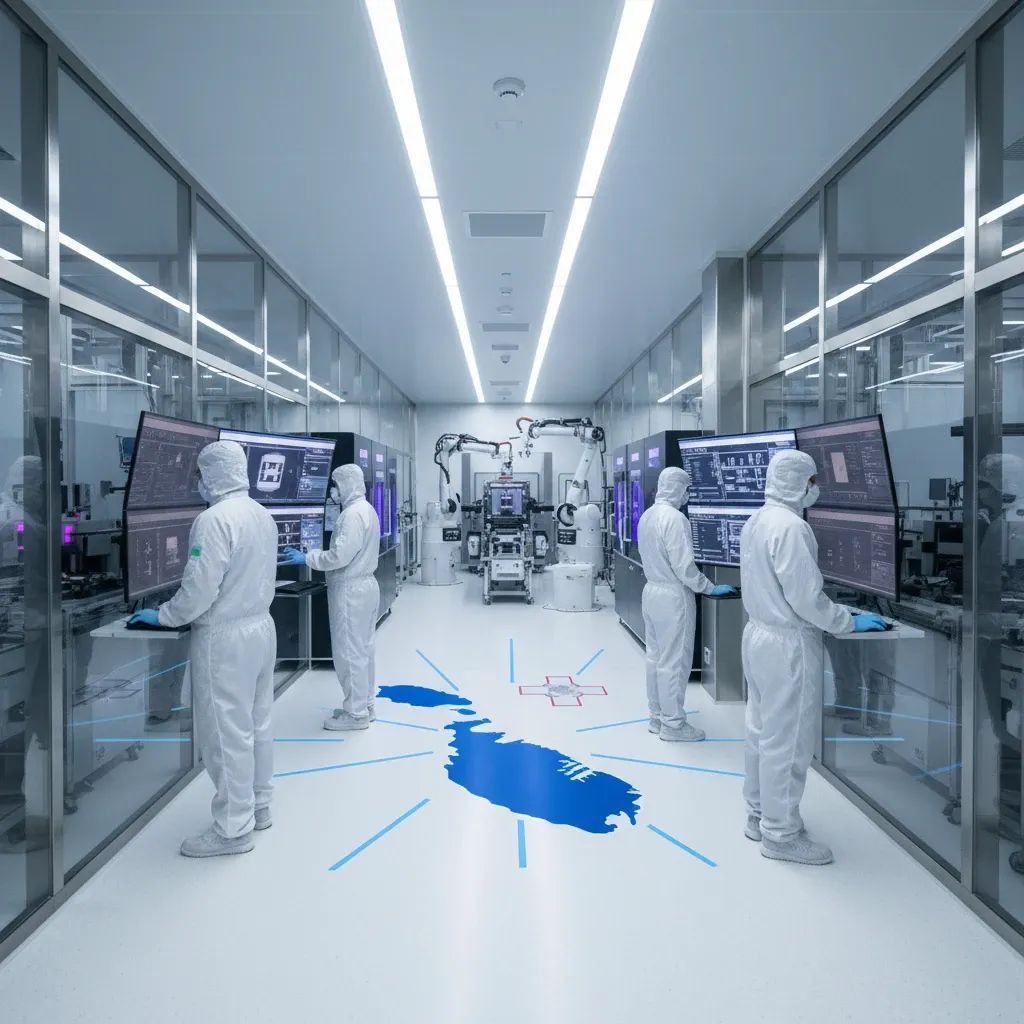
The 2026 budget begins laying groundwork. The government is offering accelerated tax deductions for AI, automation, and cybersecurity investments, alongside 175% deductions for research and innovation spending. A €100 million digitalization fund is promoting tech adoption across sectors. Tax incentives for renewable energy and green property development are designed to position Malta as an attractive hub for sustainable industries.
But tax breaks alone do not create competitive exports. Malta must also build human capital. The proposed National Talent Register—a database matching local skills to economic needs—suggests the government recognizes that skill gaps limit productivity. €13 million for school infrastructure is a start, but sustained investment in technical education, vocational training, and university-industry partnerships will be necessary.
The sectors to target are clear: fintech and blockchain (where Malta has regulatory expertise and a growing ecosystem), green industries and renewable energy, tourism innovation (luxury, specialty, environmental experiences rather than mass-market volume), and professional services (law, accounting, digital services). These sectors attract high-value clients willing to pay premium prices, and they generate sustainable employment without requiring massive population influxes.
What Restraint Means for Daily Life
For people living in Malta, the council's message translates into several practical implications.
First, expect fewer blanket spending increases in coming budgets. The energy and fuel subsidies that have shielded electricity and petrol bills from global price swings may become more targeted (narrowed to lower-income households) rather than universal. Pension increases, allowance hikes, and employment cost-of-living adjustments may slow or be tied to specific inflation triggers rather than automatic annual rises. This is not popular politically, but the council is essentially suggesting that the current model is unsustainable.
Second, infrastructure investment will accelerate, but problems will persist in the interim. New roads, water upgrades, and electricity links are welcome, but they take years to complete. Residents will continue navigating congested traffic, housing shortages, and occasional water pressure issues for at least the next two years. The long-term gains are real, but the short-term frustration is unavoidable.
Third, job quality may improve faster than job quantity. If the economy pivots toward higher-value sectors, wage growth could accelerate for skilled workers, and opportunities in tech, green industries, and specialized services will expand. But immigration may slow or stabilize, tightening the labor market further and potentially raising wages for less-skilled workers too. Conversely, if structural change stalls, working-age Maltese may find themselves competing with lower-wage immigrants for entry-level roles.
Fourth, fiscal flexibility will diminish if current patterns persist. The council is essentially flagging a ticking clock. If revenue growth slows—due to global economic headwinds, trade tensions, or domestic factors—the government will lack the budgetary cushion to respond without tax increases or spending cuts. Building that cushion now, through restraint rather than crisis-driven austerity later, is the council's core recommendation.
The Fiscal Lesson: Comfort Is Not a Guarantee
Malta enjoys an enviable fiscal position by EU standards. But the council's message is that this position is temporary and contingent. It depends on strong revenue growth, which depends on strong economic growth, which depends on continued immigration, which has environmental and infrastructure limits.
The fundamental question facing policymakers is whether to invest current revenues in immediate income support (sustaining political goodwill and consumption-driven growth) or in productive capacity (innovation, skills, export competitiveness, infrastructure). The council is arguing that the current balance—favoring immediate support—is shifting too much risk into the future. A recession or external shock would then require harsh, sudden spending cuts or tax hikes. Prudence now, the council implies, buys flexibility later.
This is not an argument for austerity. Rather, it's an argument for strategic reallocation: maintain or even increase support for education, research, and infrastructure; slow the growth of universal allowances and subsidies; and target remaining income support more carefully to those who need it most. That approach would ease the burden on public finances while preserving social safety nets and investing in long-term competitiveness.
Whether the government heeds this counsel will define Malta's economic trajectory for the next decade.