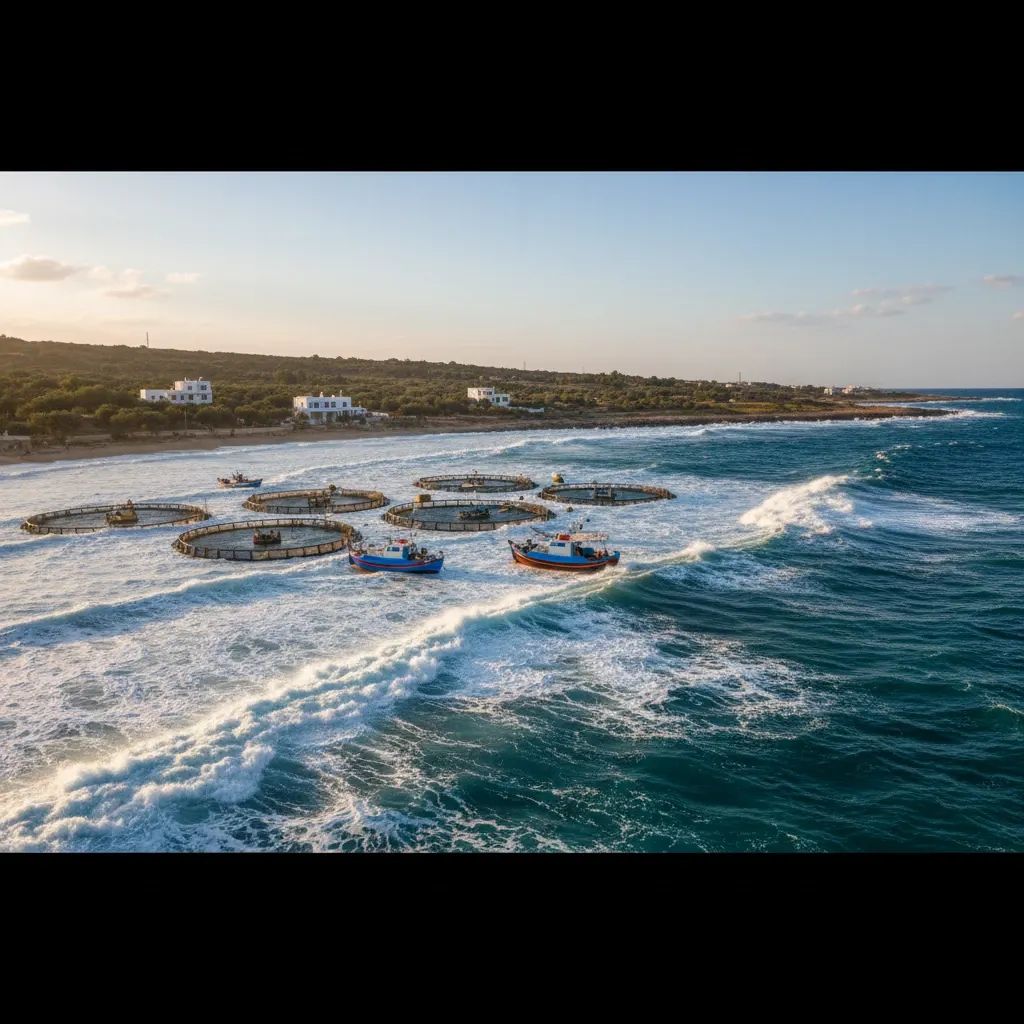
The white foam spotted drifting near Buġibba this week offers Malta's aquaculture sector a convenient narrative: nature did it, not us. But the incident exposes a far deeper problem for residents and policymakers—a regulatory system so fragile that almost nobody, including local authorities, genuinely knows what's happening in Malta's offshore waters anymore.
Why This Matters
• The transparency crisis: The Environment and Resources Authority refuses to share detailed monitoring reports with local councils, citing confidentiality. Coastal residents have no reliable way to distinguish between natural phenomena and farm violations.
• Penalties that don't punish: Fish farms have been criticized for receiving fines that appear insufficient relative to industry revenues. For an industry worth hundreds of millions annually, modest penalties lack meaningful deterrent effect.
• Season starting soon: Tuna fattening operations resume within weeks. Recent coastal contamination incidents will become a reference point for whether promised improvements have materialized.
The Foam Versus Slime Distinction—And Why Most People Don't Buy It
When seawater churns violently, something genuinely different happens than when a fish farm discharges poorly thawed sardine bait. Natural sea foam emerges from dissolved organic matter—dead algae, proteins from decaying plankton—being whipped into bubbles by wind and waves. It's white, sometimes off-white or brownish with sediment, and it appears without regard to farming seasons or feeding schedules. This process happens regularly across the Mediterranean, often indicating a healthy marine ecosystem at work.
Aquaculture slime operates under completely opposite conditions. When frozen mackerel and sardines arrive at farms inadequately thawed and drained, their oils leach directly into surrounding water. The result isn't foam—it's a viscous, oily substance with a distinctly putrid smell that coastal residents remember vividly from recent contamination events. Investigations by the Environment and Resources Authority and the Department of Aquaculture and Fisheries have confirmed this mechanism during contamination crises.
The Maltese Aquaculture Producers Federation, represented by CEO Charlon Gouder, correctly notes that tuna farms remain unstocked as March approaches, meaning no feeding operations are currently underway. By that logic, Wednesday's foam cannot originate from fish farm activity. The Malta Meteorological Office did issue a yellow weather alert Tuesday, confirming Force 5 to 6 winds—conditions documented to generate natural sea foam.
Yet this is where the industry's credibility problem becomes acute. Residents remember recent contamination incidents, when farm operators initially denied responsibility before photographic evidence emerged of workers attempting emergency containment measures. That imagery, combined with official investigations confirming aquaculture involvement, permanently altered public perception of industry assurances. Trust, once fractured, doesn't reconstitute simply because an explanation is scientifically plausible.
What Actual Accountability Looks Like Elsewhere in the Mediterranean
Across southern Europe, countries confronting similar tensions between farming expansion and coastal protection have implemented fundamentally different enforcement models. The Mediterranean region employs a variety of strategies addressing environmental oversight, operational transparency, and penalty structures—approaches that differ significantly from Malta's current system.
Some Mediterranean operators have adopted certification standards and third-party verification mechanisms to demonstrate environmental compliance. Others have implemented detailed regulatory application processes requiring environmental impact documentation before operations commence. Emerging technologies including recirculating aquaculture systems and alternative feed sources have been explored to address pollution reduction at the source rather than managing impacts downstream.
The common thread across these Mediterranean approaches is transparent communication backed by genuine enforcement. When fines are imposed, they're substantial enough to function as deterrents. When monitoring data exists, it's accessible to the public and local councils, not restricted to government files. When improvements are promised, residents see visible infrastructure changes and can verify compliance through accessible inspections.
The Penalty Structure That Enables Repeat Violations
Malta's aquaculture sector has faced criticism for fines perceived as insufficient relative to industry scale and violation severity. Observers argue that modest penalties function as routine operating expenses rather than meaningful deterrents. Environmental pollution, from a business calculation perspective, becomes cost-neutral when fines lack proportional impact on company finances.
The Nationalist Party has seized on this logic, framing the issue as existential for Malta's tourism sector, which depends on the image of pristine Mediterranean shores. The political opposition isn't wrong on the mechanics—it's merely highlighting what economic analysis confirms: current penalties lack adequate deterrent capacity.
Where Environmental Oversight Has Actually Failed
In October 2025, when the Environment and Resources Authority refused to release detailed fish farm monitoring reports to a local council, citing confidentiality, something fundamental broke in Malta's system of democratic accountability. The Green Party (ADPD) publicly condemned the decision. The justification—that monitoring documents represent "internal matter"—essentially declared environmental data the private property of the regulator rather than public information.
This matters concretely. Without access to monitoring reports, local councils cannot meaningfully assess whether farms are complying with permit conditions. Fishermen cannot compare official findings against their own observations. Residents cannot pressure their representatives with hard data. The Environment and Resources Authority becomes simultaneously prosecutor, judge, and keeper of evidence—a structure that virtually guarantees insufficient public scrutiny.
Contrast this with how Mediterranean countries typically handle similar information. While farm expansion proposals continue facing opposition across the region, environmental assessment practices generally emphasize public accessibility and comment periods. Malta's opacity isn't standard Mediterranean practice; it's distinctly local, and it serves institutional interests more than public ones.
What Recent Contamination Events Actually Revealed
Recent coastal contamination incidents have demonstrated specific operational failures within the aquaculture sector. Investigation findings confirmed that inadequate thawing and drainage of frozen baitfish contributed to oily residues reaching surrounding waters. Farm contingency plans, which are supposed to mitigate such scenarios, apparently weren't activated or proved ineffective.
The Maltese Aquaculture Producers Federation acknowledged aquaculture operations' involvement in contamination events and committed to infrastructure investments aimed at preventing recurrence. Yet residents continue reporting concerns about coastal conditions, raising questions about whether promised improvements were actually implemented or simply announced.
What Residents Should Actually Verify as Tuna Season Approaches
The farming season recommences within weeks. Rather than debating whether a particular foam patch is natural or industrial, residents should focus on observable, measurable indicators of whether recent crises marked a genuine inflection point or merely damage control theater.
Physical infrastructure: Walk the quays near major farm operations. Are new drainage systems, treatment facilities, or containment technologies visibly installed? Promises made following recent contamination should manifest as concrete changes.
Regulatory transparency: Will the Environment and Resources Authority finally release monitoring data to local councils and the public, or does confidentiality continue preventing meaningful oversight?
Documented feeding protocols: Are farms implementing and documenting standardized thawing and draining procedures for frozen bait? Compliance should be verifiable through inspection records accessible to environmental monitors.
Penalty escalation: If violations occur during upcoming operations, will administrative fines substantially exceed historical amounts to function as genuine deterrents, or will enforcement remain essentially symbolic?
Strategic alternatives: A proposed deep-water offshore farm project under environmental assessment could potentially reduce coastal impact by locating operations further from populated areas and sensitive ecosystems. Will this advance with rigorous environmental protections, or does it simply relocate the problem?
The Underlying Question That Remains Unresolved
Wednesday's foam is almost certainly natural. But for coastal residents, yesterday's accurate explanation doesn't guarantee tomorrow's accountability. The real test isn't whether individual foam events originate from farms or weather—it's whether Malta's regulatory institutions can credibly demonstrate genuine enforcement capacity rather than sophisticated damage management.
Until the Environment and Resources Authority operates with presumptive transparency, until penalties reflect the scale of violations rather than appearing cosmetic, and until the aquaculture industry proves promised improvements are operational rather than rhetorical, skepticism remains the rational response. The foam debate, fundamentally, is a trust debate. And trust requires more than scientific explanations—it requires systems that can be publicly verified.