
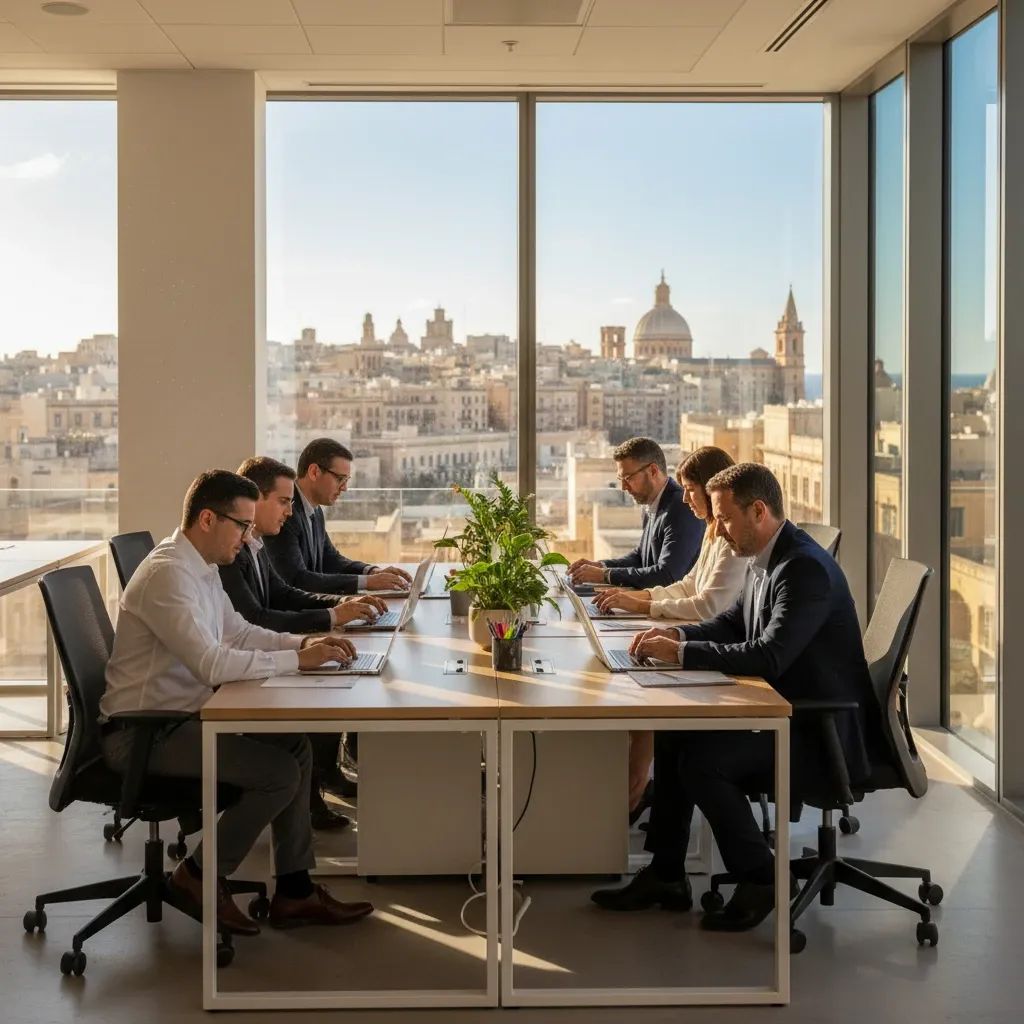
Malta's economic strategy is facing a fundamental reckoning not over its capacity to generate wealth, but over whether prosperity measured purely in GDP terms can build the kind of nation its residents actually want to live in. The debate has shifted from technical economics to philosophy: does relentless expansion serve society, or does society now serve expansion?
Why This Matters
• Economic policy debates are pivoting from growth targets to quality-of-life metrics that affect housing affordability, infrastructure strain, and social cohesion
• Business leaders and policymakers are publicly questioning whether Malta's population density and resource limits can sustain the current development trajectory
• Residents face trade-offs between job creation and livability factors like traffic congestion, environmental degradation, and community erosion
The core tension is unmistakable. Malta's economy has delivered consistent growth for over a decade, fueled by financial services, iGaming, tourism, and a liberal work permit regime that expanded the labor force rapidly. Unemployment remains low, corporate tax revenues climbed, and the island positioned itself as a competitive EU jurisdiction for international business. By conventional metrics, the model works.
Yet prosperity has brought visible costs. Housing prices have surged significantly—according to recent property market data, residential property prices in Malta have increased by approximately 40-50% over the past five years, far outpacing wage growth for local residents. Traffic gridlock has become a daily reality across the main island, with congestion particularly acute on arterial routes in Sliema, Valletta, and the Three Cities. Public services—hospitals, schools, utilities—strain under demand that outpaces infrastructure investment. Green spaces shrink as construction accelerates. The social fabric shows stress as cultural identity and community networks adapt to a population growing faster than integration mechanisms can manage.
The Limits of the Growth Playbook
Malta's economic architecture relies heavily on attracting foreign capital and labor. The model prioritizes regulatory efficiency, tax competitiveness, and ease of doing business—attributes that appeal to corporations and high-net-worth individuals alike. Financial services and gaming sectors dominate GDP contributions, creating well-paid jobs but concentrating wealth in specific industries and demographics.
Critics argue this approach produces two parallel economies: one serving international clients with high incomes and mobility, another serving local needs with wages that haven't kept pace with the cost of living. The mismatch creates resentment and inequality. Construction continues at a pace that has physically transformed the island, yet affordable housing stock has not expanded proportionally. Developers chase premium buyers, leaving middle-income residents squeezed. In areas like Paceville and coastal zones, property developments continue accelerating while starter homes remain increasingly unaffordable for young Maltese families.
Environmental degradation compounds the problem. Malta's finite land area—just 316 square kilometers—means every hectare converted to development is lost permanently. Agricultural land, coastal access, and historical sites face pressure. Water scarcity, exacerbated by tourism and population growth, forces reliance on energy-intensive desalination. Air quality suffers as vehicle density per capita ranks among Europe's highest.
The sustainability question isn't hypothetical. Ecological economists point out that small island states face hard physical constraints. Unlike continental economies, Malta cannot simply expand infrastructure outward. Every new resident, every additional car, every building plot consumed intensifies competition for space, water, energy, and public services. Growth models that work for large, resource-rich nations hit limits faster on a densely populated island.
Redefining Success Metrics
A growing chorus of voices—ranging from environmental NGOs like Natura 2000 advocacy groups to some business executives—now advocates for alternative performance indicators. Rather than celebrating GDP growth in isolation, they propose evaluating economic policy through metrics like housing affordability ratios, commute times, air quality indices, healthcare wait times, and citizen well-being surveys.
The concept isn't radical. Bhutan pioneered Gross National Happiness as a policy framework decades ago. New Zealand formally adopted well-being budgets. The OECD publishes Better Life Index rankings that look beyond income. Malta could adapt these models, embedding quality-of-life targets into national planning.
Implementing such a shift requires political courage. Construction and real estate sectors wield significant influence in Maltese politics, both as employers and as donors. Financial services and iGaming firms argue that competitiveness demands continued liberalization and growth-friendly regulation. Any pivot toward sustainability, affordability, or environmental protection risks pushback from powerful constituencies who profit from the status quo.
What This Means for Residents
For the average Maltese household, the debate translates into immediate concerns. Will my children afford homes? Can public schools handle enrollment surges? Is the healthcare system keeping pace? Will I spend two hours daily in traffic commuting from areas like Mosta or Birkirkara to employment centers? These aren't abstract policy questions—they shape life decisions about whether to stay, where to work, whether to start families.
Expatriates and foreign workers face related uncertainties. Work permit policies could tighten if political pressure mounts to slow population growth. Housing competition already makes Malta expensive for newcomers without corporate relocation packages. Social integration remains uneven, with some communities welcoming diversity and others resistant.
Business owners confront trade-offs too. Labor shortages across hospitality, construction, and services drive wage increases, squeezing margins. Recruiting internationally solves immediate needs but adds complexity around permits, housing, and retention. Meanwhile, consumer spending patterns shift as residents allocate more income to housing and transport, leaving less for discretionary purchases.
The Path Forward
No consensus has emerged on how Malta should balance growth and sustainability. The Malta Chamber of Commerce emphasizes competitiveness and warns against policies that could deter investment. Environmental advocacy groups call for moratoriums on construction in ecologically sensitive areas. Labor unions push for wage indexation and affordable housing mandates. Residents' associations demand infrastructure investment before any further population increases.
What seems clear is that the conversation itself marks a turning point. Policymakers can no longer dismiss livability concerns as secondary to economic performance. The social contract between government, business, and citizens requires renegotiation. Growth that enriches some while eroding quality of life for many will eventually provoke political backlash.
Malta's size, which complicates expansion, also enables agility. Policy changes can be implemented faster on an island of 500,000 than in nations of millions. Experiments with zoning reform, transportation investment, environmental protection, and social housing could yield results quickly. The challenge is mustering political will to prioritize long-term resilience over short-term gains.
Ultimately, the question facing Malta isn't whether its economy can grow—it demonstrably can. As residents navigate rising housing costs, infrastructure strain, and community change, policymakers face an increasingly urgent task: designing an economic model that serves the people living on the island, not one that demands residents serve the needs of endless expansion.


