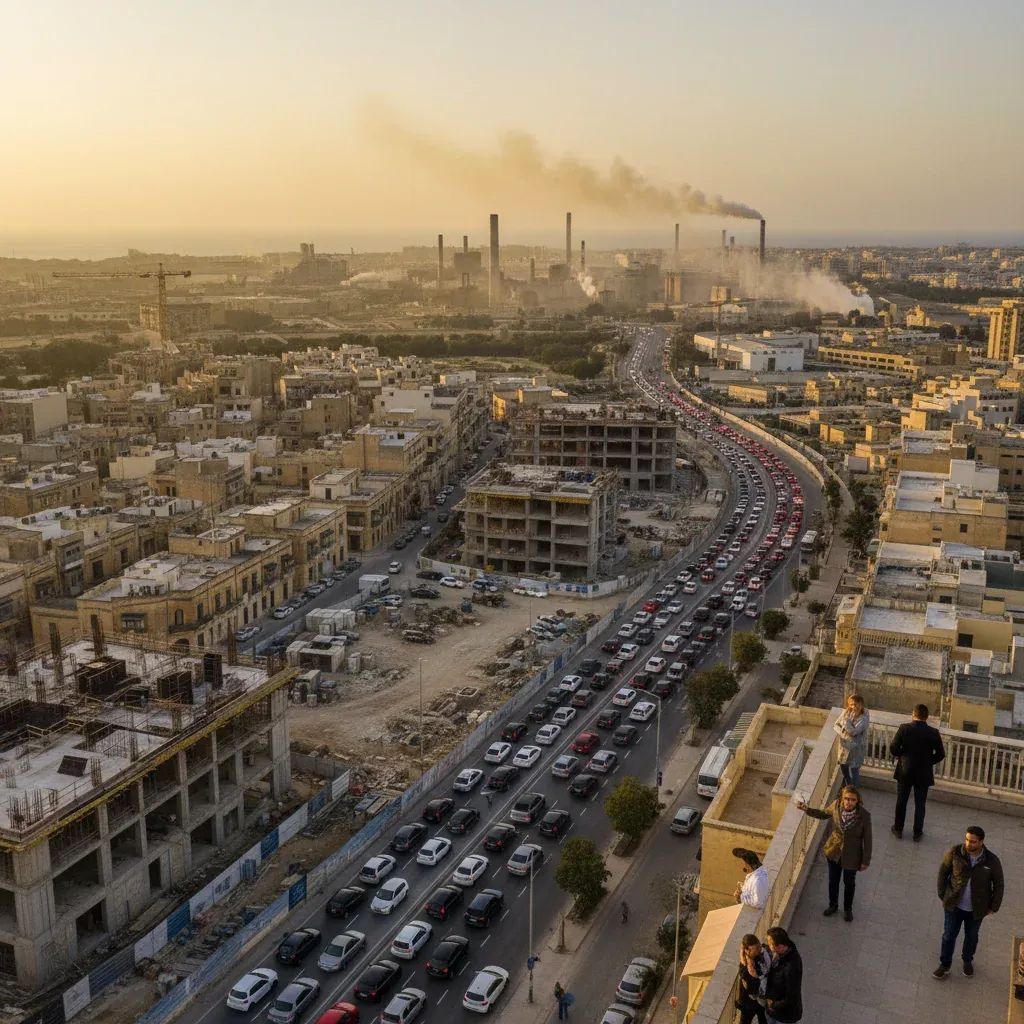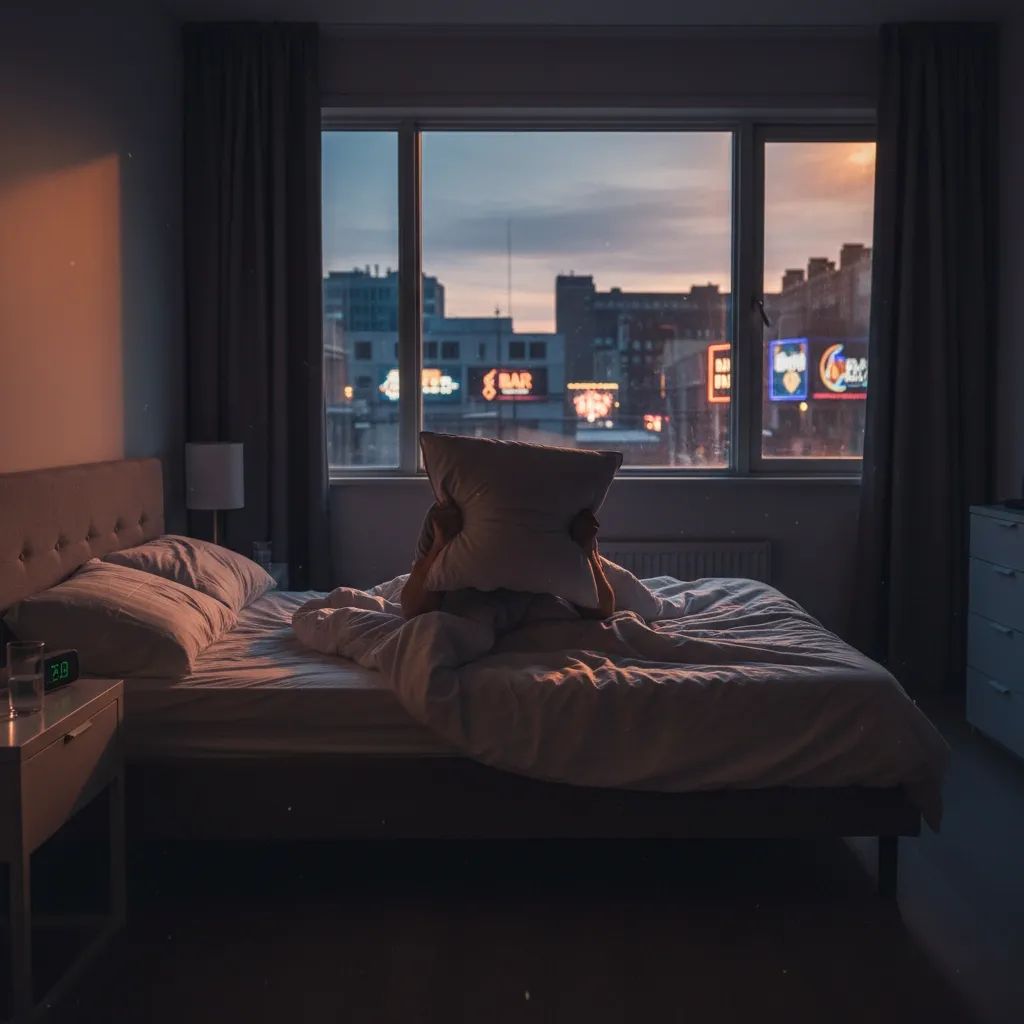
Close your windows against the heat and lie awake listening to bass from the bar below, or open them to breathe and abandon sleep entirely. For thousands of residents in Sliema, St Julian's, Gżira, Valletta, and Swieqi, this is not a hypothetical choice—it's a nightly reality.
Malta faces a deepening health crisis that goes largely unrecognized: the systematic erosion of sleep as commercial venues multiply across residential neighborhoods. The combination of lax zoning enforcement, fragmented regulatory responsibility, and a reluctance to define noise limits in law has created a situation where residents face nightly acoustic assault that disrupts not just rest, but cardiovascular function, cognitive development, and mental stability.
Why This Matters
• Sleep loss now carries measured health costs: A 10 dB(A) increase in environmental noise correlates with a 29% spike in poor sleep quality and a 24% reduction in sleep duration, according to 2024 research. Each such increase also costs people roughly 23 fewer minutes of deep sleep per night—the restorative phase critical for memory and immune function.
• Enforcement infrastructure is fractured: Residents reporting noise violations must navigate the Trade Department, Malta Tourism Authority, Malta Police, Lands Authority, and Planning Authority simultaneously, with each capable of deflecting to another, leaving complaints effectively unresolved.
• Regulatory definitions are absent: While EU Directive 2002/49/EC covers aircraft and industrial noise, it explicitly excludes construction, entertainment, and neighborhood noise—precisely the sources that dominate public complaints in Malta.
The Two Categories Nobody Distinguishes
Malta's cultural identity rests partly on sound: village feasts, band processions, fireworks, and church bells form the acoustic backdrop of community life. These seasonal events, celebrated as expressions of heritage, are fundamentally different from what unfolds nightly in commercial districts. The distinction matters legally and practically.
Cultural noise is episodic. A feast occurs on a specific weekend; fireworks end by midnight. These events strengthen social fabric and reflect values held across generations. Residents generally tolerate them because they arrive predictably and depart. Yet even here, standards exist. Celebrations diluted by excessive volume or extended hours risk undermining their own significance.
Commercial noise, by contrast, operates year-round. A terrace with amplified music plays six nights a week, often until 2 or 3 AM. The noise originates directly below residential windows, not several streets away. Open-air lidos emit continuous activity; boat parties return late; bars without proper acoustic treatment leak bass frequencies that penetrate walls and disrupt sleep architecture even for people who don't consciously hear them. The difference in impact is not marginal—it is the difference between a cultural marker and a chronic stressor.
Current law fails to capture this distinction meaningfully. Regulations speak vaguely of "noise" versus "nuisance," leaving enforcement to subjective judgment. One official might consider 65 decibels at 2 AM acceptable in Paceville; another might cite disturbance. Without objective thresholds for timing, volume, and location, authorities operate without clear authority to act, and violators face minimal consequences.
How Sleep Loss Becomes Systemic Disease
The health case against chronic noise is no longer speculative. Research from 2024 and early 2025 has mapped the physiological cascade with precision that should alarm policymakers.
Cardiovascular Risk
Cardiovascular risk accelerates under chronic noise exposure. A Harvard University study linked industrial, commercial, and community noise to elevated mortality from heart disease, with stronger effects in women and for nighttime exposure. The mechanism is straightforward: noise activates the sympathetic nervous system—the body's fight-or-flight response. Cortisol and adrenaline rise, blood pressure spikes, and heart rate climbs. Over months and years, this repeated activation hardens arteries, elevates baseline blood pressure, and increases the risk of myocardial infarction. European estimates attribute 48,000 new cases of cardiovascular disease annually to noise exposure alone, making it one of the continent's leading preventable risk factors.
Sleep Disruption and Cognitive Decline
Sleep structure disintegrates under fragmented exposure. Noise-triggered micro-awakenings—brief arousals lasting just seconds—splinter sleep into shallow, unrestorative fragments. The sufferer may not consciously remember waking, yet slow-wave sleep (stage 3), the deepest and most physically restorative phase, never fully develops. This phase is when the body repairs tissue, consolidates memories, and regulates metabolism. Chronic noise disruption blocks access to this phase, leaving people chronically depleted despite spending eight hours in bed.
Cognitive function degrades, particularly in children. A growing body of research demonstrates that children exposed to higher environmental noise show delayed bedtimes, symptoms of inattention, and increased hyperactivity. Language acquisition suffers in noisy environments. Long-term cognitive performance—attention span, reading comprehension, problem-solving—declines measurably. The World Health Organization now estimates that 15 million children in Europe live in acoustically harmful environments. For adults, noise impairs concentration, memory retrieval, and decision-making, with effects intensifying under fatigue.
Mental Health and Stress Response
Mental health outcomes track directly with noise exposure. Anxiety, depression, and irritability cluster in populations under chronic noise stress. The mechanism again involves sustained sympathetic activation—the body remains perpetually in defensive mode, unable to shift to parasympathetic rest-and-digest function. Inflammation markers rise. Oxidative stress accumulates. Over time, the brain's emotional regulation centers show structural changes associated with anxiety disorders.
For residents of Gżira or St Julian's, this cascade is tangible. They close windows against heat to escape noise, or open them to ventilate and sacrifice sleep. They invest in earplugs or white-noise machines—partial solutions that don't address the underlying problem. Some eventually relocate, conceding that their ability to live peacefully in their own neighborhood has become untenable.
The Regulatory Landscape: Policies That Exist but Don't Work
Malta's Environment Protection Act (Chapter 549) and Noise Control Regulations (S.L. 549.38) establish a nominal framework. The EU's Environmental Noise Directive (2002/49/EC), incorporated into S.L. 549.37, mandates strategic noise mapping and action planning. Yet in practice, this architecture serves as theater more than substance.
A February 2026 report commissioned by the European Parliament and requested by MEP Peter Agius explicitly flagged the disconnect. Malta complies with EU requirements on paper but lacks effective mechanisms to address construction, entertainment, and neighborhood noise—the precise sources generating resident distress. Administrative delays compound dysfunction: the Noise Action Plan for 2019-2024 was published only in 2023; the successor plan, due by January 2025, remains unpublished as of May 2026. The Environment & Resources Authority (ERA), the designated enforcement body, operates chronically understaffed and lacks coordination tools with the Planning Authority, Lands Authority, and Police.
Recent interventions offer glimpses of what's possible when political will aligns with regulation. From June 15 to September 30, 2025, the Building and Construction Authority (BCA) and Malta Tourism Authority (MTA) prohibited demolition and excavation in tourist zones—a temporary reprieve that demonstrated how targeted restriction can work. Similarly, July 2025 amendments tightened commercial boat party regulations, mandating music cessation by 11 PM and prohibiting sound checks in ports and harbors. Existing 2019 rules already prohibit audible music from entertainment venues after 1 AM and ban amplified sound entirely between 4 AM and 9 AM, yet residents report inconsistent enforcement.
More ambitiously, in September 2025, the political group Momentum proposed comprehensive construction noise reforms: weekday work restricted to 7:30 AM–4:30 PM, a mandatory quiet period from 1 PM to 2:30 PM, Saturday restrictions permitting only low-impact tasks from 9 AM to 1 PM, tiered fines for repeat offenders, and a centralized 24/7 hotline with mobile app reporting. If enacted, these measures would substantially reduce one major complaint category—construction—though entertainment noise remains a separate legislative frontier. The urgency of reform was recently highlighted by MP Albert Buttigieg, former mayor of St Julian's, who advocated for establishing a unified regulatory authority during parliamentary debate, drawing on firsthand experience of residential neighborhoods transformed by commercial expansion.
What Residents Can Do Now
Despite fragmented authority, residents have concrete options:
• Document the problem: Keep a noise log noting date, time, duration, and source. Photograph or video-record the disturbance if possible. This evidence strengthens official complaints.
• File formal complaints: Contact the Environment & Resources Authority (ERA) online portal or phone line. Also notify your local council, which can amplify resident concerns to planning authorities.
• Know your authorities: The Planning Authority addresses zoning and entertainment licensing; Malta Tourism Authority oversees tourism-related venues; Malta Police respond to immediate disturbances; Lands Authority manages public land use. Written complaints to all relevant entities create an official record.
• Join resident associations: Neighborhoods like Sliema and St Julian's have active resident groups that collectively petition authorities—individual complaints carry less weight than coordinated, documented pressure.
• Request information: Under freedom-of-information statutes, residents can request recent enforcement actions, noise monitoring data, and licensing decisions for venues in their area.
What a Functional System Looks Like: Mediterranean Precedents
Several European cities have moved beyond aspiration to results. Their approaches illuminate what Malta could adopt.
Barcelona deployed an IoT-based noise monitoring network that continuously maps sound levels in recreational areas, triggering real-time warnings and lighting effects designed to encourage quieter behavior. The system transforms noise from an abstract grievance into visible, quantified data that authorities can act upon with precision.
Rhodes, Greece implemented a comprehensive acoustic rehabilitation program that successfully reduced urban noise by zoning entertainment activities away from residential cores and enforcing strict quiet hours. The approach treated noise as an urban design parameter from the outset rather than an afterthought.
Mykonos, Greece achieved satisfactory acoustic conditions through strict enforcement of music restrictions in inner-town bars and traffic control measures, proving that even a high-tourism environment can maintain residential tranquility outside designated zones.
Seville's "Sevilla Sin Ruido Ya" campaign directly addressed specific noisy behaviors—loud conversations, outdoor televisions, motorcycle revving—through public education rather than enforcement alone. The strategy acknowledged that awareness precedes compliance.
Antalya, Turkey demonstrated that strategic noise barriers around pools and animation areas in holiday villages significantly reduced affected neighborhoods. Post-pandemic tourism surges tested these systems' resilience, yet the infrastructure proved its worth.
These models share common elements: explicit decibel limits tied to location and time, integrated urban planning that separates incompatible land uses, real-time monitoring and enforcement, stakeholder collaboration, and political commitment to consistency. Malta possesses the legal templates. It lacks only the political will to implement them.
Zoning Failure: How the Lands Authority and Planning Authority Enabled the Problem
The core issue traces to permitting decisions made years ago. The Lands Authority and Planning Authority continued granting licenses for commercial outlets—bars, clubs, restaurants—in predominantly residential zones. These outlets were initially modest, often with indoor operations. Over time, proprietors applied for extensions: outdoor seating, outdoor bars, amplified entertainment. Approval followed approval, each individually justified, yet cumulatively transforming neighborhoods into de facto commercial districts.
This pattern lacks holistic planning discipline. A coherent strategy would establish buffer zones, restrict entertainment licensing in residential areas, or require acoustic impact assessments before approving outdoor extensions. Instead, approvals have proceeded incrementally, piecemeal, each decision isolated from its cumulative context. The result: Paceville and St Julian's evolved into nightlife concentrations where sleep-seeking residents compete with vibrant nightlife for spatial dominance.
Residents aren't anti-business. They recognize that employment matters. What they contest is the inversion of planning priorities—allowing commercial interests to reshape neighborhoods without adequate mitigation or consideration of existing residents' welfare. Forward-looking planning could accommodate both. Current practice accommodates only the loudest and latest claimant.
Key Recommendations: What Malta Needs
A functional noise control system requires coordinated action across three dimensions:
Immediate steps (within 6-12 months):
• Consolidate enforcement authority under a single entity responsible for construction, entertainment, and neighborhood noise
• Establish objective decibel limits tied to location and time: e.g., 55 dB between 10 PM and 7 AM in residential zones
• Mandate sound limiters in all entertainment venues
• Implement a centralized 24/7 reporting system with mobile app access
Medium-term reforms (1-2 years):
• Conduct a comprehensive audit of existing entertainment licenses to identify cumulative noise impacts
• Restrict new entertainment licensing in predominantly residential zones
• Require acoustic impact assessments before approving outdoor extensions to existing venues
• Deploy noise monitoring networks in high-complaint areas
Long-term vision (2+ years):
• Adopt the EU best-available-techniques standard for noise mitigation as mandatory for new development
• Redesign zoning to separate entertainment districts from residential cores
• Establish residential acoustic standards comparable to Mediterranean precedents
The One-Stop-Shop Solution: Consolidating Fragmented Authority
A parliamentary proposal advanced the idea of a unified regulatory authority operating under a single ministry, consolidating oversight of commercial noise, construction noise, and entertainment permitting. Currently, a resident complaining about a noisy bar must contact Trade, Tourism, Police, Lands, and Planning—five entities, each capable of citing another's jurisdiction. The result is bureaucratic deflection, not resolution.
A consolidated authority would establish single accountability, consistent enforcement standards, and clear appeal mechanisms. It would eliminate the "please move elsewhere" response by making residential tranquility a protected baseline rather than a negotiable amenity. Such a structure exists in Barcelona, Rhodes, and Seville. Malta's bureaucratic culture is sophisticated enough to adopt it.
The February 2026 European Parliament report endorsed this direction, recommending that Malta broaden noise monitoring to construction and entertainment sources, mandate sound limiters in venues, and adopt an industrial regulatory model requiring best available techniques for noise mitigation—the same standard applied to emissions controls. Such measures would position Malta as a jurisdiction that values resident welfare without sacrificing economic vitality.
The False Choice Between Growth and Livability
Public discourse often frames this conflict as a binary: either accept noise as the price of economic dynamism, or sacrifice employment and tourism revenue to silence. This is a false dichotomy born of planning failure.
Sustainable development demands both economic vitality and livable neighborhoods. Cities from Barcelona to Seville prove that tourism thrives alongside residential tranquility when land use is thoughtfully managed. The problem in Malta is not that commerce and residence coexist; it is that their coexistence was never intentionally designed. Zoning decisions were reactive, permitting rather than strategic, driven by commercial pressure rather than community balance.
What's needed is not the inverse—shuttering businesses to appease residents—but planning discipline: clear rules established before conflict arises, consistent enforcement, and stakeholder engagement to negotiate workable boundaries. Short-term rental sectors could adopt noise monitoring devices; entertainment venues could install sound limiters; construction schedules could respect quiet hours; and residents could accept that certain neighborhoods will remain livelier than others, provided their own streets remain habitable.
The Path Forward
The scientific evidence is conclusive: chronic noise exposure causes measurable harm to health. The regulatory framework exists in draft form. Mediterranean peers have demonstrated workable solutions. What Malta lacks is political readiness to prioritize resident welfare over commercial convenience.
Effective action requires: establishing objective decibel limits tied to location and time; consolidating regulatory authority under a single entity; conducting a comprehensive audit of current entertainment licenses to identify cumulative noise impacts; adopting the EU best-available-techniques standard for noise mitigation; and enforcing existing rules with consistency and visible consequence.
The right to sleep is not anti-development rhetoric. It is a public health imperative, grounded in biology, documented in epidemiology, and recognized by the World Health Organization as the second leading environmental health threat after air pollution. In a densely populated island where 800 people per km² compete for limited space, achieving livable acoustic environments is not luxury—it is necessity. The question is whether Malta will act decisively or continue deferring until sleep deprivation becomes a recognized public health crisis requiring far costlier interventions.