Why This Matters
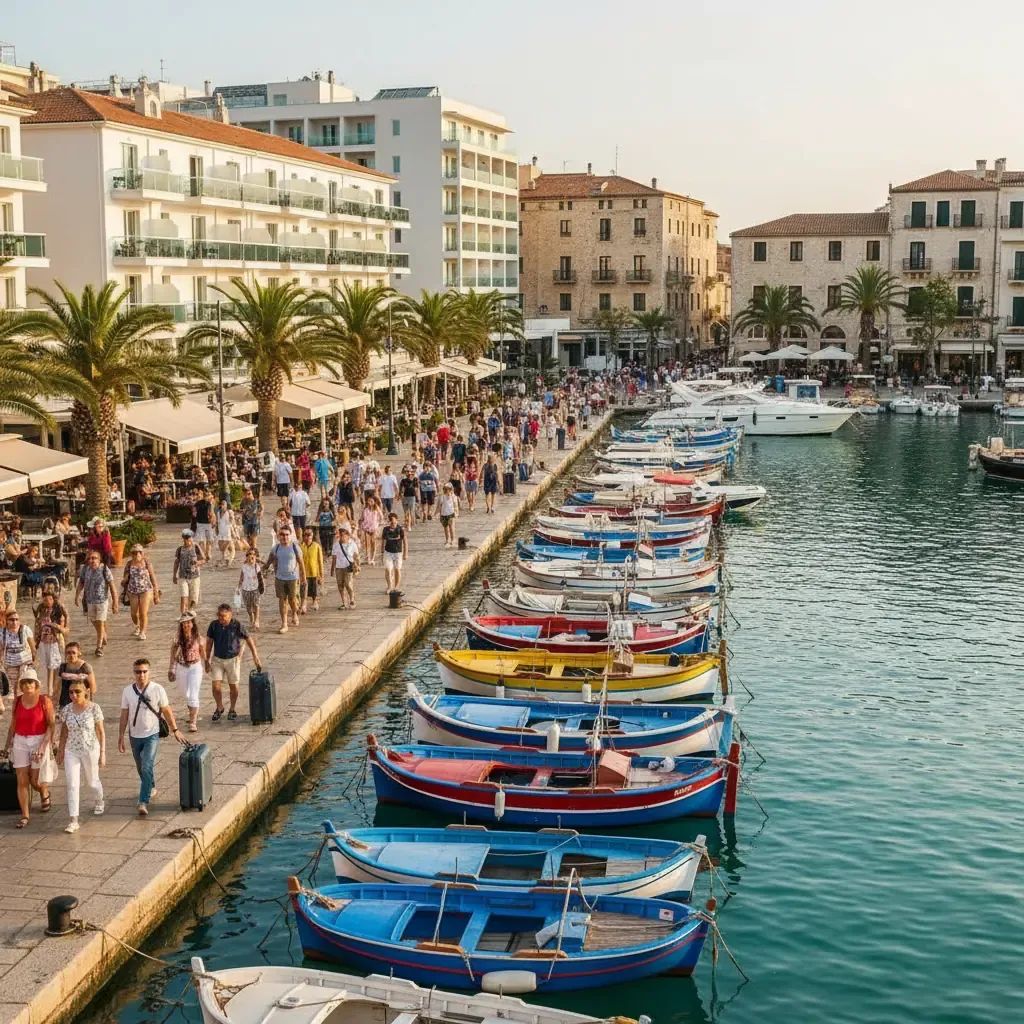
• Record spending without visitor saturation: February tourists in Malta spent €171.7 million across 249,139 arrivals, averaging €125.8 per night — a sign that the island is successfully shifting toward premium, longer-staying guests rather than chasing raw volume.
• Ferry gridlock reaching critical point: Over 40% of February's tourists visited Gozo or Comino, yet infrastructure hasn't scaled to match; expect queues and service disruptions unless the planned rural airfield project accelerates.
• Workforce crisis looming in hospitality: With 224,757 holiday visitors in a single month, seasonal staff shortages are intensifying across hotels, restaurants, and service sectors — wage pressure and recruitment challenges will persist through summer 2026.
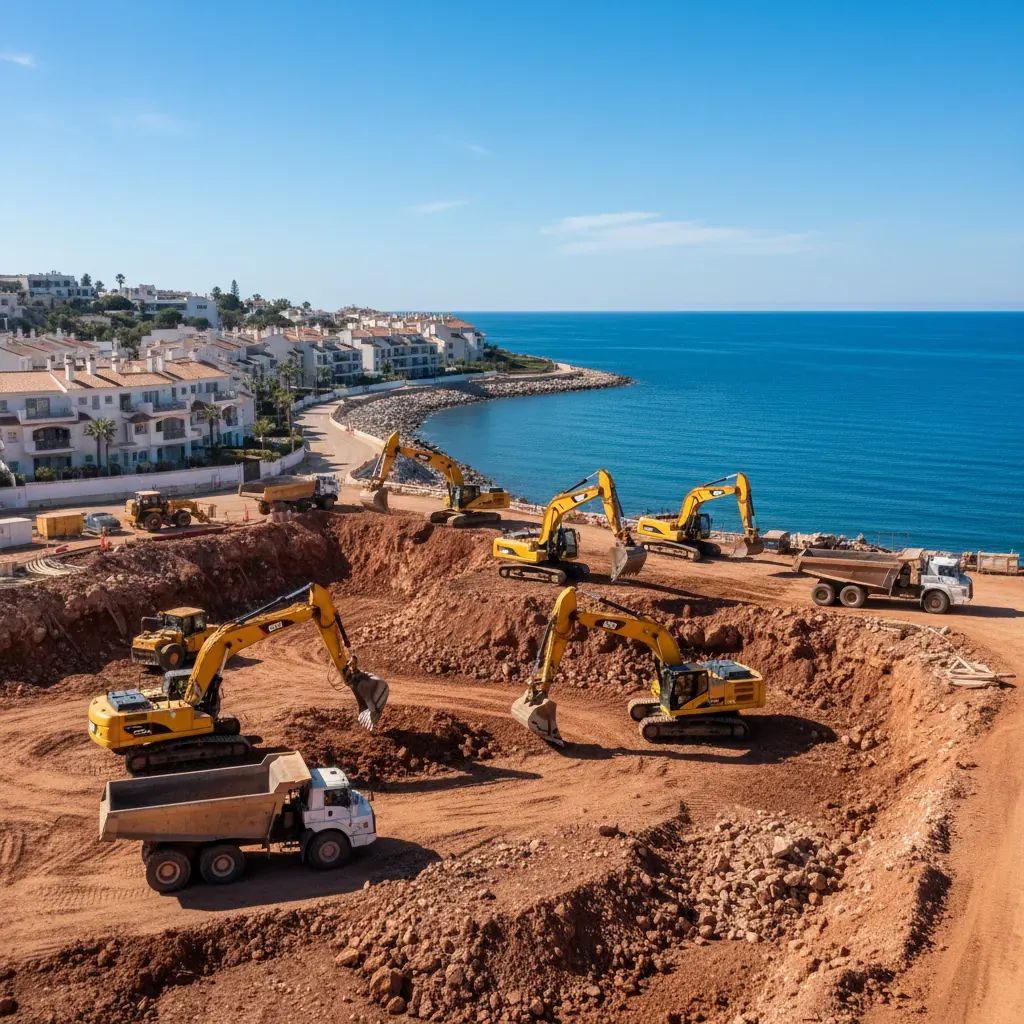
• Residential disruption intensifying: Short-term rental proliferation continues eroding housing availability for locals; new accommodation regulations introduced in April 2026 attempt to rebalance the equation, but enforcement and impact remain uncertain.
The Momentum Is Real — But the Picture Is Complex
Malta logged an impressive 249,139 tourist arrivals in February 2026, jumping 18.5% year-on-year. For the opening two months combined, the island hosted nearly 485,000 visitors, a 19.9% surge, with total overnight stays climbing to 2.7 million nights. The financial outcome tells an even richer story: €350.6 million in total expenditure across January and February represents a 21.1% increase, substantially outpacing the arrival growth rate. This matters because it signals visitors are not simply arriving in larger numbers—they are spending meaningfully more per trip.
The disparity between volume growth and spending growth sits at the heart of Malta Tourism Authority's strategic pivot. Rather than treating tourism as a pure numbers game, the shift targets wealthy, longer-staying segments: affluent pensioners, professional conference attendees, diving enthusiasts, and gastronomic explorers. February data shows the strategy gaining traction. Average per-visitor expenditure for the January-February window reached €723, up from €716 in the identical 2025 period. This incremental gain might seem modest, but across nearly half a million visitors, it translates to millions in additional economic value without proportional strain on roads, beaches, or waste systems.
Who Is Coming, and What Travel Patterns Reveal
The typical February visitor to Malta belonged to the 25-to-64 age bracket, with younger middle-aged travellers (25–44) representing 35.7% of arrivals and established professionals and early retirees (45–64) claiming 35.0%. This demographic preference aligns closely with segments historically willing to spend more freely and travel during non-peak periods—precisely what Malta's year-round destination strategy targets.
Holiday travel dominated the arrivals mix, with 224,757 leisure visitors dwarfing the 14,600 business travellers. Yet the business segment occupies disproportionate strategic importance. The Malta Tourism Authority is aggressively positioning the island for MICE events—conferences, corporate retreats, product launches—because such gatherings occur outside peak summer and generate high per-participant revenue. A single 500-person conference in April or September can deliver value equivalent to thousands of budget holiday tourists, while distributing foot traffic across months when roads and beaches experience spare capacity.
Geographic origin patterns hint at evolving market dynamics. The United Kingdom, Poland, and Italy collectively supplied 49.6% of February arrivals, but Poland's recent ascent as an individual source market represents a substantive reorientation. Historically, British travellers anchored Malta's source market composition; today, Polish outbound tourism is accelerating across Mediterranean destinations, driven by rising disposable incomes and perceptions of Malta as a sophisticated yet affordable alternative to overcrowded Spanish or Greek coastlines. For Malta Tourism Authority, this diversification reduces vulnerability to single-market economic downturns or policy shifts while unlocking Central and Eastern European spending patterns that analysts have flagged as an emerging growth pocket.
The Accommodation Paradox: Supply Rushing Ahead of Demand
Here lies the fundamental tension underpinning Malta's tourism trajectory. Guest nights in February totalled 1.4 million, with 90.5% spent in private rentals, Airbnb-style properties, or alternative accommodation rather than traditional hotels. This pattern reflects a global travel shift toward flexibility, local authenticity, and perceived value—precisely what short-term rental platforms deliver. However, the supply side is accelerating beyond sustainable levels.
Between January 2020 and June 2024, Malta's accommodation establishment count swelled 47.4%, while bedroom inventory rose 13.4%. Extrapolating existing development pipelines suggests Malta's room stock could nearly double by 2030. Such a scenario would demand 4.5 to 5 million annual arrivals merely to maintain today's occupancy rates. For perspective, current full-year arrivals hover near 2 million; reaching 4.5 million would require wholesale transformation of island infrastructure—wastewater treatment, road networks, ferry capacity, waste collection—on a scale and budget currently unplanned.
In response, the Malta government enacted new accommodation regulations in April 2026, establishing minimum quality standards, operational guidelines, and community protections. The Malta Tourism Authority is simultaneously piloting community-based tourism management in Valletta and Swieqi starting summer 2026, designed to mediate between operator interests and resident livability. These initiatives represent honest acknowledgment that unconstrained tourism growth and resident wellbeing are fundamentally incompatible—a recognition missing from earlier policy frameworks.
Infrastructure Under Stress: The Resident Perspective
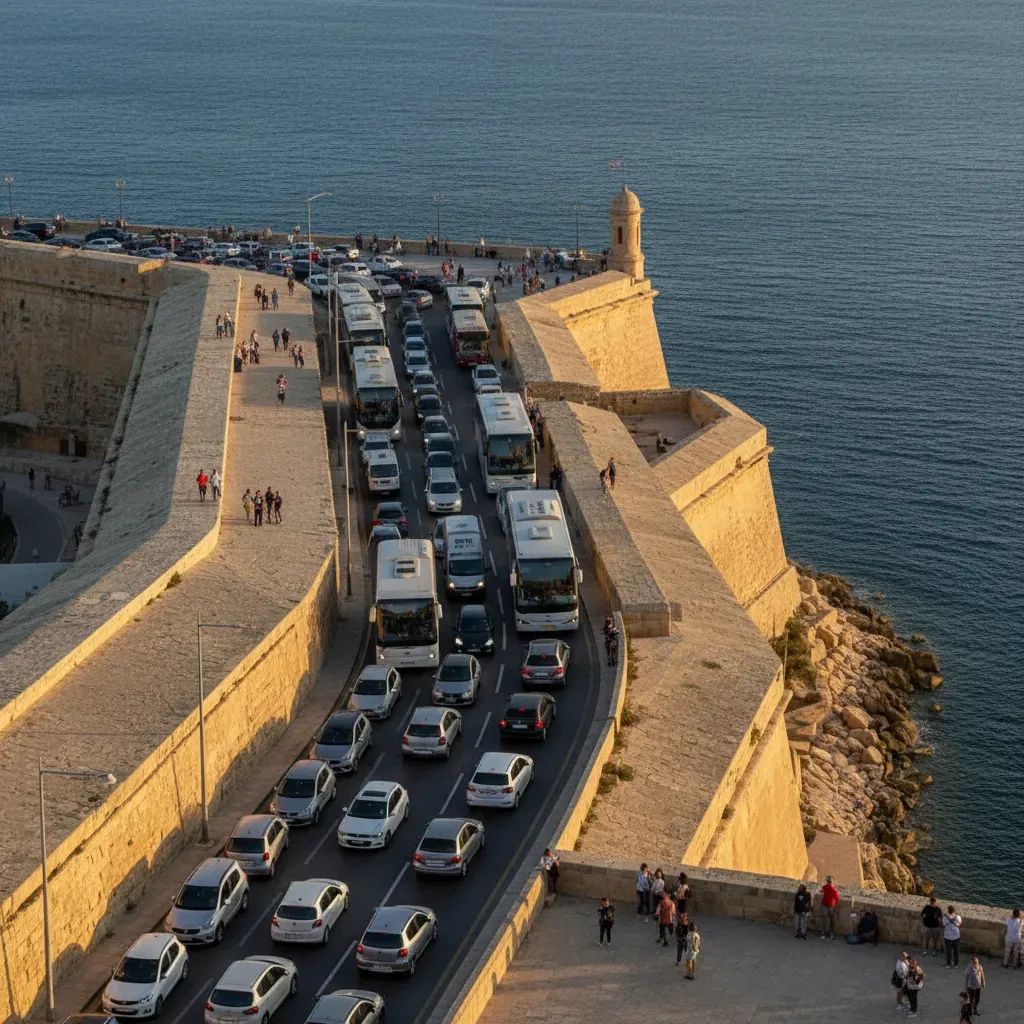
For people living in Malta, the 18.5% tourism surge translates into tangible friction points. Residential property rents in central Valletta, coastal Sliema, and business districts like St. Julian's continue climbing as investor-landlords convert family units into short-term tourist accommodation, chasing returns driven by sustained demand. Traffic congestion has visibly deteriorated: rental car volumes spike alongside tour coach traffic, creating bottlenecks during morning school drop-offs and evening rush hours. Popular beaches and archaeological sites—Popeye Village, Ġgantija Temples on Gozo, Valletta's waterfront—experience weekend crowding when domestic recreation and tourism demand collide.
Public-facing services absorb the pressure unevenly. Emergency healthcare wait times have lengthened during peak tourist seasons as walk-in clinics treat tourist injuries and minor ailments. Waste collection faces seasonal disruption as landfill capacity tightens. Public transport, already insufficient for local commuting, offers minimal additional capacity for tourist volumes. Water scarcity—Malta's chronic structural constraint—intensifies when tourism peaks coincide with summer drought.
The government's infrastructure response centers on four pillars. First, road upgrades funded through the 2026 budget aim to enhance arterial capacity and junction efficiency, though projects chronically face delays. Second, Park & Ride expansion continues, attempting to reduce private vehicle dependency in urban zones and redirect parking demand to peripheral transit hubs. Third, Malta International Airport's "East Expansion" will deliver a new 6,000-square-meter terminal building by 2028, designed to process higher passenger volumes with improved operational efficiency and passenger experience standards. Fourth, a rural airfield project in Gozo will enable small-aircraft charter operations, theoretically diverting specialist tourism segments away from ferry dependency and coastal traffic gridlock.
Gozo's Tourism Concentration: Opportunity Meets Fragility
Gozo and Comino present a microcosm of Malta's tourism paradox. In February alone, these islands welcomed 103,579 visitors—41.6% of total arrivals—arriving as either overnight guests or day-trippers. Across January and February combined, the figure reached 197,080, representing 40.6% of all tourists. This concentration reflects Gozo's compelling draw: quieter rhythms, rural character, undeveloped coastlines, and heritage attractions including Ġgantija's neolithic temples, which rival Mediterranean archaeological significance.
Yet infrastructure was never engineered for such throughput. Ferry queues during morning peak hours regularly exceed 90 minutes, frustrating both residents and tourists alike. Popular archaeological sites and coastal swimming areas experience visible crowding, degrading both visitor satisfaction and site preservation. Gozo's narrow secondary roads, designed for agricultural and fishing communities, become congestion conduits during summer months.
The proposed rural airfield addresses this bottleneck partly through supply-side innovation. Rather than ferrying mass holiday crowds, the airfield would enable niche tourism segments—diving charter groups, corporate executive retreats, professional conference breaks—to access Gozo via small aircraft, bypassing ferry queues while delivering revenue premium per visitor. Such segmentation is conceptually elegant but operationally speculative; aircraft charter pricing typically exceeds ferry costs significantly, limiting addressable market to affluent travellers—precisely the demographic Malta Tourism Authority targets.
The Transatlantic Gateway: June 2026 Marks a Strategic Inflection
A pivotal threshold arrives in June 2026: the commencement of scheduled direct flights from Malta to New York. This transatlantic connectivity represents a strategic bet on long-haul market expansion, particularly targeting North American, Asian, and Australian travellers who historically perceived Malta as accessible only via European hub connections. Direct flights eliminate friction in the travel decision; they also deliver premium-segment passengers—international business executives, affluent empty-nesters, and experience-focused adventurers command higher room rates and discretionary spending than European holiday tourists.
Airline capacity across all Malta-serviced routes is projected to expand roughly 7% in 2026, translating into roughly 100,000 additional available seats. Yet raw seat capacity is immaterial without demand-management discipline. The Malta Tourism Authority is deploying AI-powered forecasting tools to predict seasonal demand patterns, optimize promotional spending, and nudge bookings toward shoulder months—autumn and spring—when infrastructure congestion and environmental impact are minimized. The strategic objective is neither explosive growth nor static preservation, but rather transformation from a summer-centric destination into a viable year-round platform for city breaks, cultural immersion, technical diving, professional conferences, and specialist experiences.
Competitive Positioning: Malta Gains Ground as Rivals Stumble
Malta's February growth trajectory significantly outpaces regional competitors. The United Kingdom forecasts modest 4% inbound growth for 2026, dampened by economic caution and geopolitical uncertainty. VisitBritain's baseline projection of 45.5 million inbound visits carries downside risk; tourism spending growth is anticipated at 7% nominally (equivalent to 5% in real terms after inflation adjustment), lagging visitor volume growth.
Italy, traditionally the Mediterranean luxury tourism anchor, has encountered unexpected headwinds. Despite robust booking momentum through early 2026, particularly in premium segments, Italian tourism experienced a marked April 2026 decline triggered by reduced American demand and elevated travel costs. Industry analysts project organized tourism could contract 20% if current trends persist, a reversal from historical European dominance.
Poland, by contrast, mirrors Malta's momentum and exceeds it in scale. Projections for 22 to 23 million international visitors in 2026 represent growth from over 20 million in 2025. Poland ranked second in the EU for overnight-stay growth in 2025 at 7% year-on-year, narrowly trailing Malta. The Polish market benefits from emerging perceptions of value and safety amid global instability, with Germany remaining the primary source market but growth accelerating from the United States and other non-European origins.
Malta's competitive advantage resides in geographic positioning, compact scale enabling rapid inter-site travel, and year-round Mediterranean climate. However, as Polish outbound tourism expands and diversifies into Mediterranean destinations, competitive intensity will rise. Maintaining market share premium increasingly demands continuous innovation: novel experience offerings, enhanced digital marketing sophistication, expanded air connectivity, and relentless reputation management.
The October Gauntlet: Global Scrutiny Arrives
Malta will convene the World Travel & Tourism Council Global Summit in Valletta during October 2026, assembling leading figures from airlines, hotel operators, destination management organizations, tourism ministries, and hospitality vendors for strategic dialogue on industry trends and policy. The gathering represents simultaneous marketing opportunity and operational stress-test. Infrastructure performance, waste management efficiency, public transport responsiveness, and resident sentiment will be observed by influential international peers and media outlets with megaphones reaching global tourism investment and marketing circles.
Hosting execution failures—traffic chaos, waste accumulation, water supply disruptions, overcrowded attractions—will become visible to industry participants capable of influencing investment flows and long-term destination positioning. Conversely, seamless event logistics, exemplary hospitality, visible sustainability initiatives, and resident goodwill will reinforce Malta's positioning as a forward-thinking, technologically competent destination capable of hosting large-scale international events while maintaining livability and environmental standards.
The Narrative Beneath the Numbers
The first two months of 2026 chronicle a destination managing controlled growth through deliberate strategic choices. Nearly 500,000 arrivals, 2.7 million guest nights, and €350.6 million in expenditure compound at 16–21% year-on-year rates—trajectories suggesting full-year arrivals could approach 2 million, a symbolic milestone representing roughly 33% growth since 2021. Yet extrapolating unconstrained growth leads toward unsustainability: infrastructure saturation, resident exodus, environmental degradation, and tourism sector decline.
The tension between growth and livability is not theoretical or distant—it emerges daily. Families pricing-checked out of Valletta rentals. Workers commuting 90 minutes through traffic to hospitality jobs in coastal zones. Communities losing neighborhood character to tourist economies. Yet tourism also delivers: employment, foreign exchange, state revenue, and international engagement. The challenge for policymakers involves maximizing former benefits while minimizing latter costs—a task requiring continuous calibration of regulations, infrastructure investment, and stakeholder communication.
The regulations enacted in April 2026, the infrastructure upgrades underway, the pilot community programs launching in summer 2026, and the strategic connectivity investments represent serious, if imperfect, attempts at this calibration. Whether they prove adequate will become clear through 2026 and 2027. The October summit will offer a provisional verdict. By then, residents and policymakers alike will understand whether Malta has engineered sustainable tourism growth or merely delayed inevitable reckoning.