
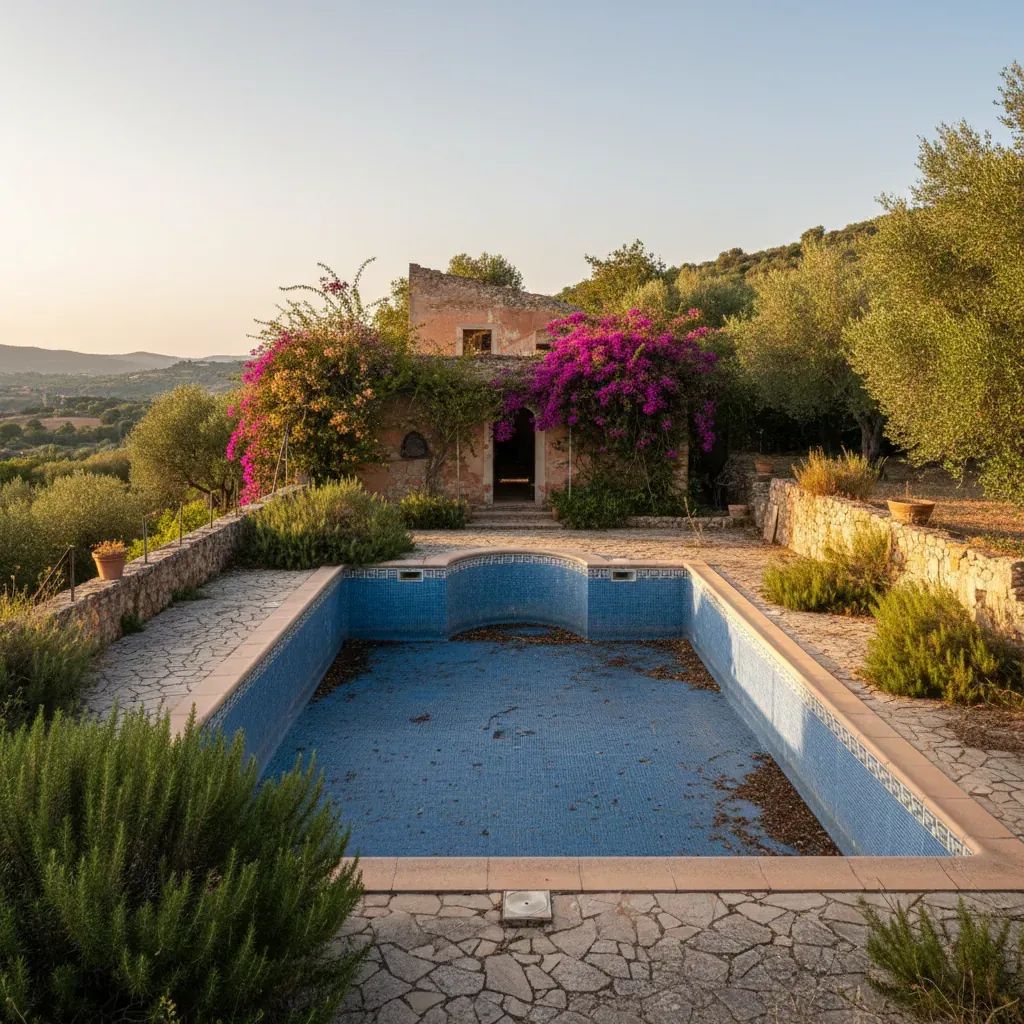
A four-year-old boy has died in Mater Dei Hospital five days after being rescued from a private swimming pool in Marsaxlokk, marking the third fatal drowning and fourth documented serious drowning incident in Malta's residential pools since mid-2025, and exposing a regulatory gap that places safety responsibility entirely on household owners.
The child was pulled unconscious from the property at Triq il-Port Ruman on May 12 and admitted in critical condition. Despite intensive medical intervention, he succumbed to complications on May 17. The Malta Police have confirmed the death, and magistrates have initiated a formal inquiry into the circumstances.
Why This Matters
• No legal mandate exists for private pool barriers, alarms, or covers in Malta — responsibility for protection rests entirely with property owners.
• Three children have died and one more faced life-threatening submersion in private residential settings in under one year.
• Parents and guardians remain civilly liable for accidents even without mandatory safety requirements — failure to install barriers can strengthen liability claims.
A Recurring Crisis
The fatality represents the third death in a series of four critical incidents within one year. In late June 2025, Zaylen Borg, a six-year-old non-verbal boy with autism, drowned in a Naxxar pool after wandering unsupervised from relatives. One month later, Noah Mizzi, just 16 months old, died days after submersion in a Gozo residence. March 2026 brought another four-year-old to intensive care following a Marsaxlokk incident that he survived. Now, the same setting has claimed another child's life.
What unites these cases is not coincidence but a structural vulnerability in how Malta regulates private aquatic spaces. Unlike neighboring jurisdictions, Malta has deliberately exempted privately owned pools from the safety apparatus that governs public facilities.
Research demonstrates that children with developmental disabilities face catastrophically elevated drowning risk. Autistic children are estimated to be 160 times more likely to die by drowning than their neurotypical peers—a figure that reflects both behavioral factors and sensory differences that complicate perception of water hazards. Yet because these children are disproportionately affected, their families face the same regulatory void as everyone else.
The Law's Architecture—and Its Gaps
The Swimming Pools Law of 2025 fundamentally reorganized Malta's aquatic safety framework, dividing pools into three operational categories. Type 1 pools—public recreational facilities, water parks, and high-risk venues—operate under intensive oversight. Type 2 pools serving tourism and hospitality face comparable requirements: lifeguard staffing, operational licenses, regular inspections, and documented water quality management. Both require formal designation of a "pool manager" answerable to authorities.
Type 3 pools, which encompass private residences and self-catering holiday rental properties, inhabit a different legal universe. Owners must notify the Environmental Health Directorate before operation and designate a pool manager, but nothing more. There is no obligation to install fencing, motion detectors, weighted covers, or alarm systems. Inspections occur sporadically—primarily during summer months—and focus on water chemistry rather than structural barriers. A property owner could operate a Type 3 pool indefinitely without physical safety modifications.
This stands starkly against practice in France, where residential pool barriers have been mandatory since 2004 following a drowning epidemic. Cyprus enforces fencing through municipal building codes. Portugal mandates barriers or alarm systems. Spain maintains comparable requirements. Drowning prevention specialists are unambiguous: passive barriers—structures that prevent access regardless of supervision lapses—represent the single most effective technology for protecting unsupervised children. Education builds competence; supervision creates presence. Neither substitutes for physical boundaries.
The gap is not technical but political. Retrofitting thousands of existing residential pools with compliant barriers would impose costs on property owners, triggering anticipated resistance from real estate advocacy groups concerned about retroactive obligations. Parliamentary action would be required to close the exemption, and appetite for such intervention remains limited.
Liability Without Law
The absence of mandatory requirements does not protect property owners from legal consequences. Malta recognizes premises liability doctrine, which holds owners responsible for injuries occurring on their land when they fail to maintain reasonable safety conditions. The concept of "attractive nuisance"—applied specifically to hazards that draw children—can render owners liable even for trespassing children harmed by unsecured water features.
Liability assessments consider several variables: whether barriers existed, whether warning signage was posted, whether supervision was maintained, and whether the owner took any deliberate steps toward protection. Critically, courts often weigh what safety measures could have been implemented against what was implemented. An owner who installed no barriers, posted no warnings, and provided minimal oversight faces substantially greater exposure than one who invested in multiple layers of protection.
This creates an uncomfortable incentive structure: property owners have legal risk from negligence without having legal guidance on acceptable standards. They must infer best practices from voluntary guidance published by the Environmental Health Directorate—material that lacks the force of law but carries evidentiary weight in liability proceedings.
Families with pools should understand that even partial compliance with recommended measures strengthens their legal position. Installation of 1.2-meter non-climbable fencing with self-closing, self-latching gates; weighted covers or motion alarms; and documented supervision protocols all reduce liability exposure. The law does not require these; prudence dictates them.
What Has Changed—And What Hasn't
The government has launched targeted interventions acknowledging the elevated vulnerability of specific populations. In February 2026, the Inclusion Ministry activated a 10-week water safety pilot targeting autistic children aged three to five. Delivered by certified coaches in heated indoor pools, the program pairs child instruction with parental training in water safety, supervision technique, and emergency response. Enrollment is restricted to children holding an EU Disability Card, reflecting a deliberate focus on the highest-risk cohort.
Simultaneously, the pan-European AquaSafe Kids Project, coordinated in Malta by the Aquatic Sports Association of Malta, commenced operations under the Erasmus+ Sport funding scheme. This initiative promotes water safety literacy and basic aquatic competency through age-appropriate educational programming across multiple European countries.
Established providers like Aquahub Malta and Aquababies Malta continue offering structured swimming instruction. Aquababies specializes in parent-child sessions for infants and toddlers, emphasizing natural reflex development and multi-sensory water adaptation.
These educational initiatives represent genuine progress—particularly for families whose children face heightened drowning risk. Yet experts uniformly stress that education cannot replace physical barriers. Learning to swim builds confidence and technique; it does not eliminate the danger of unsupervised pool access. A child can be an excellent swimmer and still drown during a moment of medical emergency, panic, or disorientation.
The Inquiry Ahead
The magisterial inquiry into the May 12 incident will examine whether negligence, structural deficiency, or supervision failure contributed to the child's death. Depending on findings, renewed parliamentary pressure may follow—though such pressure has failed to crystallize into legislative change following the June 2025 and July 2025 deaths.
Advocates for regulatory reform face an entrenched position: the exemption for private pools was embedded in the 2025 law deliberately, not accidentally. Reversing it requires not just public pressure but political willingness to impose retrofitting costs on an existing pool-owner constituency. No such appetite has materialized.
For households currently hosting children around water, the practical message is unambiguous. Malta law places safety responsibility entirely on individual owners. The Environmental Health Directorate's recommendations—1.2-meter barriers, self-closing gates, weighted covers, motion alarms, continuous arm's-reach supervision for non-swimmers—should be treated as minimum standards, not optional guidance. Drowning remains among the leading causes of unintentional child death in Malta. Unsupervised access can be fatal in seconds. No regulatory exemption changes that reality.


