
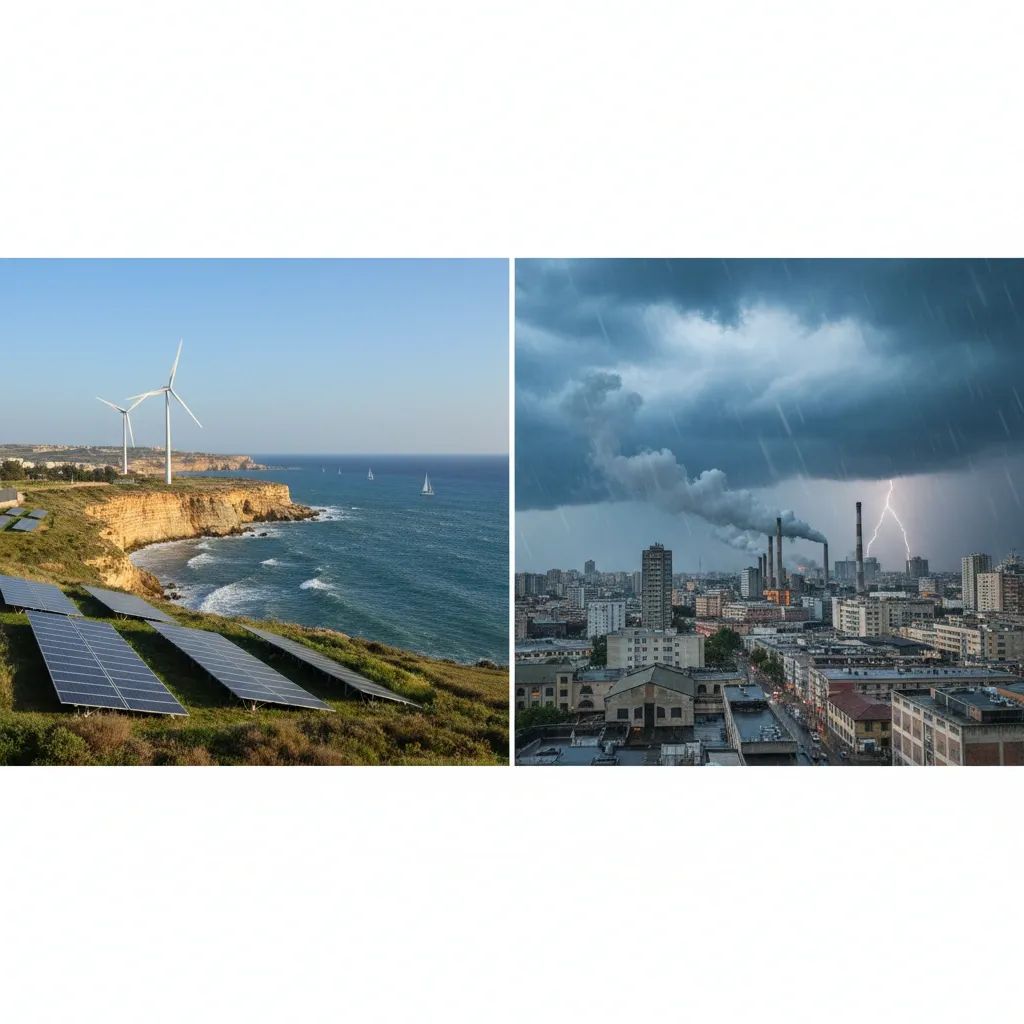
Interconnect Malta has issued a tender for the basic engineering phase of a third undersea electricity cable to Sicily, a development that will fundamentally alter the island's energy infrastructure and potentially lower long-term electricity costs for households and businesses.
Why This Matters:
• Higher voltage, more capacity: The new link will operate at 380kV using HVDC technology, compared to the existing 220kV system—doubling potential capacity to 400MW once fully expanded.
• Direct Italian grid access: Unlike the first two interconnectors, IC3 will plug straight into Italy's national transmission backbone, not just regional Sicilian networks.
• EU funding pathway: The project is now listed in the 2026 ENTSO-E Ten-Year Network Development Plan, a prerequisite for securing Project of Common Interest (PCI) status and Brussels co-financing.
• Carbon neutrality tool: Greater import capacity will allow Malta to phase out fossil fuel generation faster while integrating intermittent solar and wind power more reliably.
A Technical Leap Over Existing Infrastructure
Malta's first two interconnectors—IC1, commissioned in 2015, and IC2, now under construction—both run at 220kV. The third cable represents a generational upgrade. Operating at 380kV and deploying High-Voltage Direct Current (HVDC) transmission, IC3 will be the island's first to use a technology standard designed for long-distance subsea links exceeding 600 kilometers.
The initial capacity is set at 200MW, with engineering provisions to scale to 400MW as demand grows. For context, the first interconnector already supplies roughly one-third of Malta's electricity, and the combined capacity of all three links will eventually approach 1GW—enough to cover peak summer demand entirely via imports if necessary.
Critically, IC3 will bypass regional Sicilian substations and connect directly to Italy's high-voltage national grid, known as the Rete di Trasmissione Nazionale. This means Malta will gain access not only to Italian power, but to electricity traded across the broader European synchronous grid, including French nuclear and Iberian solar.
What This Means for Residents
For households and commercial operators, the third interconnector is a hedge against price volatility and supply disruption. Malta's energy costs have historically been vulnerable to fuel price swings and mechanical failures at the Delimara and Marsa power plants. A third import route reduces that exposure.
Stable pricing: Greater import capacity allows the Malta Resources Authority and Enemalta to arbitrage cheaper electricity from continental Europe during off-peak hours, storing surplus or displacing expensive local generation.
Renewable integration: Solar and wind installations on rooftops and utility-scale farms in Malta generate intermittently. When local production exceeds demand, the interconnectors can export surplus to Italy. Conversely, during cloudy or windless periods, the island can draw from mainland renewables or nuclear baseload, reducing reliance on diesel and gas turbines.
Resilience: A third cable provides redundancy. If one interconnector requires maintenance or fails, Malta will still have two operational links—eliminating the single-point-of-failure risk that characterized the island's energy system before 2015.
Funding and European Alignment
The tender for basic engineering is the first formal procurement step. It will produce detailed design specifications, environmental impact assessments, and permitting documentation required before construction contractors can bid on the main works.
Interconnect Malta, the state-owned developer, is positioning IC3 for Project of Common Interest (PCI) designation under the European Union's Trans-European Networks for Energy (TEN-E) regulation. PCI status unlocks access to the Connecting Europe Facility (CEF), a Brussels funding stream that co-finances up to 50% of eligible infrastructure costs for projects deemed critical to the single energy market.
The project's inclusion in ENTSO-E's 2026 Ten-Year Network Development Plan is a prerequisite for PCI application. ENTSO-E, the European association of transmission system operators, evaluates cross-border electricity projects based on their contribution to grid stability, decarbonization, and market integration. Malta's IC3 scored well on all three criteria.
Ismail D'Amato, CEO of Interconnect Malta, emphasized that the tender "marks a crucial step that will guide the project's design and permitting stages, ensuring a modern, flexible, and efficient link." The agency has not disclosed a construction timeline, but comparable HVDC subsea cables—such as the 1.4GW NeuConnect link between the UK and Germany—typically require four to six years from final engineering to commissioning.
Regional Context and Competing Projects
Malta is not alone in expanding interconnection capacity. Across the Mediterranean, governments are racing to build high-capacity electricity highways as part of the EU's push to integrate 500GW of offshore wind and decommission coal plants by 2030.
Spain and Morocco are finalizing a third 700MW link across the Strait of Gibraltar, while Cyprus, Crete, and Israel are advancing the Great Sea Interconnector, a €1.9B HVDC cable that will be the world's longest submarine electricity link once completed. Great Britain, meanwhile, has 10.3GW of operational interconnection to the continent and is targeting 18GW by 2030.
Malta's third cable fits this broader pattern: small, isolated energy systems are being stitched into regional grids to improve security of supply and enable the massive expansion of variable renewables. For an island economy with no domestic fossil fuel resources and limited space for large-scale generation, interconnectors are the only viable path to deep decarbonization.
Environmental and Economic Payoff
The Malta Resources Authority projects that the second and third interconnectors combined will reduce the island's carbon emissions by 13.5M tonnes over their operational lifetimes, a significant contribution toward the government's 2050 carbon neutrality target.
Economically, the business case hinges on avoided fuel costs. Every megawatt-hour imported via the interconnectors displaces diesel or liquefied natural gas that would otherwise be burned at local plants. With European wholesale electricity prices averaging €60–€80 per MWh in recent years—well below the marginal cost of Malta's thermal generation—the interconnectors pay for themselves through reduced fuel imports.
The second interconnector alone carried an estimated price tag of €297M, financed through a combination of EU grants, an EIB loan, and national resources. The third is expected to cost a similar amount, though final figures will emerge from the engineering tender process.
Next Steps and Timeline
The tender for basic engineering is open to international consultancies with experience in HVDC subsea systems. Bids are expected to be evaluated by mid-2026, with a contract award likely by the end of the year.
Once the engineering phase is complete—typically an 18-month process—the project will enter environmental permitting and seabed surveys. Construction tenders for cable laying and converter stations would follow, with physical work unlikely to begin before 2028.
In the interim, Malta's second interconnector remains on track for commissioning in late 2026 or early 2027, depending on final testing and grid integration. That project, already years in the making, will itself represent a major upgrade to the island's import capacity, bringing total interconnection to roughly 600MW before the third cable comes online.
For residents, the message is clear: Malta's energy system is undergoing a structural transformation from isolated, fossil-fueled generation to a hybrid model increasingly reliant on imported electricity from a cleaner, more competitive European grid. The third interconnector is not a standalone project—it is the linchpin of a decarbonization strategy that will reshape how the island powers its homes, businesses, and future.


