
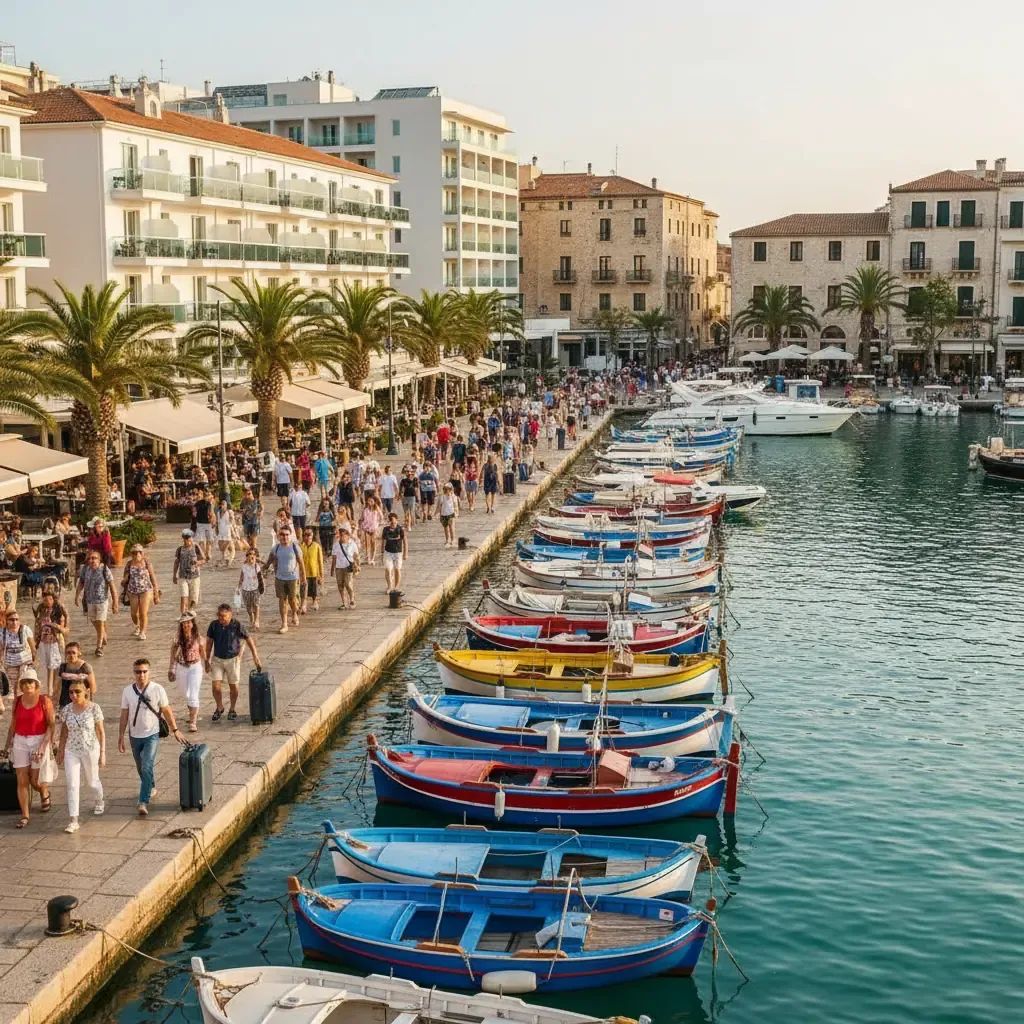
The Malta Tourism Authority has confirmed that the archipelago welcomed 2.13 million inbound tourists between January and June this year, representing an 18.1% surge over the same period last year. Yet beneath the headline growth lies a structural shift that is reshaping how the islands are used—and increasingly strained: visitors are staying for shorter periods, Gozo is functioning more as a day-trip overflow valve than a standalone destination, and off-peak months are absorbing growth faster than the traditional summer peak. For residents navigating daily congestion, working in hospitality facing longer seasons, or concerned about their neighbourhoods, these trends carry tangible consequences.
Why This Matters for Residents:
• More visitors, less spending per head means the tourism sector grows in volume but not necessarily in economic return relative to the infrastructure strain residents experience daily—average expenditure per visitor fell from €866 to €842 in the first half of 2026.
• Gozo day-trippers account for over 50% of inbound tourists but contribute minimally to overnight accommodation and local businesses, yet pressure ferries and roads that Gozo residents depend on.
• Off-peak tourism grew 19% in winter 2025, reducing reliance on summer but adding pressure to infrastructure and services year-round, with no seasonal relief.
• Infrastructure bottlenecks—ferries, buses, and roads—are struggling to keep pace with volume growth, directly affecting residents' commutes and quality of life.
• Short-term rental pressures are intensifying housing affordability concerns, as Airbnb and tourist apartments compete with residential accommodation in towns like Sliema, St. Julian's, and Valletta.
The Numbers Behind the Shift
Malta's tourism arrivals are climbing steeply in terms of volume. In May alone, 457,636 inbound tourists arrived, a 22.3% jump over the previous year. June added another 458,223 visitors, up 18.5%. But the arithmetic reveals a concerning tension for residents: while tourist arrivals rose 18.1% in the first half of the year, total nights spent climbed only 10.1%, reaching 11.8 million nights. That gap signals a clear pivot toward short-break tourism—quick escapes facilitated by low-cost carriers, which accounted for 60% of air traffic in 2023 and continue to dominate in 2026.
The average stay has contracted sharply, from 8.7 nights in 2021 to 5.5 nights by February 2026. By June, the figure had edged up slightly to 5.6 nights, but the trend is unmistakable. The Malta Hotels and Restaurants Association attributes this to a combination of factors: the rise of budget airlines, the decline of English as a Foreign Language (EFL) students (once 4% of visitors in 2016, now just 2.5%), and the growing appeal of multi-destination itineraries that slot Malta in as a weekend stopover rather than a week-long holiday.
Total expenditure presents a mixed picture for the local economy. While aggregate spending reached nearly €1.8 billion in the first half of 2026—a 14.8% increase—the per-visitor average fell from €866 to €842. This means that despite record visitor numbers, the economic return per person is shrinking. Spending per night ticked up 2.4% to €146, suggesting that visitors are willing to pay for quality experiences but are simply spending fewer nights on the islands. For residents, this translates to more congestion and pressure on services without proportional economic benefit.
Gozo: A Day-Trip Economy Under Pressure
More than half of all inbound tourists to the Maltese Islands visited Gozo or Comino at least once during the first six months of 2026. Yet Gozo accounted for a disproportionately small share of overnight stays, reflecting its role as a same-day excursion rather than a self-contained destination. Between January and October 2025, 1.9 million visitors crossed over to Gozo for a few hours, a figure that underscores both the island's appeal and the strain on its limited infrastructure.
The economic impact is lopsided. Day-trippers patronize restaurants, use buses, and visit beaches, but they contribute little to accommodation, nightlife, or cultural programming. More critically, they concentrate pressure on specific bottleneck points: the Mgarr ferry terminal experiences acute congestion during peak hours (9 a.m. to 1 p.m. and 3 p.m. to 6 p.m.), with wait times regularly exceeding 45 minutes during summer months. Ferry capacity caps mean queuing extends beyond the terminal into surrounding roads, disrupting traffic flow for Gozo residents commuting to work or running errands. Bus routes connecting Mgarr to popular destinations like Xlendi and Ramla Bay are overwhelmed, forcing residents to adjust their schedules around tourist peaks.
InvestGozo has responded by launching schemes in 2026 to promote niche tourism markets—boutique hotels, eco-lodges, regulated farmhouse rentals—and support digital marketing initiatives aimed at positioning Gozo as a high-quality, multi-night destination. The goal is to shift from volume to value, encouraging visitors to stay longer and spend more deeply across the local economy rather than simply passing through.
Infrastructure pressures extend beyond Gozo's borders. Roads leading to Mgarr from Mellieha and Ghajnsielem remain consistent bottlenecks, ferry scheduling struggles during peak times, and Gozo's small size means that even moderate increases in visitor numbers translate into noticeable congestion. The Malta Hotels and Restaurants Association has warned that rapid tourism growth is creating overcrowded destinations across both islands, stressing infrastructure and potentially damaging cultural and natural sites. Residents report longer queues at restaurants, reduced availability of parking in popular areas, and increased noise from tour groups in previously quieter neighbourhoods.
Off-Peak Growth: Expanding Pressures Year-Round
The Malta Tourism Authority has committed €7 million to grow off-peak tourism, targeting Conferences & Expos, Sports Events, and Music Tourism. The strategy appears to be working. Winter and shoulder-season tourism activity surged 19% in 2025, reducing reliance on the summer crush and distributing revenue more evenly across the calendar year.
The off-peak push is designed to attract higher-spending visitors—business travelers attending conferences, sports enthusiasts arriving for international events, and cultural tourists exploring Valletta's Baroque architecture or Mdina's medieval streets during cooler months. Visitors aged 45 to 64 and those over 65 showed the strongest growth in 2025, up 21.6% and 23.8% respectively, demographics that typically command higher discretionary spending.
However, year-round tourism brings significant pressures for residents. Malta's infrastructure—buses, ferries, roads, sidewalks, waste management systems—was originally built for a smaller, more seasonal population. The shift toward steady, year-round arrivals means that congestion, waste management challenges, and public transport capacity issues no longer concentrate in July and August. They now persist across most months, with minimal seasonal relief. Public bus services experience elevated passenger loads from February through May and again in October and November, reducing comfort for resident commuters. Parking in central areas like Sliema, St. Julian's, and Valletta becomes increasingly difficult outside traditional summer months. Waste collection services strain under year-round visitor volumes, leading to overflow in some areas during peak event periods.
Source Markets and Accommodation Pressures
The United Kingdom remains Malta's largest source market, but Poland has emerged as the second-largest by May 2026, with visitor numbers surging 47.1% year-over-year. British, Italian, and Polish residents together accounted for 45.6% of inbound tourists in June, a concentration that leaves Malta's tourism sector exposed to economic or political disruptions in any one of these markets.
Rented accommodation establishments—hotels, guesthouses, apartments—absorbed between 89.2% and 90.3% of guest nights in the first half of 2026. The rise of platforms like Airbnb has diversified visitor options but has significantly contributed to housing pressures in residential neighbourhoods. Popular residential areas including Sliema, St. Julian's, Valletta, Mosta, and Mdina have seen marked increases in short-term tourist rentals, reducing long-term rental stock for residents and driving up rents. The Malta government addressed this with new tourism accommodation regulations introduced in 2026 to drive quality-focused growth and establish registration requirements. However, residents in affected neighbourhoods report ongoing concerns: noise from guest arrivals and departures at odd hours, parties in tourist-rented apartments, reduced sense of community as residential turnover accelerates, and friction with absentee landlords prioritizing tourist revenue over neighbourhood livability.
What This Means for Residents' Daily Lives
For residents, the tourism boom translates into visible, daily friction across the islands:
• Transport and Commuting: Public buses to popular destinations like Golden Bay, Mellieha, and Marsaxlokk are increasingly crowded year-round. Peak commute times (7–9 a.m. and 4–6 p.m.) now overlap with tourist activity, extending travel times for residents. Ferry queues to Gozo regularly stretch to 30–45 minutes during mid-morning and late afternoon, disrupting the commutes of Gozo residents and workers who cross daily.
• Roads and Parking: Traffic on routes leading to tourist hotspots—Sliema promenade, the Three Cities, and routes to Comino ferries—experiences sustained congestion beyond summer months. Finding parking in central areas has become a prolonged challenge. Residents in areas adjacent to Airbnb concentrations report increased double-parking by guest vehicles unfamiliar with local regulations.
• Hospitality Employment: Workers in hotels, restaurants, and bars face longer working seasons with reduced downtime for rest and family commitments. While employment is steadier, wage pressures remain as businesses respond to declining per-visitor spending with tighter margins. Seasonal workers report difficulty securing off-season employment in other sectors.
• Cost of Living: Restaurant and cafe prices in tourist-heavy areas have risen as venues cater to visitor expectations. Services like laundry, maintenance, and accommodation repair are increasingly in demand, sometimes pushing prices upward. Residents using popular beaches report reduced access and increased costs for amenities as commercial operators expand tourist-focused offerings.
• Noise and Disturbance: Residents living near tourist accommodations and popular night-life districts report ongoing noise complaints, with late-night arrivals, departures, and parties disrupting sleep. Complaints to local councils have increased, but enforcement remains inconsistent.
Economic Trade-Offs: Growth vs. Quality of Life
Tourism contributes approximately 15% of Malta's GDP and employs roughly 25,000 people directly. The €1.8 billion generated in the first half of 2026 is significant for tax revenue and business earnings. However, residents should understand the trade-off: increased visitor numbers without proportional spending growth means more congestion and infrastructure strain without equivalent economic uplift. The decline in per-visitor spending from €866 to €842 suggests that residents are bearing mounting quality-of-life costs for a sector that is becoming less economically efficient per visitor.
Practical Actions for Residents
Government Consultations on Tourism Policy: The Malta Tourism Authority conducts quarterly consultations on sustainable tourism policy. Residents can participate in public forums to voice concerns about infrastructure, noise, and neighbourhood livability. Information on upcoming consultations is available through the authority's website and local council offices.
Reporting Noise and Disturbances: Local councils and the Malta Police can address complaints regarding excessive noise from tourist accommodations. Residents should document disturbances and file reports with their local council or the police non-emergency line. The National Statistics Office tracks complaint patterns to inform future policy.
Rights Regarding Short-Term Rentals: Residents have the right to report unregistered or non-compliant tourist accommodations to the Planning Authority. Legitimate concerns about noise, parking violations, or neighbourhood disruption can be escalated to local administrators.
Advocacy and Community Engagement: Residents' associations and local communities are increasingly active in advocating for infrastructure improvements, parking solutions, and stricter regulations on short-term rentals. Joining these groups amplifies resident voices in policy discussions.
The Path Forward
Malta's tourism model is in transition. The islands are attracting more visitors than ever, but they are grappling with tangible infrastructure, environmental, and quality-of-life implications of a sector growing faster in volume than in depth or spending. Whether the shift toward off-peak, higher-value tourism succeeds in balancing growth with livability for residents will depend on execution—and on how effectively government, industry, and communities prioritize managing visible bottlenecks and protecting the neighbourhoods and services that Malta residents depend on daily.


