
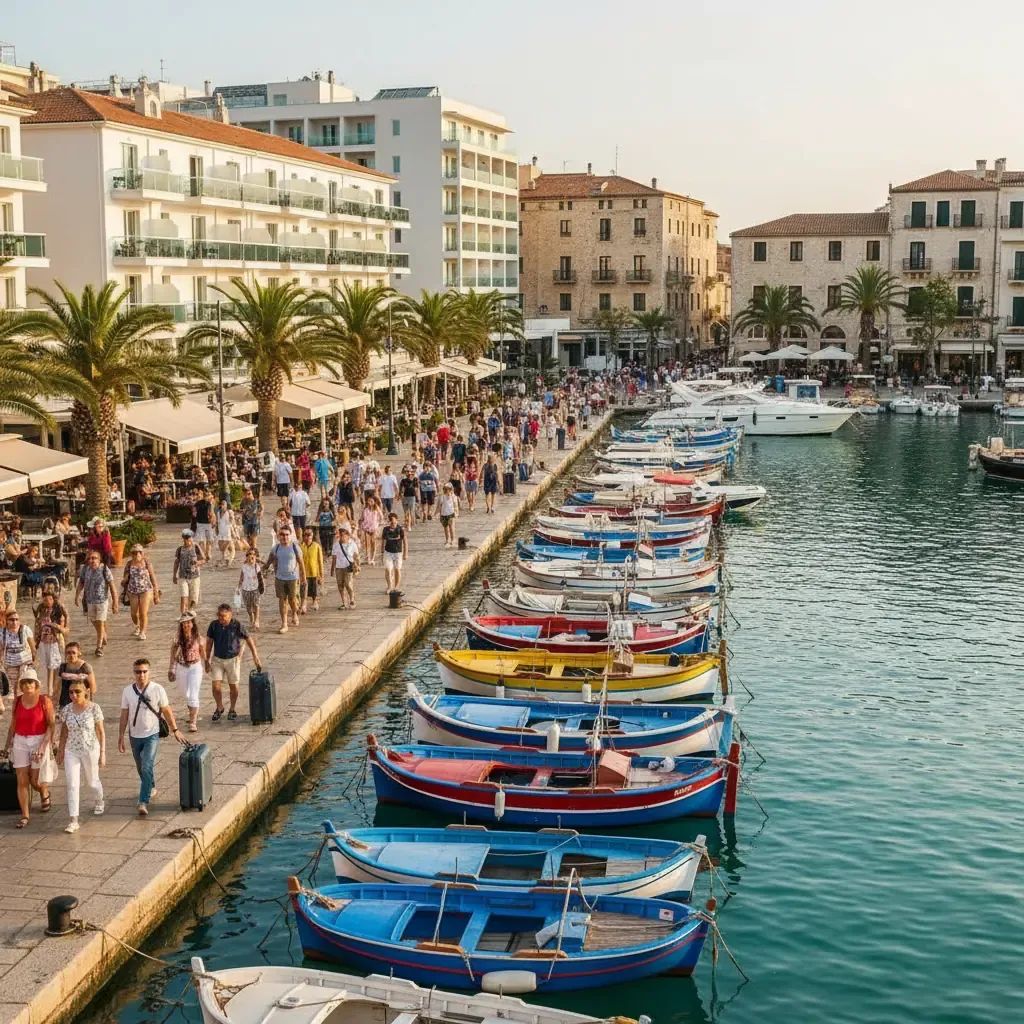
Malta's Cleansing and Maintenance Division is battling a summer waste crisis that has left bins overflowing across the island's prime coastal districts, despite collection crews emptying containers in Sliema three times daily. The surge reflects a deeper structural problem: tourist arrivals have jumped significantly in recent years, pushing municipal waste volumes to levels the island's decades-old collection infrastructure was never designed to handle.
How Malta's Waste System Works
Unlike most European neighbourhoods, Malta doesn't rely on wheeled communal bins. Instead, residents place sealed bags on their pavements at designated collection times—typically once or twice weekly depending on locality. This system works reasonably well for permanent residents who understand the schedule and know how to separate waste using the island's colour-coded bags: black for residual waste, white for compostables, and bags of varying colours for recyclables. However, the system breaks down entirely when thousands of tourists cycle through short-let apartments weekly, often unaware of collection days or separation rules.
Why This Matters
• Peak season strain: Tourism authorities report over 2.13M tourists visited in the first half of 2026, each generating an estimated 1.5–2 kg of solid waste daily per accommodation unit.
• Visible hotspots: Overflowing bins are concentrated in St Julian's, Paceville, Sliema, Buġibba, Qawra, Valletta, and Pietà—areas where short-let apartments have proliferated, often with tourists unaware of Malta's pavement collection system.
• Infrastructure gap: Local councils receive less than 1% of national tax revenue, leaving them unable to fund the expanded bin networks or advanced collection systems deployed elsewhere in the Mediterranean.
Tourist Boom Outpacing Collection Schedules
The numbers tell the story. According to tourism ministry data, inbound visitor numbers have climbed significantly over recent years, with projections indicating record annual arrivals now being reached. The summer months see particularly intense pressure—peak season alone logs hundreds of thousands of additional tourists, each adding to the island's daily waste burden.
Translated into waste, these figures mean an additional 1.5 kg per overnight guest added to the island's daily burden—before accounting for day-trippers or the local population. In practice, that equates to hundreds of extra tonnes entering the system each week during high season, and the Malta Cleansing and Maintenance Division reports a corresponding spike in service requests.
Sliema exemplifies the mismatch. Crews empty public bins three times daily, yet pavements and roadsides still accumulate takeaway cartons, coffee cups, and black refuse bags by mid-afternoon. Residents in these areas regularly wake to streets lined with rubbish spilling onto cobblestones and beaches. Similar scenes play out in Msida, Gżira, Mellieħa, Santa Venera, St Paul's Bay, and parts of Valletta, where residents and business owners have begun documenting the problem on social media.
Short-Let Properties: Where the System Breaks Down
The vast majority of tourists stay in short-let apartments rather than hotels. Property managers estimate turnover rates of 40-50% weekly during peak season, meaning residents and permanent visitors share streets with constantly changing occupants unfamiliar with local waste protocols.
Local councils in St Julian's and Sliema have flagged short-let units as chronic offenders, noting that uncollected waste sits in the summer heat for days, attracting rodents and cockroaches. Tourists often discard waste on the wrong collection day, leave unfolded takeaway boxes that consume triple the bin volume, and overlook the island's colour-coded bag system entirely. The Malta Environment and Resources Authority (MERA) acknowledges the enforcement challenge: identifying violators in high-turnover buildings is labour-intensive, and fines—when levied—are seldom high enough to change landlord behaviour.
What Other Mediterranean Destinations Are Doing
Malta's predicament is not unique, but peer jurisdictions have responded with measures the island has yet to replicate at scale. The Balearic Islands enacted legislation banning single-use plastics in hospitality venues, while Tilos, Greece, achieved 90% recycling rates by mandating at-source separation and investing in composting infrastructure.
Smart bins with IoT sensors—alerting collection teams the moment a container nears capacity—are now standard in parts of Sardinia and coastal Croatia. Paros, Greece, installed water refill stations and distributed reusable bottles under the "Clean Blue Alliance" initiative, cutting plastic waste by an estimated 30% over two summers. Door-to-door organic collection programs in Sardinia and southern France divert food scraps into industrial composters, shrinking residual waste volumes by nearly half.
Malta has the legal and technical capacity to adopt similar interventions. The Long Term Waste Management Plan 2021–2030 already commits the government to a circular economy model, yet budget allocations to local councils remain frozen at levels set before the tourism surge began.
Infrastructure Expansion: Progress and Persistent Gaps
The Malta Ministry for the Environment, Energy and Enterprise can point to tangible recent investments. A €185M waste-to-energy plant came online in 2023, designed to process 114,000 tonnes annually—roughly 40% of the island's waste output. An organic processing facility treating 74,000 tonnes per year opened in parallel, converting food scraps and garden waste into biogas and compost.
A fully automated Material Recovery Facility began operations in March 2023, sorting plastics, metals, and paper at speeds the old manual lines could not match. In June 2024, a €2.5M glass-sorting plant capable of handling 52,000 bottles per hour started operations at Ħal Far. A €20M bulky-waste facility—processing mattresses, tyres, and timber—diverts previously landfilled items into recycling streams.
Yet the new infrastructure addresses the back end of waste management—treatment and recovery—without relieving the front-end bottleneck choking tourist districts. Bins still fill faster than crews can empty them, and the island's 13% recycling rate (2022 figures) trails the EU-27 average of 49% by a wide margin. Meeting the EU's 55% target by 2025 and 65% by 2035 will require not only more treatment capacity but also a redesign of how waste is collected, stored, and separated at street level.
What This Means for Residents and Investors
For residents, the overflowing-bin crisis translates into daily quality-of-life erosion: unpleasant odours, pest infestations, and degraded streetscapes in neighbourhoods once prized for coastal charm. Property values in affected areas may face downward pressure if buyers and renters perceive chronic waste mismanagement as a permanent feature.
Hospitality operators should anticipate stricter enforcement. The Malta Tourism Authority (MTA) has signalled that establishments failing to comply with waste-separation protocols risk having licences reviewed, particularly in areas where visual blight undermines the destination brand. Short-let landlords may soon face mandatory participation in contractor-managed waste schemes, adding a line item to operating costs.
Expat professionals and remote workers considering relocation will find the waste issue a bellwether for broader infrastructure resilience. If Malta cannot scale bin collection to match tourism growth, other public services—water, electricity, transport—may encounter similar stress points as the population grows.
Practical Guidance for Residents
If you live in an area affected by overflowing bins, here's what you can do:
Report the problem: Contact your local council directly or use the Malta Public Services website to report overflowing bins and uncollected waste. Most councils respond within 24-48 hours during summer months.
Understand the system: Check your council's website for your specific collection schedule—it varies by locality. The colour-coded bag system is mandatory: black for residual waste, white for compostables, and designated colours for recyclables. Using the wrong colour can result in fines.
If you're renting out: As a short-let landlord, include clear collection instructions with check-in information and place bags outside on collection days yourself if guests are unfamiliar with the process. Properties that maintain clean records may soon qualify for council incentives.
Join neighbourhood initiatives: Many affected communities now organise regular clean-ups and advocate collectively with local councils for faster response times during peak season.
Policy Proposals on the Table
Environmental NGOs and local council associations have submitted a suite of recommendations to the Malta Cabinet. High on the list: underground pneumatic bins, already common in Barcelona and parts of Nice, France, that store waste below street level and reduce visual clutter. Pilot installations in Valletta's Republic Street and Sliema's Tower Road could test feasibility within 12 months.
Enhanced public education campaigns, delivered via hotel check-in materials and Airbnb messaging, would clarify collection schedules and bag-colour requirements for tourists. Deputising property managers as compliance officers—with financial incentives for buildings that maintain clean records—could shift accountability to those who profit from short-let rentals.
Longer term, a pay-as-you-throw tariff structure, already piloted in parts of northern Italy, charges households and businesses per kilogram of residual waste, rewarding those who separate and compost. Revenue generated could fund expanded council budgets without tapping general taxation.
The Summer Test Ahead
Malta's waste crisis is a visible symptom of a tourism model outpacing municipal capacity. The Cleansing and Maintenance Division responds to daily schedules and prioritises hotspot call-outs, but without structural reform—greater council funding, smart technology, and enforceable separation rules—the island will continue cycling through summer seasons marked by overflowing bins and frustrated residents.
The infrastructure investments completed since 2023 demonstrate political will to modernise waste treatment. What remains missing is a comparable commitment to the unglamorous front line: more bins, smarter routing, stricter short-let oversight, and the fiscal resources that allow councils to do more than simply react. As tourism continues to grow, the window to design a sustainable collection system is narrowing fast.


