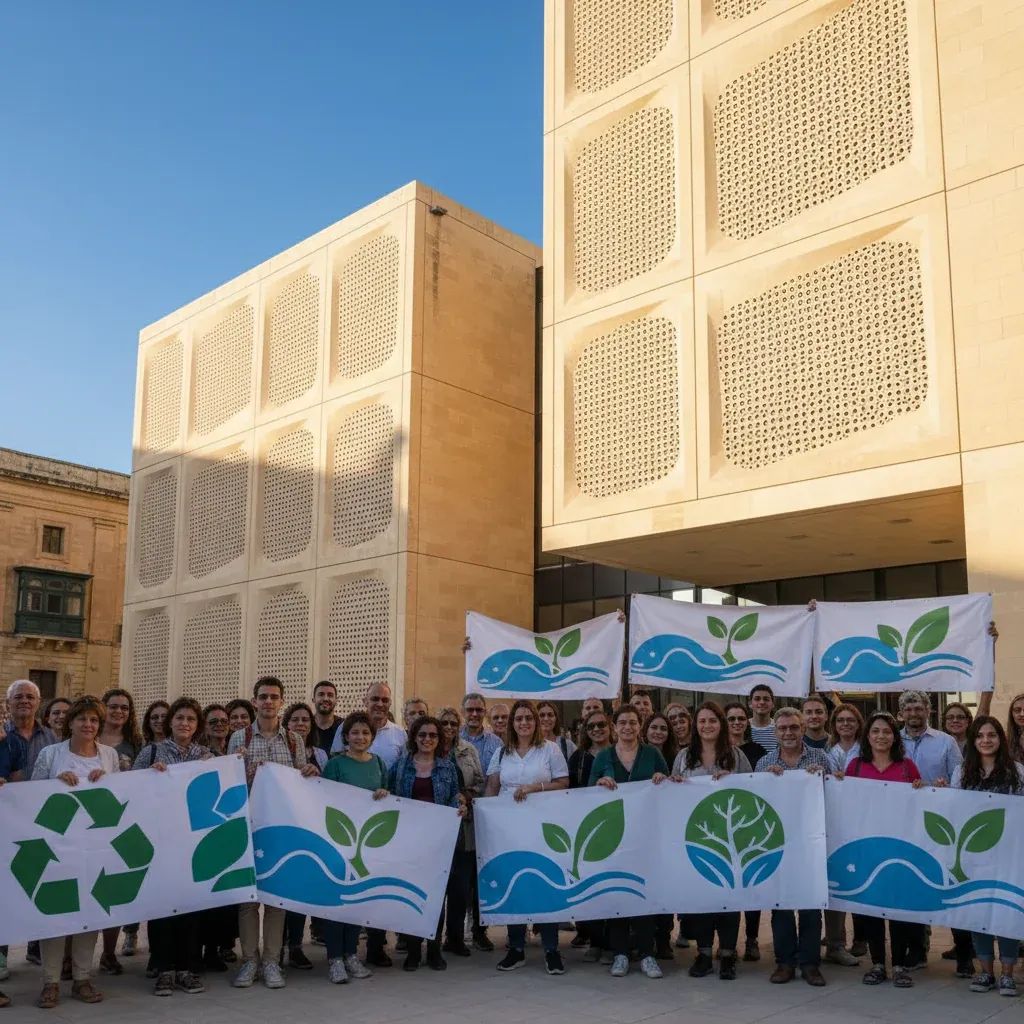
Momentum, the Malta-based political party, is pushing for a new taxpayer-directed funding model ahead of the upcoming general election—one that would allow residents to allocate 0.8% of their annual income tax to a voluntary organization of their choosing, essentially reshaping how civil society groups are financed on the island.
Why This Matters:
• Direct control: Taxpayers would choose which charity receives their contribution, expanding beyond the current system limited to the Malta Community Chest Fund.
• Broader utility support: All voluntary organizations that own premises—not just disability and animal welfare groups—would qualify for financial assistance on electricity and water bills.
• Employer incentives: Private companies releasing staff for voluntary work would receive tax rebates, treating volunteer time like a charitable donation.
• Youth advantage: Registered volunteers would earn accredited points convertible to tax credits and formal CV recognition.
The proposals, unveiled during discussions with the Malta Council for the Voluntary Sector, mark an attempt to inject more citizen agency into the distribution of public funds while alleviating the financial strain on non-profits struggling with operating costs.
The Italian Model Comes to Malta
Momentum's flagship proposal mirrors Italy's "otto per mille" system, which translates to "eight per thousand"—or 0.8%. Under this framework, Malta taxpayers would indicate their preferred voluntary organization when filing annual returns. The designated 0.8% slice of income tax would then flow directly to that entity, provided it meets eligibility criteria set by regulators.
Currently, Malta residents can opt for automatic payroll deductions only when donating to the Malta Community Chest Fund, a government-backed charity. Momentum argues this setup is too narrow and fails to empower taxpayers who want to support niche causes—whether environmental conservation, mental health advocacy, or cultural heritage preservation.
The party has not disclosed cost estimates or how many organizations would initially qualify, but the model's success elsewhere offers clues. In Slovakia, a similar scheme allows individuals to allocate 2% of income tax (rising to 3% for those who volunteered over 40 hours). More than a third of Slovak companies also direct 1-2% of corporate tax to charities. Slovenia operates a smaller version at 0.3% for individuals and 0.5% for corporations, typically generating EUR 5-50 per person.
Whether Malta's Revenue Department would implement the system as a checkbox on tax forms or require a separate declaration remains unclear. Administrative feasibility will likely dominate the debate if Momentum gains legislative traction.
Expanding Utility Bill Relief Across the Sector
Beyond tax allocation, Momentum wants to broaden financial assistance for utility bills to all voluntary organizations that own their facilities. At present, only groups working in disability services and animal welfare can access this support, leaving environmental NGOs, community centers, and cultural associations to absorb rising electricity and water costs on their own.
For context, Ireland—a jurisdiction often compared to Malta on civil society funding—rolled out targeted relief schemes in recent years. The Community & Voluntary Energy Support Scheme (2023) and the Community Support Fund provided one-time grants to offset energy price spikes, while the Sustainable Energy Authority of Ireland offers renewable energy grants and EUR 2,000 energy audit vouchers. Voluntary organizations in Ireland derive over 50% of their EUR 14.5 billion annual turnover from state grants or service contracts, highlighting how government support can stabilize the sector.
Momentum has not specified whether the expanded Malta scheme would be permanent or linked to energy price thresholds, nor whether it would cover renewable energy installations—a gap that environmental groups are likely to press on.
Work Release and Tax Rebates for Employers
The third pillar of Momentum's package envisions a public service work release scheme, allowing Malta government employees with specialized skills—accountants, IT professionals, legal advisors—to assist voluntary organizations during work hours. The party proposes extending this concept to the private sector by offering tax rebates to employers who release staff for volunteer assignments, treating the foregone labor cost as a charitable donation.
This approach borrows from corporate social responsibility frameworks in Nordic countries, where employers often sponsor employee volunteer days. The difference here is the direct tax incentive, which could make participation more attractive to profit-driven firms. However, critics may question whether the rebate would be capped per employee, whether it applies to all organizations or only those meeting certain standards, and how the Malta Revenue Department would audit compliance.
Volunteer Credits: Building Tax Relief and CVs Simultaneously
Perhaps the most novel element is Momentum's proposal to award accredited points to registered volunteers, which could be redeemed for tax credits or listed formally on CVs. The party frames this as a dual benefit: young people entering the job market gain documented experience, while accumulating tax credits early in their careers—potentially offsetting student loan interest or first-time homebuyer expenses.
For the system to work, Malta would need a centralized volunteer registry, a points calculation formula (hours worked versus credits earned), and employer buy-in to recognize volunteer credentials during hiring. The Malta Qualifications Framework or a similar body might oversee accreditation, but implementation details remain sparse.
What This Means for Residents
If enacted, the tax allocation model would not increase your total tax burden—it redirects 0.8% of what you already owe. For a taxpayer with an annual liability of EUR 5,000, that's EUR 40 channeled to a cause you choose, rather than entering general revenue. Organizations would gain predictable income streams independent of fundraising campaigns, while donors receive the psychological satisfaction of direct impact.
The utility bill expansion could stabilize dozens of community centers and cultural NGOs currently at risk of closure due to operating cost inflation. Environmental groups, which often rent or own aging buildings with poor insulation, stand to benefit significantly.
For employers, the tax rebate on volunteer time offers a low-cost way to enhance corporate reputation while providing staff with skill-building opportunities. Small and medium enterprises in Malta—which often lack the capital for large charitable foundations—could leverage this incentive more readily than cash donations.
Young volunteers, particularly those between secondary school and university, would find the accredited points system useful for padding early-stage CVs and reducing tax liability once they enter full-time employment. However, the scheme's success hinges on whether the Malta Qualifications Authority or employers truly value the credentials.
Precedents and Pitfalls
Direct tax allocation models exist in Slovakia, Slovenia, and select U.S. states like California, where taxpayers designate contributions to specific funds on their returns. Slovakia's system, operational since 2004, has proven popular: over a third of companies participate in the corporate version. Yet these countries also maintain rigorous eligibility standards for recipient organizations, requiring annual financial disclosures and compliance audits to prevent misuse.
Malta would need equivalent safeguards. Without them, the system risks becoming a vehicle for politically connected groups or "paper charities" that meet registration requirements but deliver minimal public benefit. Transparency in how organizations spend allocated funds, coupled with penalties for non-compliance, would be essential.
Administrative costs also warrant scrutiny. The Malta Revenue Department would need to update tax filing software, train staff on verification procedures, and handle disputes when taxpayers contest allocations. Ireland's voluntary sector, by contrast, relies on direct statutory grants—over 50% of sector income—administered by central agencies, which some argue is more efficient than decentralized taxpayer choice.
Political Context and Next Steps
Momentum's proposals emerge as Malta prepares for a general election, with the voluntary sector serving as a key constituency. The Malta Council for the Voluntary Sector, which represents hundreds of organizations, has long advocated for diversified funding mechanisms to reduce dependence on government grants and private donors.
Whether larger parties adopt similar platforms remains to be seen. The ruling party and opposition have historically supported the Malta Community Chest Fund model but have not committed to broader tax allocation systems. Momentum's challenge will be demonstrating that the Italian-style framework can scale to Malta's smaller economy and administrative capacity without creating loopholes or bureaucratic overload.
For now, the proposals remain campaign pledges. If Momentum enters coalition talks or secures legislative seats, the voluntary sector could see its most significant funding reform in a generation—or another round of promises deferred until the next election cycle.