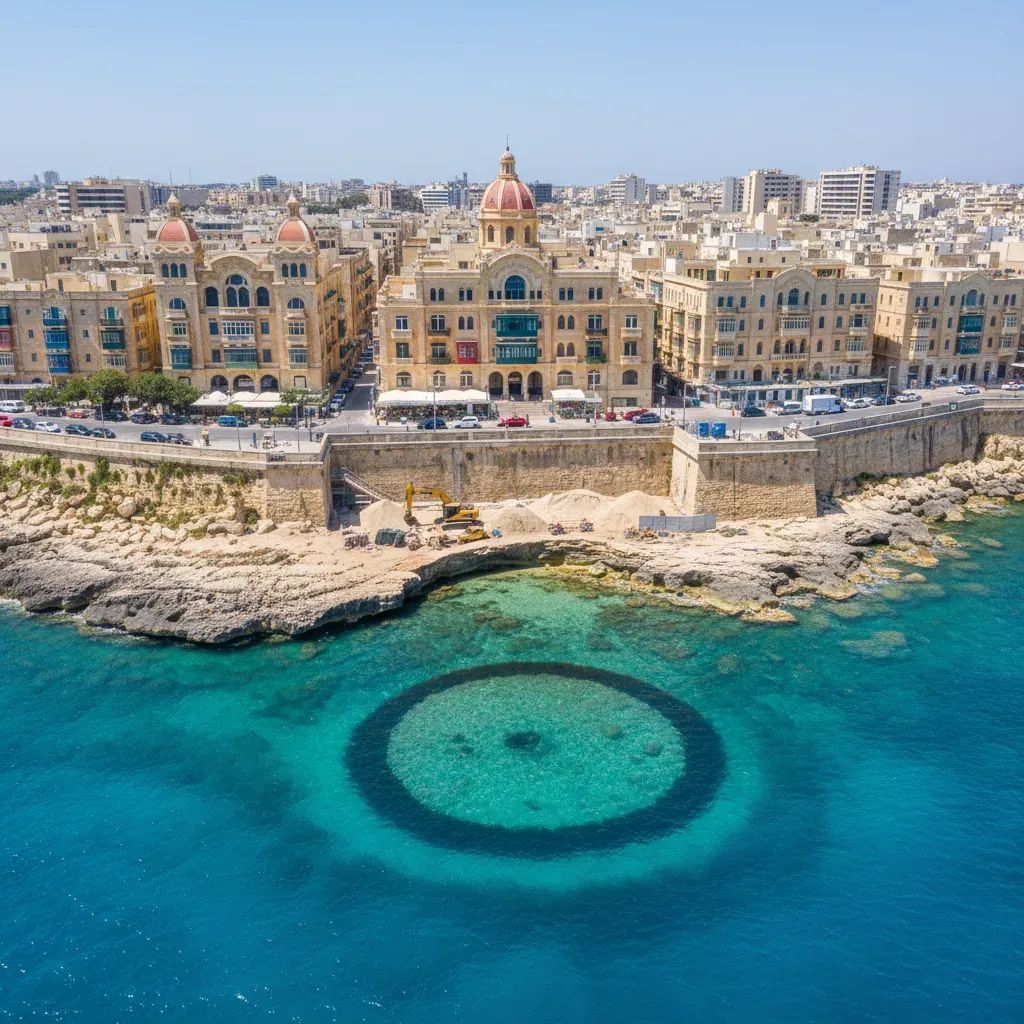
The San Ġiljan Aquatic Sports Club has secured approval to reclaim 2,230 square meters of seabed between Balluta Bay and Spinola Bay, a decision that will transform a stretch of St Julian's coastline into an international-standard water polo complex—and has reignited debate over Malta's aggressive use of its limited marine space for development.
Why This Matters
• Construction timeline: The facility is expected to take approximately 2 years to build, meaning disruption to the popular St Julian's waterfront through at least mid-2028.
• Environmental trade-off: The revised design will still destroy 197 square meters of protected Posidonia oceanica seagrass, despite an 80% reduction from the original 2019 proposal.
• Commercial component: The project includes two restaurants—one at promenade level, one at deck level—raising questions about whether this is sports infrastructure or coastal real estate development.
• Precedent risk: This marks one of Malta's most prominent coastal reclamation approvals in recent years, potentially setting a template for future projects along the island's already pressured shoreline.
The Planning Authority approved the proposal on July 30, 2026, by a vote of 10 to one, with the sole dissenting voice coming from NGO representative Romano Cassar, who cited conflicts with coastal zone protection policies. The decision clears the way for the club to build a full-scale competition pool, training pool, children's pool, deck areas, changing rooms, gym, committee rooms, and technical facilities—all on land that doesn't currently exist.
What Will Actually Be Built
The facility is designed to meet international water polo standards, positioning St Julian's as a potential host for regional tournaments and training camps. The main competition pool will be flanked by a training pool and a separate children's facility, with deck areas intended for spectators and competitors. Ancillary spaces include changing rooms, a gym, committee rooms, and technical storage—standard for a modern aquatic sports venue.
But the project's scope extends beyond athletics. The two restaurants—one at promenade level accessible to the public, and another at deck level with outdoor seating overlooking the water—suggest a hybrid model that blends sports infrastructure with commercial hospitality. Critics argue this dual purpose dilutes the public-interest justification for sacrificing marine habitat, while supporters contend the revenue stream will ensure long-term financial sustainability for the club.
The reclaimed platform will jut into the sea between two of St Julian's most iconic bays, altering the visual and physical geography of a coastline already defined by high-density development. The Environment and Resources Authority (ERA) granted clearance for the revised design, which trimmed the footprint from an original 3,140 square meters proposed in 2019. That reduction came after sustained pressure from environmental groups and regulators concerned about the project's impact on Posidonia meadows, a protected habitat critical for oxygen production, seabed stabilization, and marine biodiversity in the Mediterranean.
The Environmental Calculus
Even with the 80% reduction in direct Posidonia loss, the project will still destroy 197 square meters of seagrass meadow. Posidonia oceanica is a slow-growing species—taking decades to establish—and its loss is effectively permanent within any planning horizon relevant to human development. The meadows serve as nurseries for commercial fish species, stabilize sediment, buffer wave energy, and produce oxygen at rates that rival terrestrial forests.
Land reclamation in Malta's coastal waters raises a cascade of concerns beyond the immediate footprint. The construction phase typically involves filling the seabed with rock, cement, and construction waste, which generates clouds of sediment that reduce water clarity, smother surrounding habitats, and introduce chemical changes that can acidify the water or block sunlight needed for photosynthesis. Malta's reputation for clear, pristine waters is a cornerstone of its tourism economy, particularly for diving and marine recreation, and degradation of coastal water quality has direct economic consequences.
The geological risks are less visible but equally significant. Displacement of marine sediments during reclamation can trigger mud-wave formation beneath the fill, destabilizing the surrounding seabed and potentially leading to soil liquefaction. Malta's coastline is already subject to intense land-use pressure, and its relatively steep, unprotected shoreline makes reclamation projects inherently challenging from an engineering standpoint.
Proponents of the St Julian's project argue that modern reclamation techniques and the revised design mitigate these risks to acceptable levels, and that the environmental clearance from ERA validates this claim. Opponents counter that any loss of Posidonia is unacceptable given the species' protected status under both Maltese and European law, and that the cumulative effect of multiple reclamation projects—including the ongoing 30,000 square meter expansion at Malta Freeport in Birżebbuġa—will erode the island's marine environment beyond recovery.
How This Fits Into Malta's Sports Infrastructure Push
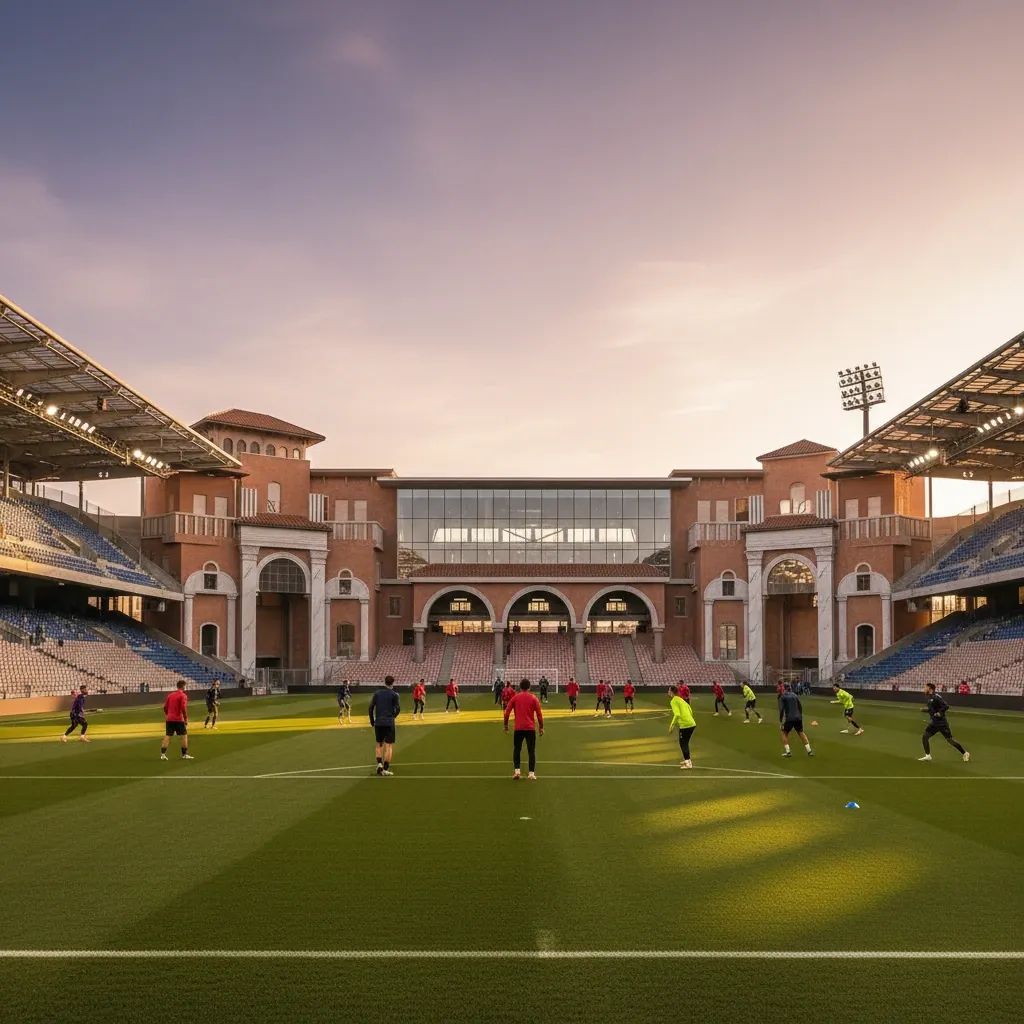
Malta has invested heavily in sports facilities over the past three years, with the government framing infrastructure upgrades as essential for both athletic development and tourism positioning. The Cottonera Sports Complex received €17.1 million for a new indoor pool and renovations, while the Marsa Sports Complex saw €17.4 million in upgrades, including an athletics track and squash courts. A €16 million multi-sport complex for gymnastics, weightlifting, and netball opened in January 2026, and a €13 million UEFA Category 1 football training centre was completed in September 2025.
The St Julian's water polo facility fits this pattern, but with a critical difference: it requires the physical creation of new land rather than repurposing existing sites. The project's budget has not been publicly disclosed, making direct financial comparison difficult, but the combination of marine reclamation, specialized aquatic facilities, and commercial restaurant spaces suggests a substantial investment—likely in the range of Malta's other flagship sports projects.
Water polo holds cultural and competitive significance in Malta, with a passionate following particularly along the island's historic harbors and bays. The San Ġiljan Aquatic Sports Club is one of the country's most prominent teams, and the absence of an international-standard facility in the St Julian's area has long been cited as a gap in the country's sporting infrastructure. The new complex is intended to address that deficit and position Malta as a viable host for Mediterranean-level competitions.
What This Means for Residents
For residents and regular visitors to the St Julian's waterfront, the project will bring at least two years of construction disruption starting in the coming months. The promenade between Balluta Bay and Spinola Bay is a heavily trafficked pedestrian route, popular for evening walks, dining, and waterfront recreation. Construction activity—particularly the seabed filling and structural work required for reclamation—will likely involve heavy machinery, noise, road closures, and limited public access to sections of the shoreline.
The long-term trade-off is access to a state-of-the-art aquatic sports facility and two new waterfront dining venues, set against the permanent loss of marine habitat and a further narrowing of the visual and physical corridor between the built environment and the sea. The project also establishes a precedent for other coastal reclamation proposals currently in exploratory phases, including sites off Smart City in Kalkara, Fort Ricasoli, Qalet Marku in Baħar iċ-Ċagħaq, and The Strand in Sliema.
The government's Vision 2050 strategy explicitly contemplates land reclamation as a tool for addressing Malta's chronic land scarcity, framing it as a necessary mechanism for accommodating growth without consuming more agricultural or green space inland. Critics argue this approach treats the sea as an infinite resource and ignores the irreversible ecological costs of artificialization.
The Bigger Picture
Malta's coastline is finite, and its marine environment is one of the few assets the island possesses in abundance relative to its size. The St Julian's water polo project, whatever its merits as sports infrastructure, represents a permanent reallocation of that resource from natural ecosystem to human use. The debate over whether that trade-off is justified will likely intensify as additional reclamation proposals move through the planning pipeline, particularly if water quality or marine biodiversity shows measurable decline.
For now, the project has cleared its regulatory hurdles, and construction is expected to begin within months. Whether the result is a model for sustainable coastal development or a cautionary tale about the limits of reclamation will depend on how the facility performs—both as a sporting venue and as a test case for Malta's ability to balance growth with environmental stewardship.