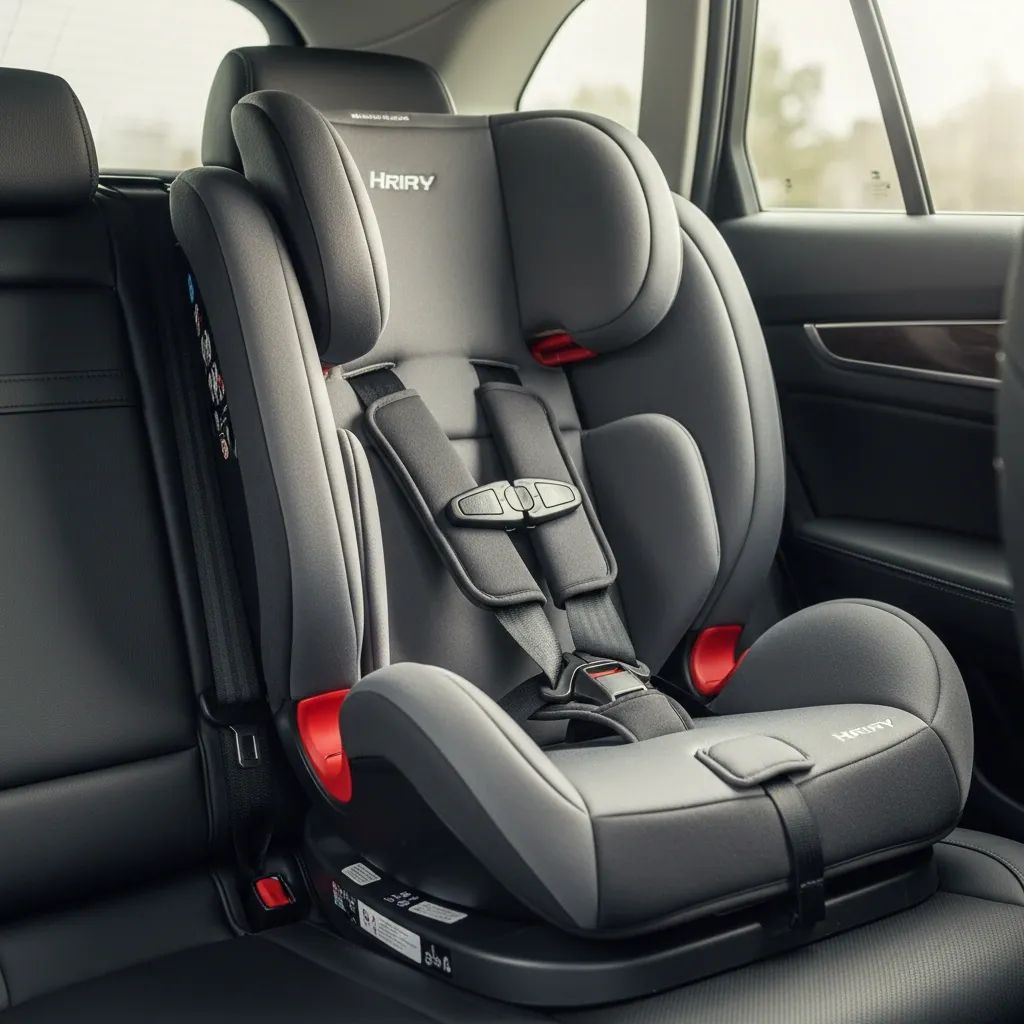
The Malta Police are investigating a rollover collision in Marsaxlokk that sent a toddler and his mother to hospital on Monday afternoon. While both passengers escaped with minor injuries, the incident highlights the critical role of proper child car seats in protecting young passengers during serious traffic accidents.
Why This Matters
• Child restraint systems demonstrated real-world protection: The two-year-old's survival likely depended on proper car seat use, a legal requirement for Maltese children under 135 centimeters—proof that compliance saves lives when crashes occur.
• Rollover incidents carry heightened risk: When vehicles flip completely, occupants face catastrophic injury or worse unless properly restrained. This collision underscores the importance of mandatory safety measures.
• National rollover data reveals a larger vulnerability: As vehicle collisions increase in severity despite total crash numbers declining, lighter cars face heightened risk when struck by heavier vehicles—a physics problem that regulation and driver behavior can address.
The Incident: Physics and Fortune Converge
A Nissan March and Jeep Renegade collided on Triq Għar Dalam around 5 PM on Monday afternoon. The lighter sedan flipped completely, landing on its roof—a violent outcome that typically leaves occupants with catastrophic injuries or worse. The driver, 25, from Birżebbuġia, and her son, two years old, were transported to Mater Dei Hospital where medical staff classified their injuries as minor. The Jeep operator, a 64-year-old Marsaxlokk resident, was unharmed.
Emergency responders reached the scene swiftly, and both passengers were released after treatment. For anyone familiar with rollover mechanics, the outcome represents extraordinary luck layered atop sound vehicle safety design and, critically, proper child restraint use.
The Malta Police have launched a standard investigation into fault and causation. No citations or charges have been announced, though the inquiry will examine speed, visibility, road surface condition, and driver error to determine primary contributing factors. This investigation matters not merely for accountability but for identifying whether Triq Għar Dalam requires targeted intervention—speed reduction, enhanced markings, or enforcement escalation.
Why Lighter Vehicles Flip When Hit by Heavier Ones
The collision mechanics explain vulnerability. A Nissan March weighs approximately 1,000 kilograms; a Jeep Renegade reaches roughly 1,500 kilograms. Mass difference alone creates physics that favor the heavier vehicle, but the decisive factor is collision angle and speed—how the two vehicles met and at what velocity determined whether the smaller car would absorb impact or vault onto its roof.
Safety researchers identify multiple triggers that transform a routine collision into a rollover. Speed dominates the risk calculus. Approximately 40% of fatal rollover crashes globally stem from excessive velocity. The Jeep's elevated center of gravity—a structural characteristic of sport-utility vehicles—acts as a potential "tripping point." If the collision caught the Nissan's side at the correct angle and speed, the vehicle could launch sideways rather than crumple.
Road surface conditions amplify this danger. Potholes, uneven asphalt, and soft shoulders act as trip mechanisms, forcing a chassis sideways at the critical moment when a vehicle is already destabilized by impact. Triq Għar Dalam carries mixed residential and through-traffic, and speeds frequently exceed safe thresholds for such corridors. A vehicle already sliding from collision impact becomes airborne when it encounters surface irregularities.
Tire condition matters significantly as well. Worn or improperly pressurized tires reduce traction, compromising a driver's ability to maintain control during an emergency maneuver or immediately after impact. Overloaded vehicles or those with top-heavy cargo distributions raise their center of gravity, multiplying rollover susceptibility.
National Road Safety: Fewer Crashes, Deadlier Outcomes
Marsaxlokk's troubles sit within a broader national concern. According to the National Statistics Office, road safety data reveals a troubling pattern: crash frequencies have declined while the severity of incidents has increased.
The National Statistics Office reported that quarterly accident and casualty trends show volatility in fatality rates. This pattern suggests something counterintuitive: fewer collisions are occurring, but the crashes that do happen are more severe. Speed, impairment, and distraction—behaviors that transform minor fender-benders into critical injuries—appear to drive the remaining incidents rather than congestion-induced pile-ups.
Casualty demographics concentrate among working-age adults. Children remain unquantified in official breakdowns because the National Statistics Office categorizes injuries by broad cohorts rather than isolating pediatric involvement. This data gap means policymakers lack precision on whether child passengers face disproportionate risk—a critical blindspot in road safety planning.
Legal Framework for Child Passengers
For parents navigating Marsaxlokk's congested streets or any Maltese residential corridor, Monday's incident crystallizes both a legal obligation and a survival mechanism. Maltese law mandates that children under 135 centimeters use an appropriate child car seat or booster, and all passengers must wear seatbelts. These requirements exist because restraint systems don't prevent rollovers but dramatically reduce ejection risk, the leading cause of death in rollover incidents.
The two-year-old in this collision almost certainly survived because restraint systems functioned as designed. An unrestrained or improperly secured child in a flipping vehicle faces ejection and catastrophic injury; being ejected from a rolling car is nearly always fatal.
Enforcement of child restraint compliance remains inconsistent across Malta. Police conduct spot checks, but sporadically. The absence of granular data on child casualties means authorities cannot measure compliance effectiveness or identify demographic hotspots where child safety interventions would yield maximum benefit. National road safety initiatives acknowledge child protection as a priority, yet the infrastructure for measuring and improving pediatric outcomes remains underdeveloped.
Transport Malta's Recent Initiatives: Scope and Limitations
Transport Malta has launched the "Think Twice" campaign, emphasizing mobile phone distraction and impaired driving as primary targets. The messaging addresses genuine hazards—approximately half of fatal rollover crashes globally involve alcohol, and distracted driving has emerged as a rising contributor to loss-of-control incidents in Malta.
Enhanced police and LESA enforcement around schools and high-traffic zones represents an effort to address traffic safety in concentrated areas. These initiatives are necessary, but their geographic scope is broad and often reactive rather than preventive. Marsaxlokk's specific vulnerabilities—narrow residential streets, mixed residential and through-traffic, aging infrastructure—require customized intervention beyond generic solutions.
The broader National Road Safety Strategy positions Transport Malta and local councils as joint implementers, but coordination remains inconsistent. Local councils maintain authority over traffic calming measures including speed bumps, lane narrowing, gateways, and improved road markings—tools available under Maltese traffic engineering protocols. Yet adoption remains patchy.
The Mechanics of Prevention
Expert consensus converges on practical interventions that Malta has not systematized. Reducing speed, particularly on curves and residential roads, is the single most effective mechanism for preventing rollovers. The majority of fatal rollover crashes occur on roads with posted limits of 55 mph (approximately 90 kilometers per hour) or higher. Malta's standard urban limit is 50 km/h, but enforcement varies wildly. The European Union recommends implementing 30 km/h zones across all urban residential areas to protect vulnerable road users—a standard barely implemented across Maltese neighborhoods.
Avoiding abrupt steering corrections is equally critical. Sudden swerves, even when attempting to dodge minor hazards, destabilize vehicles. Counterintuitively, safety literature suggests that striking a small obstacle is often safer than overcorrecting dangerously—a paradoxical truth that driver training must reinforce.
Tire maintenance assumes outsized importance. Improper tire pressure or worn tread reduces traction and invites rollover risk, especially during sharp maneuvers or on wet surfaces. Many vehicles on Malta's roads operate on aged or under-maintained tires, a condition that Transport Malta could address through mandatory periodic inspections or financial incentives for compliance.
Overloading or improper cargo distribution raises a vehicle's center of gravity, amplifying instability. Distracted driving—particularly mobile phone use while steering—has emerged as a growing rollover contributor in Malta. The "Think Twice" campaign explicitly targets this behavior, but enforcement remains the weak link. Without visible, consistent police presence on residential corridors like Triq Għar Dalam, behavioral change plateaus.
Path Forward: Lessons and Accountability
The immediate outcome here is merciful. The mother and child returned home with minor injuries, traumatized but physically intact. The Jeep driver was unharmed. No fatalities, no permanent disability, no destroyed families—a day when Maltese roads easily could have claimed victims but didn't.
For Marsaxlokk residents and the broader Maltese public, this incident represents another data point in an increasingly urgent conversation. Road safety is not a niche concern; it is an active crisis claiming thousands of injuries annually across the island. Verified safety interventions—reduced speed limits on residential corridors, visible police enforcement, improved road markings, better pedestrian separation from vehicular traffic, mandatory tire inspections, and enhanced data collection on child casualties—would signal genuine commitment to prevention.
Transport Malta possesses expertise and statutory authority. The Marsaxlokk Local Council controls traffic engineering tools. Whether political will exists to prioritize these interventions over competing interests or budget constraints remains an open question—and the answer will determine whether future incidents in this village produce survivors or more tragic outcomes.