
Why Malta's Maritime Strategy Matters Now
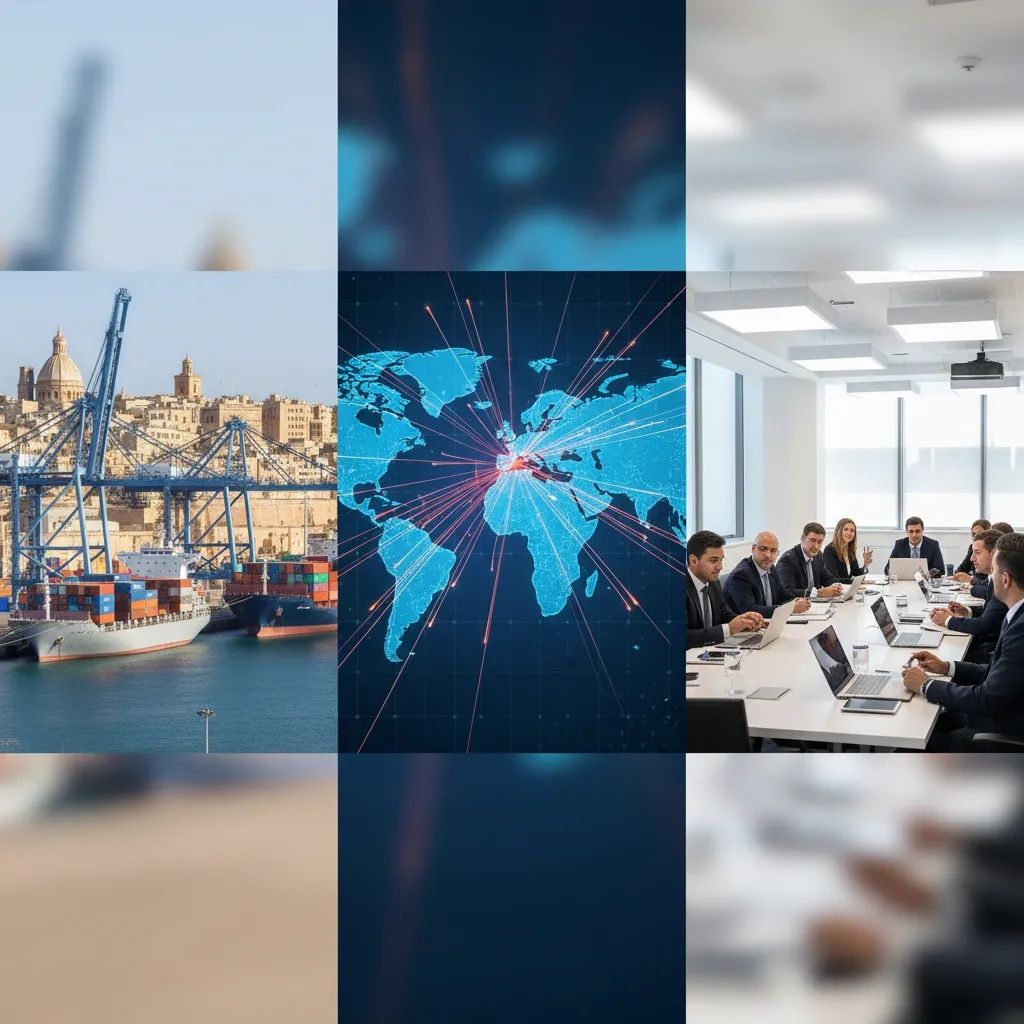
Malta's government is investing in a strategic repositioning aimed at becoming a more influential voice in global maritime policy. Two major conferences scheduled for autumn 2026, combined with diplomatic agreements across North Africa and the Middle East, represent an attempt to strengthen Malta's role in shaping shipping regulation—even as the island faces a substantial economic threat from EU climate policies.
For residents and businesses tied to Malta's maritime sector, understanding this strategy matters. The stakes are real: the EU's carbon pricing system is already pushing container transhipment work toward North African ports, threatening approximately €45M annually in port revenue and related jobs in stevedoring, logistics, and warehousing that employ thousands locally.
Key Takeaways
• Two autumn 2026 conferences will test Malta's ability to attract serious maritime policymakers and industry leaders—organisers expect increased delegation numbers compared to recent years.
• The EU's carbon pricing rules are reshaping Mediterranean shipping patterns, pushing transhipment operations toward North African ports and threatening significant annual revenue for Maltese port operators.
• New air connectivity from the United States launching in June 2026 expands Malta's reach to North American shipping executives, a demographic historically difficult to attract to island venues.
• Malta's University is deepening its advisory role in maritime policy, creating a direct channel between academic research and international regulatory bodies.
The Economic Reality Behind Malta's Push
Strip away diplomatic language and Malta faces a straightforward economic challenge: its traditional maritime registry business alone no longer guarantees prosperity or employment stability.
The Malta Registry operates the world's 7th-largest merchant fleet by tonnage, generating licensing revenue and supporting legal, compliance, and administrative employment. Yet this business model faces pressure from multiple directions, and the most immediate threat comes from EU climate policy.
The EU's Emissions Trading System (ETS) imposes carbon costs on shipping in European waters. Container operators conducting transhipment—moving cargo between large ocean-going vessels and smaller regional feeders—have increasingly relocated operations to Port Said in Egypt and Tangier Med in Morocco, where these carbon costs don't apply. The Malta Maritime Forum has documented the impact: approximately €45M annually in lost port revenue if current trends accelerate, alongside job losses in stevedoring, logistics coordination, and port services that directly employ Maltese residents.
This isn't a theoretical concern. Egypt, Tunisia, and Morocco have invested substantially in modernizing container terminals and establishing competitive advantage through lower regulatory costs. Malta's traditional strengths—English-language services, EU legal certainty, efficient operations—no longer guarantee dominance in a competitive Mediterranean market.
Rather than competing on cost and throughput alone, Malta is pursuing a different strategy: accumulating soft power and policy influence in global maritime governance. If Malta can position itself as a credible forum where shipping policy is genuinely shaped, it increases the island's relevance and potential influence over rules affecting port economics and maritime regulation.
The 2026 Conference Schedule: Building Policy Presence
October Maritime Summit
The Malta Maritime Summit scheduled for October aims to embed policy-relevant conversations directly into maritime governance channels. The event will bring together Transport Malta (the national maritime authority), maritime law professionals, and academic researchers to focus on substantive topics affecting the industry.
The summit is designed around operational realities rather than generic sustainability messaging. Sessions will address practical challenges: how shipping operators actually scale decarbonization adoption when fuel infrastructure remains limited and costs remain high, automation and technology integration in ports, and regulatory gaps affecting maritime operations. This operational focus signals to international participants that Malta convenes serious stakeholders, not just tourism-oriented events.
November Maritime World Show
Held at the Mediterranean Conference Centre in Valletta, the Maritime World Show merges commercial exhibition with professional conference programming. The event attracts shipowners, port authorities, offshore energy specialists, and maritime technology professionals. The 2025 edition drew 1,200 delegates; organisers are targeting higher participation for 2026, including confirmed pavilions from multiple European, Scandinavian, and international maritime hubs.
Additional Specialized Events
Malta is also hosting targeted professional events throughout 2026—technical workshops on maritime technology, supply chain digitalization conferences, and entrepreneurship forums—that collectively strengthen the island's position as a maritime knowledge centre.
Building Diplomatic Relationships
Beyond conference scheduling, Malta has been constructing bilateral relationships that position the island as a trusted intermediary in Mediterranean maritime affairs. Existing agreements with the UAE and Saudi Arabia facilitate regulatory alignment and intelligence-sharing within international maritime forums. Malta is also engaged in ongoing regional dialogue with North African governments and other Mediterranean states on maritime security, regulatory coordination, and trade facilitation.
These relationships matter because they create pathways for policy influence. If Malta is perceived as a neutral, professional venue where regional maritime interests can be discussed, the island becomes more valuable as a conference destination and policy forum.
The University's Growing Role
The University of Malta Maritime Platform has evolved into a meaningful research and advisory institution, drawing faculty across engineering, law, environmental science, and economics. The platform now provides research support and advisory input to Transport Malta on maritime policy submissions to international bodies, creating a direct academic-to-policy pipeline increasingly rare in smaller nations.
For 2026, the university is expanding maritime education programming, creating professional development opportunities that strengthen Malta's intellectual infrastructure while building a professional network that views the island as a knowledge centre.
Malta's Competitive Position
Malta competes with established Mediterranean conference venues on geography (compact, efficient), language (English-language operations), and venue infrastructure. To strengthen its competitive position for 2026, the Maltese government has committed funding to support qualifying conferences, and new transatlantic air connectivity launching in June 2026 improves accessibility for North American participants—a demographic historically underrepresented at Mediterranean maritime events.
The Strategy's Vulnerabilities
Malta's maritime repositioning rests on several assumptions vulnerable to disruption. First, the island's small population (500,000) means limited labour capacity and economic diversity. A reputational problem in maritime regulation or enforcement recovers slowly, unlike larger hubs that can compartmentalise damage.
Second, the ETS carbon cost differential remains structurally unresolved. If the European Commission modifies ETS policy or if international carbon pricing evolves, the current competitive disadvantage facing Mediterranean ports could shift.
Third, success depends on conference quality and genuine participant value, not marketing. Maritime professionals select conferences based on substantive content and useful networks. If October and November 2026 fail to deliver meaningful technical exchange and valuable connections, participants will avoid future editions regardless of destination quality.
How to Judge Whether This Strategy Works
Over the next 18 months, Malta's maritime repositioning will reveal its effectiveness through concrete indicators.
Do conferences produce actionable policy outputs that reach international maritime bodies? Generic communiqués suggest limited impact. Specific regulatory proposals or technical standards derived from conference discussions indicate genuine policy contribution.
Does Malta attract North American maritime participation at meaningfully higher levels than recent years? New transatlantic air service only matters if executives from major US shipping centers actually attend and find value in participation.
Do Malta's regional diplomatic relationships deepen? If relationships with North African and Gulf maritime interests atrophy, Malta reverts to standard conference venue status—commercially useful but strategically undifferentiated.
For an island economy dependent on external confidence and regulatory goodwill, these distinctions determine whether autumn 2026 represents genuine strategic repositioning or expensive event hosting. The maritime professional community judges venues by substance; Malta's conferences will be evaluated on that same standard.


