Malta's Traffic Intelligence Overhaul: When Algorithms Take the Wheel
The Malta national transport authority will activate an intelligence-driven traffic management platform within the coming months, a decisive pivot toward algorithmic management of the island's roads. This isn't a minor software upgrade. This is infrastructure transformation—and it arrives at a moment when sitting still in traffic has become a defining feature of daily life for hundreds of thousands of people.
Why This Matters
• Immediate practical benefit: Commuters face potentially shorter journey times through real-time signal optimization and routing alternatives delivered via the TM Alert mobile app.
• Economic reprieve: Malta bleeds roughly €770 million annually to gridlock; the new system is designed to begin reducing that drain almost immediately upon activation.
• Public transport gets teeth: Buses will receive priority signal adjustments at congested intersections, making scheduled services more predictable and reliable.
The Congestion Crisis, By The Numbers
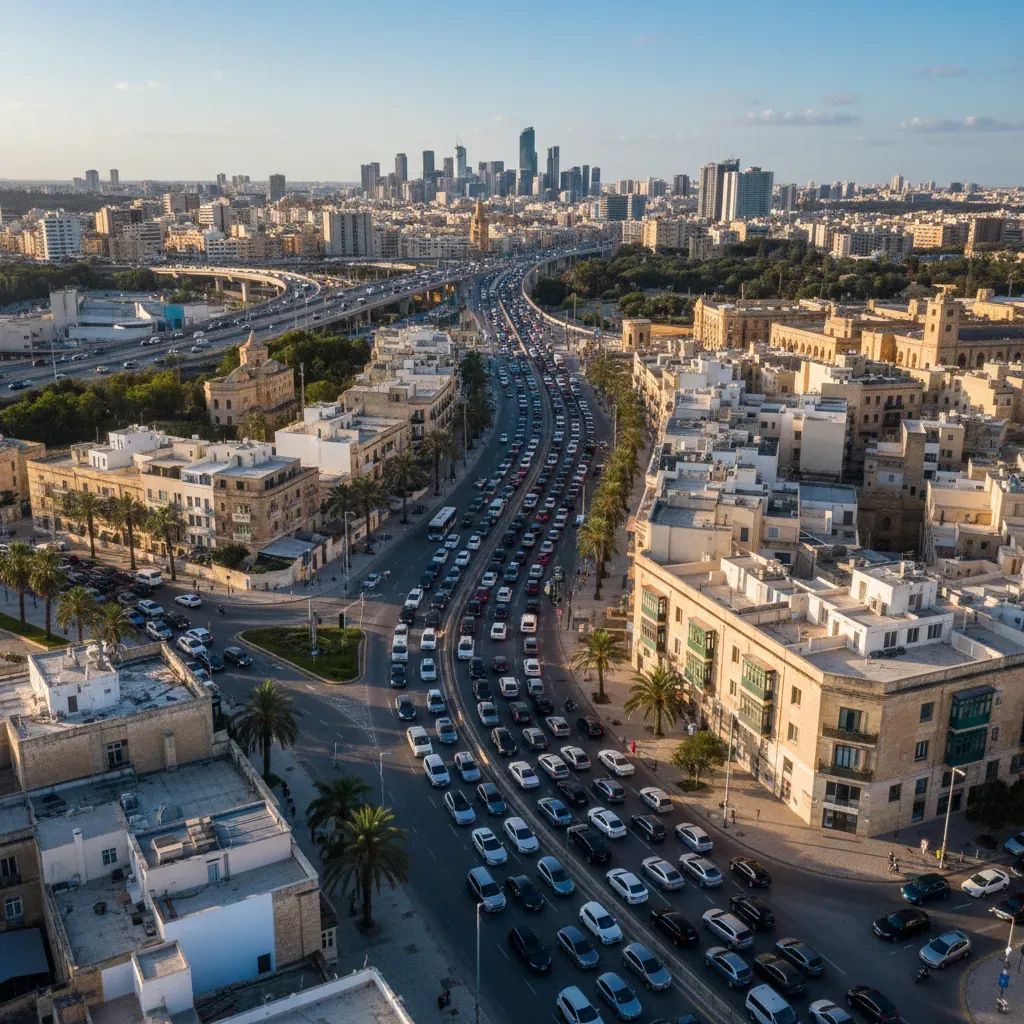
To understand why this system matters, start with the scale of the problem. Malta ranks as Europe's most congested country and second-worst globally, per the 2025 TomTom Traffic Index—a distinction that no nation wants to hold. In Valletta, the capital, drivers surrendered an average of 94 hours per year to stationary vehicles in 2025, a figure roughly equivalent to losing four complete working weeks sitting still.
The culprit isn't mysterious: 791 cars per 1,000 residents crowd the island, vastly exceeding the EU average of 560. That density matters. Unlike Portugal or Greece, which can distribute traffic across sprawling motorway networks, Malta's compact geography and constrained road infrastructure create a bottleneck effect. During morning and evening rush hours, congestion routinely hits 80% in the capital—meaning a journey that should take 10 minutes takes 18.
The economic toll compounds yearly. The €770 million Malta loses to gridlock in 2026 is forecast to balloon to €917 million by 2030. For small businesses reliant on delivery schedules, logistics firms managing fleet movements, and anyone with a commute, this isn't an abstract number. It's lost productivity, inflated shipping costs, and perpetually late arrival times.
What Transport Malta Is Actually Building
The core of the system is a centralized national traffic control hub—think of it as a digital nerve center monitoring every arterial route and residential street simultaneously. Radars, CCTV feeds, and embedded road sensors feed continuous vehicle flow data into AI algorithms trained to detect congestion patterns, predict bottlenecks, and recommend interventions.
The practical component most drivers will notice first involves adaptive traffic light clusters. Currently, most signals cycle on fixed timers, often creating absurd situations where green lights illuminate onto empty roads while backup queues build on cross-traffic. The new intelligent signals work differently. Embedded sensors detect approaching vehicles, queue lengths, and speed, then adjust green-light duration automatically. The goal is to create synchronized "green waves"—uninterrupted progressions of green signals for priority corridors like bus routes, emergency vehicle lanes, and high-density commuter paths.
Variable Message Signs stationed on strategic highways will display real-time congestion warnings and rerouting suggestions. These signs connect to the central control room via fiber and mobile networks, updating within seconds when accidents occur or roads flood. When a major incident is detected—say, a collision near the Harbour Entrance in Valletta—the system triggers automated alerts to the Malta Police Force and Malta Civil Protection while simultaneously suggesting alternate routes to drivers through navigation apps.
The TM Alert application, already available on iOS and Android, serves as the public-facing feedback loop. Users receive push notifications about incidents on habitual routes and view alternative paths with recalculated travel times. For public transport passengers, the system prioritizes buses by extending green phases when vehicles approach intersections, reducing dwell time and making schedules more reliable.
Why Residents Should Care Beyond Commute Times
The system promises tangible quality-of-life improvements that extend far beyond shaving minutes off your morning drive. Fewer stop-and-go cycles reduce fuel consumption and emissions per vehicle. Over an island-wide fleet, that's measurable progress toward air quality goals. Drivers encounter less brake wear, meaning lower maintenance costs for household budgets already squeezed by fuel and insurance.
Public transport users gain the most. Buses running on predictable schedules become attractive alternatives to private vehicles. Cyclists and pedestrians receive safety enhancements through integration with the C-SAM project, which deploys sensors to detect vulnerable road users and adjusts signal timings accordingly at crossings. Over years, the system will accumulate historical data identifying recurring congestion hotspots, allowing infrastructure planners to target interventions where they matter most—widening bottlenecks, improving junction design, or repositioning bus stops.
For businesses, the implications are direct. Delivery networks operate on time guarantees; predictable traffic means fulfilled commitments and reduced overhead. Taxi services and ride-hailing platforms benefit from optimized routing algorithms that reduce idle time and fuel waste.
How Other European Cities Achieved Similar Goals
Malta isn't innovating in isolation. Prague deployed the Yutraffic FUSION adaptive system in 2024, optimizing signal settings based on real-time conditions while prioritizing trams, buses, and emergency vehicles. The result: measurable reductions in delays and unnecessary stops across the Czech capital.
Barcelona went deeper, embedding machine learning into its Traffic Management Centre to analyze live camera feeds, sensor data, and parking occupancy simultaneously. The system predicts congestion up to 30 minutes in advance and automatically adjusts signal cycles. Barcelona reports a 12–15% reduction in energy consumption across mobility infrastructure and faster average public transport speeds.
WISP Solutions, operating across multiple European countries, demonstrated its approach during the 2024 Paris Olympics, managing seven intersections to prioritize athlete and spectator movement. The company claims operational savings of up to 69% by avoiding expensive new hardware and instead leveraging data from connected vehicles and existing infrastructure. Their clients report up to 20% faster public transport speeds.
These aren't theoretical outcomes. They're proven results from cities with similar urban challenges.
The Technical Foundation
Behind the interface sits serious infrastructure. Automatic Number Plate Recognition (ANPR) cameras embedded with incident detection capabilities allow the system to spot accidents within seconds. A comprehensive Geographic Information System (GIS) integrates traffic data with municipal planning information, enabling scenario simulation before committing to real-world decisions.
The network connecting everything—roadside sensors to the control hub to driver-facing apps—uses a hybrid of fiber-optic cables for static infrastructure and wireless mobile technology for dynamic elements like Variable Message Signs. This redundancy ensures the system remains responsive even if single connection points fail.
Transport Malta has committed to staffing the control hub with trained operators capable of overriding automated decisions when circumstances demand human judgment. The system isn't autonomous; it's augmented decision-making.
Timeline and Regulatory Standing
The AI for Traffic Management Pilot Project commenced in 2020. As of May 2026, the system has entered final validation, with Transport Minister Chris Bonett confirming that strategic capabilities will activate within months. The TM Alert app has operated since late 2024, providing early experience with real-time driver notifications.
Sensor installation continues, with the target of making all major traffic light clusters fully adaptive by year-end 2026. The control hub will also serve as the foundation for Malta's National Access Point, a centralized transport data repository designed to integrate with existing ITS platforms and accommodate future Vehicle-to-Infrastructure (V2I) communication as connected vehicles become standard.
The initiative aligns with the Malta National Transport Master Plan 2030, which emphasizes data-driven, automated infrastructure as critical to reducing congestion and improving safety. Importantly, the system is being developed to comply with the EU AI Act, which mandates that traffic management AI be safe, transparent, traceable, and equitable—protecting against algorithmic bias and ensuring regulatory accountability.
The Reality Check
No system eliminates congestion overnight, especially on an island with 791 vehicles per 1,000 residents. Malta's core problem—structural vehicle oversupply relative to road capacity—demands parallel investments in public transport, cycling infrastructure, and perhaps someday, vehicle restrictions during peak hours. The AI traffic management platform optimizes existing road capacity; it doesn't create new roads.
What it does accomplish is imposing intelligence where none currently exists. It replaces the inefficiency of fixed signal cycles with responsive algorithms. It gives drivers better information to make smarter routing decisions. It gives transit agencies tools to operate buses on predictable schedules. Over time, these incremental gains compound—saved fuel, reduced emissions, reclaimed hours previously lost to idle engines.
For anyone living and working in Malta, that shift from reactive gridlock to responsive management represents the closest thing to relief the island's transport system has experienced in a decade.