
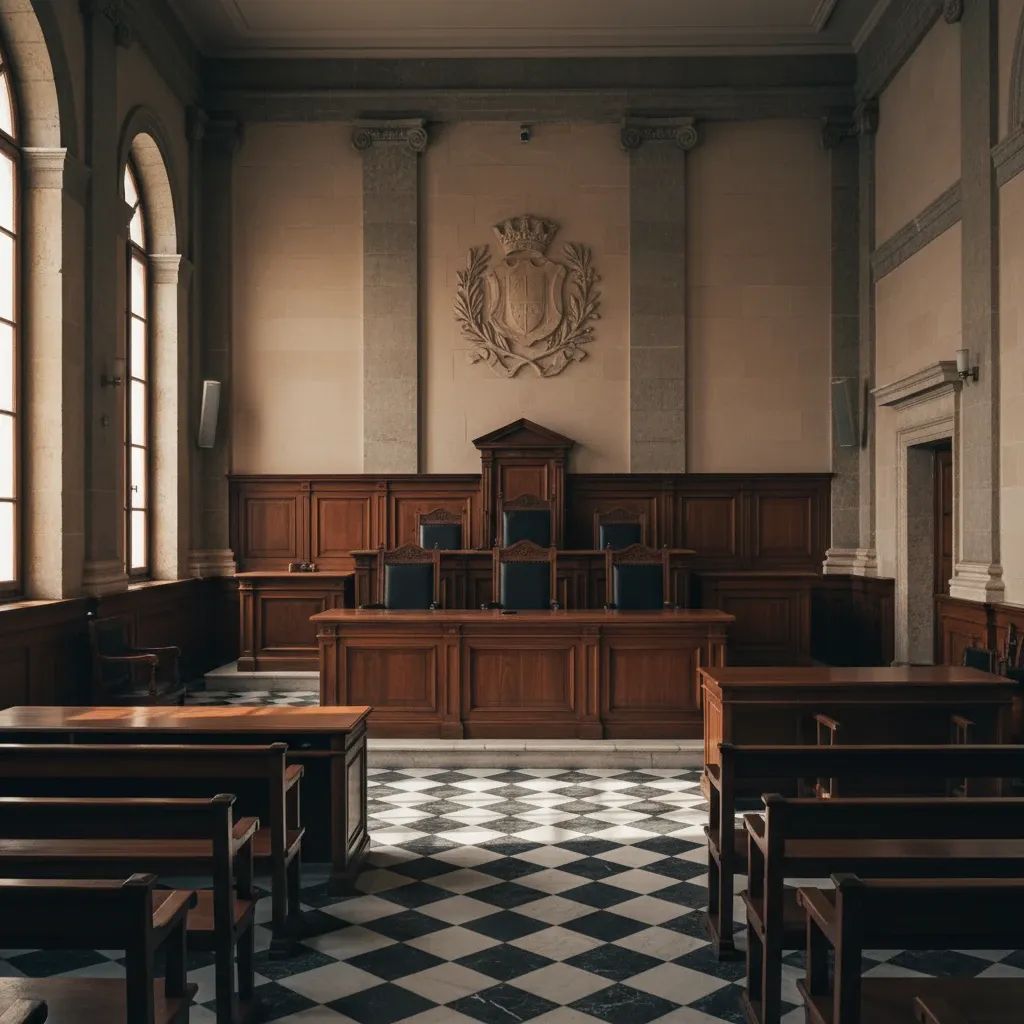
Malta's judicial apparatus has hit a critical impasse. The chief justice post remains vacant well past its constitutional retirement deadline, forcing the judiciary to function under interim arrangements that were never intended to be permanent. Adding urgency to this vacuum, political negotiations have stalled entirely—and now both parliamentary factions are considering a controversial procedural bypass that would hand the President veto power over judicial appointments, effectively converting the head of state into a political referee on matters of institutional independence.
Unlike larger EU democracies with multi-layered institutional backup systems, Malta's small governance structure means that single vacant posts create disproportionate bottlenecks. When comparable positions sit empty in larger member states, administrative capacity typically distributes across multiple departments. Here, the absence cascades directly through the system.
Why This Matters
• Constitution is being sidestepped: Judges must retire at 68 (a requirement designed to ensure regular renewal and prevent indefinite tenure); the chief justice vacancy has already exceeded that age threshold, yet political parties prefer procedural workarounds to direct amendment.
• Independence is becoming negotiable: Recent agreement between government and opposition to restrict what the standards commissioner can publish reveals that institutional autonomy now depends on partisan convenience.
• Accountability institutions are quietly weakening: Audit reports get politicized, ombudsman recommendations are shelved, and governance gaps expand—but the machinery stays intact, just neutered.
The Pattern of Paralysis
This is not Malta's first institutional deadlock. The Commissioner for Standards only took office after an emergency anti-deadlock mechanism was forced through. That precedent set the template: when political consensus fails, create a workaround rather than resolve the underlying disagreement. The current chief justice impasse follows the exact same script, except the stakes are higher and the proposed solution more troubling.
Under the new proposal, the President of Malta would gain authority to accept or reject any appointment that passes parliament by simple majority (support from over half of MPs) but fails to reach the constitutional two-thirds supermajority (support from two-thirds of all parliamentary seats). The supermajority requirement exists specifically to force broad agreement on sensitive posts, preventing narrow partisan majorities from dominating institutional appointments. Rather than build that consensus, or formally amend the constitution to lower the threshold, both parties are outsourcing the decision to a figurehead position. In practical terms, this makes the head of state a tiebreaker on constitutional posts—precisely what the framers wanted to avoid by requiring supermajority agreement in the first place.
Each procedural band-aid normalizes the next one. Each workaround weakens parliament relative to the presidency. Each compromise on institutional design chips away at the architecture of checks that ordinary governance depends on.
What a Vacant Chief Justice Actually Costs
The chief justice is far more than a ceremonial figurehead in formal robes. The post carries real administrative authority over case management, judicial scheduling, disciplinary matters, and systemic efficiency. When the role sits empty for months, the judiciary operates without permanent executive direction—a structural liability in any complex system, but especially acute in one handling contested cases that affect property rights, family law, and criminal justice.
In Malta's family courts, litigants already report waiting 18-24 months for contested divorce and custody hearings. While multiple factors contribute to delays, the absence of permanent chief justice authority means no coordinated strategy exists to reduce those backlogs or reallocate judicial resources where delays are most acute. Property disputes similarly languish—cases involving inheritance claims or boundary disagreements routinely take three to four years to resolve. Criminal cases progress more predictably due to stricter procedural timelines, but even there, the lack of coherent judicial administration creates scheduling inefficiencies.
A sitting judge swore in writing recently what the Prime Minister allegedly told him regarding the chief justice selection process. Those claims have gone unanswered publicly, lending weight to suspicions that the appointment has become a political transaction rather than a merit-based process. Yet qualified candidates exist. Malta's legal profession includes jurists with demonstrated integrity, technical expertise, and administrative capability. The blockage is manifestly political, not meritocratic.
The constitutional text is unambiguous: judiciary members cannot remain in office past age 68. Circumventing that deadline with improvised procedural solutions is not creative governance—it is a tacit acknowledgment that political leverage now routinely overrides constitutional obligation.
Watchdog Institutions That Have Lost Their Bite
Both parties are fond of citing the ombudsman (an independent office that investigates complaints about government administrative actions), the standards commissioner (who examines ethical violations and conflicts of interest among public officials), and the auditor general (who scrutinizes government spending and procurement) as evidence that Malta maintains robust institutional safeguards. The operational reality differs sharply. These offices function more like documentation centers than enforcement bodies.
The ombudsman and commissioners have repeatedly reported to parliament and the Prime Minister that recommendations on administrative violations have been ignored or left to expire without action. Just days ago, government and opposition suddenly aligned—agreeing that the standards commissioner should be forbidden from publishing decisions to reject complaints. This bipartisan consensus is not a technical refinement; it is a mutual understanding that both factions benefit from limiting uncomfortable public disclosures about their conduct.
The auditor general produces detailed, often thorough reports on spending irregularities and procurement problems. Those findings circulate briefly during parliamentary public accounts committee sessions, become political fodder, then disappear into institutional archives. Without enforceable remedies or mandatory correction timelines, audits become expensive pamphlets rather than operational constraints on executive spending.
A resident reporting maladministration to the ombudsman enters a system designed to log complaints while avoiding confrontation. A businessperson uncovering irregularities in government contracting can expect the auditor general to document the problem—and expect nothing more. An official engaging in ethical misconduct faces a standards commissioner whose findings may never reach public view. The institutions exist, the staff is competent, but the enforcement architecture is permissive by design.
The Ground-Level Impact
For someone living in Malta, institutional drift is not abstract constitutional theory—it shapes daily interactions with government and trust in the system itself. When the judiciary lacks permanent leadership, court scheduling becomes erratic and case backlogs worsen. A parent awaiting a custody determination may wait years while judicial resources remain uncoordinated. A business owner with a property claim faces similarly indefinite timelines. When audit reports are reliably shelved, government contracting becomes more prone to irregularity because consequences are unlikely. When ethical oversight is jointly agreed to be toothless, officials calculate risk differently.
The accumulated effect is corrosive. Citizens observe that institutions designed to constrain power are consistently weakened through agreement between those that power benefits. They witness procedural escapes being substituted for real accountability. They see that constitutional deadlines matter less than political accommodation.
Each month the chief justice post remains empty represents a month when the judiciary operates without full administrative authority. Each parliamentary session that passes without resolving the auditor general vacancy is a session where financial oversight is compromised. Each time both parties align to suppress an uncomfortable finding is a reinforcement that institutional independence is contingent on political convenience.
Why Political Leaders Resist Merit-Based Appointment
Malta's political ecosystem has evolved toward a system where independent appointments are treated as high-risk ventures. Rather than trust qualified candidates to execute their roles impartially, both factions conduct intricate auditions designed to identify reliable allies versus potential critics. When that calculus fails to produce mutual comfort, institutional deadlock results.
The proposed presidential veto mechanism is symptomatic of this deeper malady. Rather than reform the appointment process itself, both parties are adding another layer of procedural complexity—this time vesting final authority in a position specifically designed to be politically neutral. The irony is revealing: when ordinary politicians cannot decide, they transfer the decision to someone explicitly outside the political system. That conversion of the presidency into a tiebreaker role fundamentally alters the institutional balance.
Constitutional amendment would be the honest approach. Parties could formally lower the supermajority threshold, argue publicly for the change, and let voters weigh in. Instead, they are creating a shadow amendment through procedural expedient. The presidency expands quietly. Parliament's authority diminishes in practice if not in law. Accountability diffuses as responsibility becomes unclear.
The Recurring Cycle
This deadlock pattern has emerged multiple times now. The solutions follow a predictable sequence: emergency mechanism, temporary appointment, procedural bypass, normalization of the exceptional. No structural lesson is absorbed. No reform agenda takes root. The next vacancy simply triggers the same negotiation, the same stalemate, the same improvised escape.
The cost compounds with each iteration. The judiciary operates under permanent interim arrangements. The auditor general learns that critical findings will be absorbed into politics rather than triggering reform. The standards commissioner internalizes that controversial disclosures can be blocked through bipartisan collusion. Ordinary residents internalize that the institutions meant to check state power are only as strong as political leaders allow them to be.
For someone who lives here, this trajectory is not merely disappointing—it is destabilizing. Governance requires that people trust that power faces meaningful constraints. Each circumvented deadline, each suppressed audit, each agreed-upon institutional limitation teaches the opposite lesson. The system looks intact from the outside but operates on eroded foundations.
What You Can Do
If you are concerned about these institutional issues, several mechanisms exist. Civil society organisations tracking judicial reform and governance transparency regularly publish recommendations and can provide updates on developments. Parliamentary debates on judicial appointments are open and recorded; communicating with your elected representative about your expectations for merit-based selection can register constituent concern. For anyone experiencing specific court delays, the ombudsman's office remains a valid avenue for documenting systemic problems, even if remedies are uncertain. Independent media outlets continue investigating governance gaps—supporting quality journalism on these issues creates accountability pressure that institutions alone may not.
Political leadership that places institutional health above partisan advantage would resolve this impasse directly: identify qualified candidates, negotiate in good faith, accept outcomes that reflect genuine consensus, and respect constitutional deadlines. That demanding standard appears increasingly foreign to Malta's political culture. Until it reasserts itself, institutional vacancies will recur, procedural patches will accumulate, and the space between what Malta's constitution promises and what its institutions actually deliver will continue to widen.


