
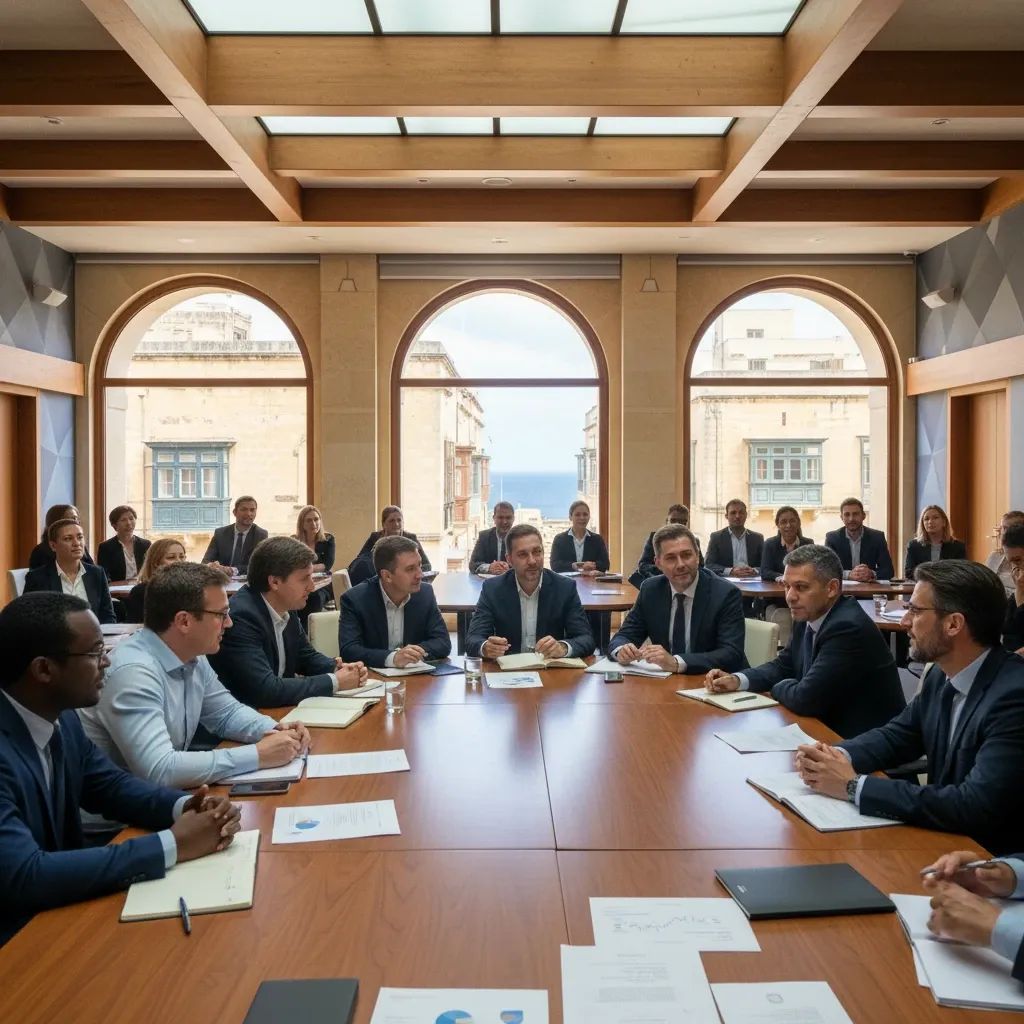
Malta's snap election campaign has entered its critical mid-point phase, with political analysts highlighting a mounting disconnect between voter expectations and the capacity of political leaders to deliver transformative change. The May 30 ballot, called nine months early by Prime Minister Robert Abela, is exposing fundamental tensions in the island's political culture as both major parties scramble to address quality-of-life concerns while navigating systemic constraints.
Why This Matters
• Labour maintains a commanding lead: Recent polling shows the incumbent party ahead by 9-12 percentage points, with approximately 36,000 undecided voters who could still shift the final margin.
• Quality-of-life issues dominate: Traffic congestion, cost of living, and overdevelopment have overtaken traditional partisan debates, forcing parties to compete on practical solutions rather than ideological differences.
• Campaign tactics raise concerns: The proliferation of AI-generated political content and identity-based attacks are reshaping how voters consume information during Malta's shortest possible campaign period.
The Numbers Tell a Clear Story
The Sagalytics survey conducted between April 30 and May 6 reveals Labour commanding 53.1% support compared to the Nationalist Party's 42.6%. Prime Minister Abela personally enjoys a 14-point advantage over Opposition leader Alex Borg in preferred prime minister rankings. Yet beneath these seemingly decisive figures lies a more complex reality: voters are demanding concrete improvements to daily life rather than simply choosing between established parties.
Political observers note that Malta's two-party system creates a paradox where citizens feel simultaneously powerful in their electoral influence yet frustrated by limited substantive choice. The 33-day campaign—the minimum allowed under electoral law—has compressed traditional debate into a rapid-fire exchange of pledges covering everything from extended maternity leave to free ferry services between Malta and Gozo.
Economic Promises Collide With Infrastructure Reality
Both major parties have centered their campaigns on putting more money in citizens' pockets, responding to persistent concerns about purchasing power and inflation. Labour's platform includes a €250 million allocation to stabilize energy and utility prices, alongside a "super bonus" for workers and tax-free income for young people entering the job market. The party has also pledged to extend maternity leave to six months and make pedestrian ferry crossings to Gozo free.
The Nationalist Party has countered with mortgage relief proposals that would cover half of home loan interest for first-time buyers during their first decade of ownership. PN leader Alex Borg positions his party as a "breath of fresh air" that will help people feel economic growth more tangibly, while maintaining the economic expansion that has characterized Malta's recent trajectory.
But the promises confront infrastructure limits that neither party has fully addressed. Traffic congestion consistently ranks among voters' top concerns, yet comprehensive solutions remain elusive. While Labour proposes a "Rapid Transit System" and new flyovers, and the Nationalist Party pledges a new mass transport system, analysts question whether Malta's limited geography and population density of over 1,600 people per square kilometer allow for transformative change without painful trade-offs.
What This Means for Residents
The campaign's focus on immediate economic relief offers tangible benefits regardless of outcome. Both parties recognize that Maltese voters prioritize practical improvements over abstract political debate. The convergence of platforms on issues like housing support, family benefits, and infrastructure investment suggests that whoever forms the next government will face immediate pressure to deliver.
However, residents should temper expectations about rapid transformation. The population growth that has fueled Malta's economic expansion—driven largely by foreign workers essential to key industries—creates infrastructure strain that even generous budgets cannot quickly resolve. Three-quarters of Maltese respondents in recent surveys indicated the government isn't doing enough to address climate change, while similar majorities express concern about overdevelopment.
The election outcome will likely determine the pace and style of addressing these challenges rather than whether they get addressed at all. Labour's stability-focused message appeals to voters wary of disruption, while the Nationalist Party's emphasis on feeling economic growth acknowledges widespread sentiment that prosperity isn't translating into quality-of-life improvements.
The Digital Campaign's Darker Side
This election marks Malta's first full embrace of AI-generated political content, which analysts have dubbed "slopaganda." Unlike sophisticated deepfakes designed to deceive, these low-quality AI images aim to mock and troll political adversaries, particularly targeting Opposition leader Alex Borg. The tactic distorts substantive debate and reduces complex policy questions to emotional reactions.
Identity politics have also surfaced in concerning ways. The candidacy of Omar Rababah, a Maltese-Syrian candidate on Labour's ticket, triggered waves of Islamophobic abuse and fearmongering online. Such responses highlight tensions around Malta's social transformation as the island absorbs foreign workers at rates that have reshaped community demographics within a decade.
The Malta Chamber has called for banning MPs from holding government jobs, reflecting broader governance concerns that persist beneath campaign rhetoric. While neither party emphasizes anti-corruption measures as prominently as economic proposals, ongoing legal proceedings—including magisterial inquiries into healthcare privatization scandals—create an undercurrent of accountability demands.
Geopolitical Context Shapes Electoral Timing
Prime Minister Abela justified the early election by citing international instability and the need for a renewed mandate to navigate global challenges. The 33-day campaign began amid escalating tensions in the Middle East, though specifics about how geopolitical events would constrain Malta's next government remain vague.
The OSCE Office for Democratic Institutions and Human Rights has deployed an Election Expert Team to observe the parliamentary vote, focusing on legal frameworks, election administration, campaign conduct, and media coverage. International monitoring of Malta's democratic processes has become standard practice following controversies in recent election cycles.
The Undecided Factor
With approximately 36,000 voters still uncommitted as of early May, the campaign's final two weeks could shift margins enough to affect government formation under Malta's single transferable vote system. While Labour appears positioned for victory, the gap has narrowed from earlier projections, and the Nationalist Party retains mathematical pathways to power if undecided voters break decisively in their favor.
Smaller parties like AD+PD and Partit Momentum are coordinating to avoid competing for the same votes in individual districts, though neither is expected to challenge the two-party duopoly that has defined Maltese politics for generations. Momentum's proposals, including a national park at Fort Chambray and a two-year moratorium on high-rise building permits, represent more dramatic departures from status quo development policies than either major party offers.
As Malta enters the campaign's final stretch, the fundamental question remains whether any party can reconcile voter demands for improved quality of life with the economic model and population growth that have delivered prosperity but strained infrastructure. The May 30 result will reveal which message resonates more powerfully: Labour's promise of stable continuity or the Nationalist Party's pitch for tangible change within familiar frameworks.


