
The Malta government faces mounting scrutiny over a pattern of scaling back healthcare and infrastructure ambitions—commitments that have been reformulated rather than fulfilled, with completion dates extended years beyond original timelines.
Why This Matters
• Mental health services crunch: The promised standalone mental health hospital has become a 128-bed acute psychiatric unit within Mater Dei, now projected operational between late 2027 and mid-2028—at minimum, five years later than originally pledged.
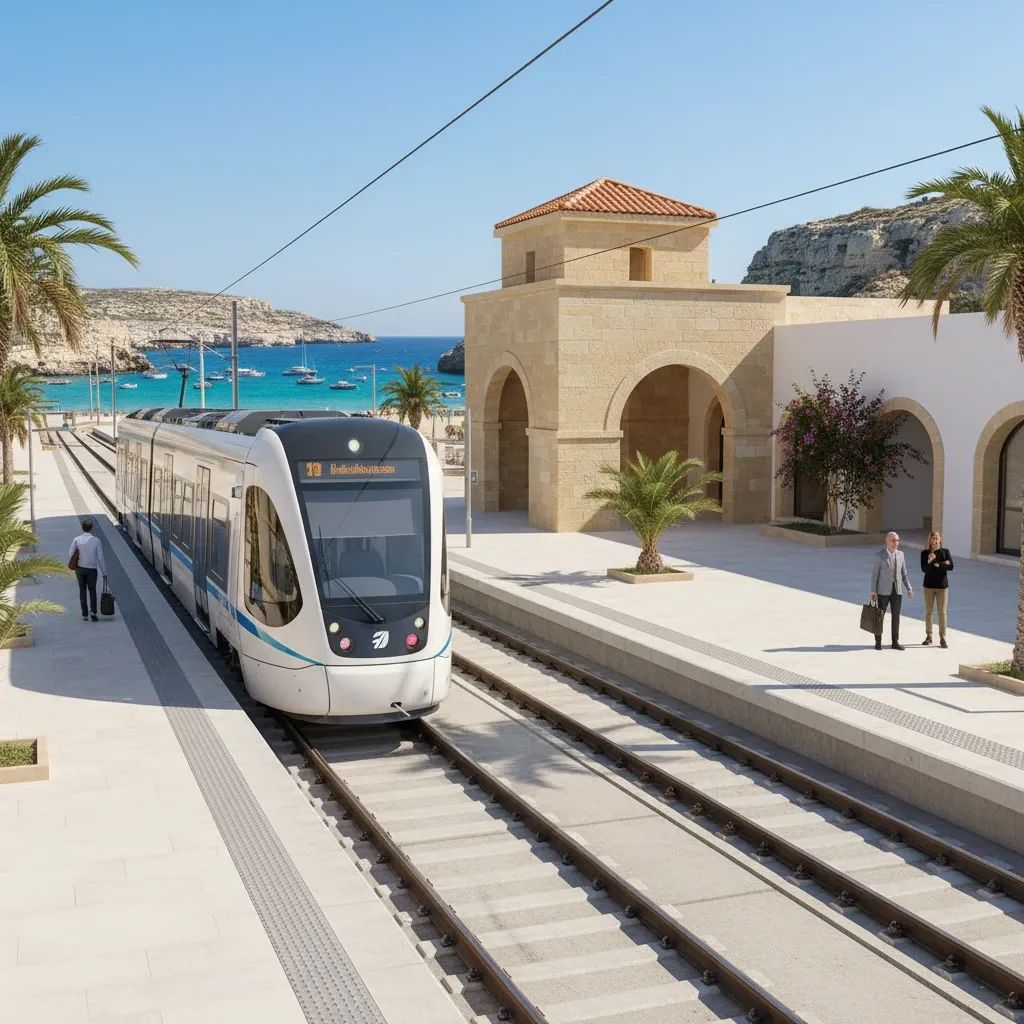
• Transport rebranding: The €6.2 billion metro from 2021 is now the €2.8 billion La Valette Light Rail, with construction starting 2031 and operations beginning 2036—pushing relief for current commuters well beyond the incoming government term.
• Healthcare infrastructure stretched: The €1.5 billion national masterplan spans 15 years across three hospitals; while the Gozo hospital helipad is operational by Q3 2026, the full first-phase hospital campus won't open until 2031, leaving current patients waiting years for promised services.
Mental Health Hospital Becomes Ward Within Mater Dei
Labour's original pledge—a standalone psychiatric hospital adjacent to Mater Dei Hospital—was specific and frequently repeated across three election cycles. Four health ministers have served since 2013. No dedicated facility materialized.
Instead, what exists now is a 128-bed psychiatric unit housed within Mater Dei's expanded Emergency Department complex. This represents a significant change: psychiatric services remain part of general hospital infrastructure rather than the specialized standalone campus originally envisioned. The government presents this as acceleration—tender results arrived spring 2026, construction targeting late 2026 or early 2027 startup, with operations between late 2027 and mid-2028.
What this means for residents now: Mater Dei's psychiatric wing closed during COVID-19 and only recently reopened to accept acute patients from the aging Mount Carmel Hospital, which currently bears the primary caseload for psychiatric emergencies. For families navigating mental health crises, the current shortage of acute beds is immediate. Patients are waiting longer for assessment and treatment. Relief won't come for years.
Gozo Hospital: Progress and Long Waits
The Gozo General Hospital regeneration shows tangible forward momentum. A comprehensive Healthcare Campus Masterplan is finalized. Geological surveys are complete. A new helipad is under construction and expected operational by Q3 2026—the first visible infrastructure completion from a healthcare pledge made repeatedly since 2013. The first phase of hospital regeneration is underway with a projected five-year completion window.
What this means for residents now: The entire €1.5 billion national healthcare masterplan—encompassing Gozo General Hospital, St Luke's in Msida, and Boffa in Floriana—unfolds across 15 years. The helipad represents emergency air transport capacity, not the comprehensive hospital campus Gozitans have been promised. For Gozitan families whose relatives require oncology or cardiac services now, confirmed acceleration still translates into a wait measured in years.
Transport: Metro Becomes Light Rail
The transformation of the €6.2 billion underground metro (2021) into the €2.8 billion La Valette Light Rail (2026) shows how infrastructure ambitions shift when fiscal constraints become undeniable. The new system is materially different—24 kilometers, hybrid underground-surface-elevated routing, faster deployment potential, reduced environmental disruption, lower cost.
However, the government has not clearly explained why the metro proved infeasible. For residents, this silence reads as tacit acknowledgment that the original promise was never viable.
What this means for residents now: Construction timelines underscore the scale of deferral. Technical studies conclude end of 2027. Construction of the first phase (airport to Valletta) begins 2031 and opens 2036. The entire line reaches completion by 2041. For commuters experiencing congestion now, relief will not arrive for 10 years. The government's broader "Malta in Motion" strategy adds bus network redesign (post-2029 when the current contract expires), sea ferry expansion, and cycling infrastructure—all valuable, but none addressing current congestion urgently.
Other Urban Projects: Stalled and Aging
Floriana's St Anne Street was promised as a pedestrianized public garden—a flagship project of the 2013–2022 cycle. The street remains open to traffic. Congestion has intensified rather than eased. Neither government nor opposition has explained the stall publicly.
The Santa Venera tunnels roofing project—announced years ago with plans for a garden atop—has never progressed beyond press releases. No technical studies have been commissioned. The Qbajjar battery restoration in Gozo, a cultural heritage commitment, suffered partial collapse earlier this year with no accompanying restoration timeline announced.
Gozo-specific unfulfilled pledges accumulate: the Marsalforn breakwater, an innovation hub for start-ups (built but reportedly hosting primarily government offices), the goal of making Gozo the first climate-neutral area of Malta, an MCAST campus extension, and a new court building.
Roads: Investment Without Systemic Improvement
The 2017 manifesto commitment to prioritize infrastructural development nationwide targeted comprehensive road rehabilitation. Millions have been spent. Commuters report worsening congestion, particularly around Valletta, the airport, and suburban corridors during peak periods. Road spending without parallel transit alternatives tends to encourage more driving rather than reduce congestion—a phenomenon transport economists call "induced travel demand."
The Electoral Choice
For households evaluating their voting choice, the core issue is pattern recognition. Three election cycles show government commitments reformulated rather than fulfilled, with completion dates extended years beyond original timelines.
The Labour government claims 82% manifesto completion for its 2022 agenda. These figures measure progress on individual milestones rather than actual project finalization. A hospital 40% through design counts as "in progress" regardless of opening date. The distinction shapes how voters interpret government effectiveness claims.
The 2026 manifesto itself—263 pages with over 1,000 points across 24 chapters—represents policy ambition rivaling its 2022 predecessor. New proposals include a €1,000 annual tax-free super bonus for workers, six months maternity leave, a "My First Home" scheme subsidizing mortgage interest up to €75,000 for couples, and €5,000 per newborn. Transport investment alone carries an €829 million five-year budget.
Yet the Malta Chamber of Commerce flagged both major parties' manifestos as potentially "reckless" in promising scope relative to fiscal sustainability. This captures a broader concern: when parties promise extensively and deliver partially, voter trust in democratic process itself erodes.
What Voters Face
For Gozitan families, healthcare and infrastructure delays carry direct quality-of-life implications. For working households, the timing of wage bonuses and housing support affects immediate budgeting. For commuters, the 15-year transport redesign represents acceptance of current congestion as baseline reality for years ahead.
The election debate will sharpen around whether the government's track record of reshaping rather than finishing projects justifies renewal, or whether voters should demand completion of prior commitments before endorsing new ambitions. Broader context—geopolitical instability, economic headwinds affecting household disposable income, climate pressures accelerating infrastructure urgency—compounds the stakes. Voters are weighing whether continuity offers stability or simply extends unfinished business into another term.


