
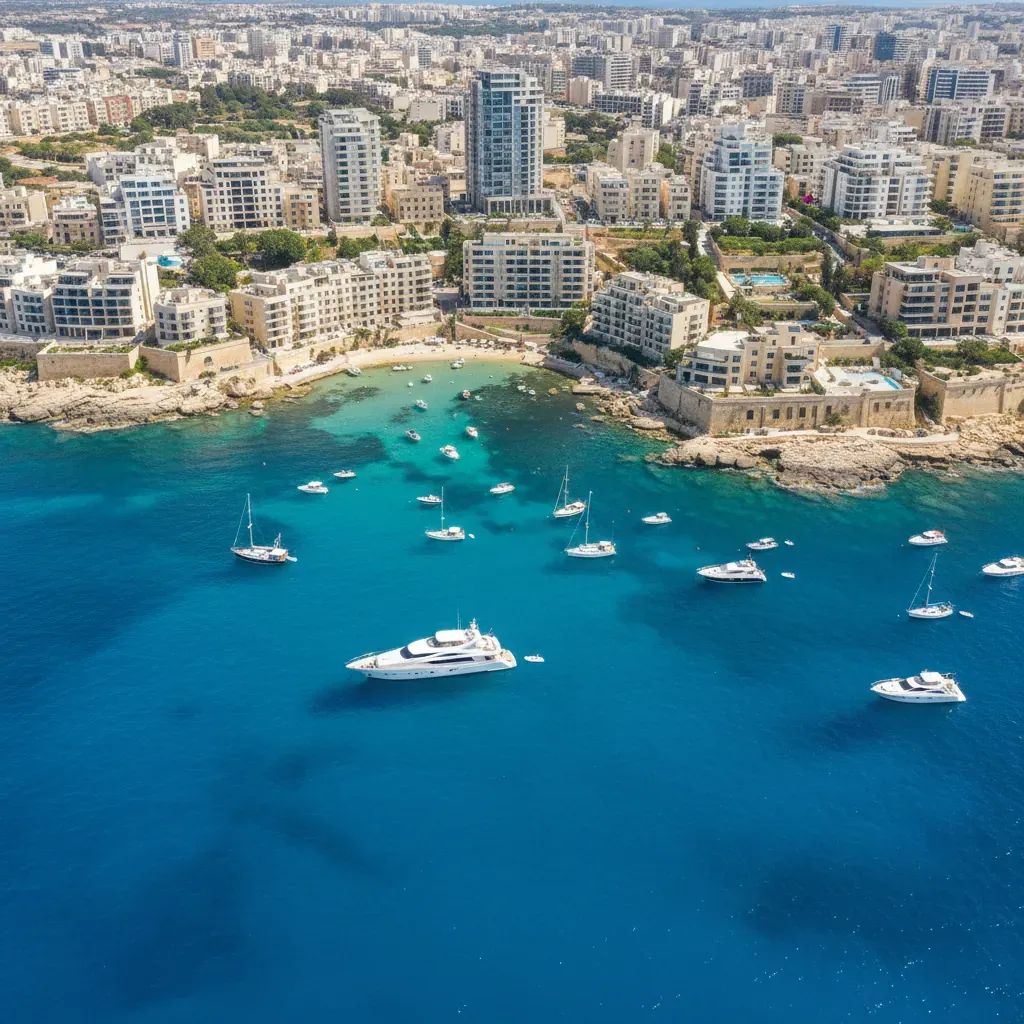
The Malta Planning Authority is fast-tracking a contentious proposal to reclaim seabed and build a sprawling commercial lido opposite Manoel Island, triggering alarm from environmental groups, local councils, and residents who warn the project could set a precedent for further privatization of Malta's dwindling public coastline.
Why This Matters
• Public seabed at risk: Development application PA03174/26 seeks to transform public waters into a commercial facility with pools, restaurants, and sun decks.
• Government entanglement: The Maltese government holds shares in LAMHCO, one of three companies behind the proposal, raising conflict-of-interest concerns.
• Environmental damage already underway: Early works have reportedly harmed protected Mediterranean coral colonies (Cladocora caespitosa), an endangered species.
• Objections open May 20: Residents have a limited window to formally challenge the application after its publication in the Government Gazette.
How to Object
• When: Objections open on May 20 following Government Gazette publication
• Deadline: 30 days from Government Gazette publication
• How: Via Planning Authority online portal or by registered mail
• What to include: Specific environmental, visual, and traffic concerns related to the proposal
What This Means for Residents
Anyone who lives in or frequents Sliema or Gżira will encounter a transformed waterfront if this proposal clears regulatory review. The project would replace open sea views with a commercial facility, likely increasing foot and vehicle traffic along an already congested urban corridor. For daily commuters, the added strain on parking and road access could extend travel times. For families who use the promenade for jogging, cycling, or seaside strolls, the loss of visual openness toward Manoel Island—designated to become a national park—means a more enclosed, commercialized experience.
Beyond convenience, the financial model matters. The lido would operate as a paid-entry venue, effectively gating access to a stretch of coast that currently belongs to everyone. Investors behind the plan argue the facility will serve hotel guests who lack dedicated beach clubs, but critics counter that Malta already features multiple private lidos and that sacrificing public seabed for another one crosses a significant threshold.
The Planning Authority is processing the file at an accelerated pace, and public objections officially open on May 20. If you wish to submit a formal objection, you must do so within the statutory window—typically 30 days from gazette publication—via the PA's online portal or by registered mail.
The Players Behind the Plan
Three entities jointly filed the application in April 2026: Strand Lido Ltd, LAMHCO (Libyan Arab Maltese Holding Company), and Sea Pebbles Ltd. The Maltese government's shareholding in LAMHCO immediately politicized the dossier, because a state-backed entity is effectively seeking to monetize public maritime domain.
Key individuals include Daniel Farrugia, partner of Labour MP Rosianne Cutajar, and his father Lino Farrugia, who are associated with The Londoner Hotel. The Casha family, known for the Pebbles Resort group and MedAsia Playa, also holds stakes in the consortium. This concentration of hospitality interests underscores the commercial rationale: hotel operators want captive leisure infrastructure for guests, and they are willing to reclaim seabed to build it.
Political connections have fueled public cynicism. Sliema Mayor John Pillow and Gżira Mayor Neville Chetcuti both issued statements condemning the proposal, with Chetcuti emphasizing that "the coastline belongs to the public and should not be sacrificed for commercial expansion." Momentum, a political party, accused the consortium of seeking "private commercial profit" at the expense of communal access.
Environmental Red Flags
Flimkien għal Ambjent Aħjar (FAA) and Moviment Graffitti published a joint statement describing the project as raising significant environmental concerns, citing damage to marine ecosystems. Site assessments confirmed the presence of Cladocora caespitosa, a slow-growing stony coral listed as endangered under European and Maltese law. The Environment Resources Authority attempted to translocate colonies to safer habitat, but those transplants are reportedly "declining," a technical term indicating the coral is struggling.
Silt from early construction activity has already spread across the inner creek, affecting both coral and Posidonia seagrass meadows, which serve as nurseries for commercial fish species. Marine biologists warn that even if formal permits are eventually denied, the damage may prove long-term because coral regrowth in the Mediterranean occurs over decades, not years.
Beyond the seabed, the development would obstruct sightlines toward Manoel Island and Valletta's UNESCO World Heritage fortifications, potentially violating guidelines for the proposed Valletta buffer zone. Air-quality advocates note that additional vehicular traffic—delivery trucks, taxis ferrying hotel guests—will worsen nitrogen dioxide concentrations in a neighborhood already exceeding EU ambient-air standards.
Precedent That Shapes the Debate
Critics point to a nearby lido, also built on reclaimed land, that received Planning Authority approval despite widespread objections. That facility later added unauthorized structures, which were subsequently sanctioned by the PA rather than demolished—a sequence that environmental groups view as problematic. The concern is that even if the new proposal faces formal rejection, construction may proceed under temporary permits, with regularization granted retroactively once political pressure mounts.
This pattern has eroded confidence in the planning system and explains why Moviment Graffitti and others are demanding not just objections but a moratorium on all seabed-reclamation applications until Malta adopts a comprehensive coastal master plan.
Alternative Visions Gaining Traction
While no rival master plan has been formally tabled for Sliema-Gżira, several initiatives point toward a public-centric model. The JUSTNature project in Gżira focuses on green roofs, cycle lanes, and vegetation corridors designed to lower the urban heat-island effect. Project Green, a national program managed by Malta's environmental projects agency, will launch 22 initiatives across 1.3 million m² of open space in 2025, prioritizing pedestrian zones and native planting over hard infrastructure.
A separate €10 million rehabilitation of the historic Gżira pumping station will transform its garden into a new public plaza, demonstrating that heritage-led regeneration can coexist with tourism without sacrificing communal assets. Advocates argue that waterfront policy should follow this template—celebrating Malta's maritime identity through accessible promenades and green corridors rather than gated commercial enclaves.
Regional Context: Mediterranean Lessons
Large-scale lido projects elsewhere in the Mediterranean offer instructive examples. Barcelona's waterfront transformation in the 1990s successfully integrated public beaches with urban renewal, but later phases triggered gentrification and displacement. In Venice, engineering works tied to the MoSE flood-barrier system disrupted sediment flow to the Lido di Venezia, accelerating beach erosion and requiring costly nourishment campaigns.
Across the Euro-Mediterranean basin, over 40% of beaches face erosion, driven by non-compliant coastal urbanization, port construction, and reduced riverine sediment supply. Malta, with limited sandy coastline to begin with, faces significant risks from further public seabed development without comprehensive coastal planning.
What Happens Next
The Planning Authority will schedule a public hearing once the objection period closes. Environmental NGOs plan to submit detailed technical rebuttals, marine surveys, and legal opinions challenging the project's compliance with EU Habitats Directive obligations. Local councils will likely table resolutions opposing the application, though such votes carry advisory weight only.
If the PA greenlights the proposal, opponents can appeal to the Environment and Planning Review Tribunal, a process that typically takes 12 to 18 months. In the interim, developers may seek enabling works permits—for site clearance, dredging, or temporary structures—that allow construction to begin before final adjudication, replicating dynamics seen in earlier cases.
For residents, the immediate action is straightforward: file an objection by the statutory deadline on or before the 30-day closure date, citing specific environmental, visual, and traffic concerns. Mass participation in public hearings can also influence the process, especially when local business associations and civic groups present coordinated positions.
Ultimately, the lido proposal tests whether Malta will maintain the principle that its coastline is a public trust or move toward a model in which seabed is treated as a commodity available to investors with the right connections. The outcome will shape not only Sliema and Gżira but every stretch of shoreline still free from commercial development.


