
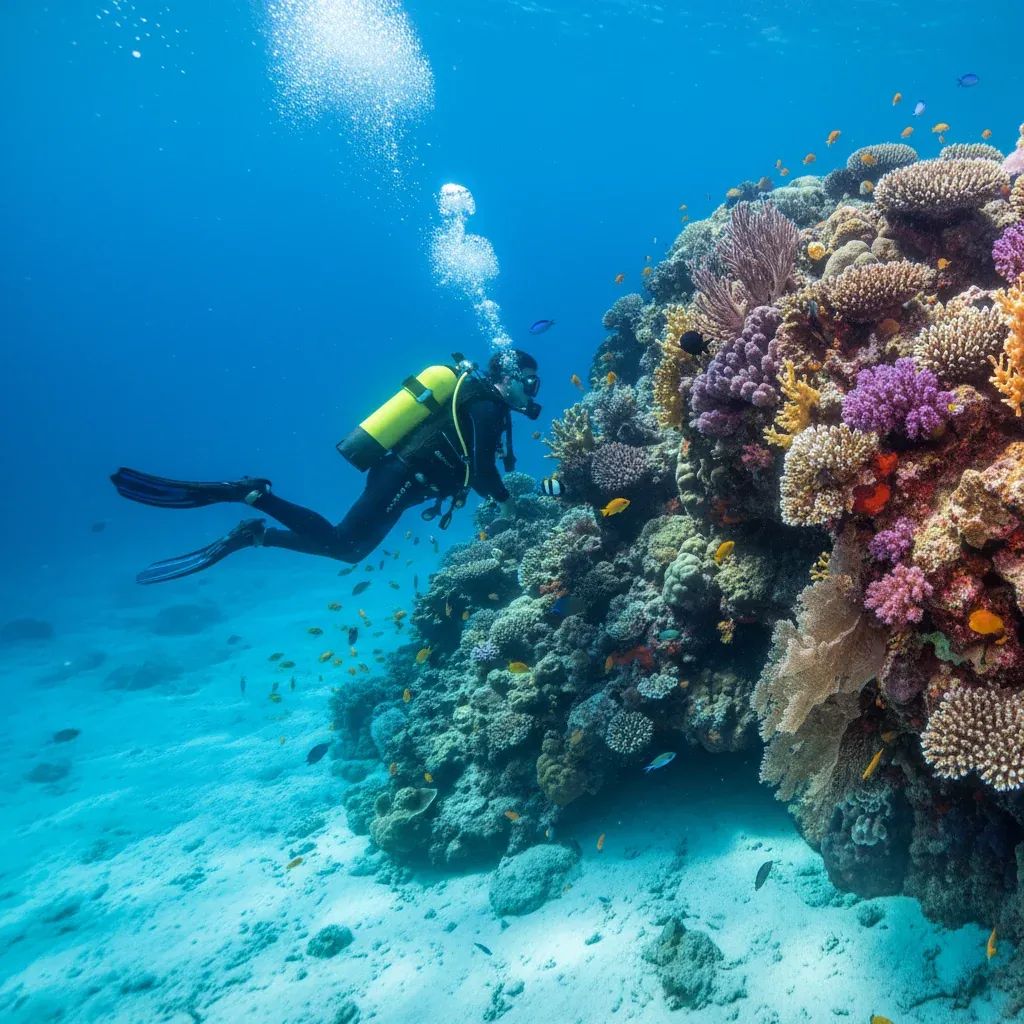
The Malta Tourism Authority has successfully positioned diving as a cornerstone of its long-term economic strategy, with Gozo emerging as the quieter, higher-value alternative to the mainland's crowded coasts. Yet sustaining this momentum faces significant obstacles that will require more than marketing—it demands regulatory discipline, infrastructure upgrades, and a willingness to protect the marine assets that divers travel thousands of miles to see.
Over 2.3 million tourists visited Gozo in 2025, marking a 13.3% year-on-year increase, and diving remains one of the island's most powerful magnets for foreign spending. This growth trajectory, however, has exposed critical gaps in site management, environmental protection, and coordinated governance.
Why This Matters
• Economic weight: An estimated 18–20% of foreign visitors cite diving as their primary reason for choosing Gozo, contributing significantly to the island's tourism-dependent economy, which accounts for 50% of Gozo's GDP. For Malta residents, this translates to employment opportunities, local business growth, and potential pressure on coastal municipalities and marine resources.
• New safety infrastructure: A €1.2 million hyperbaric unit is planned to open at Gozo General Hospital in March 2026, funded through eco-contributions—fees collected from tourists to finance environmental and infrastructure projects. This facility reinforces the island's reputation as a safe technical diving hub and demonstrates how visitor spending can directly fund local medical and safety services.
• Year-round potential: Shoulder-season growth is outpacing summer peaks, offering dive operators more predictable revenue streams and reducing strain on sites during high tourist months. This diversification provides more stable employment for tourism workers and local service providers throughout the year.
• Regulatory clarity: The Malta Tourism Authority enforces strict licensing standards under LN 359 of 2012, but stakeholders report persistent gaps in site management and inter-agency coordination that undermine both safety and environmental protection.
Gozo's Diving Economy in Context
Compared to other Mediterranean destinations, Gozo punches above its weight. At the national level, Malta's diving sector generates over 20% of annual tourism revenue, a figure that reflects both mainland and Gozitan operations. Croatia, by contrast, is seeing 15–20% annual growth in dive arrivals, with nautical tourism—including diving—contributing to a broader sector that accounts for over 20% of Croatia's GDP. Greece has committed €6.2 million to developing underwater parks and extending its dive season, signaling recognition of the sector's economic firepower.
What sets Gozo apart is concentration. With 18 licensed dive centers and 55 dive sites—most accessible from land—the island offers a density of quality spots that larger coastlines struggle to match. Divers visiting the Maltese archipelago stay an average of 9 nights, well above the Mediterranean tourist norm, and their spending per capita tends to be higher than that of sun-and-beach visitors. The island's reputation for technical and deep diving, reinforced by globally recognized sites like the Blue Hole and wrecks such as the MV Karwela and Hephaestus, attracts a clientele willing to pay premium rates for guided experiences and extended courses.
The planned hyperbaric chamber represents strategic investment in safety infrastructure. Funded entirely by tourist eco-contributions—fees embedded in visitor levies and dive center operations—the facility signals to international tour operators and insurance providers that Gozo takes risk management seriously. For Malta residents in healthcare and public services, this investment expands emergency medical capabilities that serve both tourists and locals.
Regulatory Framework and Enforcement Gaps
Diving in Gozo operates under The Recreational Diving Service Provider Regulations LN 359 of 2012, enforced by the Malta Tourism Authority. The rules are comprehensive: all dive centers must hold MTA licenses, instructors and dive leaders require annual medical clearances from hyperbaric specialists, and divers over 60 years old must present fresh fitness certificates. Independent diving is restricted to those certified to 30 meters depth, a standard that aligns with international norms but requires consistent enforcement.
Spear fishing with SCUBA gear is banned outright, and designated Marine Conservation Areas prohibit any fishing activity. The Cultural Heritage Act and the Underwater Cultural Heritage Unit govern access to wreck sites, with Transport Malta issuing regular updates—most recently Notice 025 of 2026 in February—on safe distances and archaeological zones.
Yet stakeholders consistently report that on-the-ground enforcement lags behind the regulatory framework. In practice, this means many dive sites lack basic amenities: proper kitting-up areas, signage, emergency access points, and bathroom facilities. Unlike Cirkewwa on the mainland, which benefits from a managed marine reserve and coordinated infrastructure, Gozo's sites often operate without centralized oversight. Divers occasionally encounter plastic debris, and sewage outflow remains a documented problem at certain locations—particularly near populated stretches on Gozo's eastern coastline. The Gozo Tourism Association has called for the establishment and active enforcement of marine reserves around the Gozitan coast, citing the positive impact of the Cirkewwa reserve on fish populations and underwater biodiversity.
The absence of a single, well-managed showcase site in Gozo is a missed opportunity. Such a site—perhaps on the northeastern coast near Xatt l-Aħmar or the western cliffs—could serve as a model for sustainable dive tourism, demonstrating how coordinated efforts between the Malta Tourism Authority, Transport Malta, and local operators can deliver both economic returns and environmental protection. For residents concerned with sustainable development and coastal preservation, this represents a critical policy gap.
Strategic Scuttling and Artificial Reefs
One of the more successful interventions has been the deliberate scuttling of decommissioned vessels to create artificial reefs. The MV Xlendi, MV Karwela, MV Cominoland, and the tanker Hephaestus now rest at Xatt l-Aħmar, on Gozo's northeastern coast, attracting divers and relieving pressure on sensitive natural sites. These wrecks serve dual purposes: they offer compelling underwater attractions for recreational and technical divers, and they act as biodiversity hubs, with marine life gradually colonizing the structures.
The wreck strategy aligns with broader conservation goals. By concentrating diver traffic at a handful of robust, man-made sites, authorities can better manage access to fragile reefs and caves. The Underwater Cultural Heritage Unit maintains strict permitting protocols for archaeological wrecks, balancing public access with preservation mandates. Transport Malta's updated notices ensure that dive operators maintain safe distances and respect exclusion zones, reducing the risk of accidental damage.
What This Means for Residents and Operators
For Gozitan dive operators and the broader community, the current landscape is a mix of opportunity and friction. The Gozo Tourism Association's summer 2025 survey found that 48% of tourism operators, including dive centers, reported improved business performance compared to 2024. The foreign market was the key driver, with 65.4% of respondents noting a positive impact from international visitors. Over 192,000 foreign overnight visitors arrived in Gozo in 2025, a 7% increase year-on-year, and improved ferry connectivity—over 46,000 crossings in 2025, up by 1,700 from the prior year—has made access easier.
For residents, this growth creates both opportunities and pressures. Employment in hospitality, retail, and transport sectors expands, while property values in coastal areas have risen significantly. However, rising operational costs and labor shortages remain persistent headaches for dive center owners and tourism businesses. Infrastructure strain—particularly roads, water supply, and waste management—becomes more acute in a tourism-dependent island.
The global trend toward eco-conscious and sustainable travel plays to Gozo's strengths, but only if the island can credibly deliver on environmental promises. Overdevelopment, primarily residential construction, threatens the island's character and the natural appeal that draws divers in the first place. If Gozo's coastline becomes indistinguishable from the mainland's urbanized stretches, its premium positioning erodes—along with the economic benefits residents have come to expect.
The Envision 2050 strategy, which prioritizes quality over quantity and aims for higher expenditure per capita, offers a policy framework that should favor dive tourism. But translating strategy into action requires inter-agency coordination that stakeholders say is often lacking. Clean-up initiatives led by dive centers and community groups are valuable, but they are not substitutes for systemic infrastructure investment and proactive marine protection.
The Challenge of Year-Round Viability
Gozo's push to become a year-round destination is yielding measurable results. Significant growth in winter and shoulder months in 2025 diversified revenue streams for dive operators, reducing dependence on the compressed summer season. Diving's inherent year-round practicability—Mediterranean water temperatures remain diveable throughout the year—positions it as a natural fit for this strategy.
However, competition is intensifying. The Red Sea remains a formidable rival, offering warmer waters, higher visibility, and often lower costs. Croatia's rapid growth and Greece's infrastructure investments signal that other Mediterranean nations are not standing still. For Gozo to maintain its edge, it must leverage its unique selling points: compact geography, diverse dive sites within short distances, a mature regulatory framework, and a state-of-the-art hyperbaric facility in the pipeline.
The question is whether the island can address the persistent gaps—site amenities, marine protection enforcement, and coordinated governance—before frustrated operators and discerning divers look elsewhere. The planned €1.2 million hyperbaric unit demonstrates that targeted investment can move the needle. The challenge now is replicating that success across the broader infrastructure and regulatory landscape, ensuring that Gozo's underwater assets remain as compelling in 2030 as they are today—and that the economic and employment benefits reach residents who depend on a healthy, sustainably managed tourism sector.


