
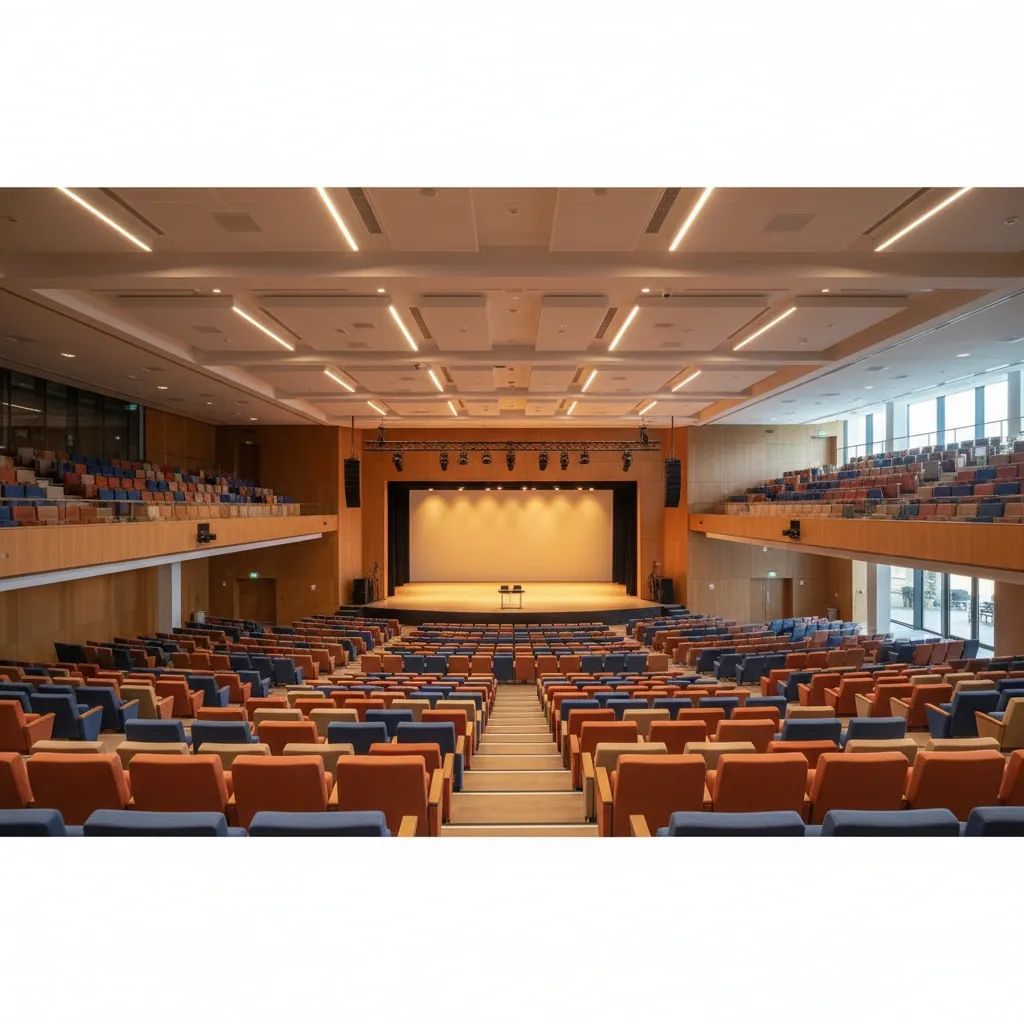
The Malta government has pushed back sharply against industry proposals to build a major convention centre in Pembroke, citing space constraints and infrastructure pressures that make the coastal site impractical for a facility of the scale Malta needs to compete regionally.
The rebuke follows a recent opinion piece that championed Pembroke as the natural home for a high-end MICE venue (Meetings, Incentives, Conferences, Exhibitions), pointing to its seafront appeal and proximity to the hotel belt stretching from St Julian's to Sliema. Yet both the Office of the Prime Minister and the Pembroke mayor have made clear that the location is unsuitable, signaling that Ta' Qali—not Pembroke—is the frontrunner for Malta's next flagship convention project.
Why This Matters
• Regional competitiveness: Malta is actively pursuing a large-scale convention centre to strengthen its position in the Mediterranean MICE market, a sector forecast to grow at 12.8% annually through 2025.
• Site selection: The Malta Fairs and Conventions Centre (MFCC) in Ta' Qali is now the preferred candidate for expansion, with private stakeholders already in discussions with government.
• Pembroke friction: Local officials warn that a convention centre would place undue strain on a locality already grappling with multiple large developments and limited open space.
The Government's Case Against Pembroke
According to sources within the Prime Minister's office, the Pembroke site lacks the physical footprint required for a modern, multi-purpose convention venue capable of hosting 10,000-plus delegates. Malta's existing largest facility—the MFCC in Ta' Qali—spans 7,000 m² in the main hall alone and can accommodate up to 22,000 standing guests. Any new or expanded centre would need comparable or greater scale to justify the investment.
The Pembroke mayor echoed these concerns, emphasizing that the locality is already under pressure from concurrent projects, including the DB Group's City Centre development at the former Institute for Tourism Studies (ITS) site. That mixed-use complex—comprising the Hard Rock Hotel Malta, Ora Residences, and a shopping mall—is slated to open imminently, adding a fresh layer of traffic, commercial activity, and visitor flow to the area.
Local residents and advocacy groups have also raised alarm about environmental risks. A portion of land under consideration in Pembroke falls within a Natura 2000 site, the EU's protected biodiversity network. Critics warn that construction would threaten habitat integrity, increase light and noise pollution, and erode Malta's already scarce open spaces. The White Rocks complex, once floated as a potential site, has since been earmarked as a national park, effectively removing it from the convention centre shortlist.
Industry Voices Push for Seafront Appeal
Despite official resistance, some industry experts continue to advocate for Pembroke, citing its sea-facing setting and efficient connectivity to the northeastern hotel corridor. One suggestion centers on the Institute for Education campus on Martin Luther King Road, a government-owned site that could theoretically link to a proposed national park, creating a dual-use space for both residents and international visitors.
Proponents argue that a convention centre in Pembroke would offer delegates an experience fundamentally different from the inland Ta' Qali site, which, while spacious, lacks the coastal views and urban proximity that many event organizers prize. Malta's tourism infrastructure is heavily concentrated along the northern coast, and a Pembroke venue would place delegates within walking distance of restaurants, nightlife, and waterfront amenities—key selling points in the competitive MICE market.
Yet these arguments have failed to sway policymakers, who appear focused on expanding existing infrastructure rather than greenfield development. The MFCC is currently leased to the Corinthia Group, which has a proven track record managing large-scale events and exhibitions. Government sources indicate that redevelopment and expansion of the Ta' Qali facility would be both faster and more cost-effective than building from scratch in Pembroke.
What This Means for Malta's MICE Ambitions
Malta's convention and events sector is a designated priority niche in the government's 2026 strategic investment framework. The industry has posted uninterrupted year-on-year growth since 2010, driven by Malta's strategic location at the crossroads of Europe and North Africa, its English-speaking workforce, and a mature network of Destination Management Companies (DMCs).
Currently, Malta can compete regionally with at least five major convention venues, including the MFCC, the Mediterranean Conference Centre (MCC) in Valletta, the InterContinental Arena Conference Centre in St Julian's, and facilities at the Hilton Malta and Eden Arena. Together, these venues offer capacity ranging from 900 to 22,000 guests, supported by more than 3,900 rooms across 19 five-star hotels and over 60 four-star properties.
However, the Prime Minister has emphasized that Malta lacks a single purpose-built venue capable of hosting the largest international conferences and trade shows—events that can generate millions in direct spending and position the island as a tier-one MICE destination. The MFCC expansion in Ta' Qali is seen as the most viable path to closing that gap, particularly given the site's existing infrastructure, parking, and modular flexibility.
Malta was nominated for Europe's Best MICE Destination at the World MICE Awards 2025, a recognition that underscores both the country's progress and the intensity of regional competition. Without a flagship venue, industry insiders warn, Malta risks ceding ground to rivals in Cyprus, Portugal, and the Adriatic.
Impact on Pembroke Residents
For those living in Pembroke, the government's decision to sideline the area as a convention site may come as a relief. The locality is already contending with the DB Group's City Centre project, a contentious Valletta FC football campus proposal on land currently zoned for offices and residences, and ongoing traffic congestion on key arterial roads.
The football campus plan has drawn fierce opposition from residents and environmental groups, who argue it would consume scarce open space, increase noise and light pollution, and encroach on the Natura 2000 site. A large convention centre would have compounded these pressures, adding thousands of visitors per week and requiring significant upgrades to parking, public transport, and road networks.
The Pembroke mayor's stance suggests that local government is prioritizing quality of life and environmental protection over high-density commercial development—a shift that may signal broader tensions between Malta's economic ambitions and the limits of its physical and ecological capacity.
Ta' Qali Emerges as Frontrunner
With Pembroke effectively ruled out, attention has turned to Ta' Qali, where the MFCC already occupies a central position in Malta's events calendar. The site's inland location offers advantages in terms of space, accessibility via major highways, and separation from residential zones. Expansion plans under discussion with private stakeholders would likely increase exhibition space, add breakout rooms, and modernize audio-visual infrastructure to meet international standards.
Critics note that Ta' Qali lacks the coastal ambiance that gives Pembroke its appeal, but government sources counter that Malta's compact geography ensures that even delegates based in Ta' Qali can reach the coast in under 15 minutes by car. Short transfer times and efficient air connectivity to major European hubs remain among Malta's strongest MICE selling points, regardless of venue location.
The Takeaway
Malta's convention centre debate highlights the delicate balance between economic growth and spatial constraints on an island where every hectare of land is contested. While industry experts see opportunity in Pembroke's coastal setting, the government has made clear that Ta' Qali offers a more pragmatic path to expanding Malta's MICE infrastructure without straining local communities or compromising environmental protections.
For residents of Pembroke, the decision represents a rare victory in a broader struggle over the pace and scale of development. For Malta's tourism and events sector, it signals a renewed focus on upgrading existing assets rather than pursuing greenfield projects in densely populated areas. Whether the Ta' Qali expansion will deliver the world-class convention venue that Malta needs remains to be seen—but for now, the Pembroke proposal is off the table.


