
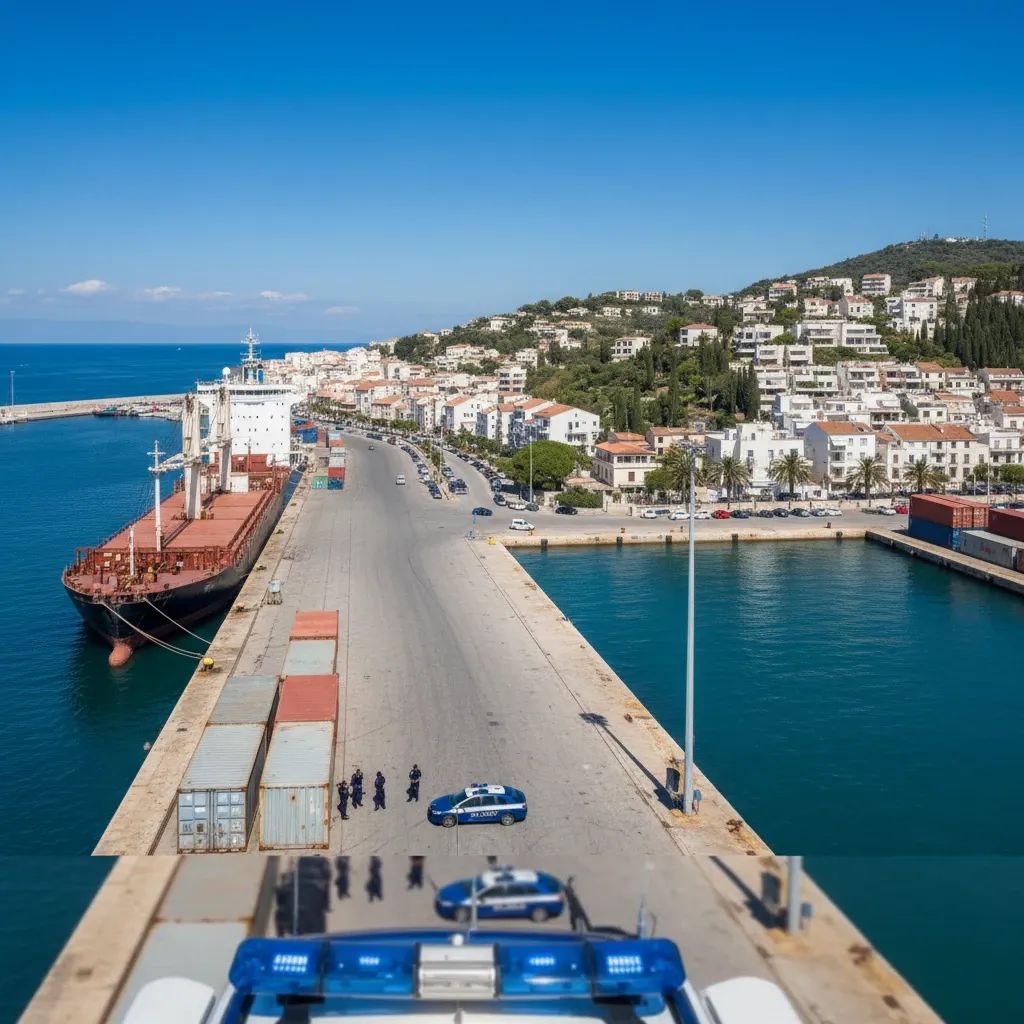
The Malta Police Force arrested a 26-year-old Qormi resident on Tuesday, May 13 after officers discovered roughly 100 sachets of suspected synthetic drugs and cash during a parking lot operation on Triq l-Iljun. The man faced arraignment scheduled for Wednesday afternoon, marking another tactical success in what has become an intensifying police response to organized drug distribution.
Why This Matters
• Enforcement is accelerating: Over 14 months since early 2025, the Anti-Drug Squad has conducted at least seven major operations, reflecting a sustained commitment to disrupting trafficking networks.
• Sentencing carries severe weight: Trafficking convictions in Malta's Criminal Court carry life imprisonment; in Magistrates' Court, sentences reach 10–12 years plus fines up to €35,000.
• Synthetic substances evolve faster than laws: New psychoactive compounds like HHC and CC9 bypass detection and have driven emergency room admissions, forcing legislation to classify substances retroactively.
What Happened in Qormi
Qormi, a central town southwest of Valletta, was the location of Tuesday's operation. Officers responding to a tip-off arrived at a car park on Triq l-Iljun around 5 p.m. after receiving intelligence about alleged trafficking. They observed the suspect exiting a vehicle and, following a search, recovered paper-wrapped packets of suspected synthetic drugs alongside a quantity of cash—typical indicators of distribution-level dealing rather than personal use. The man was taken into custody and processed for Wednesday court proceedings.
The operation reflects the Anti-Drug Squad's—Malta's specialized narcotics enforcement unit—shift toward intelligence-led enforcement. Rather than random patrols, officers now prioritize street-level dealers and distribution nodes, believing this targets the supply chain more effectively than individual arrests alone.
Seven Major Operations in 14 Months
Qormi's bust sits within a broader surge. Since early 2025, the Malta Police Force has dismantled trafficking cells in Marsa, Ħamrun, Manikata, and now central towns. The progression reveals both police capacity and persistent market availability.
On April 25, authorities raided Marsa and arrested four individuals, seizing 278 sachets of cannabis, 126 of heroin, 9 of cocaine, and synthetic substances alongside €1,400. The April 16 Manikata operation netted five foreign nationals, with searches uncovering MDMA pills, LSD, cocaine, and active cannabis plants at a residential address. A March 4 Ħamrun arrest yielded 80 grams of synthetic drugs and €3,000, leading to a swift conviction: two-year sentence plus €1,500 fine. Marsa operations in February and January uncovered synthetic cannabinoids packaged in sachets and thousands in cash.
The most significant 2025 case occurred in late October when five men were arrested following surveillance of a Marsa horse stable. Police recovered approximately 160 sachets of suspected synthetic drugs and 60 of heroin—suggesting this network operated at wholesale level rather than street corner retail.
What Residents Face: The Synthetic Drug Reality
Synthetic drugs differ fundamentally from traditional narcotics. They are laboratory-engineered compounds designed to replicate the effects of cocaine, cannabis, or ecstasy but chemically altered to evade existing laws and detection methods. The most prevalent varieties in Malta include MDMA, amphetamines, synthetic cannabinoids, and synthetic cathinones.
The concern extends beyond enforcement statistics. Substances like CC9 were directly linked to a cluster of emergency department visits in April 2025, with patients presenting acute adverse reactions. Unlike consistent plant-based drugs, synthetics vary wildly in potency and composition batch to batch, raising overdose risk substantially. Users encounter unpredictable effects; hospitals encounter unpredictable complications.
Malta's legislative response prioritizes speed. Under the country's classification framework, newly identified substances can be designated illegal within weeks rather than the months required elsewhere. That rapid adaptation underscores enforcement's commitment, though supply challenges persist as manufacturers innovate.
The Legal Consequences: Where Possession Ends, Trafficking Begins
Malta's legal system draws a sharp distinction. Under the Drug Dependence (Treatment not Imprisonment) Act, possession of minimal quantities—under 2 grams of most prohibited drugs or two ecstasy pills—for personal use carries fines of €75–€125 and may result in referral to rehabilitation rather than prison, especially for first-time offenders under 25.
Trafficking crosses into criminal gravity. Maximum sentences include life imprisonment in the Criminal Court (jury trial) or 10–12 years in Magistrates' Court. Aggravating factors—such as trafficking near schools or youth centers—escalate penalties. Recent convictions illustrate the severity: a 40-year-old received 12 years and €25,000 for cocaine and cannabis trafficking in 2025; another drew 24 years and €35,000 for trafficking association and aggravated possession in early 2026.
The judiciary continues to refine enforcement approaches, recognizing both the need for stern penalties and proportionate sentencing. However, judicial proceedings typically stretch several years, and foreign nationals often remain denied bail until resolution.
Malta's Strategy: Enforcement Plus Treatment
Malta's National Drug Policy (2023–2033) acknowledges a fundamental tension: supply-side enforcement without demand-side interventions cannot eliminate markets. The strategy combines law enforcement intensity with treatment and prevention infrastructure, recognizing that organized networks adapt faster than any single police operation can dismantle them.
Regionally, Malta's Anti-Drug Squad operates within a European framework. Italy operates a Central Directorate for Anti-Drug Services and specifically targets synthetic opioids including fentanyl. Spain disrupts international networks and has prevented large synthetic manufacturing facilities from establishing. Cyprus uncovered trafficking innovations—substances soaked into paper sheets to evade detection. Greece contends with cheap synthetic drugs like "sisa," produced in unregulated labs.
Malta participates in EU-wide cooperation via Europol and INTERPOL's National Central Bureau (NCB), sharing intelligence and coordinating cross-border investigation. The country's rapid legislative adaptation—immediately classifying new psychoactive substances—positions it among the more proactive Mediterranean enforcement jurisdictions.
The Underlying Challenge
Wednesday's arraignment adds one more case to Malta's prosecutorial ledger, yet the underlying problem persists: the illicit market evolves chemical structures faster than legislation can classify them. The Anti-Drug Squad's success in dismantling trafficking cells is tangible and measurable. Police operations continue across multiple localities as new synthetic compounds emerge regularly in the market, requiring sustained vigilance and international cooperation.
For residents, the implication is clear: police pressure is demonstrably reducing supply in targeted neighborhoods, though emerging compounds require ongoing legislative and enforcement adaptation. Understanding the distinction between possession and trafficking, recognizing the risks of synthetic substances, and supporting evidence-based prevention efforts remain essential as authorities work to manage this evolving challenge.


