The Wignacourt Museum in Rabat is hosting an exhibition that challenges conventional portraiture by dissecting identity itself. Silvio John Camilleri's "Vestiges" runs until May 24, 2026, presenting self-images built through distortion, exaggeration, and fragmentation rather than photographic likeness. For anyone interested in contemporary Maltese art, this show offers a rare glimpse into how a local artist is using paint to explore the fluidity of the self in an age dominated by digital self-presentation.
Why This Matters
• Limited viewing window: Exhibition closes May 24, 2026, at the Wignacourt Museum, Rabat.
• Distinctive technique: Camilleri employs bold, rough brushstrokes and contrasting colors to create quasi-caricatural figures.
• Thematic depth: The work examines identity as a construct shaped by memory, instinct, and imagination, not a fixed entity.
The Artist Behind the Distortion
Silvio John Camilleri occupies an unusual position in Malta's art world. By day, he serves as an Associate Professor in the Department of Banking, Finance, and Investments at the University of Malta. Outside his academic role, he produces expressive paintings that have earned him four solo exhibitions since 2020. His artistic education began in the late 1990s at the Malta Government School of Art, followed by studies at the Malta Society of Arts, where he specialized in human figure drawing and artistic printing techniques.
His previous exhibition at the same venue, "Urban Dreamscapes," concluded in January 2025 and explored the relationship between city life and human experience. That show introduced a stronger focus on human presence within urban environments, a theme he has continued to develop. Now, "Vestiges" shifts the lens inward, examining the self as both subject and object.
What Makes This Exhibition Different
Traditional self-portraiture aims for psychological depth through careful observation—think Rembrandt's aging face or Frida Kahlo's unflinching gaze. Camilleri rejects that approach entirely. His self-images embrace spontaneity and freshness through a quasi-caricatural style that borders on the surreal. Faces appear fragmented, exaggerated, sometimes barely recognizable as belonging to a single individual.
The artist has acknowledged using selfies as models for the predominant male faces in some of his work, though he emphasizes that not every such figure should be read as a direct self-portrait. This ambiguity is deliberate. Camilleri's work explores the impossibility of presenting the self in its totality, treating identity as a porous boundary rather than a solid core.
His color palette draws influence from artists like Philip Guston, particularly in his use of a distinctive pink that recurs throughout his compositions. The technique involves acrylics, ink, and watercolors, applied with a rough immediacy that contrasts sharply with the highly polished digital self-images flooding social media feeds.
Urban Contexts in Camilleri's Work
While "Vestiges" focuses on self-representation, Camilleri's broader body of work engages with urban environments, where flyovers and supporting columns serve as visual metaphors for the psychological alienation of contemporary city life. His figures inhabit these spaces as characters experiencing both resilience and fragility. Malta's rapid urban development over recent decades provides fertile ground for this exploration, and Camilleri's quasi-caricatural style captures the emotional dissonance of navigating transformed spaces where ancient architecture meets modern infrastructure.
The Contribution to Malta's Contemporary Art Scene
Camilleri's prolific output since 2020 has positioned him as a consistent voice in Malta's contemporary art dialogue. His exhibitions at the Wignacourt Museum generate critical discussion in local media, with reviews appearing in outlets like the Times of Malta and TVMnews.mt. His impact comes from sustained thematic engagement with identity and the human condition, adding stylistic diversity to contemporary artistic expression in Malta.
The fact that Camilleri maintains a full-time academic career while producing exhibition-quality artwork reflects Malta's creative economy, where many artists sustain parallel professional lives. This dual existence enriches his artistic perspective, keeping his work grounded in everyday experience.
What Residents Can Expect at the Exhibition
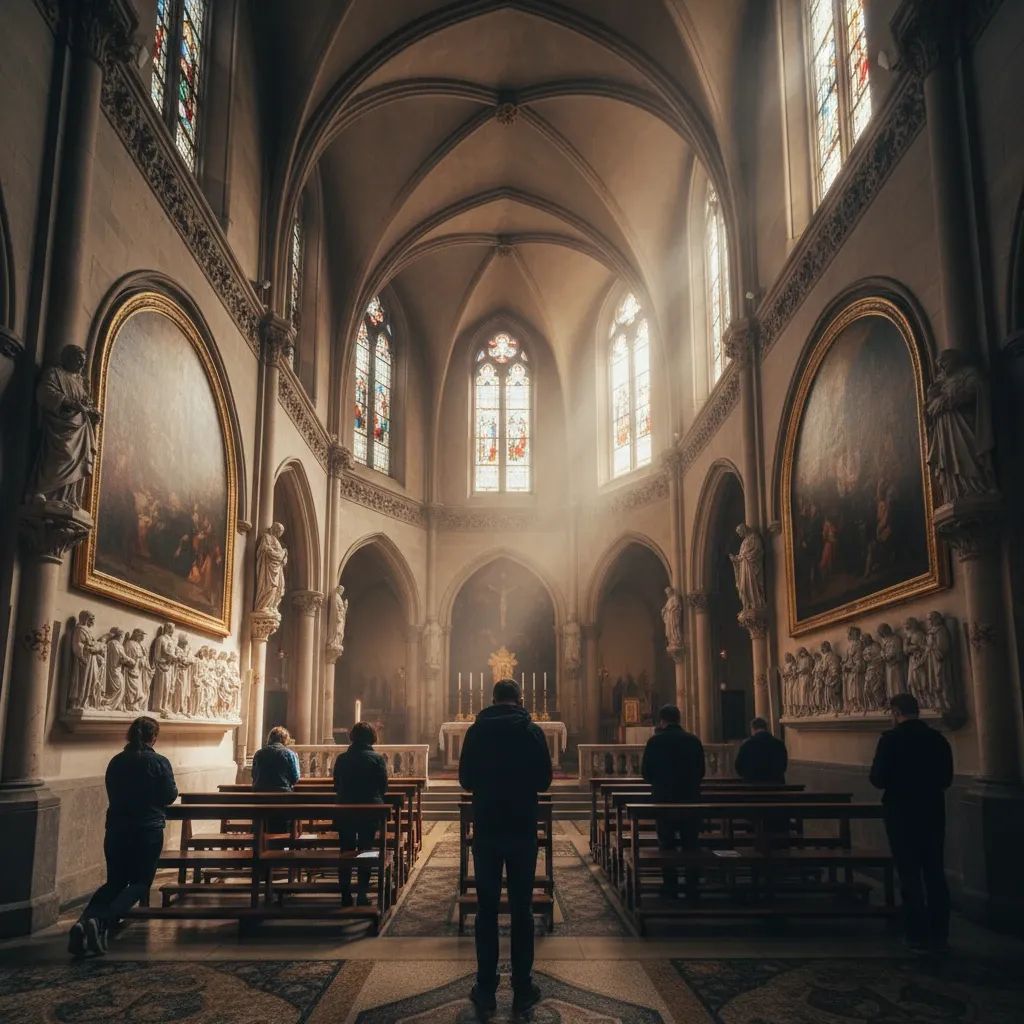
"Vestiges" occupies the historic Wignacourt Museum in Rabat, a venue that provides an interesting counterpoint to Camilleri's contemporary concerns. The museum's baroque architecture and religious artifacts create a dialogue between Malta's layered past and the artist's present-day explorations.
Visitors will encounter self-images that refuse easy interpretation. The fragmented faces and exaggerated features challenge viewers to consider how identity functions in an era of constant self-documentation. With smartphones generating endless selfies and social media platforms encouraging carefully curated self-presentation, Camilleri's approach feels deliberately resistant to digital aesthetics.
The exhibition's title, "Vestiges," suggests remnants or traces—fragments left behind rather than complete pictures. This framing aligns with the artist's philosophical stance that the self cannot be captured in its entirety, only approximated through accumulated impressions shaped by memory and imagination.
For those accustomed to traditional portraiture or photorealistic representation, Camilleri's work may initially appear rough or unfinished. But this rawness serves a purpose, emphasizing the process of identity formation over any final product. The bold brushstrokes and contrasting colors create visual tension that mirrors the psychological tension of self-examination.
Practical Information for Art Enthusiasts
The exhibition remains accessible through May 24, 2026, giving residents and visitors a limited window to experience the work in person. The Wignacourt Museum in Rabat offers convenient access for those in the northern regions of Malta, though visitors should verify current opening hours and any admission fees directly with the venue.
For anyone tracking Malta's evolving art scene, this exhibition represents an opportunity to engage with a local artist whose work reflects broader international conversations about identity, representation, and the self in contemporary visual culture. Camilleri's approach—combining academic rigor with expressive spontaneity—produces work that rewards careful viewing while remaining emotionally immediate.